
Blog – How I Came To Enjoy Public Speaking As An Introvert
Just like many people, when I was younger, I was terrified of public speaking. I had terrible stage fright in general. The first time I received an award at assembly in primary school, I was too scared to get out of my chair, so the spelling award was delivered to me by the (really excellent) headmistress. The second time, my mum came up front with me, and the third time, my teacher. I didn’t even have to say anything to receive the award, but speaking was far far worse. Forced to take part in class plays, I always chose the parts with the least amount of acting, or the least amount of lines, and avoided any such thing I could. My parents encouraged me to take up debating in high school (ha), but I convinced them I didn’t like arguing. Any talks or presentations which were mandatory, I always made sure I had notes to read from.
I was always quiet by nature, and in high school, to complicate matters further, I developed something of a stutter. I was struggling to get particular words out, stumbling over others and rushing through other parts of sentences. (Helpfully, one of the words I have the most challenge saying, is “neurodegenerative”, which is why you will almost never hear me say it in a talk).
And yet, as the title of this gives away, I now genuinely enjoy public speaking. I can get up in front of an audience without any notes, feel great, and enjoy talking to a crowd. I volunteer to give talks all the time, get invited to give talks, and look forward to doing so. Without tooting my own horn too much, I also generally have excellent feedback about the talks too. This would seem near insanity to the younger me, a truly outrageous character arc that any editor would rule as implausible.
So how did it come to this?
Reflecting on this, I think these have been the keys for me: first, practicing being comfortable in front of a crowd. Second, practicing giving talks over and over again. Third, learning technical skills in being able to give a good talk. Fourth, building confidence that I actually had something to say. Let me talk you through it.
I never enjoyed being the centre of attention. I was the quiet one in my friend groups, and avoided the limelight wherever possible. However, a truly strange circumstance forced me down a different path. In the third year of my undergraduate degree, I became the President and Head Coach of my university Quadball club. Quadball (previously “quidditch”, the version of the sport in Harry Potter, adapted for real life (which I promise is real, and also great fun)) is something I absolutely loved and was devoted to (and still am…), and I felt a huge sense of responsibility when I took over the club, and desperately wanted it to continue to do well. Being president forced me to take on a substantial leadership role, but being coach in particular forced me to be up and in front of a crowd of people every week for training three times a week. I found it deeply uncomfortable at first, but I needed to do it for the club to thrive, and so I dug deep and did it, and got used to it, and started to enjoy it.
Quadball, helpfully, has an incredibly inclusive and generous community, and is the easiest of all places to try this. I had been playing for a number of years and had actual expertise and experience to share as coach, and a co-coach and other team mates to help. Nevertheless, I look back on this time as the turning point of my attitude towards public speaking, and I learned a huge number of emotional and technical skills, further developed when I captained the following year. I got used to using a loud outside voice, putting on a brave face, explaining complicated skills and plays, keeping people interested and engaged and enjoying themselves, and making jokes at my own expense while maintaining some level of authority – all skills I’ve found essential for giving scientific talks.
Quadball gave me a lot of these soft skills, eased a lot of my emotional discomfort at being the centre of attention, and helped build my confidence that this was something I could actually do. Coaching and captaining a team sport is still a step away from giving scientific talks, however. When I moved to Oxford for my PhD, I had seen enough of academia to realise that there was a huge gulf between the typical scientific talk (which is, frankly, not great), and the really excellent talks, that explain things clearly, hold your attention, entertain you, and stay with you afterwards. I had seen great speakers in tech and business contexts, but far fewer at scientific conferences. We’ve all surely had the experience of watching some absolutely amazing and fascinating science in a talk but having to desperately power through a somehow extremely boring and monotonous talk to understand it. I could see that public speaking was going to be an essential skill as a researcher, and I was determined to get good at it.
I tried to take every single opportunity I could to give a talk. I signed up to every postgraduate research showcase in my college, and every possible conference speaking opportunity. I did posters, flash talks, three minute theses, training courses, whatever I could get my hands on. These were small opportunities at first – a flash talk at an ECR event here, a small college symposium there – alongside other things like lab meeting and journal club presentations, where I sought feedback from my other lab mates too. Writing and recording these Dementia Researcher articles was also part of a concerted effort to try and practice speaking and enunciating more, even if only into my voice notes app. Eventually, as I got better, this developed into bigger opportunities. I was asked to give a talk for an ECR science meeting, since people had heard I had great images in my PowerPoints. I was invited to give a research talk to college alumni, to showcase student research. I had abstracts accepted for talks at major conferences like ADPD, and had my name put forward to speak at other local conferences and research seminars.
Don’t get me wrong – each step up was mildly terrifying. I knew I wouldn’t be able to have notes for these talks, and I knew I didn’t want to stumble through difficult and stutter prone words, so for the important ones (like conference talks, not like lab meetings), I wrote out every talk well in advance. I talked through them and ironed out all the kinks, and then practiced and practiced until I had the entire thing memorised and could do it on autopilot. The first time I gave a talk at ADPD, I practiced it for 1-2 hours every day for five days. It went great.
I’ve continued to practice and improve and actively challenge myself since. Memorising talks – especially when they get to 15-20 minutes long, is not a sustainable practice, and especially now I’m working on a new project, and don’t have years of presentations on the same PhD topic to rely on. Last year in particular, I started practicing trying to be better at ad-libbing in presentations. Not going 100% off the top of my head, but not memorising a script either. Mapping out the key things I want to talk about and the key points I want to make, but still improvising along the way. These talks aren’t as crisp, but I know my speech patterns well enough now to know how navigate them, and I’ve practiced giving talks enough that I can speak and think ahead at the same time easily enough.
 I also made a conscious effort to go to lots of talks. In college, in my department, at conferences, in and out of my field, and even outside of science more generally too, in the areas of business, tech, politics, etc. Being honest, scientists are terrible communicators compared to people in other industries, and we can learn a lot from beyond academia. I try to watch a lot of speakers, and think about their communication style, what works, and what doesn’t work. At conferences, I take notes on what I liked and didn’t like in speaking styles, metaphors and analogies people use to explain things, slide design, structure, etc. I even rate all the talks I watch for both content and speaker, and in my books, you can’t get a top score without telling a joke.
In addition to technical science talks, I’ve also tried to talk about my science in lay terms as often as possible. I talk about my research to friends and family all the time, I’ve volunteered to give talks to donors and the general public, run informal events in college, and taken part in public engagement events like science in the park and shopping centre stalls, where you face people of all ages from all walks of life. This really challenges you to be able to explain things clearly, to recognise jargon, and to empathise with your audience and remember what they do and don’t understand. It’s given me the chance, over the years, to really hone my spiel, to come up with strategies for talking about what dementia and Alzheimer’s and pathology and stem cells even are in ways people will actually understand and latch onto, and helped me actually read my audience too.
One thing that has been especially helpful for this, as well as being a huge boost to my confidence and technical skill at public speaking, has been teaching. I’ve demonstrated in neuroanatomy labs since I finished my undergraduate, mostly for the pure love of teaching (which I’ve written about elsewhere), as well as taking professional development courses in pedagogy, lecturing, etc. While the courses have been using for developing more technical skill in my ability to structure ideas and speak with a particular cadence, there is nothing quite like having to front up to undergrads day after day, week after week, and try to explain a variety of complicated neuroscience and answer all of their questions on the spot. Doing this year after year, I’ve gotten better from building expertise and from knowing my subject area and how to answer questions, but also from reflecting, thinking, and taking on feedback to hone my explanations and style.
Teaching has made me much more adept at thinking on my feet, speaking while thinking, and rapidly structuring answers that will make sense and clearly explain ideas to students in a way that will make sense for them. There is a particular art to being able to order concepts and ideas and examples in a specific way so that they build upon each other and have a logical sense of flow and can each be understood in turn. Part of learning this came from pedagogy [the science of teaching], part of this came from experience as a student and audience member, but most of this came purely from practice. Teaching was also fantastic for being comfortable talking in front of a crowd who will interrupt at any moment if you say something that seems wrong. After all this, I’ve been able to win teaching awards, have been given opportunities to give talks about teaching, and continue to try to find ways to improve and challenge myself and get more practice to get better.
These three factors – coaching quadball, practicing giving talks as much as possible, and teaching – largely explain how I got better and more comfortable with public speaking, but not necessarily why I now actively enjoy it. I don’t just seek out speaking opportunities for the practice and need to get better for the purposes of being a better researcher now – I actually find it fun? Which is still a wild concept for me to get my head around.
But I think this has substantially come from simply building more confidence over the years. This is partly a product of things like coaching and teaching and practice – just being comfortable in front of an audience and feeling more competence and control in my ability to entertain and inform. However, it has also come from being more confident and competent in my science, in having developed ideas and expertise, and having something to share that I actually feel is important and that I want people to know. I have a stronger sense of my personal brand, I know the things I can make fun of in myself to entertain with, and I have had enough positive audience feedback along the way.
I don’t think you should wait until this point to start giving talks. This point comes from giving lots of talks and doing all the other things too. It comes from having a supportive lab environment and great mentors and a lot of practice. This didn’t happen overnight – this has been a 10-year turn around for me, and I’m still fully aware that I have a long way to go if I want to go from being a decent speaker to a great communicator.
So, my advice to you? Remember, first, that this is important. Research tends to select for people who are not great at speaking, and who don’t like being in front of a large audience. However, communication is an essential part of research, and being an effective speaker is a crucial part of communicating your science to other researchers and to the public. Good science communication has maybe never been more important than in our current social and political climate. It is worth investing the time and effort into getting better at it.
So, how to do that? Practice. As much and as often and in any many ways as you can. Find a supportive community and start there. Start small and build up. Inch your way out of your comfort zone and keep on going. Don’t wait until you have enough data to present your work for the first time in year three of your PhD, start making posters and giving talks about your ideas and plans from your first year – you’ll be so much better practiced by the end. Remember that these skills come from outside the lab, so get outside. Play quadball. Take on leadership positions. Volunteer for things. Attend and pay attention to talks from other scientists and from outside the academic bubble too. Do teaching. Teaching, mentoring, coaching, these are all great. But always reflect on what you learn and think about how to put it into practice. And then, again, practice. Who knows? Maybe you’ll enjoy it one day too.
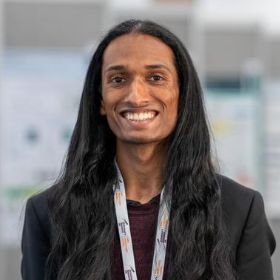
Ajantha Abey
Author
Dr Ajantha Abey is a Postdoctoral Researcher in the Kavli Institute at University of Oxford. He is interested in the cellular mechanisms of Alzheimer’s, Parkinson’s, and other diseases of the ageing brain. Previously, having previoulsy explored neuropathology in dogs with dementia and potential stem cell replacement therapies. He now uses induced pluripotent stem cell derived neurons to try and model selective neuronal vulnerability: the phenomenon where some cells die but others remain resilient to neurodegenerative diseases.