This year marked the fourth instalment of the Hot Brain conference, an annual event which aims to draw attention to the effects of the climate crisis on brain health and neurological disorders. As scientists and healthcare professionals, we often talk about environmental influences on health, thinking about diet, stress or education. But our physical environment is rapidly changing, and it can feel like there’s not much we can do to stop it. So how does an ever-changing global environment affect our brains?
Although not my area of research, I am someone who spends a lot of time thinking (and despairing) about the climate crisis. With global leaders withdrawing their net zero pledges and expanding oil extractions left, right and centre, it feels like we are well beyond the tipping point into climate catastrophe.
And with climate change happening all around us, we need to think about how it will affect the most vulnerable, including those with neurological diseases.
Hosted by UCL Queen Square Institute of Neurology and The Lancet Neurology, the Hot Brain conference aims to tackle this exact question, drawing attention to this very-understudied area. It became clear to me during the meeting, that the impact of increasing temperatures and humidity on neurological health remains broadly unknown. In some disorders, there is strong evidence of an increased burden during heatwaves. Individuals with some epilepsies, including Dravet syndrome, and people with Myasthenia gravis experience significantly worse symptoms during periods of high heat. At the conference, we heard from lived experience speakers about how extreme heat can significantly impact them, from putting people at higher risk to have a seizure, to significantly slowing down the recovery from routine surgery.
Beyond these specific conditions, and although the Hot Brain meeting is already in its fourth year, there is still very limited data on the intersection of dementia-causing diseases and climate change. We do know from epidemiological research that air pollutants, such as particulate matter, are associated with an increased risk to develop dementia. In 2020, The Lancet Commission’s Risk Factors for Dementia [1] report was updated to include air pollution as a late-life modifiable risk factor for dementia.
But beyond air pollution, what about the most common outcomes of climate change, increasing temperature and humidity? How do they impact people with dementia? Data presented at this meeting suggests that people with dementia-causing or neurodegenerative diseases were more likely to suffer from heat illness or heat stroke during heatwaves, putting them at increased risk for hospitalisation. And data showed that deaths related to Alzheimer’s disease or dementia were a leading cause of excess deaths seen during the 2022 heatwave in the UK. Temperatures recorded at Heathrow airport surpassed 40 °C that summer, and heatwaves like that are becoming more and more frequent! The increasing incidence and intensity of heatwaves are a direct result of climate change, and thus a direct cause of heat related illness during. This is incredibly scary, especially for these vulnerable populations. Clearly much more research is needed to understand if the effects of climate change could actively contribute to dementia-causing diseases.
Another big focus of the conference was adaptation to increased heat through thermoregulation (how the body maintains a safe core temperature). Data presented by Dr Anthony Shephard showed that individuals with a higher tolerance for extreme heat, such as those who frequently use saunas, have reduced all-cause mortality during heatwaves. Moreover, their studies on repeated hot water immersion, like in a hot-tub, show improved memory and logic performance. Dr Hannah Pallubinsky expanded on this, speaking about her research into the use of wearable technologies to study thermoregulation. Her group are examining if exposure to heat during days of gradually rising temperatures in the lead up to the peak days of a heatwave, will better protect vulnerable people. She highlighted how governmental advice is to ensure you are prepared with resources for a heatwave, but she asks what if we can prepare our actual physiology in advance. It will be really interesting to understand if these strategies could also help to prevent heat illness in people with neurodegenerative diseases.
A final important message from the Hot Brain conference that I think is highly relevant to dementia researchers is examining how we report our study results. Reproducibility is an important element of sustainability in and of itself. But multiple speakers at the conference pointed out how often the temperature at which studies are conducted is omitted from papers. Or researchers report that room temperature is used, which is vague and unscientific. From my experience, labs I have worked in that were in old buildings have dropped as low as 16°C in winter and had highs of 28°C in the summer. In an ever-changing climate, it is no longer good enough to report “room temperature” in the methods, particularly for any experiments involving physiology, mouse work, or even temperature sensitive reagents. This is something we can all do to improve our science.
Overall, this conference sadly reminded me that climate change is already impacting every aspect of our life, and we should not disregard what this means for our health. I hope that in the coming years, more research into the effects of climate change on dementia will emerge. And importantly, I hope that world leaders and corporations will start to act like this is an emergency!
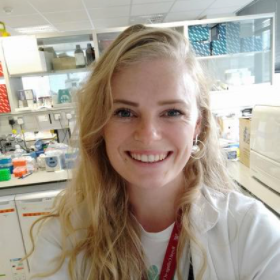
Dr Clíona Farrell
Author
Dr Clíona Farrell [2] is a Postdoctoral Researcher in the UK Dementia Research Institute at University College London. Her work focuses on understanding neuroinflammation in Down syndrome, both prior to, and in response to, Alzheimer’s disease pathology. Originally from Dublin, Ireland, Clíona completed her undergraduate degree in Neuroscience in Trinity College, and then worked as a research assistant in the Royal College of Surgeons studying ALS and Parkinson’s disease. She also knows the secret behind scopping the perfect 99 ice-cream cone.