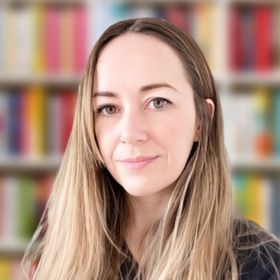
Emily Spencer
Out of nowhere, it has come to my attention that I have less than six months of funding remaining on my PhD studentship. In fact, having consulted my Gantt chart yesterday, it would appear that I have four and a half months remaining, which hasn’t exactly been music to my ears. As a result, my already divided attention has been further fractured, as I’ve had to look to the future, making plans for post-PhD.
I must preface this by saying that I am in an advantageous position. In recent months, I have been working (very) part-time alongside my PhD, with the assurance that my hours can increase upon its completion. To some extent, then, there hasn’t been the need to worry about my future or how my rent will be paid once I submit my thesis. For others I have known, this has been a very real concern, meaning an extremely stressful balancing act between applying for jobs and trying to pull together all the strands of the thesis, ready for submission. People I know outside of academia have struggled to understand this; I suppose they see the PhD as a training opportunity that naturally and seamlessly leads into a full-time (and permanent, ha!) position within your department. I can only assume that for the overwhelming majority of people, this is not the case.
With my future somewhat secure, the logical thing would have been to focus my attention entirely on the current – extremely laborious – phase of my analysis.
Alas, I thrive on making life harder for myself, so instead have spent the last two months putting together an application for a postdoctoral fellowship.
This has kind of come out of nowhere. I can’t say that I’ve historically had the most concrete ideas as to what my career will look like, and have always dreaded the inevitable “where do you see yourself in five years?” question that arises at every interview. I can guarantee I was asked that question when I interviewed for my PhD, and I can likewise guarantee that I would have garbled some vague response about continuing to work in my field, in whatever guise. I’ve always found the question of my career intentions difficult to answer, as I know I should be demonstrating my ambition and outlining the steps to get there, but in reality the end goal has always felt slightly out of focus. With no effort on my part, that lack of focus really seems to have shifted recently.
For the last six months, making progress with my PhD has felt a bit like wading through treacle, with my analysis being in a less advanced stage than I would have hoped by this point. Unlike some of my peers (of whom I am frequently envious), embarking on the PhD involved starting from scratch with an analytic method with which I was entirely unfamiliar. I am a broadly qualitative researcher by trade, and while I’m comfortable with a range of methods for collecting or generating data, projects I’ve worked on have always analytically fallen back on old faithful, thematic analysis. For my PhD, on the other hand, I am using conversation analysis, which considers the features of communication in extremely fine detail. Such fine detail, in fact, that the data I have collected – video recordings of GP consultations including people with dementia and their family/friends – could never realistically all be considered in the course of my analysis. Month by month, without fail, my supervisors have advised me to pare back the scope of my analysis, to become increasingly focused, or risk losing my handle on the data altogether. Finally, this week, I seem to have made progress, with the three foci of my analysis finally (for now, at least) determined. What this does mean, though, is that there is a wealth of video data left on the cutting room floor.
A couple of months ago I had to let go of one of my intended areas of interest, and I realised I couldn’t do it. I am just too attached to this data. There are so many interesting phenomena within those videos, and the subject matter (conversations about future care and end-of-life) is so incredibly important. Although I still feel like a complete novice, I have also become increasingly attached to conversation analysis as a method. The focus on tiny, seemingly inconsequential details really appeals to my nature, and likely plays to my strengths. The idea of abandoning my data come the end of my PhD just seemed impossible.
With this came the revelation that although I can continue working on others’ projects, that can’t be my end goal. My participants allowed me to effectively eavesdrop on some extremely sensitive conversations, with a view to providing guidance for healthcare professionals on how communication can be tailored for people with dementia. Finishing my PhD would feel like leaving this work incomplete.
In light of this, the last two months have been spent preparing a fellowship application, in the hope that I can extend and build upon the work undertaken as part of my PhD. Rather than groping around in a fog, I finally feel like I can see a clear direction of travel, and part of that has to involve building my own portfolio of research based upon ideas that excite me. So while my time has been further divided, and even if that application comes to nothing, it won’t have been in vain. Now feeling more confident as to the destination, I can start picking out the journey.
Emily Spencer
Emily Spencer is a PhD Student at University College London looking at improving how GPs communicate with people with dementia and their family carers about their future care. Emily previous had a 5 year career break to pursue a career as a musician, and has previously undertaken research on improving the care people with dementia receive from their GP practice, as well as end-of-life and palliative care provision in the community. Emily is also a new mum and will be writing about her experiences navigating motherhood and a research career.