
Blog – Optimise, troubleshoot, repeat – Beginning a new project
I’m three months into my new postdoc position, and it’s been a long time since I’ve started completely fresh in a new environment and on a new topic. I think no matter how experienced you are, or how well detailed a project proposal is, the start of a project never goes as smoothly as you imagined. So right now, I’m in the throes of troubleshooting, and this blog is all about planning, adapting and persevering.
Have you ever tried an experiment once, twice, or even three times, only to be met with failure? This is an almost universal experience in research and feels especially prevalent in the wet lab. Be it an antibody not giving bands (or worse giving phantom bands) on a western blot, a cell treatment that doesn’t behave as expected, or adapting a well working protocol to a new piece of equipment, almost every new experiment needs some optimisation and troubleshooting. For me, I’m adapting my old PCR protocol to a new machine, trialling the use of new siRNAs on my cells, all while trying to future proof what I’m doing so that I get the most out of every sample I create. Sometimes it feels a bit like mental acrobatics.
But how can we optimise the optimisation process? The good thing that comes with experience, especially having completed a PhD, is that you get better at planning, and more comfortable with asking for help. I used to rush into the lab, throw everything at a mega experiment with countless conditions, and try it again straight away if it didn’t work, without necessarily thinking deeply about needed to change. Although I still like to jump in and give it a try, I think that I’ve gained a bit more patience, and a stronger ability to reflect. With a step back and some consultation with others, I have a clearer vision of what the next best steps are. Ultimately this saves more time in the long run anyways.
It’s easy to realise something isn’t working, but recognising WHY it isn’t working requires some patience, and detective skills. That’s where decent controls come in. Everyone knows to include a negative control (an untreated condition, a wildtype mouse, a no-antibody control), but the inclusion of a good positive control can significantly improve an experiment, especially during the troubleshooting process. A positive control is a condition known to produce the desired response. For example, if you are trying to measure cell toxicity, you want a condition which is definitely toxic, so that you know your assay read out works. Or if you’re using a treatment to lower the expression of a protein, you should use a knock-out model of that protein alongside your samples of interest. The reasons for not including a positive control are many, including added cost or limited access to good positive control for your paradigm. But without it, you could spend a lot of time and money troubleshooting a sub-optimal experiment.
Even with good experimental design, things will go wrong and you question if you are using the right antibody, or machine settings. Another good way to make progress during the optimisation process is to talk to people. As well as consulting your supervisor, simple casual conversations with colleagues in your lab, floor or building can give you tid bits of information, or names of people they know who have tried something similar. These small nuggets can help you to progress. Often just verbalising the problem can spark new ideas and help solidify your understanding of the problem.
But even still sometimes we design a great experiment, and still a compound or reagent isn’t working. Another option is to go back to the company. Scientific consumables supply companies almost always have highly qualified teams of experts who know their products inside and out. Although it can be frustrating to receive email after email from sales reps looking to talk about their latest products, getting a good contact in a company from who you get key reagents can be exceptionally helpful, particularly someone within the technical team. Sharing the data you’ve generated and asking how they suggest you proceed can give good insights (or worst case, tell you when to give up). There might be some small change you’ve made to a recommended protocol that can dramatically change an experiment outcome.
And of course, the most important part is to be able to persevere when things aren’t working. Not rushing things, acknowledging that you are trying your best, working level-headedly and following sensible steps to resolve the problem, are all important steps to persevere through the long troubleshooting road. Optimisation is a continual and integral part of the scientific journey, so you need to gain the skills to bring you through it. For me, celebrating every small win when lots of new things are coming at me is what carries me through. Now, wish me luck as I continue to optimise, troubleshoot, repeat!
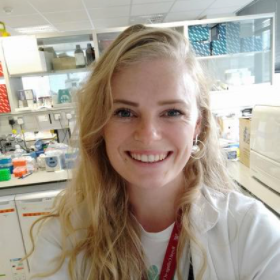
Dr Clíona Farrell
Author
Dr Clíona Farrell is a Postdoctoral Researcher in the UK Dementia Research Institute at University College London. Her work focuses on understanding neuroinflammation in Down syndrome, both prior to, and in response to, Alzheimer’s disease pathology. Originally from Dublin, Ireland, Clíona completed her undergraduate degree in Neuroscience in Trinity College, and then worked as a research assistant in the Royal College of Surgeons studying ALS and Parkinson’s disease. She also knows the secret behind scopping the perfect 99 ice-cream cone.