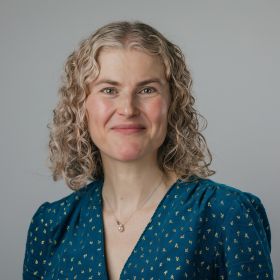
Dr Lindsey Sinclair
In 2024 I was lucky enough to win a travel award which enabled me to visit QIMR Berghofer in Brisbane, Australia and to work there with the wonderful Sarah Medland. This was the first time in a long time that I had worked anywhere other than the University of Bristol. I spent a month there with my family, had an absolutely fabulous time and learnt loads. Whilst I was there, chatting to other people in the department, going to talks advertised in the lifts and listening to the announcements from the ceiling about events going on that day, I got thinking about differences between institutions.
Now, don’t get me wrong, Brisbane definitely has better weather than Bristol but that wasn’t the only reason why I liked it. As a poster child for skin cancer risk factors there were definite downsides to Oz, but it definitely jolted me out of my comfort zone. Previously I had struggled to think about my career beyond Bristol. Whilst I was in Brisbane I got a really crushing fellowship rejection which crystallised my thinking and I started looking for jobs elsewhere. It was time to stop continually trying to justify in all of my applications why I hadn’t moved around.
Moving institutions can be tricky, even if there are jobs available which is never a given in the current financial climate.
There’s a whole new set of work politics and hierarchies to learn. It’s easy to put your foot in it because you just don’t understand the new work microclimate yet. Then there are all of the practical considerations. Do you have to move? How are you going to physically get into work? How do you get from A to B at your new institution without getting hideously lost? What IT systems do you actually need access to? Then there are the more prosaic issues like transferring between (possibly quite different) pay scales and making sure that you are enrolled in the right pension scheme.
As part of looking around I started talking to my friends at other universities about moves that they had made and what they had looked for. I also had some very useful conversations with my scientific mentor, who was very keen for me to think about moving. My friends were all happy with the moves that they had made, for a variety of reasons and had some sage advice on how to choose a university to move to. Choosing one which wasn’t in financial trouble was, of course, top of their list! I had all kind of job notifications set up as well as reaching out through my network. A major consideration for me was not disrupting my family which was one of my major reasons for staying in Bristol for so long. Working closer to home whilst my children were very young was definitely helpful.
Ultimately I ended up in Southampton because I networked really actively at conferences and found out that they had a role which might be coming up. This enabled me to optimise my CV for that particular role, as well as finding out all about the job in good time so that writing my application wasn’t a last-minute rush. I will never regret going to that particular drinks party at ECNP 2024. It’s so easy to not bother going to these things because you’re tired after a busy day at conference, but I’m increasingly realising just how critical being at these events is for career progression, building new collaborations and network building in general. Fortunately, I have a very supportive other half so even when my family come with me to conferences we still manage to make it work.
So now that I’ve moved how is it going? Two months in I’m honestly still fairly clueless about my new university, but that’s okay.
I’ve met almost all of the key people that I need to work with and they are all lovely. I naively thought that applying for grants would be fairly similar, but no. Even the same software (hello worktribe my old friend) works differently and the processes are quite alien to me. I’m used to knowing who to contact about various small queries, but now that’s changed from a 2 minute job to a 20 minute job. I’m still learning which courses I can offer student projects for and all of the bench fees and costs are different to what I’m used to. I spent a whole day exploring if there were any local funders I could apply to. I had to learn a completely new cycle route from the station to work and got lost the first 4 times. I’m still learning exactly what time I can get away with crawling out of bed in the morning so that I don’t either miss my train or forget to get my lunch out of the fridge. On a related note I still need to learn where the nice sandwich shop is! I had all of my passwords for everything saved on my old work laptop and now I’ve had to reset half of them. I’ve had to tweak my childcare and my husband is now dragging two squabbling kids into the car for the morning school bus run instead of me. Mind you, skipping that last one could be seen as a plus….
Annoying as that all is it’s definitely been worth it. I’ve been able to start afresh, be more strategic and think about what I want to have achieved in 10 years time. Not constantly panicking about where my salary support is going to come from has been very freeing and I have a lot more head space for writing grants and thinking about how all of my ideas hang together as a programme of work. Having new colleagues has brought new perspectives and a new energy to my work and I can’t wait to get started on the collaborations that I’m developing grant applications for. I used to be a round peg in a hexagonal hole. I really liked my colleagues in Bristol, am still in touch with them and intend to carry on working with many of them, but making the move to a department where the holes are round has been transformational for me in a way that I couldn’t have anticipated.
Most of all though moving has enabled me, in a funny kind of way, to embrace my new mid-career researcher identity and not feel embarrassed about not being as young as I was when I started my (part-time) PhD. I was shocked at my interview when one of my interviewers suggested that my expertise could be useful for feeding into a particular part of the local healthcare system. Perhaps because my development at Bristol was so incremental I had never really thought of myself as any kind of expert before, but moving has made it clearer that, at least in my specific scientific area, I probably now am becoming one. Personally I feel that moving has enabled me to start making the transition into scientific independence more easily, although I would have bitten your head off if you’d suggested this 5 years ago when I was writing applications talking about how staying in one place was best.
Will there be bumps along the way? Most definitely, but I’m enjoying the ride and the pros for me definitely outweigh the cons. I will however unashamedly be working on the train from now on as part of optimising my work/life balance (Dr Sam Moxon – Blog – Working on the Move). I’m still a firm believer though that not everyone can move easily between institutions and that for genuinely inclusive research careers staying put needs to be as widely accepted as taking a leap of faith and moving on.
Dr Lindsey Sinclair
Dr Lindsey Sinclair is an Associate Professor and Clinical Academic in Old Age Psychiatry at the University of Southampton. Her research explores the relationship between depression and dementia, combining lab work with epidemiology and genetics. Clinically, she works with older adults experiencing a wide range of mental health problems. Outside of work, she’s a keen baker and runner, and has a particular talent for creating ambitious birthday cakes.