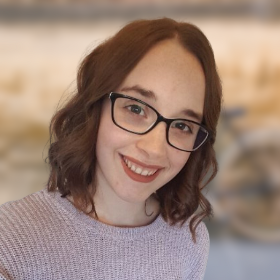
Rebecca Williams
Nearly 3 years ago, I published my first blog with Dementia Researcher. I had always liked the idea of starting a blog but two minor points always stopped me: 1) I wasn’t a good writer and 2) I didn’t have anything to say. The only reason I felt confident submitting my first blog, was because it did well in a competition, and so I knew it was of reasonable quality. However, when I was invited to become a regular blogger, I initially turned it down. I didn’t trust myself to write well consistently, and was sure that I would quickly run out of topics to write about.
But I couldn’t quite get the notion out of my head. Whilst on holiday the first idea for a blog came – it took me a long time to write and a lot of re-editing before I was happy to submit it. And this time, I took up the offer of a regular blogging spot. 3 years and 26 blogs later, I can honestly say that I’m so glad I did.
It turns out, that when you actually sit down and start writing, you realise just how much you have to say.
And you realise that maybe the way you think about the world isn’t as commonplace as you thought. You realise your perspectives might just be worth sharing.
The idea that people actually read these blogs is still something that’s unexpected to me. As much as I want my publications to have impact, I also somewhat expect them to just disappear into the ether. Then people I’ve never met catch me at a conference and tell me they enjoyed my writing. People say it helped them when they started off in a new job. People say they think it’s an important topic to talk about and they’re glad I did. It turns out that not only did I have enough to say, but I also had interesting things to say. That might have been the greatest surprise of all.
The other surprise is how much better I have become at writing. That first blog post submitted to a competition was the result of months of work. The second blog took up basically my whole holiday (worth it!) and then slowly but surely my process got faster. I’ve previously written about the power of a draft 0 – which I 100% stand by. I start writing each blog as a stream of consciousness that will be refined later. I expect that first draft to be awful. And in the early days it was. But now my first drafts are much closer to their final forms than they used to be. Writing papers is no longer the work of months, but weeks, or even days! In a crazy twist of fate it turns out that writing a lot actually makes you a better writer. And not just in the observable way that you produce higher quality work, but in the unobservable process it took you to get there as well. Recently, I wrote an opinion piece for a journal in 2 hours. I sent it to my supervisor for feedback and was shocked to receive positive comments and very few changes. I am confident with my whole being, that this is something I could not have accomplished three years ago.
As I move into my postdoctoral career, I’ve decided to take a step back from regular blogging – though you’ll never get rid of my completely – so that I can focus on writing fellowships and exploring my future in this wonderfully weird world of academia. But I have to say that if there has been one activity throughout my PhD that has changed me the most as a communicator, I think it may have been writing these blogs.
Learning I have opinions. Learning what they are. And learning how to communicate them, has been an unbelievable pleasure and privilege.
So if you’re a researcher, especially one early in your career, and you’re thinking that you might want to start writing those wonderful ideas in your head down on paper, then can I politely recommend you get started. You will never feel good enough. You will never feel ready enough. But you probably are. And the more you write, the more you might realise how much you have to say. And maybe, just maybe, it will even be something that another person needs to hear.
I’d like to thank Dementia Researcher for all the opportunities that have come my way through the community. It truly is an exceptional space for early-career researchers to come together and find their voices. I’d also like to thank my partner for listening to every single one of these blogs before release, and to my parents for listening to every single one of my blogs after release. I’m pretty sure my family has been artificially inflating my reading stats for years (sorry Adam!). And finally I’d like to thank you. Thank you for putting up with all my strange analogies, thank you for engaging, and thank you for your time. Hopefully I’ll catch you at the next one.
Rebecca Williams
Rebecca Williams is a PhD student at the University of Cambridge. Though originally from ‘up North’ in a small town called Leigh, she did her undergraduate and masters at the University of Oxford before defecting to Cambridge for her doctorate researching Frontotemporal dementia and Apathy. She now spends her days collecting data from wonderful volunteers, and coding. Outside work, she plays board games, and is very crafty, she also has her own YouTube Channel Becky & the Brain.