Pre-registration is a simple and yet totally logical concept. It has the potential to ensure more and better research is published. It is also a relatively new concept from what I can tell as an ECR.
Back in the early naughties when I was finishing my undergrad and then even in the late naughties when I did my masters I hadn’t heard about this concept at all. All the research I read about was stuff that had been done. Even when I did my research projects I don’t really remember having to write the plan up properly in advance, I just had to have some Kind of hypothesis, plan my outcome measures and the intervention before I delivered it. It wasn’t until I started my PhD that I really came across the concept of having to write a proper protocol. It made a lot of sense of course. I needed to apply for ethical approval so of course I would need to explain everything I was planning to do in rigorous detail. Just because what I do is often considered a relatively risk free therapy, doesn’t mean there are a) no risks and b) that is doesn’t need to be rigorous. In fact the interventions I develop often result in hefty emotional discussions, and the work probably benefits from being more rigorous than other research, in order to pin down the active ingredients in a complex intervention.
The first time I came across pre-registration was actually during a systematic review I did. This happened in two ways. First of all I decided to register my review on prospero- a review database. Prospero allows for peer review and feedback, which is helpful, but I also wanted other people to know what I was doing. Secondly, I decided to search trials registries as part of my search strategy- to identify any current of forthcoming work that I might have needed to include in my review. Not only do these databases allow researchers to make public the work they are currently undertaking – so others are aware and can build on it rather than do the exact same piece of work. These platforms also allow for open science methods. It means researchers must state in anticipation what they plan to do, rather than changing their minds halfway through. In fact this also means that its not just ground breaking positive outcomes that get published but also research where the results weren’t quite as “exciting” that will be published.

When you preregister your research, you’re simply specifying your research plan in advance of your study and submitting it to a registry.
So let me summarise this for you. There are lots of ways to tell people you are going to be doing a research study or currently understating a study:
- Registries: online registries have been set up that host brief or fuller protocols for current or planned work. These are often specific to a study type- such as a trials registry, a literature review registry or a core outcome set registry.
- Open science forums: these are platforms that allow you to put a new protocol or plan for a forthcoming study into the public domain by publishing it an open science forum
- Protocol publication; More and more journals are inviting researchers to publish a full protocol in a peer reviewed journal article. This means you get proper peer reviewer feedback and can cite a publication whenever you talk, write about or mention your study that is currently underway.
- Some journals are now inviting authors to submit registered. This means they review the introduction and methods of a paper- in a way similar to the process described above for a protocol. However once accepted, for a registered report the journal thereby commits to publishing your results and discussion at some point in the future.. This model seems like a no-brainer to me. although there is lots of work upfront it basically means journals and reviewers can’t pick and choose whether they publish papers on the basis of glamorous or successful results (do to speak). Even the results that don’t show much are actually answering valid questions and need to be in the public domain!
So let’s just summarise the bonuses of pre-registration:
- It is transparent
- You can receive peer feedback at a point when it’s most useful or communicate to others what you’re doing, at a point when you are keen for others to know something is in the pipeline
- You can also guarantee your findings will be disseminated
This feels like a win, win, win situation and even though I hear cries of “that’s probably a lot of work in advance” I would say it is most definitely worth it!
Author [1]
[1]
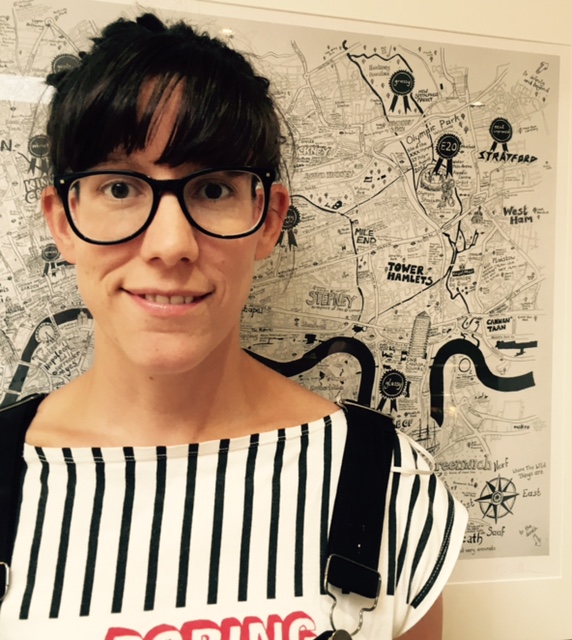
Dr Anna Volkmer [2] is a Speech and Language Therapist and researcher in Language and Cognition, Department of Psychology and Language Sciences, University College London. Anna is researching Speech and language therapy interventions in language led dementia and was once voted scariest speech and language therapist (even her children agree).