Blog – The Contradictions & Challenges of the Junior PI
It’s Friday afternoon. My last ever fellowship application is ready to go. I have five papers in various stages of review and acceptance so I feel like some work-based down time is in order. Not a holiday, I had one of those last week, just some reflecting and thinking time. Two posts are going to come out of this post-biscuit cogitation, one with today’s title, and one on the sense of self in academia which will either have already come out by the time you read this one, or is waiting in the wings. We are at the mercy of the dragon overlord on this one I’m afraid.
It’s actually hard to know where to start today because I know what I want to talk about, but getting it into some sense of a narrative arc is challenging so I’ll apologise now because this might get a bit waffly. We’ll start where the inspiration came from. It came from a friend of mine, who shall remain nameless but they’ll know who they are.
This person is a wonderful human being and is absolutely my role model when it comes to being a good academic. This inspiration came during a chat on our semi-regular coffee stroll through the park. I was lamenting that my RA is leaving this week and she has been an absolute godsend for the past year. She has allowed me to sit at my desk for hours at a time and argue with grant forms, to nag collaborators about rebuttals, to write papers, to do grant math. Because she’s been in the lab doing all the actual hard work, cutting tissue, running Western blots, helping with imaging. She’s been amazing. But I can’t keep her because I have no money.
This got us talking about various people over the years we had wanted to keep but couldn’t because of circumstances beyond our control and the consequences of that not only for the person in question, but for us. Because the contradiction of being a junior PI is that you are expected to be both a mentor and a manager, but it’s a challenge to play either role to its fullest.
I was very worried when all the grants I put in to keep my RA failed to get funded. I was very open with her from the start of the project, I told her we would absolutely try but we might not be successful. Then when the last one failed at about 6 months before she was due to finish, I let her know she should absolutely start job hunting. She fortunately got something in January and has now started, it’s a good solid three-year contract and she’ll still be in Oxford so I’m very pleased for her.
So as a junior PI one of the things you have to worry about is other people. Your success depends on them, but their lives depend on your success. When they leave, all the stuff they were doing for you either has to be done by someone else if you’re lucky enough, or it has to be done by you if you’re unlucky (like me).
PhD students are a good example of this. In an ideal world, a PhD student comes to me to do a very specific project I have in mind. If I’m a good PI, I have made the project so that it’s probably 60% very achievable and 40% ‘needs optimizing/we don’t know if this will even work’ which means they will get stuff done and also learn to troubleshoot. But for someone junior like me, the 60% absolutely HAS to be done. If it does not get done then I, by association, look unproductive. Because the PhD student is currently my spare pair of hands.
For a senior PI, someone with a permanent job and stacks of spare cash stuffed down the sofa, the PhD student almost doesn’t really matter as much. That’s not to say that the majority of senior PIs aren’t amazing but for them, if the whole PhD fails to produce anything quote-unquote ‘interesting’ because it was all optimization which didn’t really work, it does not really matter. They’ll get another one next year and the year after, new people will show up and after all, the student learned a lot from the experience.
Junior PIs cannot afford this luxury, we need the project to work because we need to publish the data because we need to get the next grant in order to remain employed.
There are aspects of the job of being a PI which I enjoy and I think I do quite well which, if I were senior and permanent would absolutely make me a great boss. But because I’m junior and expendable I think might just make me a pushover. And this is where I struggle to define my job.
If I were a senior PI, I would say that my job is to do science, and to mentor and lead the researchers who choose to come and work for me. As a junior PI, because I don’t have the financial runway or stability of a senior PI, I can mentor and lead all I like but I run the risk that the people I am choosing to help will just take that advice and run away with it to a more senior PI with a permanent job and pots of cash. At that point it feels like my efforts have been wasted. The better I am at helping people, the faster they leave to go somewhere bigger and better. And at that point it’s hard not to feel that part of your role is to help people become strong enough to leave you for something shinier.
 And to make this not sound like one long personal complaint let’s highlight how this is a structural problem. Because sometimes it feels like the system is set up so that junior PIs do all the early investment, the training, the mentoring, the confidence building, only for more established labs to reap the rewards.
We take people when they are uncertain, when they need time, when they need someone to sit with them and go through things properly. We teach them how to think, how to troubleshoot, how to recover when experiments fail. We absorb the inefficiency that comes with learning. But just as these people become productive, just as they become confident, independent, and genuinely excellent, they become competitive for positions in bigger, more stable, better-resourced labs. And they absolutely should take those opportunities. I would never tell someone not to.
Of course one way to respond to this would be to reduce the personal investment. I don’t have to be like this. I could treat people primarily as a means of producing data, to micromanage them into submission, giving them less time to spend on things that don’t immediately translate into outputs. Essentially to use them as tools. That approach is often more efficient, and in many cases, it is what the system rewards. But it is not how I want to run a lab.
The time spent teaching, mentoring, and allowing people space to grow is a choice. It just happens to be a choice that comes with a cost. The system quietly relies on junior PIs to take on the risk and the labour of training, while the rewards of productivity, publications, grants and continuity often accrues with others.
Junior PIs are expected to behave like long-term leaders in a system that only gives them short-term survival conditions.
And that is where I get stuck. Because none of this really helps me understand what my job is. Is it to produce? To generate data, write papers, bring in money, and prove that I deserve to still be here next year? Or is it to train people properly? To give them time, attention, and space to become good scientists, whilst quietly accepting that doing so might look, from the outside, like failure?
I need the answers to these questions because if I cannot define my role, I cannot figure out whether I am doing it ‘well’ or not. If I were in real estate, my job would be to sell houses. If I spent 12 months not selling a house in a year when lots of people were buying houses then by the normal standards of that job, I am not very good. But academia, such as it is, does not have such defined standards. They vary by institution, by discipline, by department and even by PI in some cases.
Given it’s unlikely that anyone will come up with a sensible set of criteria on ‘how to be an academic’ any time soon I am going to follow my lovely friend Lorraine’s advice. Lorraine is another wonderful human being and absolutely a role model for me and she was given an exercise on a leadership course once. She said they were asked to write their own eulogy, and that it forced them to really think about what they wanted people to remember them for. And she said she realised she wanted people to have had a good time in her lab and to think she was kind.
And I’m with her. The fact that I recently published my 50th paper sort of passed me by. I’m just ticking the boxes there. But I do like to keep a stack of all the really nice thank you cards all the students who’ve been through my lab leave for me. They have words like ‘fun’ and ‘inspirational’ and ‘patience’ in them. I have no idea whether that will make me a successful academic, I somewhat suspect not, but I hope it makes me a successful human.
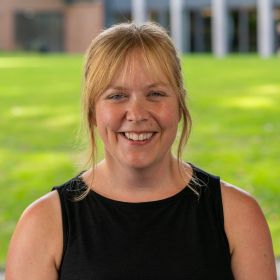
Dr Yvonne Couch
Author
Dr Yvonne Couch is an Associate Professor of Neuroimmunology at the University of Oxford. Yvonne studies the role of extracellular vesicles and their role in changing the function of the vasculature after stroke, aiming to discover why the prevalence of dementia after stroke is three times higher than the average. It is her passion for problem solving and love of science that drives her, in advancing our knowledge of disease. Yvonne shares her opinions, talks about science and explores different careers topics in her monthly blogs – she does a great job of narrating too.
@dryvonnecouch.bsky.social