In this podcast we share a few selected highlights from the Alzheimer’s Association International Conference (AAIC) day two and day three of the main event in Toronto and Online, 27the - 31st July.
Dr Shea Andrews [1], Assistant Professor at University of California San Francisco hosts the show with special guests:
- Dr Joe Butler [2], NIHR ARC Research Fellow at University of Sunderland
- Dr Lindsey Sinclair [3], Clinical Research Fellow & Consultant in Old Age Psychiatrist at University of Bristol
- Dr Harriet Demnitz-King [4], Post-doctoral Research Fellow at Queen Mary University of London
The AAIC brings together distinguished basic scientists, clinical researchers, early career investigators, clinicians and the care research community at the largest and most influential international conference on dementia science. They share theories and breakthroughs while exploring opportunities to accelerate work and elevate careers.
Main plenary talks from the day came from Professor Sharon Naismith from University of Sydney, Australia giving a talk titled "Waking Up to the Importance of Sleep in MCI and AD" and Professor Katrin Andreasson, M.D. with a talk titled "Restoring Hippocampal Glucose Metabolism Rescues Cognition Across Alzheimer’s Disease Pathologies".
Voice Over:
The Dementia Researcher Podcast, talking careers, research, conference highlights, and so much more.
Dr Shea Andrews:
Welcome to this final episode of the special podcast series from the Alzheimer's Association International Conference 2025. I'm Dr. Shea Andrews from the University of California San Francisco here in sunny and extremely hot Toronto. We've spent the last week hearing from some of the most brilliant minds in dementia research and care. And for this last session, I am joined by three special guests to round things off. We have Dr. Joseph Butler from the University of Sutherland, Dr. Lindsey Sinclair, a Clinician Scientist based at the University of Bristol, and finally, Dr. Harriet Demnitz-King from Queen Mary University of London. We'll be recapping some of the week's standout talks, themes, and sharing a few personal highlights from the last 48 hours.
But before we get into the discussion, let's take a moment to get to know our guests a little bit better. I'll ask each of you to just tell us a little bit about yourself and any talks that you are presenting or your trainees have been working on. Let's start with you, Lindsey.
Dr Lindsey Sinclair:
Hi. So I'm Lindsey, and I'm a Consultant Old Age Psychiatrist from the Southwest of the UK and I'm also a dementia researcher. And I love the variety that that brings to my work, because I effectively have two different jobs. And my main research interest is in the complex relationship between depression and dementia. And I've been presenting two posters here this week, which I have to say was an awful lot more work than just doing one, but that's gone really well and I've had some brilliant engagement with that. And I've also been doing stuff for the Neuropsychiatric Symptoms Professional Interest Area, NPS-PIA, which has been really good fun as well this week.
Dr Shea Andrews:
I'm meant to be presenting a poster at the moment too for one of my postdocs, but I'd much rather be here with you guys. How about yourself, Joe?
Dr Joe Butler:
Yeah, so my name is Joe and my background's in experimental psychology, but I'm currently an NIHR Fellow based at the University of Sunderland. And these past couple of years I've been working on neurocognitive assessment using the short-term visual memory binding task, which brings in my experimental psychology background as well. So I've been on call for three posters, and then I've also presented two, which I'm never doing again because January was hell leading up to the conference.
So the first poster was on Monday, which was looking at the effects of age on a thing called relational and conjunctional memory binding, which is one of the processes that the main tool that I work with is focused on. And then, we also had a look at how those results or how people performed on those tasks related to self-report functional daily activities. And then, on Tuesday I presented a poster where we repurposed some data that I presented previously, where we looked at performance predictors on the digital biomarker for Alzheimer's disease risk protection as well. So I presented it, but the main machine learning analysis was done by Sammy Danso, who's a Bill Gates AI Fellow based at Sunderland as well, who I collaborate with. Yeah.
Dr Shea Andrews:
Fantastic. And we also were on the same podcast last year as guests together.
Dr Joe Butler:
Yeah.
Dr Shea Andrews:
So it's good to sort of be back here again in the same seat.
Dr Joe Butler:
Yeah, see you again.
Dr Shea Andrews:
And how about you, Harriet?
Dr Harriet Demnitz-King:
Yeah. Hi, I'm Harriet. I'm a Postdoctoral Researcher at Queen Mary University of London. And like Lindsey, I've also been involved in some of the peer days right at the start the conference. I'm on the Reserve, Resilience, and Protective Factors Executive Committee. And since then, I also gave a presentation yesterday, and that was on the primary outcome results of the APPLE-Tree Clinical Trial. So this is a multi-domain lifestyle intervention for older adults with subjective cognitive decline or mild cognitive impairment, and very similar intervention to the US POINTER results that got announced a couple of days ago. And yeah, we found a very similar effect, and we're excited to try and share those findings when the paper gets published hopefully in the next month or two.
And then, I should also be presenting a poster right now, and that's with my work with the NIHR-funded Dementia and Neurodegenerative Diseases Policy Research Unit at Queen Mary, where we did a large Delphi consensus process to try and develop policy recommendations around dementia risk reduction, which resulted in 56 recommendations that we're providing to the Department for Health and Social Care.
Dr Shea Andrews:
Yeah, I'm sure we'll come back to some of the prevention results as we go through our discussion later, but do you think this has really been a big theme this year?
Dr Harriet Demnitz-King:
Yeah, I think with the big session on US POINTER, which I think they delivered really well, I'm seeing lots of themes come across, and all the effect sizes between these different multi-domain lifestyle interventions are very similar. So I think that's promising for the field.
Dr Shea Andrews:
Fantastic. So as with our previous shows, this is all about highlighting the standout content. So we'll go around the table a few times and I'll ask each of you to share something that really grabbed your attention, a session, a talk, or even just a poster that really stuck with you and has really stood out as being impactful research for dementia. So Lindsey, let's begin with you again.
Dr Lindsey Sinclair:
The first thing which really stuck in my mind was Sharon Naismith's preliminary on sleep and dementia. And this is close to my heart because as an old Age psychiatrist, I always see people pretty much every week who have sleep problems for a variety of reasons, be it related to dementia or to do with other psychiatric conditions. So sleep is something that's very much at the forefront of my clinical mind. And I thought that Sharon's outline of why sleep's important generally and why particularly is relevant in terms of dementia risk reduction and as an early sign of dementia, I thought it was just a brilliant overview of sleep in relation to dementia.
And I also thought that her discussion about orexin antagonist, which we're starting to be able to prescribe, I've got one patient on it at the moment, was really interesting in terms of them being able to help sleep, which after all is what they're sold for, but also potentially being able to have a preventative role in terms of Alzheimer's pathology. I thought that was really exciting.
Dr Harriet Demnitz-King:
I also really liked the plenary, and what I found slightly shocking was that I believe she said that 50% of older people have chronic sleep complaints and it's not routinely screened for within primary care or memory clinic settings. And actually, the tools that we have to screen for them aren't adapted to the population, that we need better both self-report and objective assessments of sleep.
Dr Lindsey Sinclair:
Yeah, I would agree with that. So as a psychiatrist, I always ask all of my patients about sleep. It's just a core part of what we do. But for other health professionals like GPs or cognitive neurologists, they may not have the time or it may not be at the forefront of what the patients come talking about. So I agree. I think we need better and probably more efficient ways of collecting information about that that are not too overwhelming for patients and their loved ones.
Dr Shea Andrews:
Yeah. At the peer day on their sleep peer, there was a big discussion about why sleep wasn't included in the Lancet Commission's 2024 report. Did you guys get any takeaways from that? Joe?
Dr Joe Butler:
I think Sharon touched on that today, that it's just such a difficult field. It's very multifaceted and very complex, but that's one of the reasons why it wasn't included. But I think what I found really interesting about that session was also the potential for non-pharmacological treatments as well such as bright light therapy, although that can be combined with melatonin and then CBT-I, so just those opportunities there, where people don't necessarily need to see a clinician to actually fix those things, so you can perhaps do CBT-I through an app.
Dr Lindsey Sinclair:
Yeah. And again, we're in a country at the moment where you can go and buy melatonin in the supermarket, whereas in the UK it's really quite hard to access.
Dr Shea Andrews:
Which was the first thing I did when I arrived.
Dr Lindsey Sinclair:
Me, too.
Dr Shea Andrews:
So I'm not sure whether I should say that, so maybe Adam will want to edit it out, but Amazon.EU you can actually buy and get it shipped to the UK, and it's around about eight pounds for 365 tablets.
Dr Lindsey Sinclair:
How to get a hold of those.
Dr Shea Andrews:
Yeah, yeah. So maybe Jill will surprise us tomorrow in her plenary talk and say sleep should be included in the future Lancet Commission.
Dr Lindsey Sinclair:
Yeah. Yeah. That would be good.
Dr Shea Andrews:
We'll see. I know the sleep researchers would love that. But Joe, did you have any other talks that stood out to you?
Dr Joe Butler:
I think the poster sessions this morning, so I had a wander around the poster, I'm not sure if it's new for this year, but the art at the start of the poster, I think that was really moving. There was one particular piece, Beloved Marjorie, which was, it was for images of somebody living with dementia, and over each image there was noise added. So it was degrading. The image was degrading. But then it was also showing Marjorie was playing a game with her family members, and it just kind of showed that change over time, but then the relationship is maintained with family members and friends and stuff like that. So I found that really powerful. I think sometimes just art can be a really great way for communicating, especially to the public as well who might not necessarily necessarily have a science background.
Dr Shea Andrews:
And it was sort of interspersed between all the posters this year, wasn't it?
Dr Lindsey Sinclair:
Yeah.
Dr Joe Butler:
Yeah.
Dr Shea Andrews:
I think last year was they had one row for all the artwork.
Dr Joe Butler:
Maybe missed them last year then.
Dr Shea Andrews:
Because yeah, I was just wandering around the posters saying, "Artwork in the middle of the scientific posters. This is different." But yeah, I'd say really impactful and moving.
Dr Harriet Demnitz-King:
We found the same with some of our work using art to disseminate. It's been really helpful. So with the APPLE-Tree results that we presented yesterday, we also did a photo exhibition where some of our participants with mild cognitive impairment took photos that were meaningful to them. And we had a huge exhibition within the Wellcome Trust, and then it also went to the Houses of Parliament. So yes, it's such a good way to engage people both within science and then also the general public.
Dr Lindsey Sinclair:
Oh, certainly.
Dr Harriet Demnitz-King:
Yeah, really nice.
Dr Shea Andrews:
Yeah. Harriet, is there anything that stood out to you?
Dr Harriet Demnitz-King:
Yeah, there was a talk at the end of yesterday which was about the mind diet, but for people who'd had cognitive impairment or dementia post-stroke. And I haven't seen that, the diet intervention being yet done within that specific population. And so, they did a 26-week randomised control trial, and they found that the population adhered to the diet and that it was associated with an improvement in cognition. But what I think was really nice is that the study was based in China, so they did a lot of work adapting the mind diet so it was culturally to the populations they were serving.
Dr Shea Andrews:
Yeah, there was a lot of talks this year, particularly on prevention and interventions like non-pharmacological interventions showing the utility. I think we really are moving into an exciting era where we don't just have the anti-immolated targeting therapies, but we really are showing that prevention can work much earlier on and reach a broader number of people.
Dr Lindsey Sinclair:
Which is important for giving people agency. As I've spoken about publicly before, all of my grandparents had dementia, so I just assume I'm at high risk. But because I know that there's stuff that you can do about it, it's okay, you can live with that because you feel an element of control. And I feel like that that's a really important message to get across.
Dr Joe Butler:
APOE carriers, the modifiable risk factors. Yeah.
Dr Lindsey Sinclair:
Indeed.
Dr Shea Andrews:
Yeah. A lot of my research is about integrating in the genetic risk with the clinical risk profile so we can say, "Does someone have an APOE allele or a high polygenic risk or an ADAD mutation?" But critically returning back the clinical risk factors that they can personally target. So not just giving a prescribed, "Do exercise, change your diet," but "What is actually meaningful for you to intervene on?" Because not everyone can intervene on the same risk factors given their life circumstances.
Dr Lindsey Sinclair:
Yeah. And also, if you tell people, "Just exercise," what does that actually mean?
Dr Harriet Demnitz-King:
The conversation we have quite a lot though is trying to balance the responsibilization, because there's so many social determinants of health, it shouldn't necessarily be on the person. We don't want everyone to feel blamed when there's many things that are out control, exactly, for example.
Dr Lindsey Sinclair:
Yeah.
Dr Harriet Demnitz-King:
Like ethnicity, the minoritized ethnic groups are at greater risk of dementia or lower socioeconomically participants. So it's really hard to find that balance and work out how best to communicate it to help people to live healthier lifestyles, but equally not put all the emphasis on individuals.
Dr Shea Andrews:
Yeah.
Dr Lindsey Sinclair:
Yeah.
Dr Shea Andrews:
Yeah. And we also had some updated results from the FINGER trials seven years on, showing that greater adherence to those non-pharmacological interventions does result in lifestyle change still seven years on and still has cognitive protections really incentivizes what we learned from the US POINTER trials as well, or what they presented a couple of days ago.
Dr Lindsey Sinclair:
Yeah.
Dr Joe Butler:
I can't remember the name of the talk, but somebody presented data this morning in one of the exercise sessions actually, that they found that if somebody had lower educational status, they actually benefited more from exercise. Do you recall?
Dr Harriet Demnitz-King:
Yeah. I can't also remember the name of that.
Dr Joe Butler:
But it was almost like so it's perhaps you can have risk factors, but then if you take one of those protective factors, then it magnifies the effect of that.
Dr Harriet Demnitz-King:
Which is great.
Dr Joe Butler:
Which is yeah, fantastic.
Dr Shea Andrews:
Yeah. It also comes back down to potentially having higher occupational opportunities and higher income.
Dr Harriet Demnitz-King:
Right.
Dr Shea Andrews:
So it allows you to pursue those non-pharmacological interventions easier.
Dr Harriet Demnitz-King:
Yeah.
Dr Shea Andrews:
So again, making sure that these non-pharmacological interventions are generalizable across multiple populations and not just for people who can afford them too is also clear.
Dr Harriet Demnitz-King:
Exactly.
Dr Joe Butler:
Exactly. Yeah.
Dr Lindsey Sinclair:
Yes.
Dr Shea Andrews:
Was there any other talks that you found interesting?
Dr Lindsey Sinclair:
Yes, so this morning, bright and early, which was not that easy after the amazing party last night, which was quite remarkable in terms of all the dancers and the costumes.
Dr Harriet Demnitz-King:
Yeah. Like the robots, kind of smoke thing.
Dr Lindsey Sinclair:
Oh, my word. Yeah, amazing party. So yeah, bright and early, I was up at the multi-omics session, which was led by colleagues from the neuropsychiatric symptoms here. And there's this really interesting collection of talks looking at using multiple different omics methods to try and get a disease heterogeneity in Alzheimer's disease. And they were just really good talks, all of them, looking at how you can integrate different methods.
And the one which stood out the most for me was from Eshan Pishva from Maastricht. He used epigenomics, he used cell sorting, transcriptomics. And it was just a fascinating talk, really well-performed science trying to get at why there is differences in dementia. And he found that in late onset Alzheimer's disease we could divide people into two different categories, one of which where there was a lot of immune stuff going on and another category in which it seemed to be neuronal dysfunction that was the core of it. So I think it's interesting that you can use these multiple different methods together to get a clearer picture. And all of the talks were just really, really well-performed.
And then the last one was very close to my heart. This was from Michael Lutz from Duke looking at essentially transcriptomics and depression and Alzheimer's disease. And this is absolutely what I do. I love this kind of thing. And one of my posters was very similar, so looking at gene expression in depression in Alzheimer's disease. And I'd also use some of the cell sorting methods that Eshan Pishva had used, so I really enjoyed that session.
Dr Shea Andrews:
Yeah, definitely multiomics is really advanced. Now UK Biobank is going to get proteomics done in nearly everyone. And the GMPC Consortium has a session this afternoon too where they've done proteomics in like 40,000 people and linking in the epigenetics as well as genomics. It's really allowing us to get the molecular drivers of dementia.
Dr Lindsey Sinclair:
And not just using one method, but triangulating it.
Dr Shea Andrews:
Yeah. And did they see differences in the pathology between the neuronal and the immune version?
Dr Lindsey Sinclair:
I can't remember if they looked at the pathological basis, but I think that it's a talk that is worth looking at on demand. But I can't remember if he integrated it with pathology.
Dr Shea Andrews:
Yeah, fair enough. Going back to you, Joe.
Dr Joe Butler:
Yeah, I saw a really interesting poster this morning, and I think maybe it's the way that it's headed, where things are headed, but it was Pan-Woo from Korea who just looked at the clinical performance of ChatGPT when they fed patient notes. It's an interesting study, and they found a 90% accuracy with ChatGPT 3.5. I don't necessarily-
Dr Lindsey Sinclair:
And what does it do?
Dr Joe Butler:
Yeah, I think it's interesting. It was a proof of concept, not that we say we don't want to replace clinicians, where you kind of sit at home and you get a spit-out on your computer saying whatever's wrong. But I just think it's interesting, the potential for the technology and just some of the uses.
Dr Shea Andrews:
Yeah. That definitely was one of my takeout talks this morning. They wanted to basically boost recruitment and retention of participants in studies, and they were using ChatGPT and natural language processing to help generate culturally sensitive messages, text messages. And I thought that's actually a really useful way to use AI and ChatGPT. Because of course, we can get a human to do this, but to generate hundreds or thousands of messages for one human, and to have them all culturally sensitive and targeted towards that person, that is a lot of effort. I felt like this was a really...
And the way they're doing the analysis was really sensitive. They're evaluating that the messages were doing what they actually thought they were doing. They had a lot of rigour going into the analysis. So it wasn't just, "ChatGPT, write me 500 messages that you think are culturally sensitive." But there was a lot of validation that went into it. I thought this is actually a really powerful use of AI rather than just trying to improve the AUC for diagnosis. But have you guys seen any more other interesting, because I know AI is really taking off in the tech world, but have you guys seen it sort of penetrating into dementia research at this conference?
Dr Lindsey Sinclair:
Not in the sessions that I attended.
Dr Harriet Demnitz-King:
Yeah, I think there were a lot of sessions on it today, but I was in different ones.
Dr Lindsey Sinclair:
Yes.
Dr Joe Butler:
I've seen it. My post that I presented on Tuesday, we used machine learning to identify predictors. We compared three models, three machine learning models with logistical regression and it just shows the benefit for identifying the predictors. But I think it's getting more, compared to last year, I think there's more AI use this year.
Dr Lindsey Sinclair:
Collated biomarkers sessions.
Dr Joe Butler:
Yeah, that's really nice though. The plasma-based stuff and the way the blood sessions have been going this year, the blood markers are going this year as well. Compared to previous years, there's a lot more of it around.
Dr Lindsey Sinclair:
Yes. Yeah.
Dr Shea Andrews:
Yeah. I went to the ADSP AI machine learning session today. There's really focus on using AI machine learning to identify drug targets from the large genomic analysis, and doing, again, a lot of multi-omics to identify candidate genes so we can potentially develop new drugs. But I think that's a more classical use of machine learning rather than me sending messages for recruitment intention, which I think is...
Dr Joe Butler:
I think what's nice about it is it's such an accessible technology though. Everybody can use it now and it's quite an equaliser as well for things like that, as a resource for people to use; rather than having to bring in the funding or whatever to-
Dr Shea Andrews:
Train your-
Dr Joe Butler:
... create those 500 messages.
Dr Shea Andrews:
Right.
Dr Joe Butler:
It's something you could, yeah.
Dr Harriet Demnitz-King:
One of the immersives at the start of the week, they were in and they were talking about language biomarkers and using natural language processing to look at different aspects of speech to see how that might lead to potentially earlier diagnoses of either MCI or dementia as a kind of like a prodromal symptom potentially. And that seemed huge. They were doing some very complicated analysis that I didn't quite understand, but it seemed very impressive.
Dr Shea Andrews:
Yeah. I definitely think there's a move towards more ecological assessments, like they're using voice measurements or how often are you using your phone as well as any wearable technology to get maybe earlier diagnosis. I still think genetics has a much earlier role to play, but at least characterise those early prodromal symptoms and to get early treatment would be hugely meaningful for patients.
Dr Joe Butler:
Also for others. So not really related to the conference, but at the start of the year through my NIHR role I carried out service evaluation in a care home for virtual reality use. And we recorded it. I've never done QUAL before. But it took me about two days, but I used ChatGPT to actually help me write software that ran offline and was able to process the recordings of the service evaluation and also attribute to individual speakers as well. So that saved, yes, probably, well, not only learning how to do QUAL and to transcribe and stuff, but also going through all of that, just two days to write the software and then it processed the files overnight.
Dr Shea Andrews:
It's just there to augment your jobs, not take them away.
Dr Joe Butler:
Yeah, hopefully
Dr Harriet Demnitz-King:
Great at solving problems in R. When you get the error message that comes up, I'm like, "Help me."
Dr Lindsey Sinclair:
Oh, man. Just because there's a comma in the wrong place.
Dr Harriet Demnitz-King:
Yeah, exactly.
Dr Shea Andrews:
But were there any other talks that stood out to you today?
Dr Harriet Demnitz-King:
Yeah, well, there's a poster, and it kind of picks up a bit on the AI side as well where you're talking about adapting things for different languages and cultures. And this person, so this is Jo Antoniades from La Trobe University, they did a lot of focus groups to adapt dementia prevention messaging for different languages. So quite a lot of the prevention literature is targeted to Western populations. But in Australia, 30% are born overseas. They really wanted to try and get the messages out there in a culturally appropriate way, so they have adapted it for four languages through over six co-designed workshops and over a hundred different stakeholders that came in and provided input. And now they're hoping to evaluate it in an RCT. So I think that's just a really nice way or a really important bit of research, and really getting that input from the start before the randomised control trial takes place.
Dr Shea Andrews:
Yeah. Getting the information across in a culturally sensitive way is important to make sure that everyone's getting the same equitable treatment as well.
Dr Harriet Demnitz-King:
Yeah. Exactly. And all the resources are going to be freely available and they can pick it up from her poster. And I think that's such an important thing for science, whether it's making the materials they've got freely available or codes that people can replicate it, open access data sources, I think important.
Dr Shea Andrews:
Yeah, we don't need to reinvent the wheel.
Dr Harriet Demnitz-King:
No, exactly.
Dr Shea Andrews:
And hopefully it can be, again, reused to append to other dementia prevention platforms as well. That's one of the things I love most about the US POINTER trial is it wasn't just that the intervention worked. Their self-guided also improved cognitive function more than you would expect with normal cognitive ageing. So just highlighting that, we could just give the self-guided information in primary care without the structural intervention that goes on with their second arm. But Lindsey, what else did you see?
Dr Lindsey Sinclair:
Okay, so I've been to two perspective sessions, one at the tail end of yesterday afternoon, which was on the last 25 years of AD research, and then one this afternoon on tau. And the one yesterday I think was really good for just showing how far we've come in the last 25 years, because I think in science sometimes it's too easy to get mired in the current problems and you're thinking too much about climbing to the top of the mountain rather than looking down and realising that actually you've come quite a long way. So I thought that that was quite a hopeful session. And also, as one of the students who asked a question points out, really useful as a primer for someone who's new to the field. So for anyone who's listening who wants a good entry point into AD research, I would recommend that session.
And the one on tau this afternoon was a mixture of academics and people from Biogen. And that was really good in terms of, again, a bit of a primer on tau biology. And one of their speakers made me laugh quite a lot when he was talking about how actually tau biology is more complex and we think. But if you have a multiple choice question, the answer about tau function is still it stabilises microtubules. That made me smile quite a lot.
And then, the two speakers from Biogen, so that's Szofia Bullain and Danielle Graham, were talking about their new medication, BIIB080, which is in trials and which seems like it might actually do something. And this works at an intracellular level to reduce the production of tau. So they were talking about obviously the evidence from early trials about how this might be effective and how there should be more news at London next year about this, which is obviously exciting. But also talking about how trials like this are driving the production of new biomarkers, because if you are reducing the production of tau inside the cell, then that may take quite some time to feed into changes in CSF or plasma biomarkers. And the biomarkers which were developed for the anti-amyloid treatments probably won't be affected by this kind of anti-tau medication. And so, it's quite interesting hearing about the new biomarkers that they're developing as well as a new treatment.
And then finally, Howard Fillit from the Alzheimer's Drug Discovery Foundation was making the point that ultimately because of the complexity of the biology of Alzheimer's disease, we may ultimately end up giving patients anti-amyloid treatments and anti-tau on possibly other modalities of treatment as well. I suppose the model that I was thinking of in the session is like an HIV treatment, where you need multiple different treatments which in combination are effective. So I think that that again, was quite a nice optimistic session about how far we've come and that there's hope for the future.
Dr Shea Andrews:
Yeah. Those kind of combined therapies might be the future, but it's probably going to make treatment even more difficult. Even now with anti-amyloid treatments, there's a substantial amount of medical infrastructure that needs to be there to deliver those, which we don't have in the UK.
Dr Lindsey Sinclair:
It's completely unfeasible in the UK at the moment.
Dr Shea Andrews:
Yeah. And potentially unfeasible in a lot of other countries. If we start thinking about anti-tau treatments or from the other plenary sessions today where they're talking about potentially restoring glucose metabolism, that's a third potential treatment that we need to monitor for an administrator. And so, the cost and who's going to bear this cost is going to be hugely problematic.
Dr Lindsey Sinclair:
And also, thinking about how we run memory clinics in the UK. So I'm an old age psychiatrist, and in the UK it's predominantly old age psychiatrists that run memory clinics, although there are some cognitive gerontologists, including some of my friends who run memory clinics, or they might be GP-led or nurse-led. And old age psychiatrists, we have our things that we can do really well, but general medical stuff and doing lumbar punctures and things like that is not really in our core skill set. And so, there's a lot of chat amongst the elderly psychiatry community in the UK about we're going to have to completely reorganise our services and reskill our workforce to even be able to deliver these treatments. For example, even having access to our blood tests in our clinics, having all of the physical health equipment ready to use like ECG machines, and like I say, just completely revolutionising our service delivery models.
Dr Joe Butler:
And I guess the other side with this being first-generation drugs, we could put in all of the infrastructure and-
Dr Harriet Demnitz-King:
Maybe it all changes. Yeah.
Dr Joe Butler:
Yeah.
Dr Harriet Demnitz-King:
As part of our Policy Research Unit at Queen Mary, one of our early career researchers, Oliver Kelsey, just did the largest survey of memory clinics across England really looking at the preparedness for disease-modifying therapies, waiting times, and saw regional disparities. So more rural areas, the memory services were much less prepared.
Dr Lindsey Sinclair:
Yes.
Dr Harriet Demnitz-King:
The ones that were most prepared unsurprisingly were the neurologist specialist clinics. Yeah. So it's a lot to think about and how it might work if things go that way.
Dr Lindsey Sinclair:
Yes.
Dr Shea Andrews:
Yes. And another reason why prevention is such an important thing to focus on.
Dr Lindsey Sinclair:
Absolutely.
Dr Shea Andrews:
But Joe, any other last sessions that you thought that were really exciting?
Dr Joe Butler:
I appreciate the female brain health session yesterday. I found that interesting, just some of the points that was highlighted, basically how dementia prevention is perhaps focused a bit too much on white men, even though we're one of the groups that are perhaps least likely compared to other groups to develop Alzheimer's disease. I think that was interesting. And around the different behavioural factors and things like that, yeah.
Dr Shea Andrews:
Were they saying that there should be specific prevention for women versus men?
Dr Joe Butler:
Basically that they should be focused specifically on the different groups, so it should be focused on the different groups rather than having this general broad model.
Dr Shea Andrews:
Right.
Dr Joe Butler:
Yeah, it should be population-specific.
Dr Shea Andrews:
Yeah. So getting back to the personalization, as we were saying earlier too, there are barriers to some of these lifestyle interventions that we could pursue. And it's key to make sure that intervening on risk factors that are meaningful to the person that they're treating.
Dr Joe Butler:
Well, I've seen that mentioned. I think it was mentioned again in the exercise talk this morning as well actually that different forms of exercise, there may be individual differences from who benefits from different types of exercise as well.
Dr Harriet Demnitz-King:
I think in that talk, they were saying they were really struggling to recruit men to do the exercise. Of course, there were women that wanted to take part and do this intervention, and they were trying to get an equal balance and they just couldn't get enough men to want to be part in it.
Dr Lindsey Sinclair:
That's such a shame.
Dr Shea Andrews:
But also, when they were doing the screening for the US POINTER trial, there was apparently a lot of runners and people with healthy diets who really wanted to enrol in a dementia prevention trial.
Dr Lindsey Sinclair:
I bet there were.
Dr Shea Andrews:
So it was like 10,000, maybe not 10,000, but they screened out thousands of people in there.
Dr Joe Butler:
I think sometimes the trials are also going to attract people that are already perhaps quite healthy anyway. I think there was something mentioned in the plenary on the first day about mindfulness with tau. And I don't know the specifics for the study, but I can imagine perhaps if people see a trial or a study involving mindfulness, then they may already have a certain type of healthy lifestyle anyway if they're interested in that.
Dr Shea Andrews:
The number one way to prevent dementia is enrol as a control in a clinical trial. What about you, Harriet?
Dr Harriet Demnitz-King:
Yeah, I was going to pick up on another talk from the physical exercise session this morning where I think her name is Irina who is based in Spain. They've just started this new consortium where they're trying to examine the interplay between exercise and cognitive ageing to develop practical and personalised applications in healthcare settings. And it seemed like a really new and exciting consortium where if anyone's interested in physical activity, they're really trying to get people involved to share data sets. They're using existing platforms like the Dementia Platforms UK to really try and get a better understanding as to how exercise relates to Cognition; thinking about that personalisation, what type of exercise or how frequent the exercise needs to be, and does that vary between different people. And they're also trying to start a new professional interest area, so they're recruiting people. So if anyone is interested in physical activity, I'm sure they would really like you to reach out to them.
Dr Lindsey Sinclair:
So just to jump in there, we had an intermission for the neuropsychiatric symptoms here this lunchtime. And I think what came across was how many people feel just really nervous about getting involved in these professional interest areas. But I found it just an overwhelmingly positive experience. People are really nice. They're keen for you to get involved, and it makes AI seem much better, in my opinion.
Dr Joe Butler:
Yeah.
Dr Harriet Demnitz-King:
Yeah. Me too. I started on a professional interest area when I was doing my PhD, and it was such a good way just to get to know researchers outside of your institution from different countries and get involved in lots of the different work.
Dr Joe Butler:
Also, in the work groups as well to get publication. So yeah, so I'm at the University of Sunderland, which is just kind of going out into this research journey with the new medical school and stuff like that. But I found that I've really been able to develop a network through the Alzheimer's associations. My first conference was three or four years ago where I had one poster, and then this year I was five posters, two first offer. And then I've had a couple of papers come out from PIA work groups, and other stuff in the pipeline. So yeah, I think it is fantastic for career development.
Dr Harriet Demnitz-King:
Definitely.
Dr Shea Andrews:
And more importantly, can justify to your departmental admin why you need to come one day earlier.
Dr Joe Butler:
Yes, yes.
Dr Shea Andrews:
So to bring this conversation to a close, let's just take a step back across the week, and have you noticed any things that are gaining traction, things that have been going away? What sort of changed from this year compared to last year? Joe?
Dr Joe Butler:
Yeah, I think for me it's seeing the blood-based biomarkers. There's much more around that this year. That's at least my perception compared to previous years, even down to things that I think somebody showed something where you can actually take it at home, so it can be remotely collected, which complements the remote neurocognitive assessment that's also gained traction this year. And also, it's more accessible as well, again, where you don't need big massive research infrastructure with PET scanning and stuff like that. So I think that's one of the big takeaways for me was the blood-based biomarkers, plasma and stuff like that.
Dr Shea Andrews:
Harriet?
Dr Harriet Demnitz-King:
I think I'm probably biassed because it's my area of research, but I've seen a lot more around non-pharmacological interventions, risk reduction prevention. I think it's really nice to see that be emphasised, particularly when there is quite a lot of emphasis on the more drug and the biological side. So I've really liked seeing that all come together. And the replication, I think we're slowly getting there, where we're seeing more positive results being replicated across more diverse samples. I think that has also been really highlighted, people trying to put more emphasis as they should be doing on recruiting diverse samples and making it more representative.
Dr Shea Andrews:
Yeah, especially compared to last year, of course, when we had the TRAILBLAZER results coming out. So it's really nice to have that balance with the US POINTER this year.
Dr Joe Butler:
Sorry, sorry.
Dr Lindsey Sinclair:
No, no.
Dr Joe Butler:
I was also going to say the remote neurocognitive testing as well seems to have really... So the first post that I presented a couple of years ago was on validation of a remote neurocognitive marker we developed. But it's kind of that stuff's everywhere now as well, which is also really good. That shows the validation behind it. So we saw some interesting stuff as well. So generally, cognitively unimpaired people, the data seems to show if they're at home and they get distracted, they are less affected than actually somebody with MCI. So that's another marker in itself actually. But I think that's really cool as well that this stuff's getting traction.
Dr Shea Andrews:
Yeah, definitely. And what about you, Lindsey?
Dr Lindsey Sinclair:
So I would agree with all of that. There's definitely the themes that I've noticed. But I think the thing that I've noticed the most, and I was talking to a professor that I knew about this yesterday evening, there's such a buzz about this conference. There's such excitement and enthusiasm, and it really feels like we're almost on the verge of something, which I think is wonderful. So I've really enjoyed this week.
And the other thing which I would like to mention, which I think is different to when I first coming to AARC, is that I think that the fact that they now offer childcare for the conference is brilliant. My five-year-old was in the conference childcare for two days, absolutely loved it. A massive shout-out to the Kiddie Corp team, you were amazing. And I think that stuff like that and just making the conference more inclusive, shameless plug for the blog that's just gone live on the Dementia Research website that I wrote about this. But I think just that element of inclusion and recognising diversity in attendees as well is in the trials. I think that's been really exciting.
Dr Joe Butler:
Actually, my partner is expecting, and we are really excited that we're going to be able to bring baby along next year actually because of the childcare.
Dr Lindsey Sinclair:
Congratulations.
Dr Joe Butler:
Thank you.
Dr Shea Andrews:
It's not just about having diversity in research participants, but also diversity in the researchers who can present their research as well. And as I said, we are definitely on the verge of maybe not curing Alzheimer's but having really meaningful treatments. And this is why it's really important to have sustained funding in research at this time, and not thinking about cutting back research funding for science.
And that's it for the final episode from AIC 2025. A huge thank you to my guests Lindsey, Joe, and Harriet for being here and sharing your insights so generously. If you missed any of our previous episodes, you can find them all wherever you get your podcasts or at dementiaresearcher.nihr.ac.uk. And while you're there, check out the short form videos that have been recorded throughout the conference featuring many of our amazing researchers who have made this event so engaging. I have a YouTube short that they recorded of my post yesterday, so give us some views, like them, subscribe. So yeah, I'm Shea Andrews and thanks for joining us, and goodbye from Toronto.
Voice Over:
The Dementia Researcher Podcast was brought to you by University College London with generous funding from the UK National Institute for Health Research, Alzheimer's Research UK, Alzheimer's Society, Alzheimer's Association, and Race Against Dementia. Please subscribe or leave us a review and register on our website for full access to all our great resources. Dementiaresearcher.nihr.ac.uk.
If you would like to share your own experiences or discuss your research in a blog or on a podcast, drop us a line to dementiaresearcher@ucl.ac.uk [5]
Did you know... you can find our podcast in your favourite podcast app [6] on mobile devices, and our narrated blogs are also available as a podcast [7].
The views and opinions expressed by the host and guests in this podcast represent those of the guests and do not necessarily reflect those of UCL or Dementia Researcher
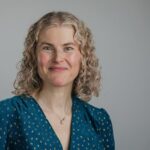
Meet the contributors
 Dementia Researcher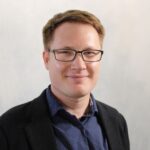
Essential links / resources mentioned in the show:
Join ISTAART [9]
AAIC Website [10]
Follow #AAIC25 [11]