 Print This Post
In this podcast we share a few selected highlights from the Alzheimer’s Association International Conference (AAIC) day two and day three of the main event in Toronto and Online, 27the - 31st July.
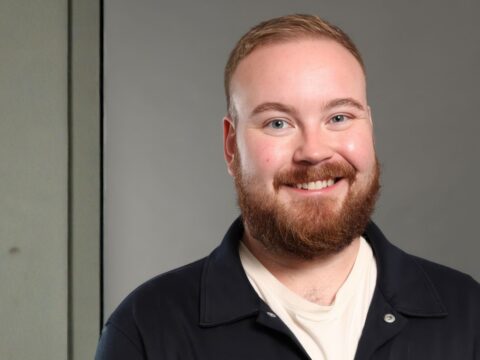
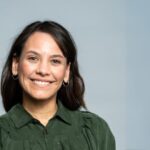
Dr Connor Richardson, NIHR / Alzheimer's Society Dem Comm Research Fellow from University of Newcastle hosts the show with special guests:
- Sára Zsadányi, PhD Student at Sant Pau Memory Unit – Neuroimaging Core and Universitat Autonoma de Barcelona
- Dr Tatiana Giovannucci, Alzheimer's Association Research Fellow
- Dr Richard Oakley, Associate Director of Research at Alzheimer's Society
The AAIC brings together distinguished basic scientists, clinical researchers, early career investigators, clinicians and the care research community at the largest and most influential international conference on dementia science. They share theories and breakthroughs while exploring opportunities to accelerate work and elevate careers.
Main plenary talks from the day came from Professor Inhee Mook-Jung Seoul National University, Korea with a talk titled "The Gut-Brain Axis in Alzheimer’s Disease: Unraveling Pathogenesis and Exploring Novel Therapeutic Strategies" and Dr Juan Fortea, Memory Unit Director — Hospital de la Santa Creu i Sant Pau, Spain with a talk titled "Alzheimer’s Disease in Down Syndrome"
Voice Over:
The Dementia Researcher podcast, talking careers, research, conference highlights, and so much more.
Dr Connor Richardson:
Hello and welcome back to the AAIC 2025 podcast series. Coming to you from Toronto, Canada, I'm Dr. Connor Richardson from Newcastle University, and I'm really pleased to be your host for today's episode, our third recording in this special conference series. AAIC always brings together a fascinating mix of perspectives, and today is no exception. I'm joined today by Dr. Tatiana Giovannucci, Sára Zsadányi from the Sant Pau Memory Unit in Barcelona, and Dr. Richard Oakley from the Alzheimer's Society. Together, we'll be reflecting on some of the standout moments from the last couple of days, sharing what's been inspiring, thought-provoking, and even a little unexpected.
Before we jump in to today's highlights, let's get to know our guests a little more. I'll ask each of you to introduce yourselves, and tell us if you've been presenting work here at the conference. Sára, would you like to introduce yourself?
Sára Zsadányi:
Sure. I'm Sára Zsadányi. I am a final year PhD student doing research on Down syndrome, individuals with Down syndrome who have Alzheimer's disease, specifically looking at neuroimaging, the manifestations of cerebrovascular disease in this population. I'm currently based in Aotearoa in New Zealand, but I work at the Sant Pau Memory Unit in Barcelona.
Dr Connor Richardson:
Awesome. Richard?
Dr Richard Oakley:
Yeah. I'm Rich Oakley. I'm the Associate Director for Research Innovation at Alzheimer's Society, so my portfolio looks after funding the research, the innovation, and research participation in trials. I haven't presented here today.
Dr Tatiana Giovannucci:
Yes. I'm Tatiana. I'm a postdoctoral research fellow at UCL, as you commented, and I work in the... I try to understand basically how biomarkers that we measure in biofluids, in the different dementias, how they end up in these biofluids and how long they take to be clear from these biofluids, which is important information for informing clinical trials.
Dr Connor Richardson:
Excellent. Here's how this works. Our guests will take turn to spotlight a session. That can be a poster, a panel that they have attended that really made an impression. We'll loop round a few times, depending on how we're doing for time, and, as always, I encourage all of you to expand, ask questions, or jump in. Tatiana, if I can begin with you, what stood out today or yesterday at AAIC?
Dr Tatiana Giovannucci:
Well, I would like to commend one of the plenary sessions from today, because I thought it was a good food for thought, quite literally. The speaker was talking about the gut-brain axis. In this case, it was... I'm really sorry for mispronouncing her name possibly, Inhee Mook-Jung from the Neuroscience Research Institute in Seoul, Republic South Korea, and she described very interesting research using mouse models and tau PET imaging. What she showed us is that there is evidence of tau depositing in the gut earlier than in the brain. She also described what the pathways that connect the gut with the brain, which include well-known the blood, through the blood-brain barrier, but also through visceral sensory neurons. What I thought it was very provoking of this talk was that besides showing us using in vitro models and these mouse models how aggregated proteins can travel through these pathways, also, metabolites from microbiota can travel through these pathways, such as lipopolysaccharide.
Obviously, these highlights how we could maybe think of this process of transport and how to block it, to block or hold disease progression. But not only that, but she also show us how we could maybe use it as an opportunity to deliver therapeutics into the brain, because it's well-known that the blood-brain barrier has been very difficult to cross for therapeutics. She showed some preliminary data and future directions of her lab, trying to use lipopolysaccharide that has been modified, in which you can attach different therapeutics, such as antisense oligonucleotides, and deliver them through these highways into the brain through the visceral sensory neurons. I thought that was very interesting for future research.
Dr Connor Richardson:
Yeah, really fascinating. Did either of you two also see that talk?
Sára Zsadányi:
I did see that talk. It's a very new concept for me, I think. I have heard a lot about the gut-brain axis, but seeing all of this onstage in front of such a large audience is really great. I don't know if I understood it all, but I will be looking into it more.
Dr Richard Oakley:
I thought what was interesting, we're hearing a lot now about the disruption of the blood-brain barrier. We've got ultrasound, we've got Brainshuttles. This is another mechanism I hadn't heard of before, but it's looking at the existing DMTs, how it can reduce side effects, how it can increase dosage into the brain, and there's four or five different mechanisms suddenly coming up. Actually, from the cancer background, we know that people's response to chemotherapies can actually change. By taking the thesis to prove from someone and transplanting it into another person entirely changes how they respond to chemotherapies, so it's a huge amount to understand that. I think we've only just started to look at it in dementia, which is really exciting.
Dr Connor Richardson:
Yeah, definitely. I definitely think you see this coming up a lot more, not even just in dementia but in a lot of diseases, especially of old age, the role the gut plays in all kinds of diseases, of chronic disease. Moving on to our next highlight, Richard, do you have any highlights from today or yesterday?
Dr Richard Oakley:
Yeah, definitely. Actually, mine was in the discussion around that diagnostic criteria. The Alzheimer's Association, they're looking at the criteria of the international working group, and it was actually the debate at the end that I found the most interesting and Jonathan Schott who went up and asked a question. Essentially, what this whole debate was around, when can you say disease has started? Sounds like the most simple question, doesn't it? When do you say actually Alzheimer's disease has started? Actually, we can't answer it, I think that's what it said in this debate. Do you link that just to biomarkers? If someone does have tau pathology or amyloid pathology, can you say disease has started? Maybe, like you can in other diseases. If you look at cancer, you don't have to be symptomatic. If you look at cardiovascular disease, again, increased cholesterol levels.
In dementia, can you say that? Jonathan went up to tell he have patients he's working with now that have elevated levels of tau amyloid, should he say they have Alzheimer's disease? Actually, the room was almost split, and it was actually split in geography. Almost the American academics almost even say, "Absolutely yes, you should be able to do that," and the European academics almost said, "Absolutely not, how dare you say they have Alzheimer's disease?" I actually flip-flopped my own opinion three or four times during the debate, because I thought each side has really great arguments for why a biomarker should be declared as having actual disease, and others declared why, right now, that probably isn't appropriate for right now. I think that's a fascinating debate. I don't think we've got an answer as to whether you can say when the disease started, but I think it's a debate that we should probably be having a lot more. I've heard it in that five or six sessions actually, but it started in that one, which I thought was fantastic.
Dr Connor Richardson:
Absolutely. How about anyone else? Did anyone else make it to that session?
Sára Zsadányi:
I didn't, but I have heard this debate quite a few times. I guess my concern is whether or not to tell a patient that they have Alzheimer's disease just based on biomarkers. I feel very hesitant to really do that.
Dr Richard Oakley:
It's so interesting, because I think with cancer, you have things like [inaudible 00:07:48] or Barrett's oesophagus that indicate you are higher risk, but they are not cancer. I think that's part of the [inaudible 00:07:54], because you say these people are higher risk but not actually say they have... It is really hard though, I completely agree, saying to a patient, "You have Alzheimer's disease," when some of them will never demonstrate symptoms in their lifetime.
Dr Tatiana Giovannucci:
I was actually going to point on that, because in the plenary session from possibly the first one, Sylvie... I don't remember her surname.
Sára Zsadányi:
Villeneuve?
Dr Tatiana Giovannucci:
Yes. She was talking and said very strongly, it's like, "I believe very strongly that if you're amyloid beta-positive and tau-positive, you should start treatment, because in five years, you're going to have Alzheimer's disease." The fact that to hearing someone so confidently saying, "We are going to treat you, because in five years, you're going to have AD," I was like, "Oh, wow. Okay. Are we that confident?" Yeah. I guess it's this definition of high risk of and knowing that the treatments that we have, we need to use them early, or the evidence is that they would work better starting early, it seemed to be.
Dr Richard Oakley:
I think that's where some of the debate happens, because obviously, in the U.S., you do have access to them.
Dr Tatiana Giovannucci:
Exactly.
Dr Richard Oakley:
Where in Europe, you don't. I think that's what, again, that's driving this debate. Where do you have access and where does that change clinical practise, and where do you not have access? Yeah.
Dr Connor Richardson:
Yeah. I'm really glad you brought that up while I'm hosting, because that's always one of my favourite things that I say. Every time you hear, you have some kind of version of that debate. The room feels completely different, whether you're at a conference on the U.S. side of the Atlantic or the European side of the Atlantic. I was just talking to someone today who said that sometimes in research, I think sometimes we lose the perspective of, but what does that mean for the patient? What does that mean to them? Yeah, I think sometimes that gets a little bit lost in this sort of debate, because you could argue, by one definition, everyone's got Alzheimer's at some point, but until you have a concrete thing for a patient, it has a completely different meaning.
Dr Richard Oakley:
I think one of the things interesting about that, to build on that, is because in the Alzheimer's Society, our biggest thing is on diagnosis, and one of the pushbacks we've had from some clinicians is this, "What can you do?" I mean, even GPs in the UK, not every GP thinks you should be given the diagnosis. They don't think it's that important to give a diagnosis of dementia, because there's no treatments. But of course, we do know it increases quality of life. You can access the care, the support. You can get things like power of attorney in place, so actually, I think it is a really important debate. At the moment, we can't even agree when you do have disease, so I think that shows you there's a real importance of getting the diagnosis, but we can't define actually what that [inaudible 00:10:23].
Dr Connor Richardson:
It's funny, we had exactly the same debate back in the days when mild cognitive impairment was in the DSM. Now, it seems like having the same debate, just using completely different phrases. Yeah, fantastic. Sára, what about you?
Sára Zsadányi:
Yeah. I guess this is what I'm going to speak about, is actually a place where you can, with some confidence, say that someone is going to develop Alzheimer's disease. I'm referring to the plenary session by Dr. Juan Fortea that happened today. In this session, of course this is a topic very close to my heart, but in this session, he really wanted to bring to this broader audience the idea that people with Down syndrome will almost inevitably develop Alzheimer's disease. This is quite an early onset Alzheimer's disease, happening around 54 years of age. What we've sort of found in the research field is that, often, clinicians aren't aware of this very ultra-high risk. Of course, in a place like Barcelona, where we have the Sant Pau Memory Unit and people are coming specifically for this reason, the clinicians are very well-aware of this.
But in my experience in other countries, like in New Zealand, this is not common knowledge. On top of that, I think that now is a really important moment in research, for researchers also, to get quite interested in using the things that we've learned from this population, sort of seeing how it translates into sporadic Alzheimer's disease, and also getting people with Down syndrome involved in clinical trials as well. That's been a major, major barrier for our field of research, so this was sort of his argument, I think, was letting the clinicians know about this ultra-high risk and also letting the researchers know that this is a population that hasn't been studied very much and should be studied on. Yeah. I always enjoy the Down syndrome research that's presented at AAIC, but in particular, seeing Juan on stage in front of such a huge audience, that was really wonderful.
Dr Tatiana Giovannucci:
He did a great job. Can I add on that?
Sára Zsadányi:
Sure.
Dr Tatiana Giovannucci:
Because I was very inspired by... Because I feel like in these conferences, as you were saying, Connor, I'm a basic [inaudible 00:12:49] fundamental researcher, so the experience of dementia is something that is very far from what I do every day. You would hope that coming to these events, you could get a bit more of a glance of that, so I'm very inspired by seeing talks from clinicians, and I would like to hear more about the experience of patients as well. But what Juan Fortea said today that I thought it was very inspiring is he was talking about a clinical trial called ALADDIN, which they want to understand how donanemab, which is an anti-amyloid therapy, might be safely used in people living with Down syndrome, because they have been... As I understood, they're not participating in trials because there is a fear that because of the vascular dysfunction that these people suffer as compared to other types of AD. Also, the high load of amyloid that they have next to the blood vessels, it might be a problem for having ARIA or other, how is it called, non-wanted effects or side effects.
He said something very powerful that was like, "Stop overprotecting this population. The fact that they are vulnerable doesn't mean that we have to tiptoe around it." We actually use, "We are scientists, so let's make a study and let's see how we could safely give access to this therapy," which, as you commented, they definitely need. He highlighted, and I'm going to finish with this, how AD is the major barrier to life expectancy for people living with Down syndrome, and so it's definitely... I found that very inspiring.
Dr Richard Oakley:
Yeah, I thought Juan gave a great talk. It isn't an area I know. I thought he was very passionate, very articulate. I think, also, he made the really great point that the back translation of information, understanding how Alzheimer's disease progresses in people in different forms, you can actually translate it back. You can understand for the wider population actually what it is. It's not just people with certain syndromes. You think, "Oh, maybe we are only going to help them." Actually, there's wider information to be gathered from people. I thought that made absolute sense. Why shouldn't people be able to get involved in clinical research? I mean, it's in the UK, it's in NICE guidance. Everyone diagnosed with any form of dementia should have a conversation about getting involved in research. We know it doesn't happen for adult populations, so I can imagine someone with Down syndrome, there's extra barriers that clinicians can put in front, so I thought it was a fantastic talk. Really good.
Dr Connor Richardson:
Absolutely. I think sometimes they're the best talks to go to. You might not be aware of all the science, but sometimes people speak so well and passionately about what they're really passionate about, and it just gives you a completely new perspective. Does anyone have any other highlights that they've come across in the past day or two?
Dr Richard Oakley:
Yeah, I've got one around... there was a session on towards a new era of anti-amyloid antibodies, and this is we talked about one mechanism of [inaudible 00:15:45], navigating the blood-brain barrier, but the other one is this Brainshuttle technology. I think one of the really interesting is they were taking a drug, gantenerumab, that Roche kind of presented at CTAD I think in San Francisco now two years ago. Actually, it was a trial that failed. They didn't reduce the amyloid levels down to high enough, they didn't see any cognition benefits. But after that, actually, Bart Strooper came out with a paper, a hypothesis saying it's actually how much amyloid you can get down to how quickly that really, really matters, and so they're taking gantenerumab and putting it in with a Brainshuttle to try and see actually, if you combine these and you can remove amyloid down to the 24 centilitres, it seems to be this magic number, quicker.
Is it actually possible then to see benefits from people? They're starting a couple of phase 3 trials on that too, starting in end this year, which I think is really exciting, that you're taking an old drug that we haven't thrown away. We understand the biology a little bit more, we understand the drug delivery targets, didn't quite happen, we've gone back, we looked at that, and they're trying new trials now, so I think it's really exciting, but they're also doing a pre-symptomatic trial. We know this is the thing. The earlier you do it, we know that's definitely better, so the fact that we've been starting a phase 3 trial on almost pre-symptomatic people with this technology, I think that shows you the progress in the field.
I mean, 10 years ago, we didn't really have blood-based biomarkers. We weren't measuring p-tau217 or 181. We didn't know what they were. We certainly were looking at amyloid 40/42 ratios. We definitely didn't have DMTs. Now, we're debating which one of these we really want to go into. Can we do finger spots, not just blood tests? Can we do brain shots and can we do pre-symptomatic? I think if you just look at the progress that's made, we can be frustrated, but we should also celebrate that. This is what we're now talking about, which I thought was fantastic.
Dr Connor Richardson:
Absolutely. Well, thank you very much. They were all brilliant highlights.
Let's go around one more time and get a few more highlights.
Sára Zsadányi:
Sure. One thing that I wanted to highlight is some of the work being done by the PIA, Professional Interest Area of ISTAART, from... Sorry, the PIA itself is the partnering with research participants, I believe. I could be wrong about that, but they have done quite a few different sessions throughout. One thing that they did today actually during lunchtime was one of the skills workshops, which was absolutely brilliantly-run. I just wanted to talk a little bit about some of the things that I learned in that experience. The really unique thing, I think, about the skills workshop, is that they brought in to each table a individual who is either living with dementia or one of their care partners. In some cases, both people were there. I thought this was absolutely brilliant, because the people running this session were these people with lived experience of dementia.
I think sometimes, I don't know, as a mirror imaging researcher, I do spend a lot of time behind the computer, very rarely get to meet any of patients that we are using the data from, and so it was really brilliant to actually have quite a few of these people in my environment to actually speak with. I think one really major takeaway that I came away from the session with was that people with lived experience of dementia want to be treated as normal people. They spoke about this idea of developing empathy rather than sympathy, so not to look down on someone who has dementia and feel bad for them but to actually speak to them as a research partner, someone who's on the same level as you who's got an active investment in the research that you're doing and wants to make sure that the research that's being done is actually going to affect people around them that are living with this awful disease.
I think this was a really, really brilliant session. If you are around at AAIC and you have the opportunity to go to these skills workshops, I highly recommend it, and also to keep in mind that ISTAART does run a lot of these different workshops and things throughout the year. AAIC is not the only place for it. But yeah, that was a wonderful skills workshop.
Dr Richard Oakley:
Yeah, I think the insight you can gain from the people living with or affected by dementia is amazing. I mean, one of things that we do at Alzheimer's Society is when you get a grant from us, we pair you up with someone with lived experience and we try and support you with a PPI. Because even the most basic researchers that think maybe it's not applicable, you always gain so much, because obviously, these are the people you are doing your research for, whether it's directly working in the clinical setting or in the basic setting, and they want to play a part, they want to play a role, and they can add huge amounts of value. I didn't realise they were doing those sessions there, but it sounds fantastic. It sounds really enjoyable.
Dr Tatiana Giovannucci:
I actually have done some, not only public engagement, but knowledge exchange with people with lived experience. As a fundamental researcher, like you were saying, I would recommend everyone to get involved, because as you say, first of all, their creativity is unmatched, and so you get so inspired by... If you see them going through this uncertain, iterative process of finding a way to live with this new condition and then you find yourself stuck in your own research, there are so many things you can learn from them on how to tackle the challenge of going through an uncertain process, such as ResearchEase.
There is this potential to exchange ways of working, but also, it makes you such a better researcher. You think fundamental research, you think, "Oh, I was afraid that they might not care or they might not see the value of what I'm doing because it's not directly translatable to the reality." Instead, what I find is such support, such motivation to understand, and also how I actually understand what I do better by being able to communicate it in a way that everyone can interact with. Yeah, 100% agree, that sounds like a great workshop.
Dr Connor Richardson:
No, I absolutely agree, and I think it's one thing the Alzheimer's Society has been doing for a long time now. My PhD was Alzheimer's Society-funded, so back in 2016, I was paired up with two lived experience mentors, and it completely changed how I... Like you say, especially how you communicate your research.
Dr Richard Oakley:
Yeah. Anytime we fund someone, they always have people living with disease or affected by disease as part of the panel. I've got to say, sometimes those questions are the hardest, because you know your field as a researcher, that's what you know, but actually, it's the left field, really creative questions that you've never thought of before. I've definitely seen the lived experience network ask the questions. They've tripped up a researcher in their grant application more times than anything else, so you can't take that lightly, definitely.
Dr Connor Richardson:
No, absolutely. Fantastic. Tatiana, anymore?
Dr Tatiana Giovannucci:
Yeah. I also had a highlight that instead of from being one of the research sessions, I actually bumped into it in the product theatre. This is part of the exhibition hall and then some companies do explain what they do. In this case was a presentation from the Global Neurodegeneration Proteomics Consortium. Basically, they use a technology called SomaScan proteomics, which allows you to measure like 10,000 of proteins or more at the same time from samples. I mentioned that I study biomarkers and we use proteomic techniques, and one challenge that you encounter in these studies is that, usually, you have a cohort of samples from patients that are available at your university or whatever. You publish the paper, make the data available, and what happens is that you don't get an insight of how that research translates to other places, or geographically, or to other populations, because it's very difficult to match or harmonise the different datasets that come from different places.
This consortium, I was impressed by the efforts that they're doing at the world. They have more like 13 institutions using this SomaScan, and they are doing a lot of platform in which they harmonise the data and they make it freely available for people to process. If you can imagine how powerful this is, is you usually find biomarkers by comparing control versus disease, and then you see the ones that are significantly changed, and then you believe that. You say, "Okay, I'm going to replicate these results and these are the cohorts." Usually, you have a validation cohort and that's it. But using this dataset, you can have 7, 8, 9, 10 validation cohorts using the same technology, so I think it was very... Yeah, the potential for this to find in novel biomarkers and novel disease-related molecular pathways is unmatched, so I was very impressed by these efforts.
Dr Connor Richardson:
Wow, sounds interesting.
Finally, before we close, let's zoom out well. Are you noticing any emerging themes at this year's conference or any that affect your own research?
Sára Zsadányi:
I would say I have seen a bit of a theme of more focus on the non drug-related interventions that you can do, especially with the information from the U.S. POINTER coming out yesterday and scattered around in many different sessions. There's a lot more focus, I think, this year on the different things that we can do instead of just the medication that we're all hoping and praying for. Yeah.
Dr Connor Richardson:
Yeah, absolutely.
Dr Richard Oakley:
Yeah, mine's building a little bit on that. I think the diversity of the people that are taking part in studies has historically been very, very poor. I think if you look at some of the initial trials that were run, when we're looking back, they're still poor, but when you look at some of the new studies coming out, I think the POINTER is a great example. They did so much work in the community to make sure they got as diverse a group of people to come in and benefit from the research as possible. I think we are beginning to see a shift of that. I think we're talking about it more, which is great. We're still not there, there are still a lot of studies out there and not as diverse as they should be, but I think we're beginning to talk about it. We're begin to see more studies that are more diverse, and they are more meaningful for that. I think that's a really great shift, and I hope that will continue in the couple years.
Dr Connor Richardson:
No, absolutely.
Dr Tatiana Giovannucci:
I've been in AAIC for the last three years, and I've noticed big presence this year of sex differences that I didn't see before. This, you probably touch on all the podcasts, because it wasn't specifically today, but there was whole sessions understanding the impact of menopause, the impact of hormone therapy into the risk of developing dementia. But also, one of my favourites was to see a GWAS study looking at sex differences, because every time in Manhattan plots, I always wonder why there are 22 chromosomes, where are the X and the Y chromosome? Everyone says, "Oh, it's very difficult to study them," but actually, we start to see that people are going in that direction, so I feel like that's very important. Yeah.
Dr Connor Richardson:
Yeah, absolutely. Definitely something that I think is going to become bigger and bigger at AAICs throughout the future. That wraps up today's podcast. A huge thank you to Tatiana, Richard, and Sára for joining me today and sharing such insightful reflections. We'll be back tomorrow, which will be our final episode from AAIC 2025, so if you haven't already, subscribe to the Dementia Researcher Podcast and follow us online, and don't forget to check out the Dementia Researcher YouTube channel, where we're posting daily short interviews with presenters and delegates throughout the week. I'm Dr. Connor Richardson. Thanks for listening and goodbye from Toronto. Bye.
Voice Over:
The Dementia Researcher podcast was brought to you by University College London, with generous funding from the UK National Institute for Health Research, Alzheimer's Research UK, Alzheimer's Society, Alzheimer's Association, and Race Against Dementia. Please subscribe, leave us a review, and register on our website for full access to all our great resources. dementiaresearcher.nihr.ac.uk.
If you would like to share your own experiences or discuss your research in a blog or on a podcast, drop us a line to dementiaresearcher@ucl.ac.uk
Did you know... you can find our podcast in your favourite podcast app on mobile devices, and our narrated blogs are also available as a podcast.
The views and opinions expressed by the host and guests in this podcast represent those of the guests and do not necessarily reflect those of UCL or Dementia Researcher
 Alzheimer's Society
 Dementia Researcher

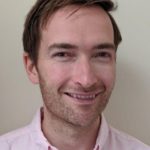
 Dr Connor Richardson