 Print This Post
Globally, women are twice as likely as men to experience depression and anxiety, and the risk peaks at moments of hormonal change: postpartum, the luteal phase, perimenopause. Why?
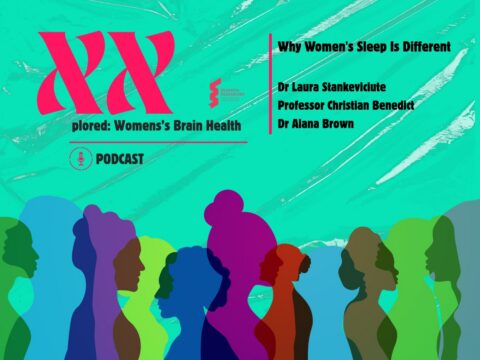
In this episode of XXplored, host Dr Laura Stankeviciute (University of Gothenburg) is joined by Professor Vibe Gedsø Frøkjær, a leading researcher on serotonin and sex hormones at the University of Copenhagen, and Franziska Weinmar, a psychoneuroendocrinology PhD researcher at the University of Tübingen and host of the Let's Talk About Women podcast.
They get into the biology behind hormone shift sensitivity, what oestrogen actually does to the serotonin system, and why the gut-brain axis might matter more for women's mental health than most clinicians appreciate. They also tackle hormonal contraception and depression risk, why suicide statistics look so different by gender, and where the field still has big gaps to close. A lot to chew on, with practical implications for counselling and care.
Key takeaways:
- Women are twice as likely as men to experience depression and anxiety, with risk clustering around hormonal transitions.
- The serotonin system is built to respond to sex hormones, which makes it a likely route by which hormonal shifts affect mood.
- Women differ in how sensitive their brains are to hormone shifts, and that sensitivity helps explain why some experience mood symptoms and others don't.
- The gut-brain axis is a real frontier for women's mental health, and may open up new treatment options through drug repurposing.
- Hormonal contraception works well for most women but carries a small heightened risk of depression that clinicians should counsel on more openly.
- Emotion regulation is a trainable skill and a useful clinical target across hormonal transitions.
- Gender differences in suicide reflect both how distress is expressed and how the care system recognises and responds to it.
Ask the researchers
Hormones, serotonin and women's mental health
Seven short answers from this episode, with Professor Vibe Gedsø Frøkjær and Franziska Weinmar.
01Why are women twice as likely to experience depression?
Globally, women are around twice as likely as men to experience depression and anxiety, and the risk clusters around hormonal transitions — postpartum, the luteal phase of the menstrual cycle, and the perimenopause. That pattern points to biology as well as social factors. Serotonin cells carry receptors for oestrogen and progesterone, so they are built to respond to hormonal change, which makes them a plausible route by which those shifts affect mood.
02Does hormonal contraception cause depression?
For most women it does not, but there is a small heightened risk of a depressive episode for some. Professor Frøkjær notes that the risk appears largely independent of the type of contraceptive and the route it is delivered by, and that registry data show a dose-dependent risk with hormonal IUDs. Around 80% of women with access will use hormonal contraception at some point, so the priority is better counselling and monitoring rather than avoidance.
03What is hormone shift sensitivity?
It describes how strongly an individual brain reacts to a change in sex hormone levels, rather than to the absolute levels themselves. Women are not equally sensitive. In Professor Frøkjær's model, those who developed mild depressive symptoms after a short-term oestrogen manipulation also showed larger shifts in their serotonin transporter levels. Women can report this sensitivity themselves, and those who describe mood instability when starting contraception show a higher risk of perinatal depression later.
04How does oestrogen affect serotonin?
Serotonin cells sit in the brainstem and project across the whole brain, and they carry receptors for oestrogen and progesterone. When oestrogen rises and then falls, sensitive brains appear to raise their serotonin transporter levels, which dampens serotonergic signalling. Separately, women using combined oral contraceptives show lower levels of the serotonin 4 receptor — a pattern also seen in unmedicated depression, and one that may reduce the brain's buffer against future risk.
05Can gut health affect women's mental health?
Most of the body's serotonin is found in the gut, and the serotonin 4 receptor sits in high density in both gut and brain. Drugs developed to treat irritable bowel syndrome and chronic constipation by stimulating that receptor also appear to have procognitive, fast-acting anti-anxiety and possibly antidepressant effects, and are now being investigated for repurposing. Evidence on probiotics and supplements lags well behind what is already on sale.
06Can you train emotion regulation?
Yes. Franziska Weinmar defines emotion regulation not as suppressing feelings but as monitoring, recognising, understanding and responding to them, then flexibly adjusting to what a situation requires. Difficulties with it are transdiagnostic — involved in the onset and the maintenance of conditions including depression and anxiety. Because it can be trained and improved, it is a useful therapeutic target across the perinatal period and the menopausal transition.
07Why do suicide statistics differ between women and men?
Women are more likely to experience suicidal thoughts and to attempt suicide, yet across the Western world more men die. Franziska Weinmar suggests distress is often expressed differently: more internalising in women, which is more visible to the care system and prompts help-seeking, and more externalising in men, alongside masculinity norms that delay it. She cautions that this does not mean the system serves women well — faster diagnosis can bring its own risk of medicalisation and overlooked conditions.
Voice Over
Welcome to "XXplored: Women's Brain Health," a Dementia Researcher podcast exploring the many factors that shape women's brain health across the lifespan.
Dr. Laura Stankeviciute
Welcome to another episode of "XXplored," and today we'll be talking about the biological model, hormones, serotonin system, and how that intersect with women's brain health.
Dr. Laura Stankeviciute
My name is Dr. Laura Stankeviciute and I'm a postdoctoral research fellow at the University of Gothenburg, where my research focuses on understanding sleep role in preclinical stages of Alzheimer's disease and also specifically looking into female vulnerabilities across the lifespan and how they intersect together with sleep to augments women's vulnerabilities for Alzheimer's disease. We know that globally women are twice as likely as men to experience depression and anxiety. And what makes this particularly interesting is that many mood disorders actually cluster around periods of hormonal change.
So, for instance, during pregnancy or postpartum, we have disorders like postpartum depression, but also even around the menstrual cycle, especially in the latest stages of the menstrual cycle around the luteal phase, we have premenstrual dysphoric disorder and also some more disturbances raising prevalence during the perimenopausal transition. So those patterns may raise a few very important questions. What is the reason behind these sex differences in prevalence? Are these specifically related to psychological and social constructs, or potentially is there any biological meaning behind it? Are the brain systems that regulate mood, stress, and emotions different between males and females?
So, to help unpack these questions, I'm joined today by two great researchers working at the intersection of women's brain biology and mental health, Professor Vibe Frokjaer and Franziska Weinmar. Professor Vibe Frokjaer is a professor at the Department of Neurology and Neurobiology Research Unit at the University of Copenhagen Hospital. And Franziska Weinmar is a PhD researcher at the University of Tuebingen in Germany. She's also part of the Women's Mental Health Across the Reproductive Years group, which is a collaboration between Tuebingen University and Uppsala University in Sweden.
And she's also hosting her own podcast dedicated to women's brain health and mental health specifically, "Let's Talk About Women." So welcome to the episode of "XXplored." It's my great pleasure to have you both.
Professor Vibe Frokjaer
Thank you very much.
Franziska Weinmar
Yes, thank you, Laura. I'm very excited for the recording.
Dr. Laura Stankeviciute
So, before we actually go into the topic, I would like to ask a little bit more about your background and what drew you to dedicate your life's work for women's brain health, specifically for the mental health and the vulnerabilities that women face. So maybe, Franziska, you can start with this one.
Franziska Weinmar
Yes, as you nicely introduced, I am an early-career PhD researcher in psychoneuroendocrinology. So that's really intersection of the mental health, the hormones, and the brain. And my work focuses on women's mental health, specifically on emotion regulation during hormonal transition, specifically the perinatal period and the menopausal transition. And here I'm also, of course, more curious about the whole range of social-effective functions in these periods, especially as I have been fascinated quite early on, as I said, by the interactions between brain, hormones, and behaviour. But beyond these personal interests, what also drives me as a researcher quite much is the striking gap.
So, we know, of course, that women are half of the population, but only about 0.5% of neuroscience research focuses on women's mental health. So, my motivation is to close that gap at least a little bit and understand the vulnerability and resilience to mental health changes across these transition periods.
Dr. Laura Stankeviciute
That is a very beautiful motivation, and I feel like obviously when we look at the statistics, especially in the neuroimaging research and showing those, like, less than what percent prevalence of the publications, that really serves as a great motivator. And how is it for you, Vibe? Obviously, you are, like, an expert and one of the pioneers in this field, were the motivation's similar to the younger generation like us or did you have different stories that brought you to the field?
Professor Vibe Frokjaer
Yeah, I think I have maybe, yeah, some of the same motivation but also my own entrance into the field. So, I come from being really driven by curiosity towards risk and resilience mechanisms in order to understand better direct ways by which we can hope to prevent and also create more robustness to protect brain health. So, I've worked actually with different models, so familial risk, personality risk factors for developing depression and also kind of biological phenomena, vulnerability to seasonal shifts between winter and summer.
And at some point I got super curious about, you know, how we could try to translate the epidemiological evidence as you nicely presented, that there's a huge difference in risk for developing depression between women and men, particularly pronounced in the reproductive years and also coming seemingly quite closely related to hormonal transition. So, my curiosity came from simply thinking of this as a real window of opportunity to model and understand very, very basic and very important mechanisms by which the brain integrates hormone information and how that may be critical for brain health and disease and maybe also even treatment mechanisms. So, I was just...
Yeah, my drive came from thinking about the female brain as a fantastic model to study really important mechanisms that may make a difference, and then also keep insisting on trying to translate this to patient care, but very mechanistic, curiosity driven.
Dr. Laura Stankeviciute
I think there's such a huge interest in the mechanistic studies, specifically lately, what we are seeing with hormonal therapy for menopause. And I feel like we are definitely lacking those models, whether it comes from, like, animal, but actually even in vivo in humans. And I feel like we should definitely shift from those epidemiological studies that do provide us more of kind of a bigger picture, but the granular research that you are doing is very, very important. So, thank you so much for joining this field and having that motivation to translate the science from epidemiology to the actual mechanisms. So, let's start with the biology.
We often hear about serotonin being quite oversimplified as a feel-good chemical of the brain, but it's really kind of the main central motivator that regulates mood, stress, responsiveness, and also emotional processing among other functions of serotonin. And its relationship with sex hormones is probably one of the most fascinating, but yet, not always that much appreciated piece of women's mental health puzzle. So, I know that you, Vibe, have dedicated a lot of work to serotonergic system and it's signalling. So, could you explain why serotonin plays such a huge role in regulating mood and emotional resilience?
Professor Vibe Frokjaer
Yeah, so, you know, the brain is a super complex organ and has to integrate a lot of information from the environment and from the body to work in healthy manners and organise well. Give an angle to this, we have around 100 billion cells that has to organise and work to maintain brain function and health. And one of these internal organisation systems or communication systems is this set of specialised cells that we call the serotonin cells. So, they sit with their core neuronal bodies in the brain stem, and they project and help organise and internally communicate with actually the whole brain. So, we have a variety of functions that the serotonergic system can modulate and also be responsible for.
And as you said, many of the domains where we know that serotonin play an important role are exactly domains that are heavily affected in depression. So, for any mechanisms by which depression can be triggered, we would always be very interested in whether it affects or works via the serotonin system. And also, the serotonergic cells, they express or they equip themselves with receptors, so they are built to be sensitive to, for instance, estrogens and progesterone. So, it's an obvious area of interest, and has been for me, to try to understand mechanisms by which sex steroid hormone changes or shifts can affect brain function in a way that could be a plausible link to increased risk for depression.
Dr. Laura Stankeviciute
Yeah, so you mentioned already that serotonin and oestrogen specifically are coupled quite closely together. And obviously from your research, could you tell us a little bit more about how this oestrogen and serotonin communication may influence how in the brain that translates to the psychiatric vulnerability such as depression and anxiety?
Professor Vibe Frokjaer
Yes. So, I've been developing a kind of preclinical human model where I use some pharmacological tools to make a transient short-term manipulation with, in particular, oestrogen. So, you know, with these pharmacological tools what we can do is to isolate oestrogen contributions to some brain functions or brain signatures of oestrogen shifts. And I mean natural oestrogen.
And what I observed in that model, which was a very clean model where I had manipulation or placebo-controlled, and I had women characterise before and after the intervention, I could see that women who actually developed some degree of subclinical depressive symptoms, they also seem to have more changes in a feature of the serotonin system called the serotonin transporter, which is a regulatory feature in the system. So, if you shift from low levels of serotonin transporter in the synapse, where neuronal cells communicate, to higher levels, then you'll kind of have a more break or compromise a little bit the serotonergic signalling. And that's exactly what I saw. So, I had women who were actually not super tolerant to the sex hormone manipulation.
And in that group, compared to the placebo group, they seemed to kind of, by the oestrogen intervention, raise their serotonin transporter levels. And we think that might have to do with direct, because it's a model that first increases oestrogen and then it drops. So, we think there's some maybe induction of gene transcription of serotonin transporters and that aligns with what others have seen in preclinical models, in, you know, rodent studies and then maybe that carry over to also the withdrawal phase. So that's kind of one way that a brain can be more sensitive or get slightly out of balance serotonergically for a bit longer time than other brains.
So, we think of this little bit as kind of estrogen-shift sensitivity because seemingly we're not all equally sensitive to such a push in sex hormone fluctuations.
Dr. Laura Stankeviciute
Very interesting. And does this oestrogen sensitivity shift also happens across different stages of the menstrual cycle or different stages across the lifespan for females? Do you see any evidence when it comes to, like, specific periods: pregnancy, postpartum or what could you talk about this?
Professor Vibe Frokjaer
Yeah, I did not myself model it exactly in, you know, natural existing models of pregnancy to postpartum for, yeah, a lot of reasons. But a similar pattern has actually been observed in women who are more vulnerable to react with effective symptoms across the menstrual cycle. So, we see also some difference in women who have kind of some degree of what we call PMDD symptoms, which is this short, pretty intense depressive-like symptoms in the luteal phase of the menstrual cycle. So, they also seem more vivid in their serotonin transporter patterns than women who are more tolerating their own cycles better, so to speak.
We have also another very interesting serotonergic observation, which comes from comparing women who start on a combined oral contraceptive with women who are natural cycling. So, when you start on a combined oral contraceptive, what you actually do is really to suppress the natural HPG axis or the natural rhythm of maturing eggs and ovulating and that's why you cannot get pregnant. So that's the purpose of it. So, you have this state where you actually suppress quite heavily natural oestrogen and then you add some synthetic oestrogen and also some synthetic progestogen back, but it does not necessarily have the same effect in the brain.
So, what we see in the combined oral contraceptive suppression is also lowering of some of the features of the serotonin system, which is on the receptor side. So, all the cells that has to receive serotonergic information have actually quite a lower level of a special receptor called the serotonin 4 receptor. If you are in this kind of suppressed phase or low-estrogen state of using a low-dose estradiol phase of using oral contraceptives. And we have actually seen that in depressed group, unmedicated depressed groups compared to other controls, we also see a lower serotonin 4 receptor.
So we think it's not necessarily an advantage to be running low on serotonin 4 if you want to have a resilient brain, which is, you know, far away, you have a good buffer zone until bumping into maybe a depressed state, even though it does not explain all, it's probably some important resilience feature not to run really low on serotonin 4. So that's another actually quite striking observation. And one thing which is striking about is that all these women that we have data from, you know, they're perfectly healthy, so they have some way of tolerating even a pretty low level of serotonin 4 receptors similar to other people who are actually in a depressed state.
So, this also talks about, you know, the big buffer zone and the female brain being actually able to adapt to quite a lot of things, which I think is also a very good reason to study, you know, female brains in themselves.
Dr. Laura Stankeviciute
Yeah.
Professor Vibe Frokjaer
But then yet again, we need to be curious about it because what if then later in life we bump into other risk factors that then altogether unfortunately can trigger depressed episode, then maybe it matters still that you have been actually, you know, that factor of serotonergic surplus is maybe lowered. So, I think we need to think about these things also in terms of developing optimization of precision medicine treatment for depressed state in any case.
Dr. Laura Stankeviciute
Yeah, I think this is very, very interesting observation and perhaps, like, if we kind of zoom out of, like, one period of life and we consider the whole lifespan, as you mentioned correctly, that could be this kind of, like, two phases where at one part in the lifespan it is kind of more of a resilient and a buffer, but maybe later on it can actually retaliate back and as a boomerang effect can actually bring more adverse effects. And this is actually where I would like to bring Franziska to the conversation 'cause we have been now talking more about the kind of biology, even like touched upon specific serotonin receptors and also the genetic factors, but the other very important layer is obviously the behaviour.
So how does brain regulate emotions during these transitions of females lives, such as pregnancy, menopause and also around the menstrual cycle. And specifically, you have done quite a lot of research on the concept of emotion regulation, which could sound relatively simple, but once you dig into it, I think it becomes a bit more complex. So, to those listeners who have not been familiar with the concept, how could you define emotion regulation and why do you think it's so important for mental health?
Franziska Weinmar
It's always good to start with the definition, I guess. And here I think we can define emotion regulation as the ability how we manage or deal with our emotions. And that does not mean suppressing only just very many emotions, but really about how we monitor, how we recognise, how we understand and respond, then, to our emotions and eventually, then, also if we can or how we can change our emotional reactions. So again, it's not about suppressing the feelings but really about flexibly adjusting emotions to what a certain situation requires. And of course, as you can imagine maybe that emotional regulation is then an ability which is quite crucial for coping with stress, with relationships or everyday challenges.
And when people have difficulties now in emotion regulation, they might be more vulnerable to many mental health problems, which is why emotional regulation is also considered a transdiagnostic factor across disorders like depression or anxiety. And also, more and more research actually recognises that this might be quite relevant during major hormonal transitions, such as pregnancy or menopause when there are not only physiological but also psychosocial changes and adaptations.
Dr. Laura Stankeviciute
Okay, so very interesting. You mentioned this word transdiagnostic. So, what does that actually mean to be a transdiagnostic feature?
Franziska Weinmar
So, what we observe is that emotion regulation as a symptom or as a factor when someone has difficulties with that is involved in many different kind of disorders. So, what we say transdiagnostic over different disorders that we can recognise that there. And really what the research also shows here is that they're not only involved in the onset but also in the maintenance of the different disorders.
Dr. Laura Stankeviciute
Okay. Now, I get the clearer picture. And then how do the patterns of emotion regulation differ between early life, midlife, and perimenopause transition? Do we see any differences or the emotion regulation seem to be quite the same and is it more like intra-individual variability rather than across the life periods?
Franziska Weinmar
That's a very interesting question. I am not aware of studies that follow emotion regulation now across the whole lifespan. We investigated emotion regulation now in distinct periods in the female lifespan, the perinatal period, and then a menopausal transition. I would say, of course, there might be inter-individual differences in emotion regulation from what your trait level is, how good are you in emotional regulation. But the good thing about emotional regulation is also that you can train it and that you can improve it, if you want to say so. And that makes it also a strong factor also in therapy for example, to really work on that.
Dr. Laura Stankeviciute
This is very interesting. I like that obviously these innate factors and abilities such as emotion regulation can still be trained and they're malleable and they're possibly improved. So I was thinking about kind of the complex interplay in between the emotion regulation and the serotonin system and I would like to actually circle back to the serotonin system because even though we kind of think of serotonin as a brain neurotransmitter, we know that the majority of serotonin is actually found in the gut. So, I was quite curious about where does the gut-brain access fit into the story of serotonin and women's mental health. What do we see in research currently? And I would like to now pass on to Vibe for this question to begin.
Professor Vibe Frokjaer
Yeah, I mentioned before the serotonin 4 receptor and that is actually a good anchor to try to talk about the gut-brain axis, yeah and how the serotonin system is also involved in brain-body connections that are important for whole-health perspectives. So, the serotonin 4 receptor sits in high density in the gut but also in the brain. And we know that certain drugs that are actually developed to help, for instance, irritable bowel syndrome or chronic constipation by actually increasing the motility of the intestinal system also has apparently a brain-related effect.
So, for instance, those same drugs, if you give them as a pharmacological tool, they have procognitive properties, also fast-acting anxiolytic properties and perhaps also antidepressant properties. So, we are actually now embarking, and we have financing for finding out whether those serotonin 4 receptor stimulators, that we can repurpose drugs that I just mentioned, to understand whether they also would maybe matter to optimise antidepressant treatment maybe in subgroups of women. So, we think there's some female-specific factors that is shared between depression risk and risk for gut problems that may be quite important to also understand sex difference in such mechanisms.
Dr. Laura Stankeviciute
This is very interesting and I love kind of the drug-repurposing angle because we are definitely seeing that across the board of different conditions from Alzheimer's to women's health. And you mentioned, obviously, the kind of the microbiome, the gut, and apart from the drugs, the therapeutics, there's a huge field of probiotics, prebiotics, supplements, and all of these talks about gut health in terms of how we can enrich our ecosystem of good bacteria. But is there, like, any research on how those elements could actually help or impact mental well-being? Is there something happening in this field? I see, like, Franziska nodding, so maybe you have some thoughts.
Franziska Weinmar
I was just having the same question. I think there's a lot of things that I think that sometimes the field around us is emerging faster than research can come back with it. So, there is a lot of things going that you can buy that you can take. And also, probably a lot of frustration from the side of the women that have symptoms or are suffering and there's not maybe no treatment. So, they're looking out for supplements, for probiotics, for prebiotics, and then research is just lagging behind and to investigate what is actually going on and is it helpful and what is the mechanism behind it.
Dr. Laura Stankeviciute
Vibe, are you aware of anything or is it more of a kind of
Professor Vibe Frokjaer
Yeah, I'm aware of different initiatives. So, we have some suggestions and proposals pending on also looking into dietary factors of healthy menopausal transitions and not so much probiotics but more simply healthy diets that are kind of, yeah, some of our gut bacteria thrive better on than others, et cetera. So, I think we should think of any way to support resilience, and I think making gut systems function better, I would be super surprised, if it would not also translate into positive effects for brain health.
Dr. Laura Stankeviciute
Yeah, I feel like it's very interesting because the gut is kind of becoming another cool organ that people are now diverting a lot of attention and research and we have different diets changing from week to week. But I would also like to kind of come back to one of the topics that we have mentioned at the beginning of this podcast, which is the contraception because this is such an important part of women's reproductive life and a lot of women worldwide are using oral contraception, but there's still, like, quite a lot of unknowns obviously and there are a lot of side effects that are associated with contraception use.
So I would like to start this theme with asking you, Franziska, what your research and the research you have seen on contraception use talking about these adverse symptoms such as depression, and do you know what could be the potential mechanisms that such vulnerabilities are expressed in some women but not in others? 'Cause not all of the women that are on oral contraception will experience adverse symptoms.
Franziska Weinmar
Yeah, I think that's a very important point to make and that is that hormonal responses or responses to hormonal contraceptives can vary very widely because the women as Vibe nicely also lined out is that they differ in hormonal sensitivity and also personal health history and that might make some women just more vulnerable to mood-related side effects than others. And definitely we should not forget that there are other factors that influence whether or how a woman will react to hormonal contraceptives differently. For example, what is the type of contraceptive that is used, what is the dosage someone is using? What are individual factors such as age or metabolism, body weight, lifestyle, or the relationship that that person is.
And then of course also other physical and mental health factors. And I would really hope that at some point we in research, but then also clinical practise, we have the ability to identify these factors early on so we can provide a more personalised counselling and contraceptive choice. But of course, we need more research to pinpoint that.
Dr. Laura Stankeviciute
I would like to continue on the personalised part of what you commented. We are also seeing now some companies and some medical institutes that are developing or working towards developing personalised hormonal contraceptives in order to prevent those adverse side effects. So, I would actually like to ask Vibe now, do you know of such initiatives and what are potential kind of mechanisms by which they try to inhibit the result or the effect that is unwanted on women's brain health?
Professor Vibe Frokjaer
Well, I don't know the exact companies and what strategies they develop. I know of just one strategy which has been a combined oral contraceptive, so kind of what we call the pill, but a type that actually has natural oestrogen in it instead of synthetic oestrogen that probably is not, you know, it's not taking care of the loss of the natural oestrogen in terms of brain function. And seemingly I think, yeah, the results I've seen so far is probably pointing towards that that can be maybe fewer side effects. But we have seen, for instance, in...
Well, first I want to say that I totally agree with all that has been said, that we need to secure access to safe hormonal contraceptives because hormonal contraceptives are very important for many of us in at least some periods of our life. And that is illustrated simply by the fact that if you have an economy and access to it, around 80% of women will use it at some point in their life. So, we have to be super interested in how they're used safe and safely, and we have had tradition for that because we know how to individualise counselling in terms of advising women who have a high risk of embolias and coagulation of the blood.
We know who should maybe not use them and we should also be better at understanding in terms of the safety concerning not developing a depressive episode. And what we've seen is that, as Franziska also said, that probably different types of progestogen also play a role. So, we actually have really large dataset on population level from, for instance, Swedish health registers and also Danish health registers where we can study these rare phenomena, right? So, we can also get an impression about which are types and combinations of combined oral contraceptives we should maybe try to move towards. Also, we've seen that there's actually a dose-dependent risk for depressive symptoms associated with hormonal IUDs.
And that's quite interesting because these are compounds actually delivered locally. And it's interesting that there's this dose-dependent risk. So again, there can also be something about dosages, but what is a little bit annoying in a way is that it's seemingly independent on route of administration and independent on type of hormonal contraceptive there is some heightened risk of developing a depressive episode at least for some women. So, what we also need to understand is more like who might those women be and could we use their experience and self-reported capacity on their, yeah, experience with sex hormone shift, like periods in their own life. Could we use that to inform our counselling?
I'm very interested in that, and Franziska did a great paper actually along those lines showing that women can self-report, in a way, hormone shift sensitivity even retrospectively. So, if you ask women like, "What are your experiences "with starting a hormone contraceptive?" If they say, "Well, "I did actually experience some mood instability," they also show to have a higher risk of developing, for instance, a perinatal depression. So that's like a natural horal shift. So, I think an important lesson learned is that women can actually self-report on these issues. So, we should be more curious to use that in our work and our clinical care, I think.
Dr. Laura Stankeviciute
This is a very, very important point. I think the counselling and actually listening to women, 'cause I do feel like being a woman in the healthcare system, sometimes the, let's say, how to put it nicely, sometimes you just don't get the time to be heard. And I feel like sometimes the physicians simply have a very short time to dedicate to you and they just have this template whereby they just provide you some treatment options.
But actually, listening in and specifically what you mentioned about the potential pre-screening framework, even where we ask retrospectively on sensitivities and on experiences to hormonal contraception could actually help to rule out certain women for certain types of medication so that they don't experience those adverse side effects. So that is I think a very important aspect for also this translation to the clinic from the research that both of you are doing.
Professor Vibe Frokjaer
But I don't think we yet know how to exactly say you should never try this or that, but we can psychoeducate and we can make sure that we help them to monitor potential side effects, and if you know about them it's easier, right? And you can also book patients who starts for extra monitoring, et cetera. So, I think, yeah, maybe that should be that way around, I suggest.
Dr. Laura Stankeviciute
Definitely. And before we close, I would actually like to address one more topic, which I think the conversation about gender and mental health should include, and it's a must one, which is about suicide. Because the statistics are quite different from what we see in mood disorders, anxiety, and depression specifically whereby despite women being more likely to experiencing suicidal ideation and trying to attempt more suicides still in Western world we see that the males are presenting with higher rates of committed suicide.
So, from both of your perspectives, as researchers working in the field of mental health, emotion regulation, what are the biological and obviously, the psychological drivers that could explain this paradox in psychiatry when it comes to suicide? So, Franziska, what do you think could lead to those disparities?
Franziska Weinmar
I think that's a very interesting question and just me reflecting about that question also, when we talked earlier about it and you pinpointed at this direction, I think that really we have to think about how also the symptoms are sometimes displayed and what the gender aspect is that you also mentioned is that often we would say that women with, for example now, depression have really more this, quote, unquote, "typical internalising distress" that we see so that that shows in sadness and worry and that make it maybe more visible also to the care system so that they also search for the help and that they look out for the help.
And I guess that maybe for men it's more that the distress is showing differently and shows up more as externalising distress, irritability, substance use, anger, risk-taking, and then maybe also the suicidal behaviour.
And I guess that also the traditional masculinity norms that we have, like self-reliance, emotional control, and these kind of things lead also the system or the men to delay-help seeking in a way, and so the men may enter the care later or too late, but at the same time, I wouldn't necessarily say that then the system works better for women because I guess that also women receive diagnosis of depression, anxiety more quicker and that can also come with a known bias, like they're medicalized very quickly or sometimes too quickly if conditions are overlooked. So, I guess that we have to move a little bit away and have to think about how we regard mental illnesses and maybe have a more biopsychosocial approach and being more gender sensitive.
So really differentiating what are the gender norms, the social roles, and what are help-seeking patterns to really look at not only how we recognise the disorders, what are the patterns behind it and how can we treat, then, these individuals better.
Dr. Laura Stankeviciute
From your answer, it definitely seems way more complex than just, you know, the simple numbers. And I agree that the way men or older generations of men are educated in terms of their emotional responsiveness, emotion regulation is very different from how women express their emotions. And we are seeing that the healthcare systems potentially are kind of using the textbooks, the tables for diagnosing disorders, but not looking into the actual gender biases, which I do believe is where the future should be, kind of stepping back from this traditional approach and looking at individual patients in the health system.
But actually, when I'm thinking about, obviously, the suicide, it's kind of, you know, the last resort in individuals who have these mental health disorders such as depression, anxiety, PTSD. I was wondering is there any research looking into the differences in the brain mechanisms between females and males that could explain certain behavioural differences that we see in those disorders? Maybe Vibe has any thoughts on this?
Professor Vibe Frokjaer
Yeah, my first thought is that there's some interesting studies on, you know, how men and women manage aggressive impulses, and you know, impulsive-aggressive behaviour, which can also kind of maybe have some similarities with also self-harm behaviour. So, I think there could be some interesting differences there in men and women.
Dr. Laura Stankeviciute
But there is still kind of no concrete mapping of the brain on those behavioural patterns.
Professor Vibe Frokjaer
It might be some research that I'm not aware of, but I agree it's an interesting way of thinking about how to personalise and tailor preventive activities and also psychoeducation and also education of our healthcare professionals in terms of picking up, you know, the more at-risk persons that we should provide better care for, right?
Dr. Laura Stankeviciute
Yeah, I feel like psychoeducation is definitely a cornerstone of everything and also counselling when it comes to oral contraception. And I am very, very positive and hopeful because now we are seeing kind of a convergence between the drug, the pharmaceutical treatments and also the psychological therapies like CBT, how they help together for both males and for females to navigate those difficult life moments.
So, Vibe and Franziska, this has been a truly amazing conversation and I really like that we touched upon the biology, but also the real kind of applications of what is happening in the brain, how our serotonin system, how our receptors, not only in the brain but also in the gut may affect the mental health outcomes such as depression, anxiety, but also we touched upon more of kind of silent and taboo topics such as suicide and that there's still so much to be done and understood and how we should probably move from one-size-fits-all approach when we are diagnosing to including more gender-specific approaches.
And before I wrap up this episode, I would actually like to ask one question both of you, which kind of has become a bit of a tradition in this episode series. So, the question is about what does women's brain health mean to you personally? So, Franziska, I think you have one.
Franziska Weinmar
Yes, so to me women's brain health is really to understand how the brain and the hormones and of course, now as we talked about the environment interact across the lifespan and that also shaping the brain in a way that it adapts to this hormonal transitions. And ultimately how these transitions then shape resilience or vulnerability to mental health.
Dr. Laura Stankeviciute
Well, that was a bit more than one sentence, but definitely very, very-
Franziska Weinmar
With a lot of commas maybe.
Dr. Laura Stankeviciute
A lot of commas and very, very profound answer because obviously it's so complex and it's difficult to put it in one, but what it is for you, Vibe, what is woman's brain health?
Professor Vibe Frokjaer
For me, it's actually very much about really insisting on staying curious and having the courage to ask complex questions because there's so much gold-kind-of knowledge to be learned that we can use to move forward brain health for all genders actually, I think.
Dr. Laura Stankeviciute
Thank you. So that's it for today's episode "XXplored." A huge thank you to Dr. Vibe and Franziska, not only for your insights, but also for helping us navigate these complex questions and moving the field forward for better mental health for both women and men. And thank you for our listeners to tuning in again. We'll see you next time at "XXplored."
Voice Over
Thank you for listening to "XXplored: Women's Brain Health" podcast from Dementia Researcher, with generous support from the National Institute for Health and Care Research, Alzheimer's Association, Alzheimer's Research UK, Alzheimer's Society, and Race Against Dementia. From hormones to cognition, from risk to prevention, we feature conversations with researchers, clinicians, and changemakers working to challenge assumptions and close the gaps in how we understand and support the female brain.
If you would like to share your own experiences or discuss your research in a blog or on a podcast, drop us a line to dementiaresearcher@ucl.ac.uk
Did you know... you can find our podcast in your favourite podcast app on mobile devices, and our narrated blogs are also available as a podcast.
The views and opinions expressed by the host and guests in this podcast represent those of the guests and do not necessarily reflect those of UCL, Dementia Researcher or its funders.
Share your thoughts on this topic in the comments below.

 Dementia Researcher

Essential links / resources mentioned in the show:
Women's brain health and brain capital
Pharmacological sex hormone manipulation as a risk model for depression




 Rahul Sidhu