In this episode, we share highlights from the fourth day of the 2026 Alzheimer’s Association International Conference (AAIC).
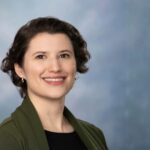
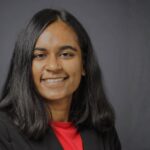
Adam Smith chats with Dr Niying Li, Assistant Professor at the University of Georgia; Dr Natasha Anita, a Research Fellow at Harvard Medical School and Massachusetts General Hospital; and Lillian Morgado, Research Coordinator at Georgia State University.
The AAIC brings together researchers from all areas of research to share their work, theories and breakthroughs while exploring opportunities to accelerate work and elevate careers.
Key topics
- The practical barriers to delivering new anti-amyloid treatments
- Rural and international inequalities in access to diagnosis and care
- What p-tau217 could tell us about future cognitive decline
- Promising results from new tau-targeting therapies
- Behavioural and personality changes as possible early signs of neurodegeneration
- Women’s brain health, inflammation and Alzheimer’s risk
- The ethical and legal questions surrounding biomarker disclosure
- Why research must include more countries and underrepresented populations
Click here to read a full transcript of this podcast
Narrator:
"The Dementia Researcher Podcast," talking careers and research, sharing conference highlights and so much more.
Adam Smith:
Hello and welcome to "The Dementia Researcher Podcast." I'm Adam Smith and this is the fourth and final of our daily highlight shows from the Alzheimer's Association International Conference, or AAIC, 2026 taking place in London and online. After four packed days, the notebooks are full and the conference has covered an enormous range of work from biomarkers and clinical trials to care and policy and lived experience, and no one person could possibly take all of it in. So, for one final time, we've brought a group of researchers together who've been attending online to compare notes and connect some of the themes and share what deserves a place in our very final roundup of this year's Highlights Podcasts.
Joining me to look back on the fourth day are Dr. Niying Li, Assistant Professor at the University of Georgia, Dr. Natasha Anita, who is a Research Fellow at Harvard Medical School and Massachusetts General Hospital, and Lillian Morgado, who is a Research Coordinator who you'll also know from our recent relay podcast series from Georgia State University. Niying, Natasha, Lillian, welcome to the podcast.
Dr Natasha Anita:
Thank you.
Dr Niying Li:
Thank you for having us.
Lillian Morgado:
Thank you for having us.
Adam Smith:
Before we look back over the conference, let's begin with the researchers behind today's recommendation. I'm going to come to you first of all, Natasha, to introduce yourself and tell us a little bit about your work.
Dr Natasha Anita:
Great. Well, hi everybody. Nice to meet you. My name is Natasha Anita.
I completed my PhD at the University of Toronto, where my research focused on uncovering potential therapeutic targets for depressive and cognitive symptoms among older adults with type 2 diabetes. And this is an important topic because individuals with diabetes are at an increased risk of developing Alzheimer's disease and related dementias or ADRD for short. And currently I'm a postdoc or Research Fellow at Harvard Medical School. And in this role, I study modifiable risk factors for ADRD. with a particular focus on cardiometabolic conditions as well as late-life depression.
So, thank you again for having me.
Adam Smith:
Great. And y'all have had a busy conference this week 'cause so much, there's so much to cover in your field. Well, thank you very much for joining us. Niying?
Dr Niying Li:
My name is Niying. I'm an Assistant Professor at the University of Georgia College of Pharmacy. My research area is health services research. I'm particularly interested in the disparities in access to care for people with Alzheimer's disease and related dementias. Particularly I'm interested in access to the new disease modifying therapies. And another piece of my research is, I'm interested in dementia family caregivers because I used to be my mom's only caregiver, so that topic is so dear to my heart. I'm very happy to be here. Thanks for having me.
Adam Smith:
That's great to have you join us. And again, access to treatments has been another topic that's been so covered, particularly in today. You must, you-
Dr Niying Li:
Yes.
Adam Smith:
In today's programme. But I'd say that the US seems to be ahead of the rest of the world when it comes to that particular challenge.
Dr Niying Li:
Yeah, and spoiler alerts, I have picked up a few posters on anti-amyloid therapy real-world implementation and caregiver perspectives that I'm ready to share later.
Adam Smith:
Great. Can't wait to hear those. And Lillian, let's come to you now.
Lillian Morgado:
My name's Lillian Morgado. Like Adam said, I am a Research Coordinator at Georgia State University. I right now am working on a lot of qualitative research, looking at data sharing between Alzheimer's researchers, as well as the ethics of disclosing biomarker research results to participants.
Adam Smith:
And of course, if you want to know more about Lillian, Lillian wasn't just in one podcast. Lillian was on two podcasts 'cause you were in one of our B-side shows as well where we got to talk a little bit about more about your career, and of course, on all your work on the peers. So, do go check those out. They're not far back in the stream. They're just a few clicks away. Thank you very much for joining us, Lillian.
Lillian Morgado:
Happy to be here.
Adam Smith:
So onward today four, and let's get around to talking about those highlights. I'm going to come to you first, Niying. You can give us your first highlight from today's programming.
Dr Niying Li:
Yep. I wanted to share first a poster from the Wednesday morning poster session titled "Dementia Care Research and Psychosocial Factors." Dementia Care and Health Services Research because my background is also health services research, so I'm a little bit biassed. This poster is titled "Healthcare Providers Perspectives on Use of Amyloid Targeting Therapies for Alzheimer's Disease in a High Poverty US State." The presenting author is Maria Pisu from the University of Alabama at Birmingham. We know that for example, Lecanemab, the disease-modifying therapy drug was approved in 2023.
Its uptake has been slowly increasing particularly in the US, but in a lower resource states like Alabama, which is a high poverty medical shortage state, the disease-modifying therapy use is lower. And this study explored providers in Alabama, their perspectives on the barriers to disease-modifying therapy use. And the researchers conducted semi-structured interviews with 15 providers who care for people with Alzheimer's disease in Alabama. They include neurologists, geriatricians, psychiatrists, primary care providers, and 46.5% work in urban areas of Alabama.
And the interviews came up with five themes. The first one is that challenges for early diagnosis, they mentioned that they are often seeing delays in recognising symptoms. The delays in seeking care so that the patients might miss that critical early-stage window, which is the indication for consideration for the disease-modifying therapy. So, the patient might come in too late.
And the second theme is limited availability. That means access to specialist. Diagnostic and treatment centres are limited in Alabama. And one person mentioned that the wait time to memory clinic appointment could be 9 to 12 months.
And the third theme that came up from the interview is the high economic burden, which include the high cost of the drugs and the limited insurance coverage for tests and diagnostic procedures. And the fourth theme that came up from the interviews was the high travel burden procedure. They mentioned that there's a large travel cost and burden, especially for patients living in rural areas. And the disease-modifying therapy, for example, Lecanemab, that's an infusion that you'll need every two weeks.
And also associated MRI screening. That would incur high frequency of clinical visits. And the fifth challenge that came up from the interview was the unclear benefits of the disease-modifying therapies. The clinicians mentioned that they were unsure about the benefits on important outcomes such as preservation of independence and memory.
And I particularly like this study because last year I published a similar one focusing on the state of Georgia. And Alabama is just located to the left of Georgia. Georgia is a bit similar. Georgia has 150 counties.
Out of 150, 129 counties are rural counties with limited supply of physicians of all kinds. Primary care physicians, neurologists, and so forth. And rural Georgia also has disproportionately higher AD burden. So, we looked at the locations of amyloid PET scan centres in the state of Georgia.
We also look at the locations of Lecanemab infusion centres in the state of Georgia. And we mapped the distance from people in each of the 155 counties in Georgia to the nearest amyloid PET scan centre and to the nearest Lecanemab infusion centres. And guess what? There was only six at the time of our publication, there were only six Lecanemab, oh, sorry, six amyloid PET scan centres in Georgia and none of them was located in the rural county.
And there was only one Lecanemab infusion centre located in the rural county. And most of these facilities clustered around Atlanta. So, we only touched on one aspect of access, which is transportation or distance to care. And from this study I saw from Alabama, they also pointed to a very similar issue, which is transportation burden and similar issues with the shortage of the medical professionals because they only, mostly they cluster at urban medical research centres.
Adam Smith:
Yeah, so there's nothing surprising there, is there? Were any of you shocked by those findings? I don't think, I don't find them shocking, but what they do is absolutely confirm what is the reality on the ground with this. And of course, singling out a single US state.
But as you already highlighted, other states are in the same position. And I mean, other countries are even worse, aren't they? I mean, of course, these anti-amyloid therapies aren't actually licenced everywhere, but I know in the UK where I am, there's an, all the discussion about those right now is even if we got them tomorrow, we're not ready. The health system isn't geared up to deliver that regular scanning that's needed to get that earlier diagnosis that we also have really long delays on memory clinics from some, and that varies in different parts of the country.
So, in some ways it's kind of good that we have time to prepare rather than failing people by giving them a treatment that they can't then access, which feels almost worse than, you know, I don't know if it is worse, probably not, but it feels slightly worse. Were they, did they present any solutions, Niying?
Dr Niying Li:
They did not in this poster, but I think that we are seeing more and more studies of this kind. I think that will be a very important research topic that I would like to see more in the future AAIC conferences.
Adam Smith:
So, I'm going to jump off the back of your highlight just to pick out on one of mine because it is absolutely connected. I don't know if any of you managed to attend the Donanemab session which was on today. No? Okay.
So, Nick Fox, who's a neuroimaging world leading expert at UCL gave a plenary talk. He outlined how modified titration regimens were reducing ARIA events without compromising amyloid reduction for Donanemab. So, they've had a whole new look at titration. But he also presented some really fascinating work that they've done on ultra rapid, a new ultra rapid MRI protocol that shortened scan times that you needed while you were on Donanemab considerably.
So, they went from, I think it was 30, usually 30 minutes scans to 7-minute scans with individual sequences taking only 90 to 100 seconds using 3D images. So, you could see a lot far more people in a much shorter space of time, which makes a massive difference. And this isn't fancy MRI kit. This is fairly normal certainly in the UK, NHS MRI scanners that were able to do this.
But this is a new protocol that they'd done. And they'd done quite a few things. They presented a lot of the work that they've been wrapping around Donanemab to see if they, so Syrup Neeri discussed Corticosteroid pretreatment, Corticosteroid pretreatment and found that it didn't reduce clearance, but it did lower infusion reactions. So, they couldn't, they weren't going to recommend it, but it did, you know, again, something that sat alongside that anti-amyloid.
And then Dr. Hong Wang shared a three-year follow-up data showing durable clinical benefits after treatment stopped which supported that early intervention that that really did matter. And so, I've written down here what the takeaway is. So, starting Donanemab early reduced the risk of progressing to Alzheimer's disease by 27%.
Amyloid stayed low in 75% of participants, remained below amyloid clearance threshold if they caught that early enough. So, it's all kind of good news, if you like, to help regulators and to make, hopefully do some of the things that are going to be needed to make that more open and accessible in healthcare. Thank you very much, Niying. And I hope you didn't mind me jumping off the back of yours.
I'll come to you next, Lillian, for your first highlight.
Lillian Morgado:
Okay, so one of the luxuries that I love about attending online is you don't have to worry about what day a poster is up. You could see it all week. So, there were actually a few posters that I have some highlights for that I really enjoyed. One was "Empowering Voices, Enhancing Outcomes: Co-creating an Open-Source Health Economic Model for National Decisions on Care in Alzheimer's Disease and Dementia in Ireland." And that basically is what it says on the tin.
The presenter was Rukhsana Pwankim, I think. And this was from the Royal College of Surgeons in London. And this is just them rolling out and letting everybody know that they're working on this economic model for Alzheimer's disease to make national decisions in Ireland. I found this really exciting because the University of Southern California announced a similar project last year.
And I'm going to be really interested to see how those calculations for economic models are weighted and what the results are differently across the two models 'cause they're obviously very different healthcare systems and there's different resources and incentives available. But we really need to see which levers are important in both, which ones are more important in others, all that stuff.
Adam Smith:
I think the charities in the past have really led that charge, haven't they? On making the economic case to talk about the economic burden of Alzheimer's disease, how it takes all that carer time and what that really costs and taking away people out of the workforce early and you know, to make an argument for saying that the treatments you think are expensive would actually pay for themselves if we address this. Never mind trying to then put a cost on the awfulness of disease or the cost of suffering, which they, I know economists do still try to quantify. That's really good.
And so, I guess were they, they hadn't moved to implementation yet. They were still just working on the policy.
Lillian Morgado:
No, they're still working on it. So, that's the sort of thing I'm going to set up a Google alert for, and I'll be nosy and poke in every so often. See where it's at.
Adam Smith:
Thank you very much. Natasha, let's come to you for your first highlight.
Dr Natasha Anita:
Sure, thank you. So, I think you know, my highlight might kind of connect with Niying's highlight about kind of rural communities and kind of access, but so my first highlight was, it was during a session called "Dementia Diagnosis and Interventions at the Primary Care Level and Among Underrepresented Populations." And if you look on the programme, I believe it's under Dr. Nicholas Farina, however the person who actually gave the talk was Dr. Victoria Mutiso, so on behalf of Dr.
Farina. And so, Dr. Victoria Mutiso was from the Africa Institute of Mental and Brain Health. And title of her specific talk was "Dementia Knowledge and Attitudes in Makueni County, Kenya: Regional Gaps in the Need for Comprehensive Education." And so, I always love attending talks that are not really related to the work that I'm doing directly.
I don't really work in Kenya. I work in the United States and have previously worked in Canada, but it's nice to kind of see, you know, how the field is in other places around the world. And so, her work was really talking about the misconceptions that people have of dementia. And so, the idea that a lot of people think that dementia is something that's just a normal part of ageing.
And so, we know as researchers that it is not. It's really something that we are trying to work towards to prevent and slow. But when you have misconceptions like this, it can lead to fear, to blame, and particularly to community exclusion, which I found particularly interesting just because social isolation is a risk factor for ADRD. And so, if you have these misconceptions, then it can kind of lead someone who may have been okay or at least been able to prevent some of the symptoms.
If they're socially excluded early on, that might kind of exacerbate how they're doing. And another thing was that the, you know, when you have these misconceptions, it's also a barrier to timely diagnosis. And so, if you're excluding them kind of early on, maybe few people are interacting with someone who's experiencing these symptoms. It might lead to kind of delays in timely diagnosis and access to support in care.
And so, to really look at this, Dr. Mutiso was talking about basically doing a cross-sectional study. So, that's what the bulk of the work focused on. So, essentially doing a survey on 630 individuals from that specific area in Kenya and to really understand how specific factors like sociodemographic religious factors might relate to dementia stigma and outcomes.
And so, they used the Dementia Knowledge Assessment Scale as well as the Dementia Attitude Scale to kind of get an idea of this. And so, what they actually found was that there was actually evidence of positive associations with religious and spiritual practises in dementia attitudes. So, meaning, that you can actually incorporate a lot of, you know, their beliefs kind of into the care system and actually make use of them. And I think it's particularly important because I believe there's been a lot of work with the idea of spirituality being tied to better outcomes in the ADRD space.
And so, when we think about maximising the benefit of some of the work that we're doing, I think it's nice to kind of integrate it with this specific community, and so that they're more willing to kind of, you know, listen to the research that's out there and also be more comfortable actually receiving that care because it is kind of, you know, a lot of the work in the ADRD space is kind of, you know, in the Western world? It's been focused that way for a long time. And so, a lot of people think it's not really applicable to their own situation. And so, if your kind of, you know, incorporate parts of their culture and their religion, then it's, it can increase uptake.
So, it was more of a work in progress. And Dr. Mutiso was saying it was, you know, it was cross-sectional, so there's a need to kind of look at it in more detail, but I was particularly intrigued by it because, again, I don't do work in this space, but I love seeing it done. And so, it's really nice to see.
Adam Smith:
So, were they kind of thinking about empowering faith? Was that this idea that you could? 'Cause we know that people have used religion and faith for their own purposes or to get their own messages across for centuries. Is that the idea is to make some of those more connections?
Dr Natasha Anita:
I think it's more of, you know, because within the community, it seems like there's still that, you know, kind of misconception towards ageing. And so, if you can kind of incorporate, for example, things like prayer, that's already happening anyway within the community, but kind of tie that in with things in the ADRD space, so making them more aware. So, there's a lot of tie-up community events that I've also seen just within my community. So, I am South Asian and I see a lot of, like, we've got a lot of diabetes in our community, and so a lot of tie-ups between the diabetes associations like Diabetes Canada, for example, or the American Diabetes Association will do events with pre-existing South Asian kind of communities.
And that way it's not kind of foreign to the community. It helps with uptake. It helps kind of drive the conversation. And so, I think that's kind of what they're going for here.
It was more of just look, you know, doing a, just a cross-sectional survey to see what's going on, and then kind of building off of that to see if you can kind of increase the knowledge and kind of make it a little bit easier for people to access care as well.
Adam Smith:
And the AAIC is that great opportunity to step out of your comfort zone and to go look at some posters to absorb some talks that aren't the usual thing that you would go to. Thank you very much, Natasha. So, speaking of lanes, we're going to go round the room again to capture some next round of highlights. And Lillian, I'm going to come back to you. Did you step out of your lane today and absorb something new?
Lillian Morgado:
I did, but I don't know if it counts because it was the plenary session. For the purposes of this podcast, yes.
Adam Smith:
Okay, great. So, which one was it? Was that Doug Osland or was it Zahinoor Ismail?
Lillian Morgado:
It was Zahinoor Ismail where he was discussing the reasoning behind looking at changes in behaviour or personality that are persistent in older adults as potentially, and this is one thing where he was going really technical and it was really cool. So, I don't remember all the exact details, but about how that's very important to look at, and behavioural change is, and behavioural impairment is just as important to look at as cognitive impairment and cognitive change. This was fascinating to me because one of the things he brought up was that in a lot of clinical trials, they use the geriatric depression scale to potentially exclude people from participating.
And the time period that they used for that is one week, which is crazy because that means if you're otherwise a fine, perfectly happy person, but I don't know, a tree fell on your house last week? Then, you don't get to participate in research. That doesn't seem logical. So, that is an interesting thing to both look at a new measure to consider when you're looking at a lot of longitudinal things.
And then, also new processes potentially for enrolling people in clinical trials and research. So that is really cool to me.
Adam Smith:
I saw the same one. I made a point. I always make a point of at least watching the plenaries. And I've written down some notes here that were new behavioural and personality changes in later life can be signs of neurodegeneration. Mild behavioural impairment can incur in cognitively normal people, but those with subjective decline are more likely to go on to get mild cognitive impairment. And if you saw that change for more than six months, it was significantly likely that they were going to go on to have some kind of neurodegenerative condition. I think I've said that correctly.
Lillian Morgado:
That sounds about right to me. So, I will say yes.
Adam Smith:
Thank you very much, Lillian. That's good. Niying, I'm going to come back to you for your second highlight.
Dr Niying Li:
My second highlight is another poster called "Health System Readiness for Anti-Amyloid Therapies in Alzheimer's Disease: A South American Physician Survey." The presenting author's name is Belén Custodio from Peruvian Institute of Neurosciences in Lima, Peru. And this is a very interesting study because I have seen most of the real-world implementations of studies coming from the US, coming from Western Europe or Japan, and I rarely see studies coming from low middle income countries. And the authors stated that the introduction of these drugs will pose substantial challenges in low middle income countries where the health system face structural workforce and diagnostic constraints.
So, they administered a cross-sectional survey of physicians who participated in the clinical management of Alzheimer's Disease in South America. They were identified through professionals’ networks, and a total of 74 respondents answered the survey, and over 80% anticipated changes in diagnostic practises with increased indications for MRI and biomarker testing. And a large majority, 89% agreed that neurology services would require additional resources due to both increased follow-up visit frequency and longer consultation times. And also, a large majority agreed that the neurology departments should incorporate clinical guidelines specific to the use of these drugs into their treatment protocols.
And as we know, we have the Lecanemab best use recommendations and the Donanemab best use recommendations. They are published and widely used in the US context. And I am aware that some countries in Western Europe, they have also published their own best use recommendations with regards to these drugs. But from this study, they indicated a need for their own guideline in South America, which I think is very important.
And maybe the next AAIC or maybe down the road, we will see something like this that is being presented at the conference. So, I think it's very nice to see that AAIC is giving the stage for a lot of the researchers, clinicians from low middle income countries to present their challenges and their needs.
Adam Smith:
Thank you very much, Niying. And Natasha, let's come to you for your second.
Dr Natasha Anita:
Yes, so I did have my highlight, but before I go into that, I appreciated Lillian's point on the plenary just because the GDS and I did a lot of work with the depressive symptoms, and so we always had our favourite scale among, you know, within the lab. And so, there's like the BDI, which is the Beck Depression Inventory, which does capture two weeks instead of the one week. There's also CES-D, so the Center for Epidemiological Studies Depression Scale, which also is a two-week frame. So, you know, it's nice to have that, like that length instead of the one week.
And then we would also do the SCID, which is a Structured Clinical Interview. But that doesn't give you, like, the depressive symptom burden. It just tells you whether you're depressed or not. So, there's, we would use all of them to kind of capture, but I think they probably lean towards the GDS just because it's quick and easy.
But it is one week, so you kind of have to wait this. But anyway, so that was the point that I wanted to make. But from my highlight, you asked about, you know, getting out of your comfort zone. And so, I went to a Developing Topics talk for disease.
So, it was developing topics in disease continuum and staging. This is a talk by Dr. Julie Wisch from Washington University. And she's a neuroimaging engineer.
So, I'm not an engineer. I've never taken an engineering course. But she was looking at an amyloid time model. And so, essentially the idea of, we hear a lot about amyloid positivity, so whether or not someone's positive or negative, but her work was kind of delving into can we look at and estimate how long someone has been amyloid positive for?
Because that might tell you how long they've had the disease and that might inform prevention as well as treatment strategies. And it again comes back to my thinking about diabetes because when we think about diabetes, again, it's more progressed in terms of what biomarkers and medications we have, but the one thing we think about is high blood sugar and diabetes duration. And so, not just whether you have high blood sugar, but how long have you been that way? And that could really inform, are you given metformin?
Are you given something that's further down the line? And so again, that was really interesting to me. Again, some of it you know, didn't make sense to me 100%, but what I appreciated about Dr. Wisch's talk was, it was an early morning session and she made a point of even explaining accuracy versus precision, like that concept just because I think at AAIC you get a lot of researchers who know that already and don't need that introduction.
But you also get a lot of students who are attending for the first time, or even researchers from outside the field. And so, that was nice to see. So, it was a developing topic, so it's not something that's kind of ready to be used in clinic just yet, but I love the idea of really trying to capture not just amyloid positivity, but really how you're doing and how long have you been that way, and that might really inform things- down the road.
Adam Smith:
Yeah.
And that really ties in. Did you see the, and this got released as a press release today as well, so it must have been one of the big new stories was the Rachel Buckley study that got a press release today.
Dr Natasha Anita:
Yes, yes, yes. Yes, I actually got to see the preview, the practise session last week. So, it was wonderful to see in real time, but yes.
Adam Smith:
But that ties in nicely. So, that study found that again, I'm going to read verbatim from my notes, so I get this correct. Adults with very high p-tau217 levels were more than twice or more than twice as high as average levels in the study. It had a 78% estimated likelihood of progressing to cognitive impairment within 10 years and roughly a 38% risk within 5 years. So, I'm assuming that this, that means that that test had, you know, I don't know, did they, they can't have done that in real people 'cause it's not been 10 years since, unless they've been able to do a retrospective?
Dr Natasha Anita:
Yes, so, I mean like Rachel Buckley says she uses a lot of pre-existing data. Over at Harvard you've got a lot of cohorts you can pull from. And so that's-
Adam Smith:
Yeah.
Dr Natasha Anita:
How we've benefited from looking at data. But it's wonderful work because really, you're, you know, taking markers that you can just measure just now and then you can kind of predict that way. And so, I think she probably would love this work and I'm sure she's looked at it already. So, I'll speak to her when I get back.
Adam Smith:
Absolutely. So, and it kind of went on to say that people with moderately elevated levels had a lower but significant risk with approximately 15% risk over 5 years and 45% risk over 10 years, which really kind of sets us up for this idea. And I was asking my colleague Amanda a couple of years ago now saying, "Well, surely if we start to put this in as a, to like a public health test when you turn 40 years old as part of your kind of turning midlife MOT, can we just test people every couple of years to look at amyloid?" And then, surely within so much time you'd be able to say, "Okay, you're at higher risk, here are," you know? Which might, even if it can't fix it, it might force people to do some of those lifestyle factors.
That we want people-
Dr Natasha Anita:
And there's no negative, like, thing that comes out of like, you know, having a healthy lifestyle, right? So even if, you know, it's with ADRD, again, it's, there's so many things that can contribute to that. But if you're living a healthy life, you're staving off, you're slowing things like diabetes, heart disease, et cetera. So, there's nothing bad that can come out of having a healthy lifestyle.
Adam Smith:
No but, and also as well, I think when people... I think it's very hard to MOT people in middle age to say, "Hey, you need to be healthier, to not have-"
Dr Natasha Anita:
Yes.
Adam Smith:
"Alzheimer's disease in 35 years time." However, if you can say, "Ooh, look, we've got this, this is your risk now, and we can, we've got a test that proves this." I don't know, if I got that information, I think I'd be more likely to act upon that than-
Dr Natasha Anita:
For sure.
Adam Smith:
Perhaps.
Dr Natasha Anita:
I think a lot of, you know, science studies, I think, and Rachel was kind of highlighting in her talk where you always talk, like, hear about relative risk. So, it's very specific. It'll be like you compared to this specific scenario, you're likely to get Alzheimer's in five years, but that makes no sense to the public and it really, it has to make sense to the public for them to act. And so, I think Rachel's work will be a great way to kind of get people moving.
Adam Smith:
Absolutely. Thank you very much, Natasha. So, I'm going to come back around for another round of highlights, and I'm going to come to you first, Niying.
Dr Niying Li:
Sure, this is another poster titled "Deciding About Anti-Amyloid Drugs: A Qualitative Study of Prescribers, Patients, and Caregivers." The presenting author is Justin Clapp from the University of Pennsylvania. They have a very clear research question. They wanted to know how caregivers, patients, and clinicians determine whether a patient should receive anti-amyloid treatment. They interviewed 38 patients and caregivers considering anti-amyloid drugs and also interviewed 10 physicians who prescribed them.
And they found that the patients and caregivers who declined treatment, they reasoned that the burdens and the risks of side effects were the main reasons to decline the treatment. And the patients and caregivers who decided to undergo the treatment said there was no choice than to do something. And they think that receiving treatment as contributing to medical research progress. And the clinicians, their perspectives are, they are weighing the clinical judgement against appropriate use guidelines.
And they're also deciding which aspects of treatment they should issue judgement on, and which should be left to patients and their families. And I think it's a very interesting study because they interviewed all the stakeholders, the patients themselves, the family caregivers, and the physicians who actually prescribed the drugs. And I'm very surprised to hear the caregiver saying, the caregivers are being very altruistic. They're saying that they want to contribute to medical research progress.
And something also very interesting is that the physicians mentioned that they are weighing the realities versus the best use recommendations. And this study reminds me of some of the previous real world implementation studies using the claims, insurance claims data that indicated that even though the best use recommendations recommended against using these drugs on people with a history of stroke, against people who are on antiplatelet drugs, but using the real world insurance claims data, we can still see some patients who actually had a previous stroke, but also get on these drugs. But they're very, very small. The number is very small.
And I remember-
Adam Smith:
Was that because of like, not following the guidance or because the patients really pushed to access them or?
Dr Niying Li:
That is a really good question, and I don't know the answer to it. But the paper mentioned that they were being very closely monitored by the physicians. So, I would imagine this is a very complex decision-making. And from the study, I can see that the caregivers, particularly from the patient's family side, they're seeing a lot of hope. They wanted to do something better than not to do anything even though they're aware of the side effects and the risks. So, maybe the patients and the caregivers, they kind of pushed to give it a try. And yeah, it's so the physicians, they're making some hard decisions now.
Adam Smith:
I think it's quiet, it must be quite hard to say no, wasn't it? When it's not like you've got an alternative. It's not like you can say, you know, with, I guess in cancer, there's usually more than, there's more than a plan A. There are a plan A, B, C, and D.
In Alzheimer's at the moment there, I mean, it's, there is no plan A, B, C, and D. So, if somebody's really sat in front of you desperate for help, what? I think that it's more likely to say, "On the balance of risk, we'll try it." Is it possibly going to make things worse? I guess for some people, it might.
But for others, as far as they're concerned, life's as bad as it's going to get. And it's worth the risk of whatever the negative reaction of that treatment might be.
Dr Niying Li:
Yeah, and if they're being closely monitored by physicians, maybe after several doses, they will stop the treatment.
Adam Smith:
Yeah, absolutely. Thank you very much. Natasha, I'll come to you for your fourth, third highlight.
Dr Natasha Anita:
Third highlight. But I mean, I would like to highlight the full session, honestly. It's called "Inflammatory and Reproductive Health Pathways: Contributing to Women's Higher Risk of Alzheimer's Disease." So, it was chaired by Dr. Jennifer Rabin or Jenny, as we call her.
She was at Sunnybrook when I trained there at the University of Toronto, so know each other well. But one talk that stood out though was Dr. Erin Sundermann of UCSD, and I did spend a little bit of time there as well. And she spoke about neuroinflammatory correlates of tau PET burden in APOE4 status of older females at risk for Alzheimer's disease.
Again, the whole session, I think the theme was a lot of, you know, just the idea that women have a higher risk of Alzheimer's disease. And we hear this a lot now, but you know, why might that be? What are the potential mechanisms? And so, her work or Dr.
Sundermann's work was kind of looking at females having a high tau burden and then what might be driving that. And so, neuroinflammation has been kind of thrown around as a potential mechanism. And so, this was, I have to find the actual acronym, but it was WTIS, women something study that you could do your research and figure it out. But Dr.
Sarah Banks from UCSC is also on that. And so, hopefully that'll help listeners figure out which study that was. But essentially, it's a study of older females over the age of 65 who've got no kind of cognitive issues, but they're kind of tracking them over time. And so basically, you know, to summarise the findings on a higher level, a lot of neuroinflammation was associated with kind of these cognitive issues, but I think the overlying theme or overarching theme was we think about neuroinflammation as being kind of bad sometimes, but it's not, I'm going to go back to diabetes, but it's not like, you know, high blood sugar is bad for you, period.
It's more of these biomarkers go up and down. And I think she highlighted TREM1 as like a state-specific immune response. So, you really have to watch if it's low or high, but that alone doesn't tell you what's going on. You have to figure like it can be good in certain situations and not.
And so, there's a lot of nuances and I found that fascinating because the story's not that simple. And so that just means, you know, it warrants further research.
Adam Smith:
And I have to excuse my naivety in this. Were women more likely to have neuroinflammation as a result of some of the hormone and sex differences that we see in women?
Dr Natasha Anita:
Yeah, so they were kind of talking about the bias. So, the female bias and the male bias in terms of your immune system. And so, there's a lot of diseases, autoimmune diseases that tend to skew towards females. And so, kind of pointing towards that perhaps women have more inflammation and that might tie into the increased risk.
And so, kind of looking at that. And so, there's a nice chart that they had or Dr. Sundermann had about what specific diseases. So again, looking at other diseases for ideas, right?
So, a lot of these women, you're looking at older women, so likely they'll have other comorbidities to think about menopause as well. And so, this, again, it's still, it was a smaller study, so I don't know if it was 50 or 60 people, but again, it's just kind of hypothesis generating in terms of you should kind of look into this. And when we look at data that not just controlling for sex, but really trying to stratify different groups because you can't just look at males versus females, you also have to consider life stage because these markers they were showing did differ depending on where you were at.
Adam Smith:
It's been wonderful to see that all that work that going on to look at sex differences in gender, which is, there's been, I mean, multiple sessions on that specific topic haven't there? Across the, I mean, every day there's been something on that. You must have had a busy week if that's your area. And of course, I should put a plugin for our "XXplored Women's Brain Health Podcast," which we have the very next episode to come out after this show will be one that looks at menopause and women's brain health.
And that show's going to be out in two weeks time. So, do check that out. Thank you very much, Natasha. Actually, that, I'm going to jump on the back of you 'cause you mentioned tau briefly there.
And so, I'm quite surprised, and this is because, of course, we have a real variety of guests that tau has been discussed very little in any of our podcasts over the last few years, but it's been a super hot topic actually at the conference. So, I hope you don't think that tau's not being explored here because it absolutely has. And one of the studies that's been presented this week was, I don't think it was necessarily today, so I'm breaking my own rules, but Cath Mummery, Professor Cath Mummery from UCL presented results from a phase 2 Biogen drug trial called Diranersen. And the strongest results compared to placebo were seen in the 60 mg dose, which slowed cognitive decline across different methods of measuring disease progression. 42% Alzheimer's Disease Assessment Scale-Cognitive Subscale and 50% on the MMSE.
It slowed cognitive decline. And 26% on the clinical dementia rating. So, the CELIA data provided some of the clearest evidence that reducing tau pathology, this was a tau drug, but the CELIA data provided some of the clearest evidence that reducing tau pathology can translate into clinically meaningful benefit. The magnitude of tau reaction and cognitive benefit of CELIA is amongst some of the more compelling reported to date in Alzheimer's disease drug development.
So, super exciting results from this phase 2 Diranersen drug trial that they're going to progress into phase 3, and that's an anti-tau therapy. Did anybody else see that results? Niying, I feel like you're all over the drug trials.
Dr Niying Li:
I feel like yeah, I'm so sorry, I missed that. Yeah, that will be interesting to see if that becomes a real drug marketed in the world. How that compares-
Adam Smith:
Yeah.
Dr Niying Li:
To the current drugs that we have.
Adam Smith:
Well, a 50% slowing on MMSE seems significant.
Dr Niying Li:
And did the, did any of the presentations mention anything like ARIA that we have in the disease-modifying therapy so far?
Adam Smith:
So, the study also found that Diranersen reduced CSF tau levels by 50 to 65% a year. No mention of ARIA in the news item. We might want to go check out the talk again, see if that question came up. But I think on the recorded talks, I don't think we always get the Q&A at the end, do we?
Dr Niying Li:
Oh, I don't think so.
Adam Smith:
So, if it wasn't presented, you wouldn't necessarily have the Q&A at the end where inevitably somebody probably asked that question. But yeah, that study found that reduced CSF tau levels by 50 to 65% and it's the first of its kind of trial, and that'll go on to phase 3 hopefully soon. Thank you very much. So, Lillian, you've been very patient in waiting, so why don't you give us your final highlight?
Lillian Morgado:
Yeah, my final highlight would probably be the panel that was considerations for the progression of Alzheimer's disease from cognitively unimpaired to cognitive impairment, weighing on the risks. And I am a little biassed because Jalayne Arias is the PI that I work under and she was on this panel. What really interested me in this one was looking for a lot at the influence of p-tau217 at the progress of the disease. The Mayo Clinic put together a really cool presentation, and they had an awesome study where they confirmed that there's a very strong link between p-tau17 disease progression and are working on a model that they can provide to researchers.
The other thing that was really cool about their study is that they were able to capture outcomes that happened after people left the study. And one of the things they found was two-thirds of incident dementia happened after those people left the study. So, I'm definitely going to be looking a little more into that and seeing how they capture that 'cause that's very exciting information.
Adam Smith:
That is really good. And we saw that in one of our podcasts earlier in the week. We were talking about how the FINGERS trial had that alumni programme to try and keep, stay connected to former participants, which I think is always beneficial. Thank you very much, Lillian.
I'm not going to follow up on that 'cause we are getting super tight on time, and I'm very conscious as well that you've all been, had some posters this week. So, I do want to give you just one minute each to put a plugin for your own posters while the online platform is there. People are still going to have 30 days to go away and look these up. So, Lillian, I'll stick with you.
Give us a plug for your poster.
Lillian Morgado:
So, I don't have a poster, but I did help Professor Arias with her part of the presentation for considerations for the progress of Alzheimer's disease panel. So, please feel free to check that out. She's looking into the ethical implications of sharing biomarker information. There's a lot, folks assume that there are a lot more legal protections than there are for this type of information and the sort of implications and vulnerabilities that people have if they receive this information.
Adam Smith:
Wonderful. Does that touch on genetic counselling and things like that as well? Is that?
Lillian Morgado:
Not on genetic counselling. So, genetic information is more protected than things like blood-based biomarkers. And that's one of the issues is folks assume that all of the protections that are in place for genetic things are in place for these blood-based biomarkers and they're not.
Adam Smith:
Oh, interesting. Fascinating. So, go look that up. Niying, why don't we look for your poster?
Dr Niying Li:
Well, thank you. My poster is a virtual one titled "Racial and Regional Disparities in Mortality from Alzheimer's and Related Dementias in the United States 2013 to 2023." This is a collaboration between Emory University and me. The presenting author's name is Tej Shah. We used the mortality data from CDC Wonder from the US Centres for Disease Control.
We look at the racial and regional disparities in ADRD mortality across the US over the last decade from 2013 to 2023. And we are also particularly interested in the mortality by dementia type. AD, Alzheimer's disease versus vascular dementia. A few things that stood out from this one is that the south of the US, they had higher ADRD mortality, but only in 2023 they were overtaken by New England which is a little bit interesting because in the south, the southern part of the US is also located on the area which we call the Stroke Belt where a lot of people have stroke and it also have the, the southern US also has higher diabetes prevalence.
So, I'm not surprised to see, historically, the south had higher ADRD mortality. But what's happening in New England, that's something we are not sure about. So, that is an interesting poster.
Adam Smith:
Fascinating. Definitely worth a look. We have a similar thing in the UK. There's this kind of belt that starts from around Newcastle and goes across the north of England where mortality is, you know, like five years less than other parts of the country is.
Dr Niying Li:
That area's an industrial area, right?
Adam Smith:
Yeah. Traditionally, yeah. Same kind of heartland. Thank you very much Niying. And Natasha?
Dr Natasha Anita:
By poster. Yes. So, it's number 2,500, if I recall correctly. And it's on underrepresented groups. So, it's using the SOL-INCA dataset. SOL-INCA stands for the Study of Latinos - Investigation of Neurocognitive Ageing. Essentially, it's the largest cognitive ageing study of Latinos living in the US. So, it's the largest minority group in the US, but there's not much research done in this population despite the fact that they are at the highest risk of developing ADRD by the year of 2016. So, we took a look at metformin use in cognitive decline over time. And so, if you're interested, please check out my poster.
Adam Smith:
Fantastic. Thank you so much. So, we really are out of time. But I do want to, because this is the last show, I think it's important that we reflect a little bit because by the last day of the conference, kind of individual presentations start to kind of merge into one and present a slightly bigger picture, don't they? And I'm interested, I'll stick with you, Natasha. Do you get a sense after the four days of the conference that, what's the kind of emerging themes and what's the big picture, do you think?
Dr Natasha Anita:
The big picture for me definitely that there is a lot of cool tools out there to kind of, you know, whether it's biomarkers or neuroimaging, or even things like digital assessments that are coming up as well. So, I think you get the idea that there's a lot of people trying to tackle this problem and from very different angles and they're all equally important, and we all need to work together. So, that's the overarching theme. But the thing that I've loved about this year's AAIC is that there's a huge focus on understudy populations, whether that be underrepresented in terms of, for example, like my work on Latinos in the US, but also just other countries that haven't been represented very well in the ADRD space.
I'm seeing specific sessions for just that. And also, I think I kind of alluded to earlier, but the importance of looking at women in particular and really diving deep. And so, those are the themes that I've caught on.
Adam Smith:
And it's great to have Alzheimer's Association who are such a great international supporter of that research, not just in providing a platform for it to be presented but funding it as well. I mean, a lot of, you know, funding internationally in the way that they do. They're such a unique charity and funder in that way that we, you know, they're one of our funders as well at Dementia Researcher. You know, I'm really grateful for that leadership that they provide in that space. And Niying, what about you? Go ahead.
Dr Niying Li:
I agree. I agree with everything that Natasha just mentioned and I'm going to add a few more things. I see a lot of emphasis on early diagnosis or how to facilitate early diagnosis using all these emerging tools, and how can we empower primary care physicians to be comfortable using these new technologies and also legal ethical implications of like p-tau217. So, I think this is a really promising area because this early stage, early diagnosis window will potentially make you eligible for the current medications and be able to participate in clinical trials and getting diagnosed early, help you and your family plan ahead, think about what to do next.
So, I think this is a really good constructive collaboration that we are all looking at how can we better get more people diagnosed early. And another interesting thing that I found even though I didn't find a lot of sessions on this, but I identify a group of posters on the potential use of shingles vaccines to prevent Alzheimer's disease in the future. I'm seeing a clinical trial protocol in Finland. They wanted to do something with the shingles vaccine.
And if that becomes a viable path, that means we can prevent the disease with low, very low cost, which is something I'm very much looking forward to.
Adam Smith:
Thank you very much. And what about you, Lillian?
Lillian Morgado:
I feel like Niying and Natasha really hit the nail on the head, but I feel like the theme of this year was kind of refinement. We have good measures. We have good tools. Now, what do we do to make sure we figure out the proper situations and how to use them right. And I think that's a really exciting stage for all this research to be in.
Adam Smith:
That was perfect. Succinct and a great reflection. I completely agree. I think for me, I agree with everything you've said, of course.
I think there's been so much talk about biomarkers, drugs and anti-amyloid is still up there. I think artificial intelligence; we haven't mentioned that today. I can't get through podcast without mentioning AI, but it's been really exciting to see some of the practical ways that this is potentially getting used. I just like to see, I've seen a lot of discoveries and a lot of cool research presented this week across posters and some of the smaller talks and the big ones.
I think we just got to crack on and put it into use. It feels we're still a little bit risk averse, but I think if I was a person living with dementia watching this at home right now, I would be sat there banging saying, "Yeah, this is great. Let's use it." You know, all these new cognitive measures, the digital tools, the drugs, the therapies, the improved health systems, you know, let's get this all into use, I think, and try and close that gap between discovery and implementation. Niying, Natasha, Lillian, thank you so much for joining me and helping to bring the fourth day and final day of AAIC 2026 into focus.
I say final day, of course, but there is the AAIC for all conference, which is going to be happening tomorrow. It is still free. There are still some amazing presentations planned as part of that programme. So, do check that out as well.
But that brings our AAIC Highlights podcast for this year to a close. Across the week, our guests have guided us through major findings, overlooked posters, and emerging questions across the whole of AAIC. And you can find profiles on all of today's guests and all of this week's guests, and all the highlights and much more on our website at dementiaresearcher.nihr.ac.uk. Look for @AAIC26 in pretty much every social media platform I've been to this week.
And of course, I think all the talks are going to be available for the next 28 days on the Alzheimer's Association platform, which is aaic.alz.org. So, do check those out for the next 28 days. Thank you all of you for joining us.
Dr Natasha Anita:
Thank you for having me.
Dr Niying Li:
Thank you for having us.
Lillian Morgado:
Thank you for having us.
Adam Smith:
I'm Adam Smith and you've been listening to "The Dementia Researcher Podcast." Goodbye.
Narrator:
The Dementia Researcher Podcast was brought to you by University College London with generous funding from the National Institute for Health and Care Research, Alzheimer's Research UK, Alzheimer's Society, Alzheimer's Association, and Race Against Dementia. dementiaresearcher.nihr.ac.uk.
If you would like to join a panel or record a podcast on your own area of research, complete our show form. You can subscribe to our podcasts through your favourite podcast app, just search for 'Dementia Researcher' or follow the links in the footer of this page.
Did you know... all of our blogs are also available as podcasts? Find them here on Apple, and here on Spotify
The views and opinions expressed by the host and guests in this podcast represent those of the guests and do not necessarily reflect those of UCL, Dementia Researcher or its funders.
Join our Supporter Programme and subscribe to our channel in YouTube or in Apple Podcasts for exclusive access to bonus shows, and to gain early access to our recordings.
Share your thoughts on this topic in the comments below.
 Dementia Researcher