In this episode, we share highlights from the first day of the 2026 Alzheimer’s Association International Conference (AAIC).
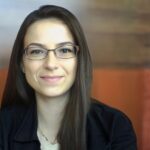
Adam Smith chats with Sarah Graef from Rush University Medical Center and Muthia Huda Islami from the National Brain Centre Hospital Mahar Mardjono in Jakarta.
The AAIC brings together researchers from all areas of research to share their work, theories and breakthroughs while exploring opportunities to accelerate work and elevate careers.
Key topics
- Biomarkers for Alzheimer's disease
- Genetic epidemiology in diverse populations
- Lifestyle interventions and dementia prevention
- Innovative drug delivery methods for neurodegenerative diseases
- Global research collaborations and underrepresented populations
Click here to read a full transcript of this podcast
Voice Over:
The Dementia Researcher Podcast, talking careers and research, sharing conference highlights, and so much more.
Adam Smith:
Hello and welcome to the Dementia Researcher Podcast. I'm Adam Smith and this is the first of our daily highlight shows from the Alzheimer's Association International Conference or AAIC 2026, which this year is taking place in London and online. There's an enormous amount happening across the conference with presentations, posters, panels, and conversations taking place all at the same time, and none of us can see everything. So, over the next few days, we'll be bringing researchers together who've been attending online to compare notes and share some of the work that's caught their attention.
Joining me to look back at the first day are Dr. Sarah Graef from Rush University Medical Centre, Dr. Muthia Huda Islami from the National Brain Centre, Mahar Mardjono in Jakarta. Sarah, Muthia, thank you so much for joining us and welcome to the podcast.
Sarah Graef:
Thanks for having me.
Adam Smith:
So, before we get into the conference highlights, let's find out a little bit more about each of our guests. So please introduce yourself, tell us about where you work and what you study and give us an overview of your research. Sarah?
Sarah Graef:
Sure. Hi, everyone. My name is Sarah and I work in multi-domain lifestyle intervention trials. I've been at Rush University since 2019. I've had kind of a varied career path. I'm a registered dietitian, a chiropractor, and then now I'm a PhD candidate. So, I moved into research specifically to study nutrition within multi-domain lifestyle trials.
Adam Smith:
So that's a really hot topic right now, isn't it? Or I'd like to think particularly given that it's kind of mentioned there in the Lancet Commission report and things like that. So is there any particular... I'm guessing you're going to say that diet's the one that you are particularly interested in out of all those lifestyle interventions.
Sarah Graef:
That might be my particular interest, but really since 2019, I've expanded my idea of what's important and it's so many pieces even within lifestyle by itself. I don't think diet is the most important factor, but it's just my personal interest.
Adam Smith:
Combined with other things. Well, thank you very much for joining us, Sarah. Muthia, how about you?
Muthia Huda Islami:
Okay. Hello, I'm Muthia. I currently work as a research fellow in Indonesia's National Brain Centre Hospital. Basically, what I do is very broad because actually the clinical research unit in the National Brain Centre Hospital was just started in three years ago, so it's very new, but we are quite kind of running on marathon. I'm the one who is mainly responsible in Alzheimer's disease and related dementia research. So, what I do is basically building Alzheimer's disease registries in the hospital and then also initiating international and national collaborations. Particularly right now, I'm also one of the key members of the team that is currently designing a multi-domain lifestyle intervention trial Indonesia. It's the FINGERS. Yeah, it's the FINGERS. My team was presented in the FINGERS Network I think on Saturday and we are pretty new, so there are a lot to learn from me in this kind of field. But actually, what I am really interested is actually molecular and genetic epidemiology. As I mentioned before, my research is very broad right now because of the initial phase of the National Brain Centre Hospital itself in my country.
Adam Smith:
Fantastic. I saw that we're expecting some big news from FINGER study tomorrow, aren't we? So maybe you should have been joining the podcast tomorrow. Sorry, have I scheduled you on the wrong day?
Muthia Huda Islami:
No worry.
Adam Smith:
But that sounds like fascinating work. Have you got some kind of key collaborations? Is there a country you find yourself collaborating with more than others do you think?
Muthia Huda Islami:
Currently, I think we are very, very in the early phase. I think we've just reached out to do FINGERS Brain Health Institute in January. So, we're still into conceptualization and e-signing. I think we plan to reach out to our neighbour countries such as Singapore and Malaysia to learn more from them because we have similar cultures.
Adam Smith:
That's wonderful. I know a lot of Indonesian researchers have historically as well ended up in Australia and places like that where obviously I know lifestyle seems to be a very key researched thing in Australia.
Muthia Huda Islami:
That's true.
Sarah Graef:
One quick thing, Muthia, I know that it sounds like FINGERS adapted culturally and regionally. I've worked on U.S. POINTER since 2019, so feel free to reach out to me or I can reach out to anyone within U.S. POINTER for you.
Muthia Huda Islami:
Oh, yeah, that sounds great. I will reach out to you definitely. Yeah.
Adam Smith:
I love it when spontaneous collaborations happen mid-podcasts. They're the best that can happen. So, tell me, all of you, is this your first... I'm assuming this isn't your first AAIC. What about you, Sarah?
Sarah Graef:
No, I think this is my fourth. I've only been to one in-person. I went to Toronto.
Adam Smith:
Oh, that was just last year, wasn't it?
Sarah Graef:
Yeah. Yeah, it was. So, U.S. POINTER had the results then, so I got to see that presented. It was just completely amazing to be in that room with so many people and thousands of researchers and people interested in dementia.
Adam Smith:
What about you, Muthia? I'm guessing that this is your... Is this your first?
Muthia Huda Islami:
Yeah, this is my first actually, because I think this is one of those early years where I get particularly active in Alzheimer's disease research because previously, I was pretty active in the tuberculosis, meningitis research. Yeah, I'm a very, very early researcher, so I'm still finding out my grounds.
Adam Smith:
So, it's exciting. Next year you absolutely have to apply to become an ISTAART ambassador. That usually opens around February time. ISTAART ambassadors get a free ticket to attend the conference, and you get to help out. They give you a T-shirt, and you go around and help facilitate the event and get to go to lots of stuff. It's a brilliant opportunity. It usually opens in February. Of course, we're going to be in Chicago next year so you can have some great pizza.
Muthia Huda Islami:
Great. Thanks. I will try to submit.
Adam Smith:
Right. Well, as I said, it's great to have you all here, but let's now turn to the conference programme. So, you've each spent the day. You've given up your Sunday to attend different sessions and see some speakers and research topics. What's the first thing you'd like to share today? Muthia, I'm going to come to you first. What's your first highlight from the event?
Muthia Huda Islami:
Okay. So, I think I will start from the very first session, which was about the novel biomarkers and its trajectories in early Alzheimer's disease. I think one of the presentations really stood out for me. It was presented by Dr. Balder about presymptomatic plasma biomarkers and autosomal dominant Alzheimer's disease. I think he presented about the longitudinal modelling of 127 plasma samples from individuals with familial Alzheimer's disease. He mapped out the segments and the timing of plasma biomarkers; changes related to expected symptom onset. He basically found that AD-related plasma biomarkers began rising roughly 20 years before the clinical onset in this familial Alzheimer's disease cohort and the ordering and the trajectory of different biomarkers over time. Of course, combining multiple biomarkers instead of relying only one plasma biomarkers, for example, p-tau217, which has been very, very, I think, prominently talked about in these years and particularly combining multiple biomarkers for building the predictive models.
I think why it stood out for me is because I'm working in a National Brain Centre Hospital and I have often heard people asking when they have a family members diagnosed with Alzheimer's disease, they often ask whether they will have disease as well. If they will, they often ask when they will develop that. I think this kind of finding, even though it's been studied on 127 plasma samples, I think this kind of open doors or ways to shape that kind of answer to those families who wonder whether they will have the disease and when they will have the disease. Also, I think in the discussion itself, he also talked about the future implication of this finding, and I really find it very interesting because it means that this kind of finding can be also externally validated in other cohort and particularly in the sporadic Alzheimer's disease, which is the part that still needs population-specific data.
Also, I think this is also because I'm working in all middle-income countries where the biomarkers for Alzheimer's disease are not readily available everywhere anywhere. We are still in the progress of the procurement of those biomarkers. So, I think to know which plasma biomarkers and which combination this kind of study can actually helps us identifying which plasma biomarkers that we need to have readily available everywhere and not in one centre. So yeah, I think that's why we stood on me in the first section of AAIC.
Adam Smith:
That's brilliant. Thank you so much. Combining biomarkers is... I mean, that was a hot topic I mentioned before that we had this AAIC Neuroscience Next event back in March in Manchester, which all the recordings for that are on our YouTube channel, and we had exactly that same conversation about how... Because with so many, and they all make these claims, don't they? Speech changes can happen 25 years before, so we should be tracking language. We had a podcast just a few weeks ago where we were looking at sensory changes and apparently your sense of smell can start to change anything up to 20 years in advance. If you can spot amyloid buildup in blood at certain points, you can see how, particularly for familial dementia, where combining those is important, but it's interesting. Did they have any thoughts on which biomarkers were good combinations? Did that come up?
Muthia Huda Islami:
I don't think it came up because I think he presented basically all the AD biomarkers that have been established in the recent NIA-AA guidelines, which are including GFAP and NfL, but I think what's interesting as well is that I think the prominent AD biomarkers such as the beta-amyloid, no, the plasma, the p-tau, they began raising 20 years before the first onset of symptom. Whereas the beta-amyloid plasma, they began rising around 10 years before the onset of symptom. I think that kind of difference in the decade can open any questions in the future studies.
Adam Smith:
Sarah, I'm going to come to you now for your first highlight from today.
Sarah Graef:
Sure. I went to the session Why Brains Age Unequally, and there was a panel there of course. One of the presenters, Dr. Gabriela Novotni, she said, "Our brains age differently based on the space we inhabit." Or putting it another way, you and your brain don't share the same number of candles. Really, it's based on the exposome for this panel. So, it's all the environmental exposures that are really hard to quantify but we know add up to part of dementia risk. So, it was really interesting to listen to all these different experts talk about their version of the exposome and how they study it.
One in particular was Dr. Agustina Legaz looking at the brain age gap. Really, they were looking at predicted age minus chronologic age. So, what goes into that in this model is 73 factors. Part of why the exposome is so hard to quantify or measure or really talk about is because there's so many different factors that go into it. Throughout my research, we've talked a lot about social determinants of health. In the United States, we have tonnes of different indices. A lot of times they'll have 10 metrics or 14 factors, but it doesn't really capture the whole exposome. You get snippets in each one of these indices.
So, what this group was able to do is get this brain age gap, this model, and it combined physical factors like air pollution, green space, temperature, precipitation, along with social factors like socioeconomic status, democracy markers, migration, and all 73 factors were able to be combined. What they found was that the whole exposome measured outperforms any single risk. So, it makes a lot of sense. Of course, all of these factors are going to make more of the risk than anyone individually, but how do you put that all together?
Adam Smith:
Wow, that is huge. I mean, it must be an amazing piece of work and super complex as well. Did they have any insights on how they bring all that together into one place? Is this modelled or is this based on real people or is it just combining data?
Sarah Graef:
I know they used a large language model to assist with some of this. I believe it's predictive, but I'm going to follow up. I wrote their names down. I was looking them up. I want to follow up and see how they did this more because it's really amazing. I think solely I can focus sometimes too much on just nutrition, but really the question is how does nutrition fit in as part of the bigger exposome? If we can look at more factors and eventually figure out what locations are needed, which another presenter talked about, being able to tailor even on a community level, what people might need might be able to have a bigger effect than any one thing alone.
Adam Smith:
I mean, that sounds quite comprehensive. Did they acknowledge that there were any gaps in their current model?
Sarah Graef:
Didn't hear them mention gaps, but something that another speaker talked about, I believe this was Dr. Iracema Leroi, she said they can do a SWOT analysis to look at the strengths, weaknesses, opportunities and really use that per location, maybe per country. She specifically looked at Southeastern Europe and Balkan countries but using that to understand where the needs are per country so that they could then target policy and help the exposome in certain locations. If it's built environment or air pollution or whatever it is, they could use all these things together from my understanding to target a region.
Adam Smith:
That's wonderful. Carl, we could do a whole podcast just on that one topic alone, aren't we? Because the potential for that and then when you bring in technology as well and looking at could your... I mean, my watch tells me whether I've had a good night's sleep. If my watch could start to say to me, have you had a good cognitive health day based on all those factors that I'm sure many of which are digitally measurable? That's probably something that Apple and Google should be all over. So, you should hook it with Agustine and Ira as well. I know, but we've had both those people on the podcast before as well talking about their work. Well, certainly, Ira's at Trinity College Dublin. I know Augustine has a position there as well as well with BrainLat, I think. So, it is fantastic work. Thank you very much, Sarah.
So, we've gone round and had our first... Do you know what? I'm going to pick up one of my highlights, shall I? Rather than putting all mine at the end. I'm going to mention that we had this great introduction from Joanna Pike and Maria Carillo who highlighted that politics should not influence science, which I think was a very important takeaway message, which they put right up there at the front. They also talked about, as ever with Alzheimer's Association, the amazing work they do to lobby to increase funding, their increased investment, which is now nearly a billion pounds. So, it's great to see those awards.
They've also given out some awards yesterday. So, the 2026 de Leon Prize in neuroimaging went to Beau Ances, who's a senior scientist at Washington University in St. Louis. That same prize as well went to Alexis Moscoso Rial, who's a junior scientist in Santorino, de Santiago in Spain, and then also to Hannah de Bruin, who's a trainee at UMC in Amsterdam. Then we had some big awards today, the Lifetime Achievement Awards, the Bengt Winblad Lifetime Achievement Award that went to Adesola Ogunniyi. And then you had the Khalid Iqbal Lifetime Award, which went to Linda Van Eldik, and the Henry Wisniewski Lifetime of Achievement Award that went to William Jagust as well from Berkeley. Then there was a philanthropy award that went to Debbie and Clay Jones.
The first plenary of the day came from Dr. Ryan Watts, who was the CEO and co-founder of Delani Therapeutics, who opened with a really personal reflection, which I really liked. I don't know if either of you saw the first plenary. He showed a video of his mom, chatting to his mom before her symptoms gotten worse and she was living with dementia and shared her experience of Alzheimer's disease and the impact that that had on his family and particularly the caregivers. His main focus was on the blood-brain barrier, one of the biggest challenges in developing treatments for neurodegenerative diseases as we know. And he described Delani's transport vehicle technology, which uses a transferrin receptor to help medicines cross into the brain more effectively.
This approach could improve how antibodies and enzymes and other biological treatments are delivered, potentially increasing their reach within brain tie and opening new treatment possibilities for Alzheimer's, Parkinson's. I think they've been looking at ALS, as well as I think he mentioned Sanfilippo's syndrome as well, one of the childhood dementias. But yeah, that was really exciting work. But the key takeaway was that there's this better drug delivery method that might just be there and that new drugs might target delivery differently to have more impact. So that was a great first plenary talk on day one.
There'd been plenty more things happening across the conference. What else did you see or hear today, Sarah, that you want to share with our listeners?
Sarah Graef:
Sure. I reviewed one of the posters and that one is called Phytochemicals and Cognitive Ageing in Adults Aged Greater Than or Equal to 50 Years. It was a systematic and meta-analysis of a long-term interventions. They define long-term as greater than or equal to 12 weeks. So of course, the nutrition aspect of it caught my eye. They looked at phytochemical classes, five different ones. While the effects did not approach significance, it didn't reach significance, it approached significance in a small effect size, what they also were able to see is that people who are vulnerable may, of course, have a better response. So that becomes kind of crucial as far as if you think of nutrition intervention, specifically phytochemicals and antioxidants, if we think those are going to have a benefit.
Part of the idea is that there's probably a threshold for what helps with brain health. More isn't always better, but you do need a certain amount. So, if you can choose and find people that are vulnerable and maybe don't have as good a nutrition quality or status to begin with, bigger room for improvement, long enough intervention, maybe there are ways to maximise what you can see from an effect.
Adam Smith:
Was there anything that particularly surprised you about that one?
Sarah Graef:
I think maybe not surprising. With a lot of Cochrane reviews, we see things that don't reach significant, but that doesn't mean there's not results there. It just means in this review, there wasn't enough evidence with this pool of studies. So, I think that's really it, is finding ways to see differences with nutrition. We know it works in preclinical models. So, what happens when we get to a randomised controlled trial or any type of trial once we're dealing with people? How do we maximise these results to se what we're seeing pre-clinically? So, it gave me a lot of questions as well as reading through this and seeing what they found.
Adam Smith:
When you're talking about vulnerable groups, I think also as well it's important or you would hope that these studies and this research looks beyond the kind of cognitive elements or the dementia part of this and recognises that actually this will also bring benefits for heart health or for diabetes or for longevity, whatever else it is, and that particularly now when we start to look at the cost-effectiveness of interventions that you've got to balance all those things and bring those things into the same space.
Sarah Graef:
Yeah. Hopefully, one of the mantras we have in a lot of the trials is what's good for the brain is good for the body, so looking at what we're capturing in outcome assessments as well, not only what is the intervention doing. We see some evidence, of course, that it's beneficial for cognition, but also what other benefits are there? I think that's important to capture.
Adam Smith:
Yeah, absolutely. Thank you very much. Muthia, let's hear your next highlight.
Muthia Huda Islami:
I think my next highlight would be the Dementia in Africa session. I think particularly it's very, very interesting for me because right now in my work, I am not only working on one trial, but also basically trying to establish the Alzheimer's Disease Research Centre as appointed by the Ministry of Health. I think Indonesia has a lot to learn from Africa basically in bridging the gaps between the genomic studies and the risk factor studies. Because I think one particular presentation was presented by Dr. Rufus Akinyemi. Basically, he presented findings from the African Dementia Consortium, which is a multicountry cohort spanning nine countries in Africa with approximately 3000 recruited subjects aimed at identifying dementia risk factors and mapping the genetic architecture of dementia in African population, which is a group historically underrepresented in Alzheimer's disease genetic research.
I think in that presentation, what I remember is that this is very, very interesting because in this study, he found that the APOE4 showed a significant but notably weaker effect on incident AD in African cohort compared to East Asian or European ancestry, which suggests that GLL's risk is a uniform across accessories. Also, when he tried to calculate the population attributable fraction of the 14 modifiable risk factors from the Lancet Commission model, the results actually differed from previously published estimate which basically in the effect size rather than which factors that matter. Also, from the genetic side is that the GWAS finding also showed... Well, there was several overlapped known AD loci such as TREM2 and APOE, but there was also suggested presence of additional African accessory linked genetic modifiers that may explain or reduce APOE for risk observed. There were also other roles, several AD GWAS loci that was previously also identified in European accessory, which suggesting there was perhaps some genetic overlap, but not necessarily completely the same kind of genetics.
I think the reason why this finding is very, very interesting is that I think I'm particularly interested in the disparities of Alzheimer's disease mechanisms across accessories. I think this kind of finding opens the doors for potential discoveries or opportunities for research in other LMIC countries such as in Southeast Asia that may be underrepresented, for example, Indonesia because for example, we are currently doing two stroke studies. We are still trying to recruit the subjects and identifying whether the genetic architecture may differ. Sometimes there's this kind of voice telling me maybe there won't be any findings, but I think this finding from Africa motivates me to actually explore further in this kind of context in Indonesia.
I think this also can be either the genetic preference may be explained by other factors such as vascular risk factors and maybe environmental modifiers or maybe other factors such as exposomic factors such as what Sarah mentioned before in the other studies. There's also a notable difference in the [inaudible 00:28:36] path divergence, which I think I also noticed in the previous abstract and the previous AAICs in Brazil, which they also have different [inaudible 00:28:50] factors and modifiable risk factors. So, I think why I feel like this study is very, very interesting is because it really highlights the disparities of Alzheimer's disease biological mechanisms across ancestries. We often see that in the papers that use GWAS from European ancestries, they say that they need to replicate those findings in other populations, in underrepresented populations. But I think maybe from the African studies, we can actually say that other countries or other underrepresented populations is not exactly a space for replication, but rather a space for another discovery.
Adam Smith:
That's always a bit of a kind of get out clause, isn't it? Or a bit of that last slide that we often see at the conferences is an acknowledgement that certain populations were underrepresented in the trial and more work is needed. That's been that kind of get out of jail free card that so many studies put at the end. Although I think for many years now, we have seen far greater effort and target levels being set to say, "This proportion of people will come from different countries." However, there's a big difference between recruiting South Asian people in the US as opposed to delivering research on South Asian people that aren't in South Asia. I think it is really important that that research happens in the countries where people are living. We know that dementia's growth is reducing in parts of the Western world but growing in Sub-Saharan Africa and across other parts of Asia as well. So, great. I completely agree. Well done, Muthia, for picking that one out.
I'm going to pick up on a poster I saw. I have to say I was deliberately driven to this poster having seen a post from Instagram. It's a bit of a plug for somebody who I do know. So, Federica D'Andrea from University of West London, the Geller Institute of Ageing at poster number 784, which I think is online if you want to check this out, on building an interdisciplinary network to advance olfactory research in ageing and dementia. I've certainly got a big of interest in sensory health. We did a relay a podcast last week on sensory health, which I thought was super fascinating looking at smell, vision, hearing, and everything else. So, this one really did catch my eye.
So, smell loss affects around half of people over 65 yet remains under-researched, underdiagnosed, and undertreated. I did ask in this relay podcast, I ask, are they looking at treatments or just as a predictor? There is actually ongoing work to generally address this. So, if somebody with dementia loses their sense of smell, what can you do to give them that back again not just using this as a predictor to say, "Oh, you've got Alzheimer's"? Her project brings together researchers, clinicians, charities, industry, lived experience and the rest to these workshops and survey to agree what should be the research priorities and objectives for funding bids. I like this because it does the kind of groundwork of priority setting but does it in a really proper way by engaging all those people in what I think is probably a really genuinely neglected field of research in that sensory health.
I think if anti-amyloid therapists are successful in giving people treatments and people are going to be living with some form of cognitive decline or some form of impairment for longer, then we ought to do more to address the things that they live with day in, day out. If that is a loss of sense of smell or a change of taste, then if we can do more to... Because these are the things that would make you miserable, aren't they, and unhappy. If you don't enjoy food anymore or you can't smell the flowers or do these, these are the things that will really impact your lifestyle. And I think that's a really important piece of work there. So, well done, Federica. That's poster 784.
We've heard about some of the work that you've been watching, but I also wanted to ask about your own involvement in the conference because I think you've both had posters or you've both had presentations as well. Muthia, what have you been presenting on this week or will you be? Let's get an advert in for your poster right now.
Muthia Huda Islami:
Okay. I think I'm actually not the main presenter, but I'm one of the co-authors of the poster and the conceptualization and the actual analysis of the study itself. So, it's basically drawing from the registries that we've been making on Alzheimer's disease. In this study, we actually aimed to quantify the Alzheimer's disease diagnostic time and to identify the determinants of the diagnostic delay in Indonesia. So how do we do that is that we actually conducted a cross-sectional hospital-based study, which is conducted in Indonesia's National Brain Centre Hospital, which is a tertiary setting and also a national and rural referral centre for all Indonesia, and we collected data from 2022 to 2025. We collected data from electronic medical records, and we extracted data, clinical data, and also other demographic data from those electronic medical records.
What we found is that when quantifying the diagnostic delay of Alzheimer's disease in Indonesia, we found that there were around 223 patients and then the median diagnostic time of Alzheimer's disease was actually 1.8 years since the onset of the first symptom. What is noted is that the maximum year that our diagnostic delay of Alzheimer's disease in Indonesia can actually reach up to 17 years. We also identified that males were associated with lower odds of diagnostic delay even though the association became a bit inconsistent in our sensitivity analysis. But I think this finding actually highlights the need for Indonesia to strengthen the healthcare infrastructure for early Alzheimer's disease detection. I think this is also a lesson for other countries with similar burden, for example, high vascular burden and also triple burden disease with also high infectious disease burden.
Adam Smith:
I mean, I'm not surprised by that. In fact, I think that actually to me, I think, sounds pretty... If that's from when they record their first symptom, that sounds pretty low actually. I mean, not the highest one, that's ridiculous, but that low one because I know in the UK certainly there was a big effort to encourage people to see their GP at the early signs of changes, pushing for earlier diagnosis. But I think even now from first symptoms being recognisable to going to a memory clinic, taking outside delays in waiting for appointments and things, it's still several years, and consistently, with what you said as well, that men are worse because they tend to ignore the symptoms more. They don't like going to the doctor as much.
I think in the UK that number used to be about three years. So, people would bury their head in the sand for about two to three years from when the first thought something was going on to finally going to the doctor about it. They always get a spike in referrals after Christmas, after Easter, after holidays when family members return to see their parents and things and somebody else says to them, "Hey, this is getting bad. You should really go to the doctors now." I don't know if that sounds... Do you get a sense of that, Sarah? I mean, obviously, you have worked clinically. Do you get a sense that that's the same where you are?
Sarah Graef:
Yeah, I think so. The only thing I would say is probably for nutrition. Before a holiday, no one comes in if it's something nutrition related. It's kind of month by month. You get total avoidance end of the year. But of course, everyone sets new goals and holidays I think allow time for people to reflect on what's important to them and hopefully their health is in there. So, I think it makes sense for after the holidays to then get something done.
Adam Smith:
Muthia, what's the biggest factor that influences that delay? Is it stigma? What's the biggest issue that needs to be addressed there?
Muthia Huda Islami:
I think looking at the baseline characteristics of the patients, actually I think more than half of our patients that have the diagnosis of Alzheimer's disease actually have more than 12 years of education. Then I think from that, we can assume that Indonesia, those people that have diagnosis of Alzheimer's disease is because that they have high awareness of the disease itself, whereas perhaps I think the real diagnostic really may actually be longer than this because we haven't reached enough patients with low educations. Also, I think it also makes sense because this is the cohort that comes to the territory setting, which means that it's located in the centre of the city and we haven't included other data from either a primary healthcare, for example, which may be located in rural areas which may have patients with lower education status. So, I think that's also our limitation.
Adam Smith:
Yeah, that'll be a factor. Thank you very much, Muthia. Sarah, you've been presenting as well. Tell us about what you've been presenting.
Sarah Graef:
Sure. I made a poster in collaboration with my research mentor, Dr. Jeff Katula, along with the entire U.S. POINTER group, which is about 20 people.
Adam Smith:
Wow.
Sarah Graef:
We listed them all. It's a big staff for a big trial. We did the two-year clinical trial multi-domain lifestyle intervention. That was completed last year. Now we're in four years of follow-up for an observational phase. However, we still have to retain the participants, and so that can get kind of tricky after an intervention when they're used to contact, staff, accountability. So, it went from clinic visits twice a year to clinic visit once a year. Plus, we're using this method of retention that's described in the poster. The title is Maximising Retention Through Participant Engagement: The U.S. POINTER Alumni Extension Study. A bit of a mouthful, but basically what we do is we offer brain healthy events that are optional every month at each of the five sites.
So, there's staff dedicated to hold these brain healthy events that fit into one of the four domains of lifestyle intervention. It could be a physical activity session. It could be something related to nutrition in the mind diet. It could be a social and cognitive challenge or health monitoring. Maybe a physician gives an educational presentation, we provide a mind diet lunch, they attend. So, it's a method where they get some more information. They keep U.S. POINTER on their mind. We get to give back to them a little bit, and then they stay in the trial throughout this observation period.
Adam Smith:
That's a great idea, and one that I think lots of people who are listening or watching today will have some thoughts on because trial retention is always challenging, particularly for anything that's kind of happening over a longer period of time. So well done for going to the effort, because I think all too often in studies, that really interesting piece of work that you've done there doesn't get published, it doesn't get written about. So well done for taking the time out to put that together to share. How does that get funded? Was that costed into the original study?
Sarah Graef:
I'm glad you mentioned that. The Alzheimer's Association decided to fund the additional alumni extension. So, I don't think it was in the original two years. I'm not the financial person, but from my understanding, it was a decision to continue support after it. The funding came through towards the end of U.S. POINTER, the main trial.
Adam Smith:
It's great as well because obviously one of the things we've learned from POINTER off and FINGERS is the number of add-on studies or new ideas that all, because there are so many collaborators on these studies that the new things that come up off the back of it or interesting questions that gives you this kind of ready and waiting cohort of people that you're in touch with enables you to potentially recruit to those studies so quickly and to say, "Okay. Actually, next week while you're here, we've got another idea. Would you like to hear more about that for recruitment to add-ons?"
Sarah Graef:
Yeah. So many times, they're asking us as we approached graduation from the original trial, "Well, what's next? Well, we want you to develop independence. That's part of it. And also, we would still like to give back as we monitor and collect the data that you're still giving us that you're volunteering." So, what we found is that the educational presentations were best attended. So, I think it'll be interesting too, from a cost effectiveness standpoint, which events are most worthwhile? There's some that are very costly and others that you can do a little more efficiently, and so we're kind of seeing that we're two years... All five sites are in a little different spot, but we're about two years into the four-year follow-up.
Adam Smith:
That's wonderful. Thank you so much. So, who's the first? How are people are going to find that on the online platform? Do you know who the first author is? Maybe if they look up that or...
Sarah Graef:
Yeah, that's me. Sarah M. Grace. Last name is G-R-A-E as in Edward, F as in Frank. Then Jeff Katula is second author very graciously as my research mentor. Help me out with that.
Adam Smith:
Wonderful. Thank you for highlighting that I've spent the whole of this podcast pronouncing your surname incorrectly.
Sarah Graef:
I'm used to it. I'll take whatever you have.
Adam Smith:
You're so very polite for not mentioning that sooner. Thank you so much. I'm going to pick up on two more posters. David Wingfield from Imperial College London, who's in the UK DRI as a professor of practise and primary care as a poster on the UK DRI's Minder study. We've talked about this study on the podcast before and it's showing that complex dementia research combining home monitoring, biological sampling, image, and longitudinal follow-up can be delivered successfully within primary care, which I think is an underutilised place, particularly for those... That's where all the people are. We often refer to memory clinics, but early symptoms are in primary care. And so, they work with GP research teams to manage recruitment and consent and tech deployment and follow-up generating some really rich data on digital biomarker development.
I really enjoyed that poster because it challenges the assumption that dementia research has to happen in specialist centres. It shows that there's this really scalable model for delivering research in a community GP setting, which I think particularly if you're looking for those people who haven't yet developed symptoms or you're trying to reach out into the communities that you're wanting to encourage prevention or monitoring, that's where the research has to be. It can't just be in memory clinics. So that's a good piece of work from the UK DRI. That was David Wingfield.
Also, Davina Premraj from Krembil Brain Institute at the University of Toronto has a post to comparing persistent post-concussion symptoms in older versus younger adults with SCAT6 data. Injury mechanisms differed markedly by falls, obviously dominating older adults, sporting injuries with younger ones while overall symptom burden was broadly similar between the two groups. This felt important because concussion research obviously almost never includes older adults despite the falls making them a high-risk group. It's always looking at younger people and on what happens on TBI in the longer term, but looking at falls in the shorter term made this really interesting for me and it fills the obvious blind spot with some clear relevance to dementia risk as well. We know that people, older people, particularly after a fall and that admission to hospital is when we see that sudden decline and dementia come in, even if the earlier symptoms were there. So that really good to see a supervisor publicly and championing a student's work in that too. So that was another one.
I'm browsing through LinkedIn. So, if you're on LinkedIn and you want your presentation mentioned, I'm very influenced by what I read on there because there are so many. There are literally well over a thousand posters in the online platform. So, add me on Instagram and I'll find you.
We're going to be back tomorrow with another group of researchers and more conference highlights talking about the studies, the posters, and the presentations of attracting the most attention. You can find profiles on all of our guests along with other AAIC coverage on the Dementia Research website of course. If you look at #AAIC26 on nearly all the social media platforms, you're going to find a vast array of highlights, people standing alongside their posters and lots of great updates on social media as well. Of course, you can still time to register for the AAIC for all conference, which is going to be on Thursday and is free and open to anybody from across the world. So, for now, I'm Adam Smith and you've been listening to the Dementia Researcher Podcast. Thank you very much.
Sarah Graef:
Thank you.
Muthia Huda Islami:
Thank you.
Adam Smith:
Thank you.
Voice Over:
The Dementia Researcher Podcast was brought to you by University College London with generous funding from the National Institute for Health and Care Research, Alzheimer's Research UK, Alzheimer's Society, Alzheimer's Association, and Race Against Dementia. Dementiresearcher.nihr.ac.uk.
If you would like to join a panel or record a podcast on your own area of research, complete our show form. You can subscribe to our podcasts through your favourite podcast app, just search for 'Dementia Researcher' or follow the links in the footer of this page.
Did you know... all of our blogs are also available as podcasts? Find them here on Apple, and here on Spotify
The views and opinions expressed by the host and guests in this podcast represent those of the guests and do not necessarily reflect those of UCL, Dementia Researcher or its funders.
Join our Supporter Programme and subscribe to our channel in YouTube or in Apple Podcasts for exclusive access to bonus shows, and to gain early access to our recordings.
Share your thoughts on this topic in the comments below.
 Dementia Researcher