 Print This Post
Welcome to the sixth season of the Dementia Researcher X ISTAART PIA Relay Podcast. This series features interviews with ISTAART PIA committee members talking about their research, the research landscape of their fields, and the work of the ISTAART Professional Interest Areas (PIA) they represent. As we build up to the Alzheimer’s Association International Conference in Toronto, join us for daily episodes that showcase the remarkable work being done in various research fields.
In this episode, Dr Marta del Campo interviews Natalie Phillips, Chair of the Sensory Health and Cognition PIA and Professor of Psychology at Concordia University. Together, they discuss the role of hearing, vision, and olfaction in cognitive ageing and dementia risk. They explore mechanisms behind these links, from cognitive load to social isolation, and discuss emerging biomarker research, challenges in clinical implementation, and how this new ISTAART PIA is fostering interdisciplinary collaboration. The episode also previews upcoming activities at AAIC and highlights opportunities for early career researchers to get involved.
The Alzheimer’s Association International Society to Advance Alzheimer’s Research and Treatment (ISTAART) convenes the global Alzheimer’s and dementia science community. Members share knowledge, fuel collaboration and advance research to find more effective ways to detect, treat and prevent Alzheimer’s and other dementias. Professional Interest Areas (PIA) are an assembly of ISTAART members with common subspecialties or interests.
There are currently 30 PIAs covering a wide range of interests and fields, from the PIA to Elevate Early Career Researchers to Biofluid Based Biomarkers and everything in between.
Voice Over:
Welcome to Season 6 of the Dementia Researcher/ISTAART PIA Relay podcast. In this special series, we've invited members of ISTAART's professional interest areas to interview each other in a unique relay format. One guest becomes the next host, and the conversation keeps moving episode by episode.
ISTAART, part of the Alzheimer's Association, brings together researchers, clinicians, and professionals dedicated to understanding and treating Alzheimer's disease and other dementias. We'll be releasing one episode each day in the lead up to this year's Alzheimer's Association International Conference taking place in Toronto and online, showcasing the vital work of ISTAART PIAs and talking hot topics in research.
Thank you for listening, and we hope you enjoy the series.
Dr. Marta del Campo:
I'm Marta del Campo. I'm the head of the Fluid Biomarker facility at Barcelona Beta Brain Research Centre in beautiful Barcelona. I work on fluid biomarkers field, and I'm the chair of the Biofluid Based Biomarker PIA. It's an honour for me to be here today, talking with Professor Natalie Phillips from the Sensory Health and Cognition PIA.
Hey, Natalie, can you please introduce yourself and tell us what is the PIA that you're involved in?
Professor Natalie Phillips:
I'm Natalie Phillips. I'm a professor in psychology at Concordia University in beautiful Montreal, Canada. I'm a neuropsychologist by training, and I am the current chair of the Sensory Health and Cognition PIA. So that's one of the more recently established PIAs in the ISTAART community. And we're really focused on developing capacity and research opportunities for clinicians and researchers who are interested in sensory health. And by that, I mean hearing, vision, olfaction. We don't have so much representation in taste and proprioception yet, though we look forward to that. And we're interested in the interface with cognition and why the senses are important for quality of life for older adults and dementia risk.
Dr. Marta del Campo:
Congratulations on making this PIA a reality. And it's always nice to know what is the background of every researcher, what they are doing, what is their work about? So, I would like to ask you, what is your research about? What are the specifics about your research? But not only that, also what brings you to your research? What is the thing that the germ that said, I want to be a scientist, and I want to be in this topic?
Professor Natalie Phillips:
Well, I grew up with a very large extended family. My mom came from a family of nine, and so I had all sorts of aunts and uncles, and I always thought older adults were just interesting people. They always had great stories to tell and lots of knowledge and they were fun to be with. So, when I started university, and I was one of the first of my cousins to go to university, I wasn't quite sure what I wanted to study, and I thought I was going to be a journalist, because I was just a curious person and I liked language. And then I took my introductory psychology course in first year university, and I literally had no idea that psychology was a science. So that introductory course really opened up my mind towards psychology, and I got interested in brain and how the brain is related to behaviour and cognition.
So, the two interests, the interest in older adults and the interest in the brain just started to marry each other. And I developed an interest in cognitive impairment. So that's the very beginning. And then I had some really great mentors over my career who helped shaped my interests in cognitive assessment. I was very fortunate to work with two colleagues in the development of the Montreal Cognitive Assessment, or the MOCA, and that's a screening measure that's become very commonly used in the dementia field.
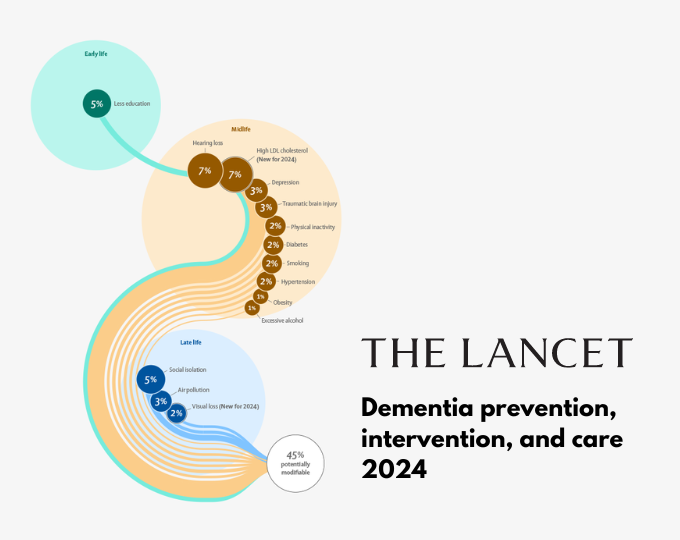
And through other work with other colleagues regarding sensory health and hearing, those lines of research began to come together in terms of the kinds of challenges that older adults have in terms of decline in their cognition for some individuals, decline in their sensory health, what implications that has for cognitive assessment and cognitive screening. And then as we know, those very influential Lancet Commission reports starting in 2017 and now updated in 2024, have identified originally hearing and then vision losses, two potentially modifiable risk factors for dementia.
Dr. Marta del Campo:
Yeah. That was exactly what I was going to tell you, that there must be really hot topics and exciting areas of research within this topic due to this new publications are coming, how the impact of modifiable risk factor has on the development, on the risk of dementia, on neurodegenerative disorders and Alzheimer's disease. So, what do you think is the most intriguing part of this modifiable risk factor and what is the people most interested in right now?
Professor Natalie Phillips:
It's really impossible to identify one, but to me it's really the mechanisms, like why would this relationship exist. And of course, the senses are very different from each other, both in terms of their sensory properties, their periphery, how they're instantiated in the brain, and what they mean in terms of our everyday functioning. Olfaction has a completely different neuroanatomical representation than hearing, and again from vision. So, the mechanistic relationships are likely to be quite different. It's really this attempt to understand why hearing loss and vision loss, why might they be related to increased dementia risk? And the big questions are whether there's a common cause, if I just take hearing loss as an example, whether there's microvascular changes or mechanisms of inflammation that might be relating to the development of hearing loss and to the development of cognitive impairment so that the two go down together, but they're not causally related to each other.
But then there's other hypotheses. Again, if we just use hearing as an example, that hearing may actually have a causal relationship with changes in cognition and cognitive decline. And one of those is referred to as a cognitive load hypothesis, which is the idea that if you're getting suboptimal sensory input over a continuous period of time, as someone with a chronic hearing loss might, you're recruiting compensatory brain pathways to help support that sensory processing.
And those compensatory pathways, although may be beneficial in the short run, may start to lead to a chronic cognitive load and may actually increase the likelihood that things like tau and other biomarkers are deposited in these very metabolically active areas. So, there could be actually a causal relationship between a sensory loss and cognitive impairment.
And then a third broad category is one that's thought to be socially mediated. And because our senses are so important for our social interactions, my ability to converse with you in a noisy restaurant and to get visual cues, or if I had a visual loss, my ability to navigate in my physical world effectively, these can be really impacted by having a sensory loss, hearing or vision.
And we know that increases in depression and social isolation are themselves risk factors for developing cognitive loss and dementia. So, there could be a socially mediated pathway. And I think likely, I don't think it's only one of those.
Dr. Marta del Campo:
That's actually my next question. You very well described these three different ways of doing, but that doesn't mean that it's one, two, or three. It could actually a mix of a little bit of one, two, like a recipe. You put a little bit of one, a little bit of two, and a little bit of three. And maybe, it depends on the patient, it could be subtyping, different paths. It can get extremely complex.
Professor Natalie Phillips:
Yeah, absolutely. So again, it's these mechanistic relationships that I'm interested in understanding. And so, another big question in the field is if you intervene in a sensory loss, whether there's positive outcomes in the long term as well. So, I would say those are at least two of the big areas in our very large field.
Dr. Marta del Campo:
And what are the challenges that you are encountering? Because to do such a complex research with a lot of different phenotypes and different types, it must be very challenging which tools you usually use to address your questions?
Professor Natalie Phillips:
Well, I mean, it really ranges from the kind of work that was cited in the Lancet Commission. Those are really epidemiology studies. These are large-scale population studies. Those are limited to associations, observing associations, and we would have to speculate about the actual mechanisms. I mean, that work is very powerful in that they're high-powered studies and you can control for a number of covariates that are important to control for.
But nevertheless, they don't get at the heart of the mechanism. So, I would say, one of the challenges is getting some of the more mechanistic work at using appropriate biological models and having that interface between the basic animal-oriented research that can really speak to mechanisms and causal relationships and then scaling that up to the associations and observations we see at population levels. And then probably another challenge for the areas is really having really diverse populations. Again, a lot of the literature that's cited comes from western countries, wealthier countries, and we know that sensory loss is actually highly prevalent in lower- and middle-income countries, but that research is really developing. And again, I think that's a gap for us.
Dr. Marta del Campo:
Probably it's a gap for everyone and it's a gap of science itself, the diversity and equality and everything. And I think that regarding how to check the mechanistic insights, probably you are making use of fluid biomarkers also to understand the different pathways, or not?
Professor Natalie Phillips:
Yes, that's right. And there's actually a very recent 2025 meta-analysis that looked at fluid biomarkers like tau and amyloid, and they also looked at anatomical measures like brain atrophy. And so that was recently published in ageing research reviews, it's Laseka and Colleagues. And what they saw, it was fairly consistent evidence of an association between age-related hearing loss and tau biomarkers in vivo, both cross sectionally and in terms of longitudinal relationships with the increase in tau. The data for amyloid was a little more variable. And there's also fairly consistent evidence for a relationship between age-related hearing loss and medial temporal lobe atrophy. Which is interesting, because the medial temporal lobe is not thought of as being a primary auditory cortex. I mean, we associate the medial temporal lobe with the limbic system and learning and memory mechanisms that are highly implicated in Alzheimer's disease. So that's true, there's a good body of evidence for hearing loss.
For something like olfaction, we think about olfaction as being much more of a disease biomarker, because of the intimate relationship between the neuroanatomy, the olfactory system and the neuroanatomy of learning and memory systems. But I would just mention that we have a study that's running in Canada called COMPASS-ND, and we're just beginning to get the readouts from our plasma biomarkers.
So, I'm keen to start looking at the relationship between those indicators and the data that we have on hearing and visual faction in our participants. And I think one of the things that's interesting about that study, lots of people, there are lots of studies that are going down this avenue, but I think one of the things that's interesting about the COMPASS-ND study is, we have participants who have subjective cognitive decline. So, they're likely at that earlier stage before MCI where individuals have cognitive complaints. We're quite keen to see what the relationships are going to look like there.
Dr. Marta del Campo:
Very, very interesting. And may I ask, which plasma biomarkers are just the set classical, let's say now it's weird that we can call it the recent plasma biomarkers classical, but the classical pathologies that we know, or you're looking into the proteomics field into any marker that might be changed?
Professor Natalie Phillips:
The proteomics data have yet to get processed. And you're speaking to a neuropsychologist, so I'd have to get back to you on the specifics, but I know we're using Simoa for the plasma biomarkers.
Dr. Marta del Campo:
Yeah, so you are measuring basically amyloid, beta, tau, p-tau and NFO, but you have proteomics data also. So, you will look at the more proteome data set to see what changes or not. So, there is really new mechanistic, and such can really pop up from there.
Professor Natalie Phillips:
In fact, we literally just got funding to do this about, beginning of June it was announced. So, I'm quite keen.
Dr. Marta del Campo:
Wow. Nice. Congratulations.
Professor Natalie Phillips:
I have a close colleague, a man, Preet Badwar, who's an expert at University of Montreal. And so, we're really keen to get that work going.
Dr. Marta del Campo:
I was thinking also that maybe you need, probably in order to get a strong effect sizes and so on, you need to do this type of analysis due to heterogeneity in huge sample size, so reliable, quite big sample size. So, I'm thinking maybe, I don't know, it's just a question that just came up to my mind. Maybe population studies very well characterised. And I'm thinking now about the UK Biobank could be a very good resource also for you now to validate the findings that you will get, because they have a lot of huge community with different aspect, and maybe those can be used to infer causality or something.
Professor Natalie Phillips:
I mean, thank goodness we're in the era of big science now, big data. So, there are some really remarkable data sets that are out there, including the UK Biobank that has measures of hearing function. To my knowledge, I don't think they have measures of olfaction. So, the ability to look at multiple senses at once, varies across the different data sets. Something like ADNI also, of course, is an extremely valuable resource, but doesn't offer the kind of sensory measures that we're interested in.
And there's another population study in Canada, the Canadian Longitudinal Study of Ageing, which is about 50,000 Canadians, aged 45 to 85 were followed for 20 years. And they do have actually high-quality measures of hearing and vision and are just introducing olfaction and have the biomarkers that would help move this field forward. So, all of these data sets offer unique opportunities to test these questions. And none of them are perfect, I would say, as you know.
Dr. Marta del Campo:
We won't get a black and white answer.
Professor Natalie Phillips:
Yeah. And what we really need are time machines to be able to go back and read the studies to include measures that we wish we had. Yeah.
Dr. Marta del Campo:
Definitely. And how do you envision that your findings, that the things that you will find will be implemented later? And do you think that the findings will be more for these initiatives that are coming of brain health centres, brain health initiatives, or more rather into the clinical settings in hospitals and so on?
Professor Natalie Phillips:
Yeah, that is an excellent question, because all of these have been... Hearing and vision have been discussed as potentially modifiable risk factors. So that means that we need effective interventions, which there's an incredibly rich field of sensory rehabilitation, including good strategies to mitigate hearing loss and to reduce vision loss. And if you can't actually act on them, there's all sorts of sensory aids that can support sensory function and maintain an older adult's ability to continue to engage in the activities that they really find meaningful.
So, the trick is to... I think there's two challenges. One is to get everyone to appreciate the importance of their sensory health and to feel that there are things that they can actively do, both to promote their sensory health, or if they do have a sensory loss, to mitigate it. So, vision is a little less challenging in the sense that there isn't a lot of stigma around wearing eyeglasses.
And people are, things like cataract surgery are quite commonly available now in western societies, but there's still a stigma around hearing loss and there's a stigma around the use of hearing aids. So, I think getting older adults to tap into the resources and tools that will support their sensory health, and their sensory function is still a bit of an uphill battle. It takes about 10 years for someone who's identified with hearing loss to actually use a hearing aid. And even then, device abandonment is fairly common.
So, I think there's lots to do around attitudes and making people more open to adopting techniques that exist. And then I think the other side is to get clinicians to really recognise and embrace that sensory health and sensory screening should be part of their clinical care. And also, not to have a nihilistic attitude about sensory health either. We want people, clinicians to really appreciate how your sensory health, your hearing, your vision, your olfaction, really underlies our engagement with society and our ability to pursue activities that are meaningful to us. And so those really feed quality of life with older adults. And so, if we had clinicians who were more routinely asking about hearing loss and vision loss and olfactory loss and making appropriate referrals, we think there'd be more opportunity for headway here.
Dr. Marta del Campo:
And you mentioned at the beginning that you just launched this, one of the last PIAs, the Sensory, Health and Cognition. PIA that you just launched.
Professor Natalie Phillips:
Yeah.
Dr. Marta del Campo:
What were the challenges to make this PIA, and how do you support this PIA, the research that you are doing?
Professor Natalie Phillips:
I mean, what a great group of people to work with. I'm currently chair, Carrie Nieman is vice chair, Jenny Campos is our communications chair, Iracema Leroy is our programming chair. We have an early career researcher, Ingrid Ekstrom, and Esther Oh is another executive member. And so that executive committee is quite interesting. We've got neuropsychology, auto-laryngology, an olfactory expert. We've got two geriatricians, a multi-sensory expert. And so, I think even just at the exec level, we exemplify how diverse the field is. There's a number of scientific and professional disciplines implicated in sensory health and cognition.
The challenge of getting it started wasn't too great. I mean, we were thrilled to have it accepted. We were the only new PIA accepted in 2023. I think the trick for us going forward is to continue to grow it, and we've got about 110 members now. So really start to create an atmosphere of our other members wanting to take on leadership roles and spearhead activities that we're doing within the PIA. We've done the basics, webinars, we've undertaken featured research, symposia submissions to AAIC. We're doing these kinds of podcasts. We promote bringing together people to do a white paper review. So, I think the two challenges for us going forward is to continue to get buy-in from our community, and to have people take on roles so we can continue to offer programming. And just, there's only so many hours in the day.
Dr. Marta del Campo:
Indeed. But is there any specific scientific activity that you are leading within the PIA? I mean, really trying to answer research questions already within the PIA or through cross collaborations or something like that?
Professor Natalie Phillips:
The other thing I wanted to mention is that we are really interested in making links with the other PIAs. For example, the fluid biomarker PIA, I mean what tremendous expertise.
Dr. Marta del Campo:
We are delighted to start up collaborations.
Professor Natalie Phillips:
Yeah. So, we really want to start to reach out to your PIA, the sex and gender PIA, the diversity PIA. I mean, there's so much opportunity when I was speaking with Owen Carmichael, the nutrition and metabolism PIA, because there's all of these cross linkages that we really, really want to start to pursue so we can build capacity in this area.
In terms of research agendas, what we have focused on over the last year is a white review paper that is designed to introduce, I would say the sensory curious about screening measures. Like, how do you go about incorporating sensory measures into your research and clinical work without being an expert in sensory health? Because I think people, they read this literature, they know about the Lancet 2024 report. And so, I think people are interested in pursuing this kind of work, but they don't know where to start. So, we're hoping that the review paper will give people a place to start. And we're really interested in talking to researchers and clinicians about how to attend a sensory health.
Dr. Marta del Campo:
Definitely. It seems that you have done already a lot of work within the PIA in such a short time span. So, congratulations. I hope that it goes just up, up, up, and up. And what do you expect now that we have the AAIC coming soon, actually in Canada? So, what do you expect to find there in related to your topic? Do you expect to find... Have you had the opportunity already to see who is going, who's going to present, and what you expect in relation to sensory health?
Professor Natalie Phillips:
Yes. AAIC is going to be in beautiful Toronto at the end of July. Canadians are very hospitable. We look forward to welcome everybody.
Dr. Marta del Campo:
Definitely. [inaudible 00:28:13].
Professor Natalie Phillips:
Yeah. We have a lot of things planned. We're offering an immersive workshop, which again is along the lines of introducing hearing, vision, olfaction and cognitive screening. Often people have an experience with one of those four things but not experience with all of them. So, we've got a workshop to give people hands-on experience with using screening measures in those four domains.
Dr. Marta del Campo:
So, there is actually hands-on experience. This means, if I bring my lab to the workshop to say, measure a biomarker?
Professor Natalie Phillips:
Well measure a sensory biomarker. So, you would-
Dr. Marta del Campo:
Yeah. No, I know.
Professor Natalie Phillips:
Yeah. Yeah.
Dr. Marta del Campo:
Exactly. In case of fluid biomarkers, if I bring the Simoa there and say like, "Look, measure your plasma biomarker." You would say like, "Look, measure the sensory health."
Professor Natalie Phillips:
Yeah. This would introduce you to, if you were interested in that-
Dr. Marta del Campo:
Oh, nice.
Professor Natalie Phillips:
... how would I incorporate a short hearing screening or a vision screening or factory screening into my line of research. So yes, please come, bring your lab. So, we have the immersive, and we are convening another discussion panel for another potential review paper. And one thing I'm really excited about is, we're doing our first student and postdoc research award at AAIC. So is the first year that we're going to be able to look at the great posters by our trainees and offer research awards to them. So that I'm really excited about, because the training component is huge. I think we're all, many of... Yeah, probably all of us are in this to help train the next generation of researchers.
Dr. Marta del Campo:
Very, very important. Bring the new ideas in, fresh ideas.
Professor Natalie Phillips:
Yeah.
Dr. Marta del Campo:
That's very, very important. It's a very nice call for students to be there to participate and to give their best, because there are actually people looking at your data, at the data.
Professor Natalie Phillips:
Yeah. Yeah.
Dr. Marta del Campo:
Well, so great. It has been a fantastic time, I would say. I'm afraid we don't have more time to go, but it was really a pleasure, Natalie, to hear from you that you have done. Huge work. Congratulations, and thank you very much. It's time to end the podcast.
Thanks, you for listening. You can find profiles of myself and my brilliant guest, Natalie Phillips, and information on how to become involved in the ISTAART on our website at dementiaresearcher.nihr.ac.uk, and also at the ISTAART web page of the Alzheimer's Association. I am Marta del Campo, and you've been listening to the Related Podcast from Dementia Researchers and the Alzheimer's Association. Hit subscribe on YouTube and your favourite podcast app, and you don't meet an episode. Thank you very much.
Voice Over:
The Dementia Researcher Podcast was brought to you by University College London with generous funding from the UK National Institute for Health Research, Alzheimer's Research UK, Alzheimer's Society, Alzheimer's Association, and Race Against Dementia. Please subscribe, leave us a review, and register on our website for full access to all our great resources. Dementiaresearcher.nihr.ac.uk.
If you would like to share your own experiences or discuss your research in a blog or on a podcast, drop us a line to dementiaresearcher@ucl.ac.uk
Did you know... you can find our podcast in your favourite podcast app on mobile devices, and our narrated blogs are also available as a podcast.
The views and opinions expressed by the host and guests in this podcast represent those of the guests and do not necessarily reflect those of UCL or Dementia Researcher
 Dementia Researcher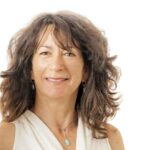

 Alzheimer's Association