In this episode, we share highlights from the second day of the 2026 Alzheimer’s Association International Conference (AAIC).
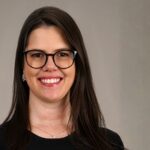
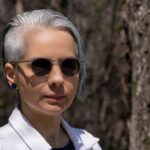
Adam Smith chats with Nathania from Universitas Airlangga in Indonesia, Dr Arezoo Talebzadeh from Ghent University in Belgium, and Dr Suelyn Koerich from the University of Texas Health Science Center at Houston.
The AAIC brings together researchers from all areas of research to share their work, theories and breakthroughs while exploring opportunities to accelerate work and elevate careers.
Key topics
- Anti-amyloid immunotherapies and personalised medicine
- Cultural sensitivity in dementia assessment
- The role of environment and architecture in dementia care
- Neuroinflammation and neuroprotective factors
- Biomarker validation and minimally invasive testing
- Impact of social determinants on dementia risk
- Soundscape and sensory health in dementia management
Click here to read a full transcript of this podcast
Narrator:
The Dementia Researcher Podcast, talking careers and research, sharing conference highlights, and so much more.
Adam Smith:
Hello and welcome to the Dementia Researcher Podcast. I'm Adam Smith, and this is the second of our daily highlight shows from the Alzheimer's Association International Conference, or AAIC 2026, taking place in London and online. There's a tremendous amount happening across the conference, with presentations, posters, panels, and conversations all taking place at the same time, and none of us have time to see everything. So, throughout the week, we'll be bringing researchers together who have been attending online, to compare notes and share some of the work that's caught their attention.
Joining me today to look back at the second day are Nathania from Universitas Airlangga in Indonesia, Dr Arezoo Talebzadeh from Ghent University in Belgium, and Dr Suelyn Koerich from the University of Texas Health Science Centre at Houston. Hi, Nathania, Arezoo, and Suelyn. Thank you so much for joining the podcast.
Guests:
Thanks for inviting us, hi.
Adam Smith:
So, before we get into today's conference highlights, let's find out a little bit more about each of you. So, I'm going to ask you to each introduce yourselves and tell us a bit about where you work or study and give us a quick overview of your research interest. And Nathania, I'm going to come to you first.
Nathania:
Okay, so hi, Adam, and hi, everybody. My name is Nathania, and currently I'm a medical student on my third year and based in Indonesia. And I work a lot in neurology research, because that has been my main interest, especially with Alzheimer's disease and other neurodegenerative conditions, and also infectious disease. So, I'm very actually an early career researcher, and I hope to move forward, as well as joining AAIC is one of my goal to improve further.
Adam Smith:
That's exciting. So, what does a day look like for a third-year medical student? Are you in the classroom, or are you out in the hospital?
Nathania:
So, we had our classes in the hospital right now, but we're not in the clerkship yet. We're just studying in the hospital.
Adam Smith:
Wonderful. And is this your first AAIC?
Nathania:
Yeah, I had my previous ISTAART Conference, but it was the AAIC in neuroscience next. It was February this year.
Adam Smith:
Wonderful. Well, thank you so much again for joining us, and I'm going to come to Arezoo.
Dr Arezoo Talebzadeh:
Hi, thank you again for inviting me. My name is Arezoo Talebzadeh. As you mentioned, I am an architect, but I did a PhD with Ghent University in Belgium on soundscape and dementia. The idea was that we can augment the auditory environment, and through that, we can lower behavioural and psychological symptoms of dementia in the people with dementia. So, I did this study in Ghent University, but I did my data collection in Toronto Rehabilitation in Canada.
So that's why I have both side of the pond experience working with people living with dementia.
Adam Smith:
That's wonderful. This might be surprising as well, but you are not the first architect we've had on the podcast.
Dr Arezoo Talebzadeh:
That's good.
Adam Smith:
We had somebody called Andrew Lashley join us, who's Tammaryn Lashley's husband, but it wasn't about dementia. It was about, we had a show where we talked to the partners of dementia researchers to say what it's like to live with a dementia researcher, and he was an architect too. But it's been an interesting topic. I know I've seen lots of work come out of the University of Sterling looking at care environments, and how you build better environments that can facilitate and lend themselves to care in that out-of-home setting.
Dr Arezoo Talebzadeh:
Yeah, exactly. In my everyday job, I designed long-term care. So, I've tried to bring this research and real-life implementation together, hopefully.
Adam Smith:
Is it the Netherlands as well that have put a lot of thought into care home settings and community spaces?
Dr Arezoo Talebzadeh:
Yes, the Netherlands very famous for.
Adam Smith:
Well, thank you very much again for joining us. And finally, Suelyn, thank you so much for waiting.
Dr Suelyn Koerich:
Hello, everyone. Nice to meet you all. So, I'm joining from Houston, Texas. I am Suelyn Koerich. I am a postdoctoral research fellow at UT Health Houston. And my research focusses right now in Alzheimer's disease is mainly in autoinflammation, microglia, and therapeutic approach. So, I'm really excited to be here, and share of the highlights of the day with you all.
Adam Smith:
That's great. So, we've got some really broad perspectives. I don't think any of the three of you will have been to the same talk. So, we've got the clinical side, we've got the care and architecture, and then we've got the fundamental science covered as well, and me that knows nothing about any of them trying to float over the top of you. That's wonderful. Thank you so much all of you for joining. So, let's now turn to the conference programme. We're on day two, as I mentioned at the start there.
And what was the first thing that you saw or heard today that really caught your attention? And I'm going to come back to you, Arezoo.
Dr Arezoo Talebzadeh:
So just going to mention that because I'm in Toronto, I'm a little behind timewise. So, I missed all of the early morning sessions, and I started in the afternoon sessions. I have to go back and watch them. But in this, and because I have an architecture background, I'm not a physician, so my interest is maybe a little different.
There was a session this afternoon about designing for inclusion, and how to engage communities that usually not be involved in the data collection to come and have data collection, which is very interesting, because I always want to do that in my own research. And there was a couple of speakers that I find very interesting, Dr Luis Medina from University of Houston. And they look at how the presentation of Black communities and Hispanic communities is usually lacking in the data collection.
And they had this idea of how we can bring communities to get involved. So, they have this initiative under the Alzheimer's Society called Brain Trust. So, they try to go into the community, make that connection with them, make the trust, because the data that they have showed that till now, most of their research, only 1.2% of the participants of our Black communities, and about 5.6% from Hispanic.
So, they're trying to change that narrative, because as we all know that if you don't have everyone in that research, then there's just very biassed data. So, one things that I find it very interesting about their work is that they're co-designing with the community how to can make them to trust the researchers, and how to can bring them into this idea of the participant in the research. And they also, for Hispanic, for example, they use the Spanish language people to make that trust.
So, I find it very interesting, and I really like to follow up with them and to see how they grow their research, bringing more people and making more inclusive.
Adam Smith:
Were there some kind of lessons that they've learned? Were there any kind of top tips from that study that would listen?
Dr Arezoo Talebzadeh:
The most things that they learned that they have to make the trust. It's not that people don't want to participate, but because people, maybe Black people, because of the history of they have, or Hispanic people, because they cannot make the communication, they don't trust. And they find that the best way to make that trust to go with the community, make sure that they co-design the research with them and not for them, as we always say in inclusive design.
So, they find that one of the tips that they said that it can work for everyone else, so they do that. And I find it very interesting, because usually when we talk about the research, researcher would say, "Well, I don't know how to find people "with diverse background." So, one way is that you have to go to the community and start a conversation. So that's one of the highlights of theirs.
Adam Smith:
Yeah, that's a kind of very clear message, isn't it, that's been coming out from all the public and patient involvement work, and co-design work for a long time now. You've got me thinking actually though that something I haven't seen talked about much before, and I though this is where you were going to go with this, is about the environment in which the research take place.
So given that you've got that white coat syndrome that people either, you know, respect, and don't listen to everything you say, or they are scared of going into a healthcare setting, or have that fear and that stigma that can be associated with that, whether there's some research that could be done to look at the environment, particularly also as well, if you're going into a medical setting where it increases your anxiety, your stress levels, that the results you might get from the tests you apply in that environment will be very different to if you applied them in people's own homes, or if you created a setting where people felt more comfortable to do that.
Dr Arezoo Talebzadeh:
That's a very good point actually, because not for this specific talk, but for soundscape research that we do, we sometimes say that we want people who are like marginalised population. We want to design for them, but how we can, we have to go to their spaces to understand their soundscape. Or if people have dementia, we have to go to their spaces. If you sit in the lab and ask everyone to come, as you said, they may never come.
Adam Smith:
No. I mean, obviously not every kind of test you can do could be delivered in somebody's own home. Sometimes people, like it or not, are going to have to visit some kind of healthcare setting or someplace, but thinking about how- I mean, we do this really well for children, don't we? If you think about it, if you're going to a children's hospital, there's going to be murals on the wall. There are going to be toys there. It's going to feel soft, and warm, and comfortable environments.
I think, I wonder if less has been done to consider how you might make an environment feel welcoming for older people. If you are aware of research into this and you're listening, do drop us a line and let us know in the comments, because I'd love to read more on that, because I just feel like it's perhaps an underexplored area. Something to look at, Arezoo.
Dr Arezoo Talebzadeh:
Yes, exactly. Where are the architects who design these buildings?
Adam Smith:
Thank you very much for sharing your first highlight. And now I'm going to come to you, Suelyn.
Dr Suelyn Koerich:
Yeah, so one presentation that was interesting to me was by Dr Henne Holstege. I don't know if it is the right way to pronounce it. She's from Amsterdam. And she presented findings from the 100-plus Study. So, it's a longitudinal cohort, related to cognitively healthy centenarians, with some participants that donating their brains for neuropathological analysis after death. So, what I found especially interesting was that many of these individuals had amyloid pathology, but still maintain it like a normal cognition, because they accumulated very little tau pathology.
So, I though that was fascinating statue of the amyloid hypothesis, because right now, the concept of cognitive resilience was in the simple disease resistance. And I found this particular inspiring, because as we understand these protective mechanisms, we could eventually help us develop therapies to promote resilience, not just reduce the pathology. We cannot just focus on the amyloid pathology as well.
Adam Smith:
Absolutely. Did she have any theories on what might be those protective resilient factors? Or was this just, you know, was it good genes?
Dr Suelyn Koerich:
Yeah, they may show a good environment, share a good time with people that they must love, the health foods, exercise, all these things that we know is good for maintenance or brain resilience.
Adam Smith:
I've seen her present a few times now, I think from AAIC last year, and AD/PD the year before. And she gives a great talk. I love that slide that she often puts on at the start, showing you pictures of older people. If Arezoo and Nathania, if you haven't watched this talk yet, and it's online, go watch it, because it's always great.
Dr Suelyn Koerich:
Yeah.
Adam Smith:
She puts this slide up with lots of pictures of older people and then ask you to guess how old they are. And usually, you would guess that they're probably in their 80s, and they're not. They're all over, they're all centenarians. They're all over 100 years old. And what I've always find fascinating is as well that these aren't people who've lived healthy lifestyles their entire lives, that they are, you know, they've smoked, and they drank, and they've had children, and they've had stressful periods.
And it's really interesting, that shows that that resilience is a complex thing, it's not just made up of, you know, it's not just to say, well, we know, don't we? Because some people who smoke, don't all go on to develop dementia.
Dr Suelyn Koerich:
Yeah. It's good, because this message gives us like, that not only the amyloid or tau pathology alone determined cognitive decline. It's umbrella factors.
Adam Smith:
It's super. Did you know, was there something particularly new? Because every time, I see if she's added something new on to, I often see the same data again, but then with something new. Was there a new addition to today's talk?
Dr Suelyn Koerich:
Yeah. She mentioned something about more preventing, which preventing or delaying the transition from amyloid to tau pathology. Something like that, that is newer, I think. I lost the word. So, it's more preventive, that like a late disease.
Adam Smith:
That's great. And I know that they've got a great website as well, and they're constantly kind of sharing their data from that 100-plus Study. So that's wonderful. Thank you, Suelyn, for your first highlight. And Nathania, I'll come to you now.
Nathania:
Yeah, so I think there's so many interesting sessions of AAIC this year, and as always, but I think that the plenary sessions really get me amazed, because it's one of my interests, which is the anti-amyloid immunotherapies. It's been very emerging this year. And we always understand that this is genuinely a new era for the Alzheimer's disease, because we finally have drugs, like lecanemab and donanemab that can slow the Alzheimer's disease by clearing the amyloid plaques.
Although there has been a lot of like refuse and also responses that are like pros and cons about this therapy, we should like acknowledge again that this is a very emerging era of Alzheimer's disease. And I saw that Dr Schindler, that she mentioned a lot of amazing important things that I can get, especially as a medical student, is that we can see about the patient's symptoms and also the patients that are going to get the therapy.
And the patient that walks into a real memory clinic is not like something that you can stereotype. And as her own experience, that she saw a lot of patients in the clinic every year using various subsets of tests, and to screen about their eligibility. There are actually so many things that we need to take care of, because that not everybody that are cognitive impaired are actually eligible for the treatment, and this is the thing that we should take in notice.
Adam Smith:
Yeah, I've just come off the back of watching that same talk too, and I really enjoyed it. I thought Suzanne Schindler did this great way of bringing storytelling. Anybody who gives you a real-life example, like this patient comes in, and this is what happened. It really helps me understand what she was talking about. She was focused on those real-world challenges of figuring out who should and shouldn't get these new anti-amyloid drugs.
And to cut what was a really long talk, you've already summarised this really well, but the main message was very clearly that treatments exist, but there's this new diagnosis bottleneck, and that clinical assessments alone really miss a lot. And so, we really need those biomarkers. But those biomarkers need to sit in that. They need to be scalable, and they need to sit in that primary care setting focused on that p-tau217 as the most current reliable blood biomarker.
But yeah, that take home message that this has got to sit in primary care, and I loved her storytelling.
Nathania:
Yeah, it was really brilliant and bring us a lot of perspectives. And that actually leads us into something that we can call as personalised medicine, where we can actually understand every single patient to give them the best care, especially for Alzheimer's disease.
Adam Smith:
Absolutely. Thank you very much. So that gives us our first set of highlights, but there will have been plenty more happening across the conference. So, let's move to something different now. What did you see or hear today that you think is worth sharing with our listeners for your next highlight, Arezoo?
Dr Arezoo Talebzadeh:
So, something that I want to mention, actually, I think it was yesterday's session, but I watched it today. So, it's on climate change, war, and migration. I want to talk about this because I find it very interesting. Dr Marco Canevelli from University of Rome, and he had a very nice presentation. So, if anyone interested, he explained it very well, much better than I wanted to say now. But they look at migration and refugees’ population in Europe, and the lack of cultural assessment for dementia.
And I find it interesting, because, for example, Mini-Mental State Examination is what I even use in my research. And it's on English, and then you talk with people, maybe there's a translator in between, but sometimes when you translate these assessment, in the culture, it doesn't really work that way. So, we always have to find out the best way to actually can do these assessments. And then the cross-cultural cognitive assessment is very important.
And it's also in the soundscape studies that I do, even if the people don't have dementia, the set of the assessment that we do is basically based on Western culture, and knowledge, and not around the world. And then just imagine that if people are refugees, or they're immigrant, and not the number of people with dementia in that group is going up because they're ageing. And the talk said that in 2019, half a million people in Europe, they have dementia between the immigrants only.
And then you have to find the best way to go and assess them and how to actually communicate with them. And there is a lack of study in those specific group. I find it very interesting, especially if I want to use the soundscape for the people living with dementia in the long-term care home. For example, in Toronto, I know that the population that I have to design with or design for them, they're coming from all around the world.
And how I can use this method that they are going to use to have the best result for my participants, or if I am designing for them. So, I find it very interesting.
Adam Smith:
Did they have some recommendations? Have they been designing some specific kind of cultural?
Dr Arezoo Talebzadeh:
They are looking at countries that they already have some dementia strategy, and they said that there's just a very few. I think in Europe, Austria, Belgium, the Netherlands, and maybe Sweden. Canada has one, I know. It's just in the progress of making it wide and accessible for everyone, but they are still looking at to making one that can work more for more people.
Adam Smith:
It's interesting, isn't it? Because I think quite often, we find that people will jump to creating their own thing. You know, I've seen this, you know, in the UK, where they want to have culturally sensitive assessments for, say, South Asian populations of people living in the UK. Whereas, of course, you'd imagine that the first thing we would do would be to go to South Asia and say, what assessments do you use? We'll adopt those.
And I think often in countries where we live, we jump to making our own, rather than just looking to what already exists in the places where they are and adopting an existing. Now, I really appreciate that doesn't always work, because some of those places in the world might not even have their own assessments, but you'd imagine that that'd be the first thing you would try to do. More broadly, I do think, I do worry.
We talked a lot about people living with dementia, and the impact of conflict and migration on them immediately after the, you know, the conflict, the war in Ukraine broke out. And there was a lot of concerns saying, hey, people can't get medication. They're trapped in these places. What do we do about that? But that war is still ongoing, and I don't remember hearing anything about that, you know, six months later. And I'd certainly like to see more of that.
If there's some AAIC presentations talking about people with dementia in conflict zones, or difficult parts of the world, I'd love to hear more about what's being done to support that, because it seems to have gone quiet.
Dr Arezoo Talebzadeh:
Yeah, effect of trauma actually. Do we have, like, war trauma, and any relation with dementia or area dementia? That would be interesting. Not interesting, but something that we need to do.
Adam Smith:
Well, access to carers, to safe environments, to medication, to whether this speeds progression, which you'd imagine it can do. Or does, you know, the whole issue of the conflict just become the most important thing that people living with dementia become so unimportant in the grand scheme of things, which you'd hope isn't the case, but, you know, you worry that that might be what happens. Thank you very much, Arezoo. That was a great second highlight. Nathania, I'll come back to you for your second update.
Nathania:
Yeah, I think I'd like to continue with the story of Dr Schindler. And we had Dr Acosta; she's also in the plenary session. I'm choosing these because they're both, I feel like, can be correlated in some part of way. And she is the investigator of the 10/66 Dementia Research Group in the Latin America. And in here, we get to know about the perspective that comes from Latin America. And that is very important. And it will be great if we can have perspective for every regions.
And from her presentation and her talk, we can see how the prevalence and how the development has been going since the mid-2000s, to 2016 to 2019. And numbers are moving so fast. For every region, it differs. For example, like Dominican Republic, and then for Peru, and also Mexico and Cuba, there has been a lot of divergence in the story, and where it tracks into multifactorial analysis again. And we can see also about like education, cardiovascular risk management.
And this, in a way, we can see granularity country per country, not just generalising as in one regional trend. And I felt this one really personally, because I think perspective from countries, like where I live in Indonesia are not often discussed as well. So, it might be great to work on this kind of thing in the future.
Adam Smith:
I watched that talk too, and I thought it was really interesting how she'd flagged that there were stable rates in Cuba and Dominican Republic, as you mentioned. But women were still more consistently affected, and that the differences that they were seeing though do seem to be driven by social and modifiable risk factors, and not genetics alone. So, yeah, I thought it was an interesting talk. And again, it was one of those big plenaries of the day, wasn't it? Could you see some similarities in that work?
Is that the kind of work you'd like to see happening in Indonesia?
Nathania:
Yeah, of course. I think that maybe sometimes some countries might be recorded as not really in the urgency, or they don't have any high prevalence of Alzheimer's or dementia, but it could just be as underrepresented. For example, like the national survey lens that did not work really closely to survey the whole country. So, I think that should be more emphasised to every of the countries, and also everyone that's involved. So, I think that it doesn’t just involve in one sector, but everybody to work together to make this come true.
Adam Smith:
Thank you, Nathania. And Suelyn, very patiently waiting. Give us your second highlight.
Dr Suelyn Koerich:
Yeah, so regarding what Nathania said, one talk that caught my attention was from a Brazilian research group, was Dr Paradela, and she talk about the neighbourhood deprivation and cognitive decline in Brazil. So as someone from Brazil, I was happy to see research using Brazilian data, because we still need more studies from countries like Brazil. The researchers look at whether the neighbourhood, or where people live affect their cognitive declines. And they found that people living poor neighbourhoods had a faster decline in this active function, even after consider age, education, income.
So, they did not find the same result for memory. And I think this study was very important because it reminds us that dementia is not only about biology. Where people live and the conditions are around them also is very important. This is especially important for countries like Brazil.
Adam Smith:
Absolutely. It's really weird you pick on that, because I've highlighted three posters that I wanted to talk to. And I don't know if this is the same research. So, this was by Nubia Al-Santa Freitas, and it's called Education, Social Isolation, Homebound Status of Dimensions of Cognitive Vulnerability in Brazilian Primary Care. It's a mouthful. But I don't think it's the same study. This study looked at 139 older adults who were receiving community-based primary care in Brazil, and asked how education, social isolation, and how being home-bound related to their cognitive impairment.
And the team classified participants through this multidisciplinary assessment, and then analysed whether each factor remained important, accounting for age and gender. And they found two kind of striking opposing effects that every additional year of education was linked to a 13% reduction in the odds of cognitive impairment, while social isolation in older adults had more than nine times as many odds of impairment. So, the more educated you become and less socially isolated was a massive difference to those that were in those other ways.
And being home-bound showed a possible increased risk, but not statistically that important. And I really like that poster because it gave this kind of clear public health message that cognitive health is shaped across life course, that that education, even if earlier in life, and that loneliness and social disconnection in later life are important too. So, it's really interesting we both picked up on that research in Brazil, and you see so much of this research looking at dementia prevention and things coming from Brazil.
Were there other studies and research you've picked up on coming out of Brazil in this same space?
Dr Suelyn Koerich:
Yeah, I think, first, this study you mentioned is a second study. They have two big studies in Brazil, because Brazil is very broad. So, we have many social and economic difference. So, they have these two studies trying to understand how this difference affects brain health and can support a better public health policies. So, I think in Brazil, we have a lot of problems relate to economy and also related to research.
We have a lot of research going on, but we don't have a lot of resources to publish these studies, or to look around the country as well. This is one the main problem. We have a lot of things happens, but we cannot access this data or sharing this data. I think this is one big problem because we don't have enough resource.
Adam Smith:
Although I have to say, I think Alzheimer's Association have been a great champion for putting funding into across Latin American research, which has made such a huge difference, because so many of the big talks that I've seen already over the first two days, and that are coming up, is of research coming out of Latin America, which is amazing and really great to see. It's not amazing. It's not surprising. It just, why wouldn't it?
But it's brilliant to see that that part of the world is getting the attention and delivering on some fantastic work.
Dr Suelyn Koerich:
Yeah.
Adam Smith:
Thank you, Suelyn. So, we have had two highlights from everybody. I am going to come round the table one more time and ask if there is maybe a smaller talk you picked up on, or one of the posters you have seen. Suelyn, I will come back to you to start this time around.
Dr Suelyn Koerich:
Yeah, I saw a small talk from a Dr Alexandra Gogola from the University of Pittsburgh, and she talk about the complex interplay between astrogliosis and Alzheimer's in non-dementia individuals. So, I think that was very new and exciting to me, because we are only mostly off 100% of the time, focusing AD individuals. So, she explored the complex between astrogliosis amyloid and tau pathology in people, health people and people living with mild cognitive impairment.
So, what I found most interesting was that the data suggests that astrocytes may play both roles during Alzheimer's disease progression. Early reactive astrogliosis appear to reduce the relationship between amyloid accumulation, and downstream, the tau pathology. And, however, as the disease progress, astrogliosis also became associated with neurodegeneration and cognitive impairment. So as someone working with neuroinflammation, I though that was very provoking, this study, because it reminds me that glial responses are not like simple. It's harmful, or it is beneficial. That may change during the disease progression.
And I think we should talk more about that in your research. It's not only focus in one way. I thought that talk was very interesting.
Adam Smith:
Wonderful. How did you come across that talk? Was that one that you went out of your way to deliberately look for, or did you, how did you come across that one in the platform?
Dr Suelyn Koerich:
I searched for glia.
Adam Smith:
So that's just top tip for anybody who's watching. There are loads of different ways. You can search by author; you can look by topic type. You can also just do some keyword search and say, hey, show me some research on music, or on microglia, or on tau, or whatever it is. Thank you very much, Suelyn. Nathania, I'll come back to you.
Nathania:
Yeah, so I would love to talk about the featured research sessions. So, there are two sessions that really catch my eye. It's about the social determinants of health, and Alzheimer's disease and related dementias. And also, the other one is to evaluate the national, such as social determinants of health in low- and middle-income countries. I think that this gives us a lot of new perspective.
It's about to maximise, not just about preventing dementia, or looking at a better prognosis, but also to build a community that understands together, and that comes into maximising the biological, cognitive, and psychosocial outcomes that I actually understand from the sessions.
It actually sounds really broad, but it also bring us back that Alzheimer's is not about just getting the tau pathology or like the amyloid pathology, but there are a lot of different trajectories, and also multifactorial, like what I mentioned before, like education, income, occupation, health literacy, the pollutions, like climate changes, also food insecurity, and many more. It's really limitless when we talk about other factors that can influence about the disease, but that actually inspires me that this should be a movement of which we all be aware.
It's like to evaluate the national brain health programmes across countries. And we hope that every country has these dedicated programmes, because I don't think that it is actually applied equally in the whole parts of the whole world. And also, we need to assess the implementation, and also to compare or maybe to discuss about the prevention strategies across countries, where there could be a dedicated prioritisation maybe in the future, and also to study how the healthcare infrastructure can actually affect all of this.
And I think that kind of factors that seem so broad can actually transform about the care in Alzheimer's disease in overall.
Adam Smith:
Yeah, I think we often talk, don't we, about personalised medicine, but, you know, the same ought to apply for policies when it comes to looking. Not every country necessarily needs to put addressing dietary concerns at the top of the list, or climate. No, we all have to put climate change at the top of the list. That's just a fact. But were there any kind of social determinants there that you felt came out as being more urgent than others?
Nathania:
I think the most important thing might be education, and also about maybe people that has exposure to social isolation, or maybe other psychological factors. I think those both might be overlooked, at least in my country, but that should be worth to be looking out for.
Adam Smith:
Thank you, Nathania. Arezoo, we'll come to you for your next.
Dr Arezoo Talebzadeh:
So, you talk about how this conference makes it very easy for us to search words. So, of course, when I go to acoustic conferences, I always search for dementia to see if anyone else is interested. When I come to this, I search soundscape, and I find one poster actually that they did the soundscape evaluation. So, the poster name is Processing of Real-World Soundscape in Alzheimer's Disease and Primary Progressive Aphasia. And the number is 6437, if anyone wants to see it. It's from UCL.
And I find it very interesting, because they look at effect of soundscape on people living with dementia and primary progressive aphasia. And when we talk about the soundscape is every sound that you hear in any environment, and the effect of sound on each person. So, for example, everyone has a different reaction to the sound of the cities, the car traffic, birds singing. So, they look at this, and they realise that. So even the people who have the hearing impairment, they don't have a hearing impairment.
Because of the type of the disease that they have, their understanding of the soundscape goes down when they have Alzheimer's, especially when they have a logopenic variant of PPA. And this is very interesting because this is very close to research that I've done with people with dementia, because at the end of my research, I went through different type of dementia and look at how each type of the disease changed the auditory scene analysis in people living with dementia, which means the way that we understand the environment through listening and hearing.
And this one actually was they went one step forward, and actually did the test with the people who have this type of dementia. And the understanding is that for these people, the scene, understanding of the scene through hearing is there's a deficit there, because there is an interference between perception, and semantic memory, and episodic memories.
And then so if for someone like me who wants to design a soundscape, to augment the soundscape for people living with dementia, I have to look at this specific type of dementia to make sure that what I'm adding to the scenery is just actually work for the person with that specific dementia that- It's very related to my research, so I got very interested to going through the whole poster and reading through it.
Adam Smith:
And UCL, of course, is where I work too. And Anna Volkmer writes lots of blogs for us, who works in that primary progressive aphasia space. It's a hot area of research for UCL. But I haven't seen their work on soundscapes. That sounds fascinating.
Dr Arezoo Talebzadeh:
Well, UCL has the largest soundscape study research team. You should go and meet them.
Adam Smith:
I absolutely will. And, well, after we did a relay podcast last week on sensory health as well, and looking at olfactory systems and things. This is my new thing. I think we should definitely be doing more to help people improve their senses if they're going to be living longer with dementia, rather than just using those as biomarkers or indicators of cognition that actually trying to help people improve their sense of smell, or with their hearing, or connecting hearing to help people live for longer in their own environment, sounds like.
Dr Arezoo Talebzadeh:
Yeah, not all of us are physicians and we cannot cure, but we can do some other stuff. As a designer, for example, I can make sure that the space that I design, works well and help with the wellbeing of the person who has dementia.
Adam Smith:
Is there a lot of work going into that space? Because I'm a bit of an audiophile myself, and I do always kind of make sure I'm on top of what are the best new noise-cancelling headphones and understanding how they work. Has that kind of technology from noise-cancelling space been used in people with cognitive impairment to help them focus? Because we know that quite often, people with Alzheimer's specifically can start to become disconnected if they're in busy environments, so they'll zone out and sit back.
But using technology to help people to focus in on single conversations, or pick out certain words, do you know of anything in that space?
Dr Arezoo Talebzadeh:
You can use it in reducing reverberation in the room, for example. The same technique that you use in schools when we do it for younger children. So, make sure that they can understand when the teacher speaks. The same can be done for the dementia care, but there's lots of research on it. There's not that much implementation yet, but we always look at, make sure that the room is quiet at least. But usually because these are healthcare settings, there are lots of other sounds that happening.
So, in my research, we always say that we have to first evaluate what is happening there. If we want to augment soundscape, we don't want to add to the chaos. Just make sure that that's not happening.
Adam Smith:
That's a great tip. I will go away and look at that poster. Thank you, Arezoo. So, we've heard about some of the work you've been watching, but, of course, I want to ask about your own involvement in the conference as well. And Arezoo, I'm going to pick on you first because I know you've been presenting. And when you said you looked up sound, and you mentioned soundscape, I was immediately about to say to you, is that your own poster? But it's not. But you've been presenting this week.
Tell us about your presentation.
Dr Arezoo Talebzadeh:
So, yes, I have a poster, which has the word soundscape in it, if you search the word. So, the title of the poster is "Mapping Auditory Processing Heterogeneity in Dementia "to Target Soundscape Intervention". So, as I said, as part of my PhD, I look at auditory symptoms in different type of dementia and the auditory deficit. And then we brought them all together and then make sure that the sound characteristic that we want to put into our soundscape augmentation works with each different deficit.
So if you look at the poster, I have the framework that I designed, and it can follow up from the type of the dementia, the type of the deficit, and comes all the way down to see what type of the soundscape can help in semantic masking, energetic masking, or in a spatial or temporal orientation, because that's the whole goal of soundscape augmentation that can help people to understand the time of the day that they are in, and the space, and they can navigate this space easily through the soundscape as a help.
So, you can look at this poster and figure out which sound works best for which type of the dementia.
Adam Smith:
That's fascinating. So, can you then say artificially, create those soundscapes to encourage certain behaviours, like making bedtime noises at bedtime, or clanking plates at mealtimes, or things like that?
Dr Arezoo Talebzadeh:
So, yep, that's what the research that we did. We did the RCT in Toronto when we have the set of the sound that we played for the people who participated. For example, we started early morning with bird sounds to activate. And then throughout the day, when it's the time to go for have a meal or a coffee, we started just playing the sound of the kitchen, or people eating, people talking in the restaurants outside.
And then when it got to the night, the sounds that is more nature during the night, birds, but the nighttime calling, birds calling. And we saw that when we evaluated, we saw that in the morning, the bird sounds actually reduce resistance to care for the participants.
Adam Smith:
Wow.
Dr Arezoo Talebzadeh:
So, we wanted to lower the behavioural and psychological symptoms of dementia in the people with dementia, but the most one with anxiety came down. But in this setting that we had, the anxiety was supposed to come down anyways. So, it was a more relationship, but resistant to care was very bent down because the soundscape played for them in the morning.
And I think one of the things that we want to really work on is how we can reduce apathy with people with dementia, because apathy is very common with everyone with dementia, and through the soundscape. So how we can make them to have a more social connection with others or just activate their feelings. So that's other things that we want to do too.
Adam Smith:
That's really creative. And you can see how you could do that, even through music and things like that. But if you want.
Dr Arezoo Talebzadeh:
Yes, definitely. I mean, we didn't have music part of it, but music is, of course, its music therapy, and music is one thing.
Adam Smith:
Well, consider this an open invitation to come back and talk about that more on the podcast, because that's fascinating. I'm sure our audience would love to know more about that.
Dr Arezoo Talebzadeh:
I should also mention that I am a big fan of your podcast, and I listen to your podcast.
Adam Smith:
You're very kind. Thank you so much. So, just give us one last reminder, what was the poster called again so we can get a plug in for that?
Dr Arezoo Talebzadeh:
It's Mapping Auditory Processing in Dementia to Target Soundscape Intervention. And the number is 2135.
Adam Smith:
Thank you very much. So, we've managed to go through the whole podcast and haven't really talked a massive amount about biomarkers. So, I am going to pick up on one poster that I'm going to mention, which was, let me pull my notes over here. So, it's called "Analytical Validation "of Minimally Invasive Capillary Blood Micro sampling "Using Tasso+ for Multiplex Neurological Biomarkers". That's another mouthful.
So, this was by Owen Swann, and I picked out on this one as well, because one of my colleagues, Amanda Heslegrave, who I worked with on AAIC Neuroscience Next, he's one of the senior authors on this paper. And this poster tested whether minimally invasive upper arm device called a Tasso+ could be used to collect blood samples suitable for neurological biomarker testing outside traditional clinics. So, this has come back in again.
If you think about blood-based biomarkers coming a big thing now, there's been a lot of talk about how you collect the samples for that, and whether this is something that could be done in their own home. And this team compared capillary samples with normal blood samples collected in a clinic, with us building in a 72-hour delay from collecting the sample to getting it into clinic.
And they found some strong agreement for brain injury markers in GFAP and NfL in both plasma and serum, although performance across wider multiplex protein panel varied depending on the individual biomarker. And that means that this approach is really promising, but it still needs further validation separately. And I like this because I've seen a few presentations in the last year about dried blood spot sampling, and different ways to collect blood at home.
But this idea of collecting this through a capillary device that then people could send in, I think opens up this accessibility. And I'd really like to see this move into more into that preventative space, or if we offer more blood testing to middle-aged to assess buildup of amyloid over time, if we can start to look at that as a predictor. I think that's got potential, and this is going to be one of those key steps in getting there.
So well done to Owen Swann and Amanda Heslegrave on that work, and a bunch of other co-authors. It's a very long list. But that's all we've got time for today. Before we finish though, I'm going to come to each of you and say if there's one last, we can't talk about the research, we haven't got time, but if there's one last talk you want to give a little plug to, you can tell us the name of the author and the title of the talk. I'll give you that chance.
Suelyn, was there one last plug you want to make for something?
Dr Suelyn Koerich:
Yes, one study that I liked too much was The U.S. POINTER, How Much Is Enough, is from by Dr Rachel Whitmer, University of California.
Adam Smith:
Absolutely. We haven't talked at all about the POINTER Study today, and that was one of the big, that's been their big press release. But if you look on the Dementia Researcher website, we've put that press release there with all their information. This is a new news from the LatAm. Was it the Latin American arm of the POINTER study? Oh, the FINGERS. Was it the FINGERS trial? I can't remember. The two were connected. I'll look that up while I'm asking Arezoo to answer that same question.
Dr Arezoo Talebzadeh:
I find it very interesting that there are so many session on ageing and women health. I am very interested in their relationship between women health, menopause, premenopausal, and dementia. So, if anyone interested, there are lots of talk about that this year. I want to invite them to go and watch them all. They are very interesting, as a woman, it's very interesting for me. Has nothing to do with my research, it's just with my own health.
Adam Smith:
Absolutely. Sex and gender have been so much talked about. We did a relay podcast on that just last week as well, and had a chat, some really interesting chats in our BSides, which is our subscriber programme on YouTube and in Apple Podcasts, if you want to hear more about that. And I've just checked my facts, and it was the LatAm-FINGERS trial, which is kind of the sister, I think, isn't it, or the brother of the U.S.
POINTER trial as well, which talked about that lifestyle programme, did boost brain health across Latin America. And that press release is on our website. And Nathania, any last plug for a talk you want to give?
Nathania:
Yeah, so you basically mentioned, and Suelyn already mentioned as well, it's about the U.S. POINTER and the LatAm FINGERS. It's really amazing. I hope to see a very good news from them later.
Adam Smith:
Well, thank you very much to all of you. I'm sure we could easily sit here and talk for another three hours, because there's just been so much to cover. Although we might have to let all of you go away and watch the morning sessions, which, of course, you've now got the pleasure of doing after we finish recording today. But Nathania, Arezoo, and Suelyn, thank you so much for joining us to share your highlights from the second day of AAIC 2026.
We'll be back tomorrow with another group of researchers, more conference conversations, and more studies, posters, and presentations that have been attracting our attention. You can find profiles on all of our guests, along with other AAIC coverage on the Dementia Researcher website. And don't forget, there is still time to register as well for the AAIC For All Conference, which has a lay track and a clinical track, which is on Thursday, and is entirely free and online.
And of course, you can find lots of updates on the conference on pretty much every social media platform looking for #AAIC26. But for now, I'm Adam Smith, and you've been listening to the Dementia Researcher Podcast. Thank you very much, everybody.
Guests:
Thank you.
Guests:
Thank you, bye-bye.
Narrator:
The Dementia Researcher Podcast was brought to you by University College London, with generous funding from the National Institute for Health and Care Research, Alzheimer's Research UK, Alzheimer's Society, Alzheimer's Association, and Race Against Dementia. Dementiaresearcher.nihr.ac.uk.
If you would like to join a panel or record a podcast on your own area of research, complete our show form. You can subscribe to our podcasts through your favourite podcast app, just search for 'Dementia Researcher' or follow the links in the footer of this page.
Did you know... all of our blogs are also available as podcasts? Find them here on Apple, and here on Spotify
The views and opinions expressed by the host and guests in this podcast represent those of the guests and do not necessarily reflect those of UCL, Dementia Researcher or its funders.
Join our Supporter Programme and subscribe to our channel in YouTube or in Apple Podcasts for exclusive access to bonus shows, and to gain early access to our recordings.
Share your thoughts on this topic in the comments below.
 Dementia Researcher