Podcast – The Road to AAIC Neuroscience Next 2026
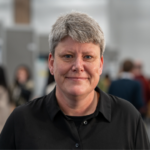
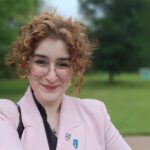
In this episode of the Dementia Researcher podcast, host Adam Smith discusses the upcoming AAIC Neuroscience Next Conference with guests Tricia Nicholson, Dr Amanda Heslgrave, and Kalli Mavromati. They explore the unique hybrid format of the conference, which combines in-person and virtual elements, making it accessible to a global audience.
The conversation highlights the focus on biomarkers in dementia research, the importance of early career researchers, and the abstract submission process, providing valuable tips for potential presenters. The episode emphasizes the conference's goal of fostering collaboration and sharing knowledge within the dementia research community.
In this episode:
- The AAIC Neuroscience Next Conference is free and accessible to all. Taking place across 6 countries and online from the 23rd to 26th February 2026.
- The UK hub will focus on biomarker advancements in dementia diagnosis, with a full in-person conference on the 26th February.
- The conference aims to support early career researchers in dementia research.
- A unique hybrid format allows for both in-person and virtual participation.
- Abstract submissions open on September 22nd and are encouraged from all researchers. From basic science to dementia care.
The UK Hub is particularly keen for researchers to submit abstract in biomarker domains.
- Fluid Biomarkers
- Cognitive Assessments
- Physiological and Behavioural Biomarkers
- Neuroimaging
- Technology Biomarkers
Follow the event on social media #AAICNeuro
Click here to read a full transcript of this podcast
Voice Over:
The Dementia Researcher Podcast, talking careers, research, conference highlights, and so much more.
Adam Smith:
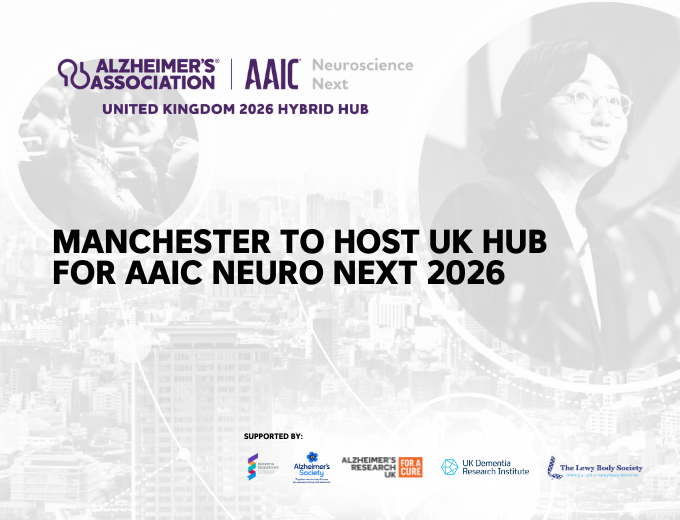
Welcome to the Dementia Researcher Podcast. Today we're looking ahead to a major event on the dementia research calendar, the AAIC Neuroscience Next conference, running globally from the 23rd to the 26th of February 2026, including a great UK hub in Manchester on the final day.
Hello, I'm Adam Smith, the programme director for Dementia Researcher, and it's a pleasure to be hosting this episode of the Dementia Researcher Podcast. Joining me today are three fantastic guests who are all involved in making next year's AAIC Neuroscience Next conference happen.
I'm delighted to welcome Dr. Amanda Heslegrave from the UK Dementia Research Institute at University College London, Tricia Nicholson, a senior specialist for scientific conference programming at the Alzheimer's Association, and Kalli Mavromati, who is a researcher at the Brain Health Alliance at the University of Glasgow. Hello, everybody.
Dr Amanda Heslegrave:
Hello.
Kalliopi Mavromati:
Hi.
Adam Smith:
Together we'll explore what Neuroscience Next has to offer, why the UK hub has such an exciting opportunity and how researchers can get involved. Importantly, we'll also discuss the abstract submission process, which opens on the 22nd of September. We're also going to share some tips on writing and submitting a successful abstract. So, let's get started by hearing a little bit from each of you and your connection with this year's conference. And Tricia, I'm going to come to you first.
Tricia Nicholson:
Perfect. And thank you so much for having me on, Adam. My name is Tricia Nicholson, and I work at the Alzheimer's Association where I handle scientific conference programming. So, for AAIC Neuroscience Next, I'm helping guide the programme for all of our six hubs.
Adam Smith:
That sounds like a lot of work. Is that like herding cats or it's not that bad?
Tricia Nicholson:
The work is made a lot easier when we have great hub leads like you and Amanda.
Adam Smith:
Oh, you're way too generous. Speaking of Amanda, Amanda, why don't you introduce yourself?
Dr Amanda Heslegrave:
Oh. Hi, I'm Amanda Heslegrave and I work in fluid biomarkers at the University College London as part of the UK DRI.
Adam Smith:
Thank you, Amanda. And of course, a regular to the show, you've hosted several for us recently. So do check back through the podcast archive if you'd like to learn more about Amanda and her work. And finally, we have Kalli. Hi, Kalli.
Kalliopi Mavromati:
Hi, Adam. Thank you. I'm so excited to be here. I'm a researcher at the University of Glasgow and I want to improve the way we work with existing data sets to investigate earlier stages of Alzheimer's disease.
Adam Smith:
Fantastic. So, the three of you have got three great perspectives, which is why we've brought you together because Amanda can very eloquently talk to what we're doing, particularly in the UK because we're a UK podcast and we're biassed to say ours is going to be the best. No, we're not really, but Amanda can talk very well to what we're doing in the UK. Tricia, of course, working for the Alzheimer's Association can talk about this wonderful conference as it is in the larger sense and what's going on across the world.
And Kalli's here as a member of our UK scientific committee who can talk about the abstracts and particularly what we're keen... and also share some tips with you on what it takes to write a great abstract. Let's get into it, shall we? And Tricia, I'm going to come to you first. Could you introduce Neuroscience? I've thrown that name around already lots. Introduce Neuroscience Next. What is it? What makes it different to other conferences?
Tricia Nicholson:
Happy to. So AAIC Neuroscience Next is a global free-to-attend conference that aims to support the next generation of Alzheimer's and dementia researchers and clinicians. So, the interesting thing about Neuroscience Next is that it was actually started as a virtual-only conference by one of my colleagues in the wake of the COVID-19 pandemic.
At the time, in-person conferences have all come to a screeching halt and the Alzheimer's Association was determined to create a place where early career researchers could present their work and gain that crucial presenting experience all while under lockdown. So that first meeting was a huge success. And since then, we've adapted the meeting to feature the hybrid hub format in an effort to connect both the local and the global community.
Adam Smith:
And I think it's that hybrid format that makes this really unique, isn't it? Because when we think about hybrid, you think about, okay, that's an in-person conference that you can also attend online if you can't make it. But this isn't just one in-person conference with AAIC Neuroscience Next. Tell us about that.
Tricia Nicholson:
Yeah, that's exactly right. So, someone who's attending AAIC Neuroscience Next might start their day by viewing one of the live broadcasts from one country, and they might finish their day by going in-person to the closest local hybrid hub happening. So that could mean that you're first on your computer, you're watching some of those broadcasts, but then there will also be in-person programming happening at each of our six hubs this year.
Adam Smith:
So just to be clear for everybody, this is a conference that lasts four days? Four days.
Tricia Nicholson:
Four days.
Adam Smith:
So, it's Monday to Thursday that week. And then each day, one of those in-person hubs from somewhere in the world takes a turn at contributing live content to the online platform.
Tricia Nicholson:
That's exactly right. So, if you're only viewing the conference from the virtual broadcasts, you'll have one or two of those to view every single day. Every hub will go live for at least one hour, but then there will also be in-person programming that's designed to be exclusively available to that in-person audience.
So, some of that in-person programming might be poster sessions, it could be workshops or any kind of networking events. But we also want to provide the opportunity for people who are attending virtually to still be able to get all of that great scientific programming that all of us are coming up with.
Adam Smith:
And that's brilliant. That's really unique as well. And I love how historically as well, these aren't hubs that are the usual places where you would expect to go to a conference, are they? They've been all over the world in the past, in parts of Africa, and in Latin America, and Eastern Europe and places like that.
So, they deliver in-person content for people who can go locally, or you can attend just entirely online and just absorb that. And so, does that mean that the presenters are only at those hubs? Where do the people who are speaking or the posters come from?
Tricia Nicholson:
That's a great question, and I think that it really speaks to that marriage that we're trying to have of the local community and the global community. So, if you're attending in-person to one of our hybrid hub locations, you'll see a lot of researchers from that local community giving poster presentations and talks.
But we also try to invite people from neighbouring regions to come give presentations. So, for example, I know Amanda, and you have chosen a plenary speaker that's not necessarily right from your local community. And the same goes for all of our other hybrid hubs.
Adam Smith:
Fantastic. So, who's it aimed at? Who should be going to this conference? We mentioned in the early days it was particularly for early career researchers. Is that still the case now?
Tricia Nicholson:
Yeah. So, Neuroscience Next was developed with those early career researchers in mind, and that's still our top priority in 2025. But really everyone is welcome. We have programming that will be applicable whether you are a PhD student or a well-seasoned researcher.
Adam Smith:
And I love that because it's free, and I know from attending in previous years so many, this is often the very first conference that people go to. Because I think I remember, was there a previous award winner? I've certainly seen a talk from an undergrad who hadn't gotten even to the master stage yet. So even if you are an undergrad, master's, PhD, because it's free, it's so accessible.
Tricia Nicholson:
Absolutely. And that's our number one goal for the conference. So, like you mentioned, these hybrid hubs, they're typically happening in locations where maybe there's not a lot of conferences happening there. And so, the real goal in mind is to give people that opportunity to do the first poster or the first oral presentation that will ultimately open doors for them in the future.
Adam Smith:
Brilliant. And for people who are participating online, do you have to be an ISTAART member or is this just open access?
Tricia Nicholson:
This is open to the public. So, although we do prefer our ISTAART members, and everyone's welcome to join if they're not already one, anyone can join this conference. So, you can visit the Alzheimer's Association website once we open registration and you can view it from anywhere in the world.
Adam Smith:
I assume you'll see who registers. Do you get many members of the public just come into this one or does it mostly just attract other researchers?
Tricia Nicholson:
This is one of our more popular conferences for members of the public, I think, because it's so accessible and you can just click a link and join that hybrid broadcast. This is a place where we see being an opening door for members of the community who want to learn a little bit more about dementia research.
Adam Smith:
Great. Okay. Thanks, Tricia. So now we have a good overview of the conference as a whole. Let's focus a little bit now on the UK hub particularly, because what I didn't mention at the start, but Tricia did, is that Amanda and I are two of the people leading this hub. And Kalli, of course, as I said, is on the UK scientific committee. Amanda, the UK hub, as I said at the start, is a full-day in-person conference, 26th of February. What's the focus for that UK hub and what can people expect?
Dr Amanda Heslegrave:
Okay, so we've chosen, and if you know me, it's not a surprise to focus on biomarkers. But we're not just going to focus on fluid biomarkers. We're really keen to get abstracts from people across the biomarker environment. So, we plan to have, at the moment, five different sessions aimed at fluid biomarkers, imaging biomarkers, cognitive biomarkers. Oh, now I've forgotten.
Adam Smith:
Technology?
Dr Amanda Heslegrave:
Digital biomarkers and physiological biomarkers. So, we're really hoping that this day can be informative and interesting for people across dementia research and to see what is new and what's happening in all of those different fields.
Adam Smith:
And we don't often see all of those brought together, do we? I think quite often, conferences will focus in on fluid biomarkers or technology, whereas I think we wanted to look more holistically across the path, and not just at these individually, but how your boss, Henrik Zetterberg, talks to this so well, how fluid on its own is much stronger when it's combined with other things.
Dr Amanda Heslegrave:
Absolutely. Yeah, yeah. And I think that a focus of conferences in the last, I don't know, four years that I've been to, has been so much on fluid biomarkers, which is great. Things are moving really fast and really positively. However, we want to hear about those other kinds and what that can add to the fluid. That's where we're coming from.
Adam Smith:
Yeah. I think it interests me particularly because as well, you often see the headlines at the start, like, "Oh, there's this new blood test," or "there's this language processing model that can listen to language and understand, predict that somebody's going to develop dementia 20 years down the line." But then there's often a big gap between hearing about the research, but then ever seeing this clinically, which is particularly interesting me to see about what the barriers are as well to bringing those forward.
Dr Amanda Heslegrave:
Also, putting the researchers together because we could work together and we see often we end up in silos just thinking about our one thing, but this is an opportunity to properly look across the whole landscape.
Adam Smith:
And I know you're particularly good at that because you did a podcast with us before with George Stothart from Bath, talking about the Fastball EEG. So, in your area, do a lot of people use the blood to validate some of those other biomarkers?
Dr Amanda Heslegrave:
Yeah, yeah. Lots of projects that we work on, they're looking at a specific aspect and they want us to measure the blood to see if we've got that correlation there, if indeed they are seeing something and we can back them up.
Adam Smith:
So, five sessions. So, let's just recap again. We've got technology, neuroimaging, fluid, physiological and cognitive assessments. And so, within each of those sessions, what do they look like?
Dr Amanda Heslegrave:
Okay. So, one of those sessions, and it is the fluid biomarker sessions, will be the session that is streamed across the world. So, this session will feature our plenary speaker, who is Marc Suárez-Calvet, who's from Barcelona, and an up-and-coming star, I should say, in the fluid biomarker field. So, he will be doing the plenary, and then there will be an opportunity to ask questions, I think, of that.
And then there will be a certain number of flash presentations chosen in that section, so that ECRs can get a chance to highlight their work in front of the world, basically. So that's how that session will work. And I think I've done that correctly. You should correct me if I'm wrong, Adam, because we're working this out together.
Adam Smith:
No, you're absolutely right. Tricia's nodding too. Tricia knows all about that one.
Dr Amanda Heslegrave:
But we'll also have other sessions that will follow quite closely that will just be for the in-person audience that are there that day. And here, what we really want to do is highlight as many ECRs as we possibly can. And so, what we've done is divide it up into a more senior ECR plenary type talk of about 15 minutes. Then another ECR highlighted talk for 10 minutes, I think it is, and then some more flash presentations.
So, I think they're four-minute talks. And then at the end of the session, and this will be the same for the other four that we're doing, we'll have all of the speakers on the stage to take questions together to make it a question-and-answer discussion session.
And I think it will be really good for people to get that opportunity to be in that situation and an opportunity that perhaps people don't get that often. So that's the way that we've planned it at the moment. Obviously, this depends on us getting their abstracts in to choose these people to speak and to fill our sessions up. So obviously there's that that's got to happen.
Adam Smith:
One of the things that we've really tried to do is to put early career researchers front and centre stage, as you say, to really give early career researchers that platform for this to be potentially the first conference that they might get one of our shorter plenary talks at, which we're meeting on Friday to talk about the more senior researchers who we're going to invite for the other four sessions. But then beyond that, they're really not given that much less time. I think it's 15 for the main, and then 10 minutes for that early career researcher plenary, and then the lightning talks.
I think it's going to be over 30 presenters given the opportunity to talk across the day, which is, I think, quite exciting. Because also as well, when we put a call out for people like Kalli came in through this call to get involved in organising, we had over 30 volunteers. Which is brilliant, trying to give people as well, not just a chance to present or be involved, but also to get involved in organising the conference and chairing the sessions as well.
Because all the sessions are also going to be chaired by members of our scientific committee who are all, as we've heard, they're at varying career stages from more senior postdocs through to much earlier people who are much earlier in their careers, who are going to be the ones chairing sessions, which you don't see that often either. Wonderful. And so, I'm giving you leading questions that I know the answers to. Why Manchester, Amanda?
Dr Amanda Heslegrave:
Okay. So, we've chosen Manchester for this because the preceding two days, or maybe three if you include the ECR day, is the Alzheimer's Research UK Yearly Conference. So that will take place in Manchester on the preceding three days. And we figured that this would mean there are lots of researchers who are interested in dementia in Manchester at that time, and so it made sense to add another day, and people can stay and follow. They don't need to go to the Alzheimer's Research UK conference to come. You don't have to. That's not the law.
But it seems like an opportunity, but also an opportunity for us to get supporters, and there are people supporting us from Alzheimer's Research UK. We have supporters from the Alzheimer's Society, the UK Dementia Research Institute, and also the Lewy Body Society. So, these people are really keen to see ECR researchers get their moment, but also, they want... encourage people to stay in dementia research basically, which is what dementia research is all about, but that was the main reason is ARUK conference.
Adam Smith:
And I don't know about you, but I wanted there to be a hub in the UK. We haven't had a hub in the UK for a very long... and since before even it really had that hub format. We did do a session from the UK many years ago, but it's always clashed with that Alzheimer's Research UK conference, which has been tricky. And this is the first year where, technically, one day of their conference didn't clash with this conference that gave us that opportunity to bid to host.
So, we're very grateful to Alzheimer's Association for giving us the opportunity to put this on. And of course, the DRI, ARUK, Alzheimer's Society, Lewy Body Society you mentioned, who are also supporting us in bringing this to Manchester and making it happen.
So, if you're in Manchester for the ARUK, don't go rushing booking your accommodation just yet. Stick around for that extra day to come to our event. And you mentioned, Amanda, the things that are going on, there's also going to be posters, of course. We're going to have in-person posters.
Dr Amanda Heslegrave:
Yeah. And those will be chosen from the abstract submissions as well. So yeah, if you've never presented a poster before and you want to do it in a lovely environment, I'd suggest that you put your abstract in for that. But I think we also can have online posters also, so we can do that too. So, I think that there's something for everyone to put an abstract in for.
Adam Smith:
There is. So, you mentioned at the start our hub is particularly themed on those areas of biomarkers. But you shouldn't think about that means that then this conference isn't for you, because of course it is. So, there are various ways you can present. All of our lightning talks, the senior ECR talks, and the in-person posters and online posters are all decided through the abstract process that opens on the 22nd.
We're particularly keen to encourage those biomarker ones at our location, but even if you're not working in biomarkers, don't be deterred because you could still be given the opportunity to present and have a poster at the conference. Tricia, how many abstract submissions do you typically get? How many online posters do you have?
Tricia Nicholson:
Last year we hit our abstract submission record for AAIC Neuroscience Next, and we're hoping to break that again this year. We had over 500 abstract submissions last year, so that amounted to over 450 accepted posters.
Adam Smith:
And so, I wonder, because this has got neuroscience in the title, do you think that that makes people think of this a bit like Society for Neuro or SFN or something? Because strictly speaking, I went to the Dublin hub a couple of years ago and it definitely wasn't heavy on the neuroscience.
How do you theme those out? We're jumping into abstracts, which I shouldn't do. Don't answer that question just yet. I'm going to come to Kalli now. Thank you very much, Amanda. I think we've given people a great overview there. So, Kalli, you are involved with this hub. What are the themes or topics that you're especially excited about?
Kalliopi Mavromati:
Yeah. Actually, I had to really think about that one because when we were discussing how we would set up the session, I honestly could not decide what kind of biomarker I would want to go through first. I think because of my research interests are very much torn between using blood-based biomarkers for dementia and working with improving functional and cognitive outcome measures for stroke survivors, that's a separate strand of my work.
Just because I'm pulled in those two directions, I think I may have to make a real decision when the time comes, what to attend, what to do. Obviously, there will be organisational commitments as well, so I'll have to work around those on the day. But yeah, I think for me, the things I would want to see most is how people are using blood-based biomarkers as part of the fluid biomarkers category and specifically when it comes to measuring risk for developing Alzheimer's disease in different cohorts.
I would also like to see if anybody's investigating cognitive resilience or resistance. That's another one that's really under-researched and not very consistently defined, and I'm really keen to see what people are doing with those biomarkers in addition to the cognitive and functional outcome measures.
Adam Smith:
Well, and luckily you don't have to choose because we don't have multiple tracks. It's everything going on in one room, so you will get to see everything [inaudible 00:23:19]. But I think what we pick up on is as we've all talked to the fluid biomarkers and blood biomarkers particularly, we know that there's a massive amount going on in that area.
So, if you're listening and you work in eye tracking or gait analysis or somewhere in technology, I really would encourage you to apply. Because what we've tried not to do so far in the programme is to say because blood biomarkers are bigger, that gets a bigger chunk of the programme.
What we're trying to do is to treat each of these areas and these fields equally to give them all the amount of space, because at the end of the day, we've got this discussion going on where we want to talk about how they come together. Tricia, do you know? I'm sorry, I'm putting you on the spot here. What is the focus for some of the other hubs that are going on?
Tricia Nicholson:
Absolutely. So, our hubs, we've worked together with our hub leads to determine a number of themes for our six different hub locations. Some hubs are centred around a regional theme, so it might be what dimension Alzheimer's research is looking like in their specific country and connected countries.
Some people are focusing on a very particular form of the science, for example, you guys are focusing on biomarkers, which is very exciting. And other people might be considering something more like a demographic theme, maybe sex and gender or other risk and resilience are some of our other themes that we've been thinking about.
Adam Smith:
Fantastic. So now that we've persuaded everybody watching and listening that this is a great event, you should definitely attend, let's talk a little bit more about how people can get involved. So, we mentioned at the start, and we've already started to drift towards abstracts.
So, abstracts open on the 22nd of September. I think this podcast is coming out on the 15th. So, you've got about one week's time before abstracts open. How long do abstracts stay open for, Tricia?
Tricia Nicholson:
Abstracts will stay open for just about a month, and we always give a couple of extra days to our ISTAART voters.
Adam Smith:
Just talk us through a little bit more about the abstract process. What's the form like? What is it you're particularly looking for? Those key dates?
Tricia Nicholson:
Absolutely. So, Adam, like you mentioned, abstract submissions will open in a week on September 22nd. On that opening day, you can go to the Alzheimer's Association, AAIC Neuroscience Next website, and we'll have all of the directions that you need for submitting your abstracts. When you're submitting, you'll be asked for things like keywords that describe your abstracts, a title, a body, any figures you'd like to include.
And you'll also be asked which hub you would like to be submitting your abstract to, or if you would like to just submit for that virtual audience. So, if I was submitting an abstract specifically to the UK hub, I'll be able to communicate that to you during my submission process. Or if you're someone who's not going to be able to attend in one of our in-person hubs, you can submit your abstract as virtual only. And like Amanda mentioned, we'll have a number of virtual-only posters that you can potentially be accepted for.
Adam Smith:
So, don't worry too much about the theme, whether the hub in the country where you are matches with your research, you should submit anyway?
Tricia Nicholson:
Absolutely. Biomarkers is one of our key themes that we look for abstract submissions, but we also have basic science and pathogenesis. We have clinical manifestations, drug development, public health, and dementia care. So whatever research you're doing in the field, we want to hear about it. So please submit.
Adam Smith:
Tricia, after people have submitted the abstract, what's the process for the peer review and things?
Tricia Nicholson:
Right. So, once you submit that abstract toward the mid-end of October, we have a peer review process. So, your abstract will be reviewed by a number of our reviewers, which we'll put out a call for reviewers as well. And after it's reviewed, you can expect a notification from the Alzheimer's Association and the local hub at the end of November.
Adam Smith:
Great. And then that's it. You're in, you've got a short window. We're limited on space. I certainly know in Manchester we've only had probably 250 spaces. So do jump on that. Kalli, I happen to know that you've already volunteered to be a peer reviewer. What for you makes a strong abstract?
Kalliopi Mavromati:
That's a bit of a tough one because I think sometimes it's really easy to see submitting to speak or to present a poster somewhere where you might have not spoken before to a community or a network where you haven't really worked with before, it can seem like a really daunting task. But I think there's some things that would generalise across audiences. And I think you want the first sentence to be something that makes it very clear what the purpose of your work is.
And then as you go along your abstract, you can be more specific, but make sure you avoid unnecessary detail. Unnecessary detail is a very, very subjective criterion, I know, but this is a really good exercise in science communication actually. Try to see your own work in the same way that you view your wardrobe when you declutter. Is this something I really need? It's not really clothes you're wearing again; you're not really using that criterion.
But the question now is, is this something that I need to understand the point? Now, earlier in your career as a researcher, it can seem that the details, the specifics of your method are what makes your work unique. But putting it in the context of what it investigates, the general purpose it serves is what's going to help your audience understand its value and your viewers understand whether it should have the place for a talk or presentation as you want.
I thought that some don'ts, you might've heard of those before. It might look like avoiding jargon. So, I know we're looking at biomarkers, but say for example, I'm a psychologist with neuroscience background. I would really struggle to read a molecular biology paper if that is full-on jargon that I have never heard in my life. It'll make it really difficult for me to understand the value of that research, even if I'm actually really working with the outcomes of that lab's work, for example.
So, try to avoid jargon as much as you can, and if you can avoid acronyms, I think that would also be a good idea. Make it easy for your audience to follow along without needing to look up things on Google or ChatGPT. I think those are the key things I could think of. If I could tell myself how to write my first abstract when I did that for the first time, I would just say, just try to see it as if you're describing it to your mom or your best friend. That's it.
If my mom can understand my abstract, she doesn't have to know all the details and the methods and the results, but if she can understand how what I'm doing serves the purpose I've stated in the beginning, then I've done a good job. And that's the essence of our responsibility as scientists.
Communicating our science effectively is the only way with which the audience, in this case other scientists, but in other instances, the public and those who fund us, can hold us accountable to our work. So, it's an essential skill. And every time your draught an abstract, it's just an opportunity to hone that skill, build that muscle.
Adam Smith:
Absolutely, couldn't agree more. And I think for anybody, you always talk to somebody who's going, "Oh, I'm not quite ready. I'm not quite ready yet. I would be by the time we get to next February, but I haven't got this." You should close your ears while I'm saying this now, Tricia, because this probably isn't the rules, but I wouldn't worry too much. If you're not quite ready yet, you can be a certain amount of vague in your abstract.
You can talk to what it is that's coming, even if you haven't got the detail yet, because very few people I think are going to look at your poster or your talk and then compare that back to the abstract to say, "Wait a second." Things happen, don't they? Things develop. And in the three, four months between submitting your abstract and actually presenting, if something emerges, then I think put in the abstract anyway, just nuance to it. Something that we do in our weekly Salon Webinars, for anybody who's not already checked, go to communities.dementiaresearcher.nihr.ac.uk for our community app.
You'll know that we have Salon Webinars every week and we round off all of those with this little thing. And I've done this today. So, we've trained an AI using content just from Dementia Researcher website. So, this isn't from the internet. Dementia Researcher website has over 3,000 pages of content. And this is everything from hundreds and hundreds of blogs, podcast transcripts, webinar transcripts, articles, news items. We've trained it entirely just on content from our website.
And there's lots on writing abstracts, as you might expect. And these are the 10 top practical tips that it suggests. Number one is read the guidelines carefully. Every conference has its own limits, formatting rules and themes. Know them precisely. So, I think building your abstract in Word, copying and pasting across, getting that limits there. Is there guidance there, Tricia, on the website? Is that something you can access before you get to the form?
Tricia Nicholson:
Absolutely. So, when our abstract submissions open on September 22nd, you'll see an official call for papers section on the Alzheimer's Association website that will tell you everything you need to know about word counts, figures, all of that good stuff.
Adam Smith:
Number two is know your audience. Pitch your abstract for people who may not be specialists in your exact field, keep jargon to a minimum, which is what Kalli exactly said. Number three, start with the why. Open with the research question, the problem, the gap in the work, the gap that your work addresses and make it clear why this matters as well.
Number four, be concise, but be complete. Include essentials, background, aim, methods, results, conclusion. It's like a mini paper. Very, very mini. Show results, not just intentions. Abstracts that only say we will present results can be weaker, but share the data, because when people are searching for abstracts on the online platform, having those keywords in there or how people are going to find you.
In your online platform, Tricia, can people record? I think it's like this for AAIC where you can record little videos of yourself talking to your poster. Can you do that in the platform?
Tricia Nicholson:
Yes, that's an option. So, if you're chosen as one of our virtual poster presenters, we'll ask you for a PDF copy of your poster and you could also have the opportunity to submit a video where you talk through all of your exciting research.
Adam Smith:
That's brilliant. Do you know what? Even if you're not going to do an abstract, I think people should be doing that more just for themselves to YouTube. Every time you just start talking to your papers, next time you publish a paper, record yourself talking about your paper and put it onto YouTube. Give yourself five minutes and you'll get probably more plays on YouTube than you will reads from that journal you submitted to, unless it's Nature or Alzheimer's & Dementia, of course. Absolutely.
And what I love particularly as well about YouTube, big plug there, YouTube, is that this content lives on forever. Some of the video podcasts or talks we've uploaded years ago still get played many, many years later because if you've got those keywords named right, you've got your title right that these things live on for a long time.
Whereas some of the other social media platforms, I'm thinking X, Bluesky, Instagram, it does tend to be a little bit... it's a bit temporary, right? It's something you put there. Unless somebody scrolls through your history, which nobody wants anybody to look at their social media and scroll through their history. They're not findable. You don't often Google something and it comes back with an Instagram video, but it might with a YouTube one. Let's get through these tips.
Number six, highlight originality. Number seven, use clear, simple structure, one idea per sentence, avoid long or complex phrasing. Number eight, check for flow, read it aloud. Wow, we're so ahead of the game here. Does it tell a coherent story from start to finish? And number nine, too short, looks thin; too long, maybe cut. Aim to use as much of the limit as possible and revise and seek feedback.
Ask your colleague to review it. A fresh pair of eyes can catch gaps for unclear phrasing. And as we said, Neuroscience Next is a great first place for PhD students. You've got something, but you're thinking, "Oh, there's probably not enough yet." Don't be deterred. Whatever you've got, this is a great place to put those first abstracts in. We've gone through those tips. I think we're nearly out of time.
So that's it. My podcasts always overrun because I'm a terrible host. But before we finish, could each of you please share one piece of advice for anyone who's planning to submit an abstract or a top tip for anybody who's thinking about AAIC Neuroscience Next for the first time? And Kalli, I'm going to come to you first.
Kalliopi Mavromati:
I will say that the biggest piece of advice to think about is approach abstracts in the same way that you approach titles, and the same way that you approach talks, filters. It's an exercise in thinking about what your audience needs to understand the purpose of your work. Always approach it in that way to same skills, just apply it in a different manner. Just go for it. That's it.
Adam Smith:
Thank you. Amanda?
Dr Amanda Heslegrave:
I'm just going to say that you really should get your abstract into Neuroscience Next, the UK hub in Manchester, because we are really looking forward to seeing you there and hearing all about your research.
Adam Smith:
Thank you. And Tricia, we'll give you the final word.
Tricia Nicholson:
Incredible. I would just say that everyone at Neuroscience Next wants to see your work. And always remember at Neuroscience Next and at every conference you go to, everyone in that room started somewhere. And people are excited to hear your talk, whether it's the first abstract you've submitted or the 100th abstract.
Adam Smith:
Thank you very much. Sage advice. So, thank you again to the incredible Amanda, the amazing Tricia and the unstoppable Kalli for joining me today. And thank you all for listening. So, let's recap. We've heard today how AAIC Neuroscience Next 2026 is going to be uniting researchers across the globe with this unique hub format.
And in 2026, there are going to be six hubs from six different countries where one of which is of course from Manchester in the UK on the 26th of February. All of them, however, are linked through this live broadcast and shared programmes, and all of them are going to have some online and in-person days. The UK hub is taking place at King's House Conference Centre in Manchester on Thursday, the 26th of February, which is straight after the Alzheimer's Research UK conference on the 24th and 25th. And it's going to focus on biomarker advancements in dementia diagnosis.
It promises a full day of in-person science discussion connection alongside that wider global programme. So don't forget that abstract submissions open in one week's time on the 22nd of September. It's a brilliant opportunity for students and postdocs and ECRs of all stages and in all areas to share their work, gain experience, and to connect with colleagues. And if you are in the UK, we're particularly encouraging researchers working across the spectrum of biomarkers to submit from gait analysis to neuroimaging to technology, cognitive assessments, blood biomarkers, whatever field you work in.
But even if you're not in biomarkers, don't be deterred because there is online platform as well that you can present into as well. And if you're thinking of attending, there really is something for everyone, be that online or in person, no matter where in the world you are listening from. For more information, you can visit the Alzheimer's Association website at alz.org/neurosciencenext.
And if you're in the UK, we also have a web page, which is on dementiaresearcher.nihr.ac.uk, where we're releasing information as it occurs, like our first speaker on our draught programme and how you register and those other things. Any idea when registration opens, Tricia?
Tricia Nicholson:
We're shooting for beginning of October for registration.
Adam Smith:
Great. So once again, a huge thank you to Amanda, Tricia, and Kalli. Thank you very much for joining me and for listening. I'm Adam Smith, and you've been listening to the Dementia Researcher Podcast.
Dr Amanda Heslegrave:
Bye.
Kalliopi Mavromati:
Bye.
Tricia Nicholson:
Bye.
Voice Over:
The Dementia Researcher Podcast was brought to you by University College London with generous funding from the UK National Institute for Health Research, Alzheimer's Research UK, Alzheimer's Society, Alzheimer's Association, and Race Against Dementia. Please subscribe, leave us a review and register on our website for full access to all our great resources, dementiaresearcher.nihr.ac.uk.
If you would like to share your own experiences or discuss your research in a blog or on a podcast, drop us a line to dementiaresearcher@ucl.ac.uk
Did you know... you can find our podcast in your favourite podcast app on mobile devices, and our narrated blogs are also available as a podcast.
The views and opinions expressed by the host and guests in this podcast represent those of the guests and do not necessarily reflect those of Alzheimer's Association, UCL or Dementia Researcher
 Dementia Researcher