Print This Post
In this podcast we share a few selected highlights from the Alzheimer’s Association International Conference (AAIC) pre-conference and first day of the main event in Toronto and Online, 27the - 31st July.
Dr Tamlyn Watermeyer hosts the show with special guests:
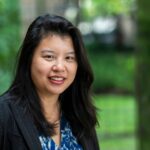
- Dr Emily Ho, Assistant Professor at Northwestern University
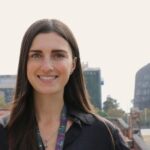
- Dr Laura Stankeviciute, Postdoctoral Researcher & Scientific Project Manager at University of Gothenburg
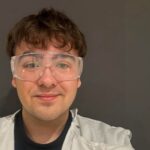
- Joseph Russell, NIHR Research Assistant at Northumbria University
The AAIC brings together distinguished basic scientists, clinical researchers, early career investigators, clinicians and the care research community at the largest and most influential international conference on dementia science. They share theories and breakthroughs while exploring opportunities to accelerate work and elevate careers.
Main plenary talk from the day came from Sylvia Villeneuve, Ph.D. Associate Professor, Department of Psychiatry — McGill University, Canada talk about Biomarker and Clinical Trajectories of Preclinical AD
Voice Over:
The Dementia Researcher Podcast, talking careers, research, conference highlights, and so much more.
Dr Tamlyn Watermeyer:
Hello and welcome to the special series of podcasts from Alzheimer's Association International Conference 2025 here in Toronto. I'm Dr. Tamlyn Watermeyer. I'm an NIHR Alzheimer's Society Dementia Fellow from Northumbria University, and I'm delighted to be hosting today's discussion. This is the first of four recordings that we'll be sharing throughout this week on Dementia Researcher. We'll be capturing conversations with researchers, clinicians, and brilliant early career researchers from across the world, so do keep watching. Today I'm joined by three fantastic guests, Dr. Emily Ho, an assistant professor at Northwestern University, Dr. Laura Stankeviciute, a clinical neuroscientist from University of Gothenburg and my own excellent research intern, JJ or John Joseph Russell, Joseph Russell from Northumbria University. Together, we're going to be talking about themes emerging at this year's conference and what excited us during the pre-conference and the first day of AIC, which is today, and what we think the future of dementia research might look like. Before we get going, let's have some introductions, more personal from our guests and learn about research that they're involved in and what they might be presenting this week. So we start with you, Emily.
Dr Emily Ho:
Yes. As you mentioned, I'm an assistant professor at Northwestern University at the Feinberg School of Medicine. I work at, basically I'm the scientific director of NIH Toolbox, which is an iPad-based assessment that has been used normed and used extensively in a lot of clinical trials for ADRD kind of outcomes. And I'm the lead scientist of an initiative funded by the NIA, it's to advance reliable measurement of decision-making ability and cognitive impairment. So I'm really excited to be here and kind of share some insights of the pre-conference and day one and what we've seen so far.
Dr Tamlyn Watermeyer:
Brilliant. Okay, yourself?
Dr Laura Stankeviciute:
Thank you for having me. So I'm a postdoctoral research fellow at the University of Gothenburg and working primarily on the project named REAL AD, which is aimed at validation of plasma biomarkers in conjunction with digital cognitive assessments and the population-based study. So really looking into this preclinical Alzheimer's disease population. And my background is in sleep. So sleep is really my core interest of research. And I'm also now setting up my own study looking into continuous sleep alterations across the period of one year in the preclinical individuals using wearable devices. And apart from this research, I also serve on the sleep PIA as a PIA programmes chair.
Dr Tamlyn Watermeyer:
Cool.
Dr Laura Stankeviciute:
So doing a lot apart from just research, we're trying to spread the awareness of sleep and including it more into the research agendas.
Dr Tamlyn Watermeyer:
I think one of the most important lifestyle modifiers that we-
Dr Laura Stankeviciute:
It is.
Dr Tamlyn Watermeyer:
Could all learn to do better.
Dr Laura Stankeviciute:
But sometimes overlooked.
Dr Tamlyn Watermeyer:
All reasons, not just for dementia risk.
Dr Laura Stankeviciute:
Absolutely.
Dr Tamlyn Watermeyer:
Your turn JJ.
Joseph Russell:
Hi. Thank you for having me on this podcast. I'm Joseph Russell or John Joseph Russell. I'm an NIHR research assistant at the University of Northumbria. My work currently focuses on diagnosis and care in global majority communities, particularly amongst those with learning disabilities, specifically Down syndrome at the moment. And as Tam mentioned, I'm her research intern. I worked with you for the last two-
Dr Tamlyn Watermeyer:
Three years I think.
Joseph Russell:
Three years, three years.
Dr Tamlyn Watermeyer:
Basically, I groom them. I get them [inaudible 00:03:48], they show promise they stay with me.
Joseph Russell:
Yeah, she caught me. I went into the second year of my undergraduate. So this is my first ever AIC. It's my first real conference at all.
Dr Tamlyn Watermeyer:
Wow, that's really cool.
Joseph Russell:
Yeah, yeah, it's exciting. So I just graduated my BSc in clinical psychology two weeks ago and I'm getting ready to go into my master's in clinical neurology at SITraN and I'm an aspiring PhD student hopefully thereafter.
Dr Tamlyn Watermeyer:
And I can vouch for JJ, he will be an excellent PhD student and I will be his reference. So come talk to me as well about him. But so JJ, this being your first international conference, I mean, this is an amazing conference to attend. I know you've come to a few local ones and regional ones in the UK with me, but what are your impressions of, is this what you expected a conference to be?
Joseph Russell:
Well, honestly, I've been following this conference since I started working with you virtually and this podcast is actually one of the ways that I got into dementia research in the first place. So I had somewhat of an idea what it was going to be like, but I don't think anything could have prepared me for quite how much, I don't know, just how much there is. There is just so much of different topics out there. I've been going to sessions that honestly, I am not 100% sure what's happening in them sometimes, but in kind in the best way that I'm just constantly learning new things, new approaches and new ways to research dementia in the future. It's been good. I find that for even one and a half days in, because I was here for the pre-conference yesterday, the support for early career researchers is phenomenal and I feel very, very welcomed. I think a lot of people are very approachable. So it's going well, I think.
Dr Tamlyn Watermeyer:
This is probably one of my conferences I just love to bring early career researchers to because there's so much support available. And like you say, I actually personally go to sessions where I am not an expert in it to learn more about the latest happenings in that field. With that in mind, what were some of your highlights from today or some sessions that you guys attended?
Dr Emily Ho:
Since we're talking about trainee events and pre-conferences, I attended a really fun duelling seminar between the Subjective Cognitive Decline PIA and the Cognition PIA, I think this was, yes, this was yesterday.
Dr Tamlyn Watermeyer:
I went to that one.
Dr Emily Ho:
Yes.
Dr Tamlyn Watermeyer:
[inaudible 00:06:12].
Dr Emily Ho:
And essentially the point of the debate was to, and it was really sort of more of just an opportunity to have a more nuanced discussion about whether it was better to look at SCD, which is essentially self-reported memory complaints and how that squares up with objective measurements like these gold standard neuropsychological tests like trail-making and NIH Toolbox, like measures like ours. And I think the main takeaway was that you need both. The main takeaway is that they both, I was really struck by what one of the speakers said that they're really assessing different things at maybe different kind of points along the disease trajectory and that it was important to kind of assess both rather than just say one is better than another. And so that was very nice.
Dr Tamlyn Watermeyer:
I was at that session as well. What I found was interesting in the questions and discussions afterwards about how women report in higher prevalence, how we need to take into account. And then also we're obviously very aware about cultural awareness of many of the cognitive tests that we're using and we can make adjustments for that. But then also thinking about actually-
Dr Emily Ho:
I like that.
Dr Tamlyn Watermeyer:
When it comes to testing our cognitive subjective complaints, how we also have to reframe that in the particular cultural setting that we are working in. So that was something that was a takeaway for me for that discussion. How about you guys?
Dr Laura Stankeviciute:
Yeah, I also attended the PIA day and honestly for me, it's probably one of the most exciting days of the whole conference because I feel like it has this special kind of tweak to it. It feels more intimate, it feels more interactive.
Dr Tamlyn Watermeyer:
It's less overwhelming than 10,000 people.
Dr Laura Stankeviciute:
Absolutely
Joseph Russell:
A good introduction.
Dr Laura Stankeviciute:
Yeah, yeah, definitely. It's like a first step, a warm-up before what you get here in the full-blown AIC. And I'm obviously a part of the sleep PIA, so I'm a bit subjective, but I really enjoyed this year what we did. So we did the panel discussion with a quite provoking topic where we discussed why sleep was not included in the 2024, so last year's Lancet edition for dementia prevention. And we had a great panellists, real experts in the field like Andrew Lim, Yue Leng, Ruth Benca, Michael Bubu. And we reached a great consensus that even though sleep sometimes feels like this very multifaceted topic, and it actually is because when we talk about sleep, we can talk about sleep quality, we can talk about efficiency, we can talk about sleep disorders such as obstructive sleep apnea, but also we have the whole sleep physiology behind it. So we have the sleep oscillation, slow sleep, we have spindles and there's a lot of evidence linking sleep physiology to Alzheimer's disease pathology, but yet it's not been included.
And what we've reached with the panel, the final decision that the really strong evidence to link sleep, specifically obstructive sleep apnea and insomnia as risk factors for Alzheimer's disease. And that kind of leads us to the kind of next point that the reason we're lacking evidence is actually for the clinical trials and interventions, but these two parts of the sleep puzzle are the biggest that we can actually intervene and modulate. So that was a really strong and supportive message. And then I went to the other event from the neuromodulatory subcortical PIA, and that kind of felt like sleep PIA 2.0 because they had full presentations related to neuromodulatory subcortical brain regions, but they were also very much related to sleep because most of them also regulate sleep homeostasis.
And one of the messages that I really liked that there was a point on interventions looking into pharmacological therapeutics specifically on DORAs, and actually that was repeated today during the plenary session by Sylvia Villeneuve, that kind of really shows that we should look into alternative pathways when we are talking about Alzheimer's disease beyond amyloid and tau, but maybe looking into orexin signalling because there's potential in modulating it. So for me, that was really, really innovative in a way that at the AIC where sleep just feels like a droplet in the ocean, there's a bit more attention being drawn to it.
Dr Tamlyn Watermeyer:
Yes. And so I believe later on in the week we will have a plenary-
Dr Laura Stankeviciute:
Absolutely. Yeah. By Sharon Naismith.
Dr Tamlyn Watermeyer:
Yes.
Dr Laura Stankeviciute:
She was a previous chair of the sleep PIA.
Dr Tamlyn Watermeyer:
Great.
Dr Laura Stankeviciute:
Yeah, looking forward to it. I think it's on Wednesday if I'm not mistaken.
Dr Tamlyn Watermeyer:
Yeah. You, JJ?
Joseph Russell:
Yeah. So I had first of all, I'd like to say I agree about the PIA day, that it was a really good introduction for me into what the conference is going to be like. And it was really interactive. The first one that I attended was the sex differences PIA, and it was highly engaging, actually ended with a song at the end, which was excellent.
Dr Laura Stankeviciute:
That's a classic from them.
Joseph Russell:
Yeah, yeah. It was really good. And I liked the session because it really showed that those particular researchers were great at demonstrating. They have considered both sides of the table. And the woman who, and then kind of escapes me a little bit that was leading the opposition side. She was giving her thoughts as someone who disagreed with, she was disagreeing with her own point. But it was interesting to see someone who is trying to progress that area forward, try and argue the opposition because it shows that they have actually considered all angles and the conclusion they've come to is that there is a difference. But for me as an early career researcher, the one that was the most interesting was the peers day, which is P-E-E-R-S. And that was the session that was right at the end and that was aimed at, it was early career researchers and preparing us with and equipping us with networking skills.
And it was really interesting. I actually used their framework that they gave for my introduction there and it was just a really nice way to meet some other early career researchers. Some of the ambassadors went along to that as well. And it was a great way to get us to connect. I was still, a lot of them were post-docs, so I thought I was a little bit, they were talking about applying for post-docs and applying for professorship and grants and everything like that. So I was a tiny bit younger, but it was very interesting, it was very engaging, and that PIA has a lot of wider application.
And I wasn't aware of it until I went to this session that it offers opportunity across Europe. There's a leave in every continent other than Antarctica, which is what they said at the start. And it just offers a lot of opportunity for that early career international collaboration. They do webinars throughout the year. They had two publications this year that had early career researchers named papers. And it was just a really interesting and really good initial insight for me to just show that actually those early career researchers are going to have a lot of support through the Alzheimer's Association. So yeah, that was my highlight of that day.
Dr Tamlyn Watermeyer:
Fantastic. I just want to highlight for the sex and gender PIA, it was Dr. Kaitlin Casaletto and Dr. Malu Gamez Tansey. And I apologise for butchering your names in the languages I can't speak. And the debate was is the female immune system protective or risk factor for AD and [inaudible 00:13:50]? And I think the conclusion at the end, they both won the debate as they always do, it's always sort of equal for the sex and gender one was that it's likely both. So depending on the stages of life and maybe the menopausal transition has something, is somewhat involved in these process as well. So kind of hitting a lot of areas of my interest. So it was really fascinating to talk to. Great. And what about today? So we're at day one, so there's not been too much, but has there been anything that's taken your interest today in particular?
Dr Emily Ho:
I went to the morning session on neuropsychiatric symptoms, so examining the sort of associations between various neuropsychiatric symptoms and risk of cognitive decline or cognitive performance. And there were two talks I wanted to kind of highlight. One was a talk by Juliet Sabata, I believe she was in Australia and she did a virtual talk and looking at the various different kinds of psychiatric symptoms, so like agitation, delusions, and which aspect of cognition it mapped onto. And so for example, agitation corresponds with decreases in global cognition, but delusions, higher levels of delusions is more associated with executive functioning.
So I thought that was a really clean way to delineate that neuropsychiatric symptoms have multi-dimensions just as cognition kind of measures do. And so she did a very nice job aligning that. And the second talk within the same session was by Dr. Ismail, I believe he's in Calgary and he works a lot on the mild behavioural impairment inventory. And he shows that, he basically advances the idea that instead of looking at severity, that you should try to look earlier in time and look at natural history and how natural history symptoms of neuropsychiatric patterns can possibly predict conversion.
Dr Tamlyn Watermeyer:
Did he be like episodes, like a-
Dr Emily Ho:
Yeah, yeah. I think episodes-
Dr Tamlyn Watermeyer:
Episodes of depression as a post-psychotic, like you had sort of spice. And how far back did he advise?
Dr Emily Ho:
It's a good question. A few years back. I couldn't tell you exactly. But yeah, the idea of instead of just looking at severity, maybe also consider the person's natural history and look at the longitudinal kind of life course more than a cross-sectional kind of lens.
Dr Tamlyn Watermeyer:
Sure. So the individual within that severity.
Dr Emily Ho:
And tracking individual change is something that's obviously very interesting to measure. Measurement folks like myself. There's how you perform against the norm population, but there's also how you perform against yourself.
Dr Tamlyn Watermeyer:
Exactly, yeah.
Dr Emily Ho:
I think most patients, if you're really interested in measuring what matters to patients and their families, they'd be probably more concerned with individual change rather than normal change. So I thought that was very insightful.
Dr Tamlyn Watermeyer:
I suppose a big, large cohort database that'd be-
Dr Emily Ho:
Yes.
Dr Tamlyn Watermeyer:
To replicate those would be great, but in a clinical situation, because often you'd have to wait for people to present a neuropsychiatric clinic for memory maybe, but then try and find if they have this history and whether they've reported or not to mental health services-
Dr Emily Ho:
I think it requires-
Dr Tamlyn Watermeyer:
Earlier in life.
Dr Emily Ho:
Access to a lot of larger databases. I think it requires specialised statistical expertise to try to that Information out of the sort of informatics. So I think it's a sort of more team science multidisciplinary approach if you want to take that kind of idea to scale, because I agree most clinics are not, the volume is not there.
Dr Tamlyn Watermeyer:
Yeah, yeah.
Dr Laura Stankeviciute:
Yeah, I think for me, definitely for today, the plenary was kind of the highlight as it's usually supposed to be. And I think Sylvia's talk was great because she presented kind of the landscape of what has been happening in terms of the diagnostics and the novel biomarkers. But I also really appreciated that she didn't just focus on the novel plasma biomarkers, which obviously has really accelerated our field and helped us to understand the biology behind the disease. And obviously one of them has been FDA approved, but she also acknowledged the other preventable risk factors and also additional processes such as neuroinflammation, which I'm very interested myself as well. So the fact that she also highlighted the evidence that GFAP is increased in the disease very initial stages and also that there's a very stark difference between sex-
Dr Tamlyn Watermeyer:
Yes, that was really interesting. I don't think I've seen that before.
Dr Laura Stankeviciute:
I'm also looking into the same variables myself. So I'm just trying to understand whether that is also potentially explaining the cognition that we are seeing in differences in men and women as we go.
Dr Tamlyn Watermeyer:
Obviously in a plenary [inaudible 00:18:52] set up and ask questions, but I wanted to ask a question maybe something for your research to consider is how close to menopause-
Dr Laura Stankeviciute:
Absolutely.
Dr Tamlyn Watermeyer:
The individual is or away. I wonder if that might play a role in GFAP as well with the sort of whole [inaudible 00:19:07].
Dr Laura Stankeviciute:
Because I feel like menopause is being seen more and more as this kind of state of heightened inflammation. So that probably also translates into neuroinflammation. And I'm very much interested as well into seeing how hormonal replacement therapy as well as natural versus surgical menopause changes or modulates this relationship. Which brings me to the point that actually apart from the plenary, there were great posters today and I think sometimes on the first day you tend to miss the posters because it's, "Oh, there's so overwhelming already with the sessions." But I did try to go to a few, although there are thousands of them, so there's like a C that you have to kind of-
Dr Tamlyn Watermeyer:
Can't see them all.
Dr Laura Stankeviciute:
Yeah, you can't see them all. But there were quite a few posters looking specifically into intersex differences and more so kind of going one layer deeper looking into the menopause therapy, also different ages of menopause. So I think there's definitely a lot to look into those posters. Sometimes we tend to focus on the sessions. But at the poster, especially for someone who's here for the first time, I think it's really great because you can engage, you can ask as many questions and as silly questions as you have because the person will be able to guide you through the poster and then you can get sometimes more because when you have a 15 minute talk then you have a few questions. I remember one of my first AICs five years or so ago, one of the persons came up to me and now we are really close collaborators just because of the post and because of the ideas and exchange we had there. So I feel like it's really good to start some collaborations as well. It's just easier and seems like not too far away when you're on the stage, but just close by.
Joseph Russell:
Yeah, definitely. I've tried to have a look around the posters today and it's another one you said, there's thousands of them and it can be a little kind of overwhelming at first, but it is good that they're kind of stood there ready to talk about their own work. I have got a couple of posters that I did take note of to talk about, but actually this morning before the plenary went to Sylvia's PhD student talk this morning and she expanded a little bit on the work that Sylvia touched upon in the plenary and it was kind of looking at structural changes in preclinical Alzheimer's and looking at the amyloid pathology. So it was by Yi-ting Chiu who's a PhD candidate at the University of McGill underneath Sylvia. And it was looking at how amyloid beta pathology is linked to structural brain changes over time. They used cross-sectional longitudinal data and looked at how amyloid levels relate to things like cortical thickness, brain volume, and diffusivity. It was the key means of interest.
It was an interesting talk and some of the kind of key findings, there's a lot of information that came out of it was that they found that the structural changes start a lot longer with fall symptoms, which is something that we did already know, but they found that it was also a nonlinear trajectory, which I found is interesting. I'm not sure how well-known that is, because it was not well-known to me at least. So I found that interesting and they found that some of the early changes, specifically the cortical thickness might actually reflect an inflammation or plaque-related swelling, not necessarily degeneration, which kind of challenges the assumption that all of the change is lost. That just because it changes doesn't mean that we're actually losing out. And they also kind of emphasised the need to replicate these findings in diverse populations, which is why I wanted to highlight it, because that seems to be where they're moving forward with that work.
Dr Tamlyn Watermeyer:
So JJ, you mentioned diversity. What I'm really pleased about seeing even just on the first day here is actually how there has been a lot of work around underrepresented groups, particularly in Africa. And I just wanted to highlight a perspective section that I went to in the morning. It was the Neurodegenerative Research and Care on the African Continent perspective led by Wambui Karanja who is at Aga Khan University and also a GBHI fellow, as well as Mohamed Salama at the American University of Cairo. And this was such a diverse session. So they considered themes such as neurotoxology in Egypt and how that might be contributing to risk. The HAALSI study from South Africa where I'm from was also mentioned the learnings and lessons from that also looked at genetics of ADRD in Nigeria.
And then something that stood out for me a lot was Professor Raj Kalaria his work on the CogFAST study, which is a cohort that sort of lives between the UK, Newcastle and the UK and Nigeria. And he's been very big on this prominent this hypothesis about vascular hypothesis and how in African populations this might be really contributing to ADRD risk in these communities. And finding similar findings between the different cohorts in the different regions but actually also finding very specific vascular risks, sorry, vascular risks that are specific to Nigerians at least. I thought that was really interesting and so I was just really happy to see that we're starting to think about communities that are underrepresented in Alzheimer's research and general dementia research and wanted to gain your guys experiences. Have you noticed the same or are you working in any populations where-
Dr Emily Ho:
I think community engaged approaches or becoming more and more the new norm, which is very exciting and I think in a way, a long time overdue. Last year as part of sort of an unrelated project, I actually was able to go to Tanzania and teach and do a workshop, like a week long workshop on cultural adaptation of measures. And we had a lot of them, I mean, the students were amazing. It was at Muhimbili, so that was in Dar es Salaam and the students were amazing. They all came, some of them actually came from quite far to hear me and my faculty member in our group, Dr. Berivan Ece speak and they're very interested in studying HIV stigmatisation. Some of the populations they work with are not literate.
And so it's a new way of approaching measurement. If you have these measures, you have to make sure they're culturally sensitive and responsive and you also have to be prepared that it's not paper and pen. So the idea was to build capacity. And I think that I'm seeing more and more of that, that participants with lived experiences, families, clinicians, healthcare providers, they all want to co-design the studies with the researchers and they want to be there starting from day one. And I think it's very important to allow them that space so that they feel like they're part of the process from the very beginning.
Dr Laura Stankeviciute:
Yeah, I fully agree that participants should be in the journey of how we design the studies, how we design the research to make sure that it's actually comfortable, it's easy for them to do the research. And I do also want to add to the point of minority groups. So even though our research is in Sweden, we know that Sweden is one of the probably number one countries in Europe with the highest immigrant and non-Swedish populations living.
And we really try to engage through our REAL AD study, the most diverse population as possible. We had our study in four languages, so like Swedish, Finnish, Arabic as well and English to give the opportunity for people from different parts to come. And some of these were a bit more represented, but again, it was not to the numbers that we were expecting. And I think in Europe we are facing a huge issue with that. When I see at AIC, when they present these cohorts and Black, white, even more fine grade Asian populations, we 're not seeing that in Europe. And I feel like Europeans have to step up their game, we have to step up our game to make it a bit more inclusive as well.
Dr Tamlyn Watermeyer:
And I think from the cognitive testing as well as the biomarkers and all aspects of research process, I think what I really like seeing is that we're starting slowly to develop these protocols that are flexible to different groups and their preferences, understanding for various social cultural reasons, maybe people don't want to do lumbar punctures and the invasive procedures or don't particularly want to sit for hours doing pen and paper neuropsychological tests. So we're finally as a community, starting to come to terms with that and address it, which is great to see.
Joseph Russell:
We've also been doing a lot of work this year and we were just talking that we've heard a lot of research around Down syndrome has been already in this first kind of half day, we've already seen Down syndrome coming up a lot and that's when Tam and I, this year especially have been speaking directly with those populations and trying to get their direct input on how dementia is assessed currently. And that's both in the actual cognitive measures and see how they like them if they're able to do them.
And with Down syndrome being having such a wide variability in the intellectual disability, it's interesting because it does mean that we can still speak to those people with Down syndrome who are able to give us feedback themselves on how it is that we approach that community. And also with the biological samples that we've been collecting, it is been interesting to see how they found some of those more or less accessible based on what very sensory related, what they like or didn't like. But because on a genetic level down syndrome is a very important topic, AIC especially this year and it's been really interesting to see already how much that has been recognised.
Dr Tamlyn Watermeyer:
Yeah, I actually did attend in the afternoon the multimodal and Fluid Biomarkers in Down Syndrome session. This was led by Shorena Janelidze and Patrick Lao. Again, very diverse speakers, very much more in the biomarker space. But two of the talks that really sort of stood out to me was one by Dr. Laura Videla of the Down Syndrome Alzheimer's Barcelona Initiative where she essentially sort of showed the 10 years of progress. I didn't realise that this cohort and the study had been running for such a long period of time. And again, how they work so well with the community to build not just a research programme but also research movement, which I know I think is kind of the pillar of all successful research programmes now where the individuals themselves can really understand the why and how it's going to benefit the community at large, not just research programme.
And then also Dr. Shorena Janelidze who was from Lund University, and I think this is maybe one of the first times that this has been done, but obviously there's a lot of work going on in blood-based biomarkers in the general population. But here her team looked at pTau 217, GFAP, AB 42, AB 46, NfL and tTau as a panel to try and understand which predicted future cognitive decline and tau accumulation and what they found that was baseline pTau 217 was really good at predicting future global cognitive decline. But a combination of pTau 217 and GFAP, GFAP came up previously as well predicted tau burden longitudinally. So this could suggest that these are some of the important markers that are necessary to look at in Down syndrome, which overlap but are unique in themselves against the general population. So I always like research that tries to make sure that we're not just cutting and pasting from one population to the other. We're actually really looking at the nuances and uniqueness of the different populations that we're working with. That stood out for me this afternoon.
Dr Laura Stankeviciute:
That's interesting.
Dr Tamlyn Watermeyer:
You said you were doing some community-based work yourself?
Dr Laura Stankeviciute:
Yeah, so our study is not just about the research, but we really want to involve our participants at the core of it. So after launching the screening study of REAL AD, we did have a one-year anniversary kind of party in a way, if you want to put it this way. And we did a REAL AD day where we actually gave presentations on what we are doing, what the research they're contributing to is making a difference for the greater field of Alzheimer's disease. But also I think that was a great opportunity for all of them just to kind of communicate and just mingle between themselves because I feel like sometimes when you do everything remote, because our studies completely remote, you may feel a little bit isolated. You don't go to the clinic necessarily to do the test, so everything is completely remote.
But that gave this kind of community feeling and I feel like after the full day of presentations talks and really engaging musical performances where they could also participate, a lot of people came with new friendships that could I think support our research as well in a way that obviously it's a longitudinal study, so we want them to continue with giving the blood samples, also doing these cognitive assessments. So I feel like that will also strengthen their kind of interest and kind of maybe they will meet up outside and be like, "Oh, have you done this test?" "I haven't done it yet." "Okay, don't forget it." And I feel like hopefully next year when we're going to be celebrating two years, we're going to see the same kind of turn up because we are doing it not for just some numbers in the next little sheet we're doing for these people and for those families.
Dr Tamlyn Watermeyer:
So building that movement, not just that research programme. So probably will be very successful.
Joseph Russell:
I did see a poster that I wanted to highlight as well that I just found it super interesting. The person wasn't stood there, but I am going to go back until they are stood there, because I want to ask them about it. And it was a mutation carrier that demonstrated extreme resilience to tau and it was a presenter, Mei Murphy from Washington University and it was so people with autosomal dominant AS developed dementia in their late 30s to early 50s. And they've named up their participant Escapee who has the PEN-2 mutation carrier who is cognitively unimpaired for 25 years past the expected diagnosis of dementia. And they use PET scans and fMRI visual checkboard tests as well as a couple of other things. And they found that even though the tau deposition was there, that it was extremely localised and they kind of was hypothesising that's what's slowing it down and they kind of want go down the neuro ophthalmology exam in the future.
But I just found it really interesting, even going back again to the culturally responsive stuff because it was just shows that if stuff like this is more likely to come out, the rarer cases are more likely to come out if we stop just looking at one or two large populations. Because if we look at those that have come from different genetic variations and backgrounds, we're more likely to see these cases, which the overall message isn't even just that it will help that population, it helps us understand the disease as a whole. And this case especially is just showing that by not studying the specific types, we might be overlooking rare cases like this that if we can even slightly understand why it is that this person is 25 years past, that we actually might be able to understand a much bigger picture about the disease as a whole. So I just want to highlight that one.
Dr Tamlyn Watermeyer:
It's a really great one to highlight. I think there's been a lot of, I mean, it's always been multidisciplinary at this event. I don't think that since it began, but I'm seeing a lot more cardiovascular risks related to menopausal risks, sex specific. And I think we used to maybe be quite discreet whereas now it seems like researchers from frontotemporal dementia, motor neuron disease, Parkinson's, Lewy bodies that they've always been invited, but there's a lot more of those presentations as well here to try and understand neurodegeneration generally and how they all overlap so that we can better understand each individual neurodegeneration and the dementia that comes from it.
Dr Laura Stankeviciute:
Yeah, I fully agree the comorbidities aspect is really, has been really overlooked, but now I feel like we are definitely trying to fuse the knowledge from different types of dementia, whether it's FTD or alpha-synucleopathies. And I feel like with more mechanistic understanding from those types of dementia, we can actually gain a better picture because in patients that are very old, we see a full panel of different pathologies. So we would really need to understand how they potentially also contribute.
Dr Tamlyn Watermeyer:
I think the question about multi-morbidity and comorbidities is so important. And in fact actually in the pre-conference day, it's not a PIA yet, but we're working towards it. So I'll plug it, the multi-morbidity and dementia PIA that we're trying to-
Dr Emily Ho:
What was it called? Sorry.
Dr Tamlyn Watermeyer:
Multi-morbidity and comorbidity in dementia working group, but we're hoping to go for PIA or PIA status next year. But we did host a pre-conference where Dr. Lucy Stirland, who joins the work, talked a lot about the difficulties we have in the field, particularly how we have all these different indices of multi-morbidity and it's not really a great consensus on really how we define that. And most people define multi-morbidity and comorbidity interchangeably when really actually, they should be represented separate quite separately.
Dr Emily Ho:
It's different frailty indices and things like that.
Dr Tamlyn Watermeyer:
Yes. And it gets quite confounded by all these different areas of research. Some not even within dementia, more just ageing generally or frailty. And once it's worked towards more, I suppose encompassing but stringent framework so that we really define what we're talking about and understand the different pathways to dementia through all these other conditions that can co-occur or predict emerging risks. So that was a really fascinating pre-conference activity as well that I was involved in.
Dr Emily Ho:
Looking forward to hearing more about the PIA.
Dr Tamlyn Watermeyer:
Come and join because we're looking for members.
Dr Emily Ho:
Tam is soliciting. Perfect.
Dr Tamlyn Watermeyer:
I mean, it's one of those things where I think it will work in the sense that there will be working groups to do a lot of collaboration with the other PIAs because it sort of stretches into the other PIAs.
Dr Emily Ho:
I love that.
Dr Tamlyn Watermeyer:
We're hopeful.
Dr Laura Stankeviciute:
Yeah, I think it's very important to have collaborations across PIAs because I think all of our topics are quite intertwined. So for instance, this year, [inaudible 00:39:15] PIA has really joined forces with sex differences PIA, that was partially my initiative, because I'm really interested and that was from my perspective, I really want to work with them. But then it kind of ended up being a really great collaboration. So we had two webinars on sex differences and sleep and how they intersect with Alzheimer's disease. And now we're trying to think whether we could actually take a step further from just doing a webinar, but actually making an action and doing some research collaboratively-
Dr Tamlyn Watermeyer:
[inaudible 00:39:46] work.
Dr Laura Stankeviciute:
Together. And we've also witnessed similar things in neuromodulatory subcortical PIAs. And I feel like, because obviously Alzheimer's is so multifactorial and a lot of things are really interconnected. And I would love to see more collaborations between PIAs as well whether it's like-
Dr Tamlyn Watermeyer:
Well, judged just by the PIA day, there was two sessions where there was a collaboration between two PIAs. So I think that is something that Alzheimer's Association is encouraging and wants to support and why not? I'm like a bit of a PIA whore, I'm liking all of them. So I can be the link between, "Hey, you know what's going on there?" But I think that's really, really great for the encouragement. So I mean, we're coming to a close, so I just wanted to end by allowing you guys to plug your own posters or presentations that you're giving just quickly before we end on the first session.
Dr Emily Ho:
I want to defer to our...
Joseph Russell:
Okay, well I'll let you talk about-
Dr Tamlyn Watermeyer:
You plug yourself. You plug me. So that's great, covers both.
Joseph Russell:
So I mean, at the moment, my key plug is that I'm an aspiring PhD student. My kind of main goal here is to get interested, learn about new approaches and new fields and hopefully make some connections that I might reach out to in the next year or two. I do have two posters that I co-authored with Tam that I'm going to let you explain those posters.
Dr Tamlyn Watermeyer:
Sure. Well, one was today. So it was about evolving priorities in health and care, health and social care policy in the UK for people with learning disabilities where we applied a natural language processing model to a bunch of reports and policy documents to understand whether dementia is a priority or when it emerges. Short answer is it's not quite, it was only mentioned really in two reports and not really prevalently. And then on Tuesday we have another poster, which is just looking at a particular cognitive measure, the visual short-term memory binding task that is getting a lot of interest in being able to detect Alzheimer's disease potentially earlier than traditional measures. And so my fellowship, which JJ is helping me with, has kind of tried to adapt this for down syndrome populations. So just some of our results there where we are finding something interesting but need to collect more data.
Dr Emily Ho:
That's great.
Dr Tamlyn Watermeyer:
And how about you guys?
Dr Emily Ho:
I'm working on, we have three posters here at AIC and then a few more virtually basically looking at NIH Toolbox cognition performance. One is in a group of African Americans in the States, and we basically show that many of our, almost all of our tasks can predict, can differentiate, I should say, differentiate between healthy agers and those that have mild cognitive impairment. So that's really exciting and it's sort of new data. Our next steps are to kind of look at the biomarker associations with it. But yeah, just as a first start it's really compelling. A lot of the effect sizes are also clinically meaningful. They're not statistically significant and small. And so that's very promising. And we see basically similar results for another Spanish speaking population. It's like 100% Spanish speaking. And then our third poster led by my research faculty, Dr. Ece Looks at olfactory performance in Spanish speaking and we see some differentiations, some different trajectories depending on whether you're female or male and depending on what stage of the clinical trajectory you're in. Yeah, so it's very exciting. Olfaction's having a moment is what I'll say.
Dr Laura Stankeviciute:
I've seen actually quite a lot of booths. And in fact where I did my PhD, we also looked into olfaction and specifically MTL and that seems to be popping up more and more and maybe it's going to be another risk factor in a few years.
Dr Emily Ho:
The sex differences, that's pretty novel.
Dr Laura Stankeviciute:
And in which direction then?
Dr Emily Ho:
Don't quote me, because it was my... I want to say females typically have lower, they have lower baseline performance, but don't quote me on that.
Dr Tamlyn Watermeyer:
But pregnancy, no. So I would disagree at the moment, but yeah, that's interesting.
Dr Laura Stankeviciute:
Yeah, that's very interesting.
Dr Emily Ho:
Yeah, this follows a paper that was published by folks in our group, including myself, looking at the general population that was published in Alzheimer's and Dementia two years ago, I think. Yeah. So this is just looking now at special emphasis and enriched populations and seeing if the effects are similar and how they differ.
Dr Laura Stankeviciute:
That's very valuable. Well, me, myself, I have a poster on Monday, which is tomorrow. So looking into sleep and really depopulation, so really preclinical stages and looking into relationship with plasma biomarkers and digital cognition. And what I'm finding very generally, and I have to put a disclaimer, this is a subjective sleep questionnaire, so it's just kind of the very preliminary evidence, but we are finding that actually poor subjective sleep quality is associated with altered pTau 217 and also pTau 181. And also that is related, so correlated to lower performance on digital cognitive tests that I mentioned before, neotiv, and this is just kind of the subjective study, but I'm about to run the objective study with wearable devices to actually see whether we can scale and we can actually replicate this result. But also some people from our greater team are also presenting on the recruitment strategy and actually the challenges and the learnings, especially in the remote recruitment.
So yeah, we have now 6,000 participants. So how we started from number zero and how we developed and grew all to 6,000. So that was a huge machinery behind that and I think that's quite important because everything is becoming or is planned to be more scalable. We are trying to look into how to move out of laboratories and do things remotely, but obviously that takes a different kind of mindset for participants to be developed. So that's one poster by Edith Bosch from our team. And then we have two other posters more looking into the neuroimaging tau ped and also the correspondence with plasma tau 217. So kind of really broad tackling all of the, in a way, hot topics of the conference.
Dr Tamlyn Watermeyer:
Excellent. Great. Well, I'm afraid that's all we have time for, but I just want to say thank you so much to Emily, Laura, and JJ for joining me on the first day of this podcast. Be sure to come back tomorrow and all the days of the AIC thereafter, and be sure to subscribe to Dementia Researcher where you can follow along as if you were here joining in on the AIC in Toronto. Thank you.
Dr Laura Stankeviciute:
Thank you.
Dr Emily Ho:
Thank you.
Joseph Russell:
Thank you.
Voice Over:
The Dementia Researcher podcast was brought to you by University College London with generous funding from the UK National Institute for Health Research, Alzheimer's Research UK, Alzheimer's Society, Alzheimer's Association, and Race Against Dementia. Please subscribe, leave us a review and register on our website for full access to all our great resources. dementiaresearcher.nihr.ac.uk.
If you would like to share your own experiences or discuss your research in a blog or on a podcast, drop us a line to dementiaresearcher@ucl.ac.uk
Did you know... you can find our podcast in your favourite podcast app on mobile devices, and our narrated blogs are also available as a podcast.
The views and opinions expressed by the host and guests in this podcast represent those of the guests and do not necessarily reflect those of UCL or Dementia Researcher
 Dementia Researcher