All the events here are relevant to people working in dementia research. If you would like to add your own you can submit an event

Human Amyloid Imaging Conference
12/01/2026 - 14/01/2026
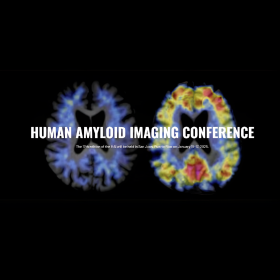
The overall goal of the Human Amyloid Imaging conference is to support active communication and collaboration between academic and industry scientists doing cutting-edge research in human imaging of amyloid-beta, tau, and/or other biomarkers that pertain to Alzheimer’s disease and related disorders.
HAI 2026 will be held once again in beautiful San Juan, Puerto Rico, at the Puerto Rico Convention Center, from Monday, January 12 through Wednesday, January 14.
The meeting will also provide related perspectives from neuropathology, neurochemistry, psychology, neurology, molecular imaging, clinical trials, and biomarker research.
- Attendees will have the opportunity to review the basic, fundamental principles of PET imaging of amyloid and tau radiotracers. This includes radiotracer synthesis, PET acquisition and data processing (e.g., application of corrections for the partial volume effect, co-registration with structural data). Aspects of radiotracer discovery and optimization and first in human applications are other important topics.
- Data analysis procedures discussed will include voxel-based and region-based imaging approaches, masking for vulnerable regions, evaluation of reference regions or standards, choice of statistical procedures and specific use of control groups from older age groups. Important topics include data harmonization methods for imaging and biofluid biomarkers.
- Neuropathology concepts will be discussed in the context of applications that include further characterization of neurodegeneration in AD and related disorders, disease subtypes, disease staging, and risk factors. Additional investigations of importance include neuropathological evaluation of PET radiotracer properties (e.g., distribution, localization of specific and off-target binding) and correspondence between antemortem PET and postmortem measures.
- Biofluid biomarker development, validation, and application in AD and related disorders will be discussed. This will include efforts to understand relationships across established and emergent biofluid biomarkers and comparison of these outcomes to amyloid and tau PET measures.
- The concept of biomarker positivity will continue to be extensively discussed, and the attendees should be able to characterize the advantages and disadvantages of both dichotomized and continuous variable approaches to imaging and non-imaging biomarkers relevant to the human amyloid imaging field and with respect to specific purposes or intended uses of the outcome.
- Attendees will have the opportunity to evaluate amyloid and tau data in specific clinical and clinical research contexts, including review of typical findings in AD dementia, mild cognitive impairment due to AD, and in clinically normal individuals. This includes further elucidation of factors that underlie relationships between amyloid and tau deposition, cognitive decline, and dementia progression that provide a more informed understanding of individual patient trajectories. These efforts will also be related to familial forms of the disease, Down Syndrome, and to non-AD processes (i.e., fronto-temporal lobar degeneration and Lewy Body dementia). Further study of “real world” research participants will be discussed that includes people from diverse, ethnic and/or racial minority, and disadvantaged groups.
- Particular attention will be given to the assessment of longitudinal amyloid and tau PET data as it relates to methods of analysis and comparison to other domains of data, including structural and functional brain imaging data, and clinical and cognitive outcomes. An ongoing topic of importance is the relative value of PET versus other detection strategies (e.g., MRI volumetry and biofluid biomarkers).
- Attendees will also continue to have the opportunity the better understand methodology that can be used to optimize participant selection and conduct of AD therapeutic trials. Important topics relate to improved understanding of how in vivo metrics (imaging and non-imaging) and cognition change in response to AD therapeutic treatment (cross-sectionally and longitudinally) and how to better identify those most vulnerable to treatment side-effects, such as anti-amyloid related imaging abnormalities.