As I barrel towards the end of my first term with a full teaching load as an Oxford Prof, I’ve been very aware that I’ve not quite been keeping up with all my Dementia Researcher blogging responsibilities. Let’s just say I’m very glad that I never have to do this term for the first time ever again. But I’m still here, I’m just about still standing, and Adam wants me to write about science, of all things! Luckily, part of my new teaching responsibilities have involved presenting an eight week introductory course for Biomedical Scientists on the theme of “Molecular Neurodegeneration.” The concept behind the course has been to take the history of our knowledge of Alzheimer’s & Parkinson’s Disease, and contextualise it with some of the brand new data coming from super up to date techniques; single-cell sequencing, high-throughput mass spectrometry, multiplex immunoassays, the lot.
It has been extraordinarily fun actually getting to read a bunch of the papers I’d heard references to at conferences or briefly scanned a figure of while writing a grant application. Even better than that, it has left me in a place of enormous enthusiasm and hope that these diseases are tractable, druggable, and potentially, with the right drugs and support, curable, in the not too distant future. So today, I’m going to walk through some super exciting examples, and hopefully leave you feeling the same as we continue to hurry towards the festive season.
Early diagnosis and staging of AD
It was only in 2018, less than ten years ago, that Clifford Jack and his very important friends proposed the ATN criteria for staging research participants along the AD spectrum. By using established ELISAs on CSF, or imaging techniques, we could more carefully define our research populations, and begin to address molecular changes that accompanied the transition from amyloid positive but phospho-tau negative, to positive for both markers. Since then, there’s been an explosion in ultra-sensitive immunoassays, with a concomitant decrease in sample input requirements, that has rapidly advanced this basic framework. In a fantastic paper in Nature Aging in 2024, Gemma Salvado and colleagues1 extended the previous binary system towards CSF staging – the idea that different molecules change in CSF at different stages of the disease.
These stages correlated not only with pathological protein deposition measured by PET, but also with cognitive decline. The first couple of stages, defined by increases in pT217 tau, show changes in CSF that precede cognitive decline, opening up the opportunity for identifying people early on, where therapeutics may be more likely to succeed. For those of us interested in molecules, this now means we can compare our proteomics experiments with the CSF stage of our sample, and evaluate which proteins are changing in CSF at these different stages (much as Eric Johnson and co have managed to do in CSF samples from people with familial AD2).
The world opened up by this work is one that is truly exciting, as we may be able to map CSF stages to specific disease processes, which may be most druggable at that CSF stage. The opportunity here is enormous.
High-throughput proteomics is here
Now, I’m old school. I still bristle when technologies like Olink and NULISA (both of which I use!) call themselves proteomics. What I mean when I say proteomics, is good old mass-spectrometry. Once again, the tech in this field has just absolutely exploded in the last 10 years. To use my life as an example, in 2017, I published the biggest proteomics study of the human brain at that time. We had about 77 samples, and to quantify about 3,500 proteins and identify about 7,000 took half a year of sample preparation and mass-spec acquisition (3 hour gradients and fractions, so many fractions!), and months of failed runs of data processing. These technologies were just not yet ready for the scale required for addressing the heterogeneity of a disease like AD.
Zip forwards 4 years, and advances in labelling now gets us quantification of 5,000 proteins, but in about the same amount of experimental time, and with a whole bunch of technical confounds from the labels. Then, in 2019 all the technical symposia at the big mass-spec conferences were talking about this thing called ion mobility, and at the time I didn’t realise we were on the brink of a truly epic step up. By combining this new technique, which acts to focus chemically similar ions together, with data-independent acquisition techniques (selecting windows instead of peaks), all of a sudden we could quantify 7-8,000 proteins in 7 minutes of acquisition time – compared to 3,500 proteins from 3 hours. Now, we have scale. Coupled to automation, we can analyse 144 samples per day instead of 7, for a fraction of the price.
To my knowledge, we’ve not yet got published data from this newest range of mass-spec instrumentation in large AD studies (I’m working on it!), but I know many people are using them. Betty Tijms and friends3 used a previous generation of instrumentation to quantify over 1,000 proteins in CSF from 600 people in the Netherlands. From this size of study they were able to identify clusters of people with different categories of dysregulated proteins in AD. People in these clusters had different rates of progression to dementia, and there were some associations with known risk gene variants. This level of scale will ultimately give us access to sub-typing and the potential for personalized medicine.
Cell-types, ohhhhh cell types
In late 2023, a whole bunch of papers submitted to Cell4,5 by Investigators at the Broad completely shook my world. These folks had performed single-cell sequencing on many millions of cells from the post-mortem brains of almost 500 people with AD and controls. They were shortly followed by the Seattle-AD group, supported by the Allen Brain Institute6, who were a bit behind on publication but produced a really fantastic tool for quick analysis of your gene in their data . These papers harnessed scale in new technologies like none I’d seen before – all of a sudden we had powered experiments that could address which highly-specific cell-types were being lost in Alzheimer’s Disease, at what disease stage we were losing them, and what kind of transcriptional changes were occurring in them throughout disease stages.
There is enough data in these studies to keep whole armies of MSc Neuroscience students busy for a decade, but two things really stood out to me, partly because of where my own work was at the time. The first was that early changes to excitation:inhibition balance, through loss of specific subclasses of somatostatin interneurons are occurring in people with dementia, but not those with cognitive resilience. This mapped onto my own findings about SST peptide in post-mortem brains, and offers clear opportunities for therapeutic modulation of these circuits. The second finding that struck me was that there are key subclasses of microglia that are upregulated at different stages of disease, but almost more strikingly, many microglia seem remarkably unbothered by the advent of major neuropathology. This means that any therapeutic targeting microglia must be pathway specific, so as not to interrupt the other microglia still happily going about their own day jobs.
Why a message of hope?
The period of the last five years has harnessed scale in molecular biology like no other period in scientific history. The pace of advancement, and our increasing ability to analyse the generated data (I haven’t even mentioned AI!), means we have a truly unprecedented level of information that will enable us to stage and subtype neurodegenerative diseases in a meaningful, powered way. Many of the drugs we need to treat these disorders may already exist – they just need to be used in the right people, at the right disease stage.
The tools we need to achieve this are here, now.
The major pharmaceutical companies have boarded this train, and they are zooming down the track, now. I have never been more excited to be on a moving vehicle, and to be part of a voyage of discovery.
- Salvadó, G. et al. Disease staging of Alzheimer’s disease using a CSF-based biomarker model. Nature Aging 2024 4:5 4, 694–708 (2024).
- Johnson, E. C. B. et al. Cerebrospinal fluid proteomics define the natural history of autosomal dominant Alzheimer’s disease. Nature Medicine 2023 29:8 29, 1979–1988 (2023).
- Tijms, B. M. et al. Cerebrospinal fluid proteomics in patients with Alzheimer’s disease reveals five molecular subtypes with distinct genetic risk profiles. Nature Aging 2024 4:1 4, 33–47 (2024).
- Mathys, H. et al. Single-cell atlas reveals correlates of high cognitive function, dementia, and resilience to Alzheimer’s disease pathology. Cell 186, 4365-4385.e27 (2023).
- Sun, N. et al. Human microglial state dynamics in Alzheimer’s disease progression. Cell 186, 4386-4403.e29 (2023).
- Gabitto, M. I. et al. Integrated multimodal cell atlas of Alzheimer’s disease. Nature Neuroscience 2024 27:12 27, 2366–2383 (2024).
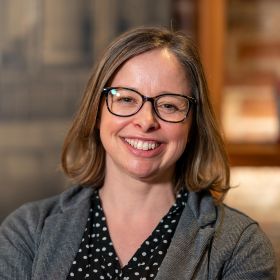
Dr Becky Carlyle
Author
Dr Becky Carlyle is an Alzheimer’s Research UK Senior Research Fellow at University of Oxford, and has previously worked in the USA. Becky writes about her experiences of starting up a research lab and progressing into a more senior research role. Becky’s research uses mass-spectrometry to quantify thousands of proteins in the brains and biofluids of people with dementia. Her lab is working on various projects, including work to compare brain tissue from people with dementia from Alzheimer’s Disease, to tissue from people who have similar levels of Alzheimer’s Disease pathology but no memory problems. Becky is also a mum, she runs, drinks herbal tea’s and reads lots of books.

 Dr Yvonne Couch
 Dementia Researcher
 Beccy Owen
 Bernie McInally
 Dr Chloe Fawns-Ritchie
 Dr Clíona Farrell
 Dr Becky Carlyle

 Rahul Sidhu
Such an inspiring read! I really appreciate how you connected historical understanding of Alzheimer’s with the cutting-edge techniques like single-cell sequencing and high-throughput proteomics. It gives a real sense of hope that these diseases are not just understandable, but potentially treatable.
Do you think in the next few years we’ll see CSF-stage–based treatment decisions being used in real clinical settings?