 Print This Post
I must preface this blog with an apology that it is narrowly focused on the medical care of someone with dementia. I fully believe that the most important people involved in the clinical treatment of someone with dementia is the person themself and their family and friends. And I know that the assessment, treatment, and care of someone living with dementia involves many different disciplines from health and social care and that doctors are no more or less important than many of their colleagues. I am very enthusiastic about multidisciplinary working!
That said, there have been interesting changes in recent years which are worth reflecting on in relation to the involvement of different medical specialties. I should declare at the start that I am an old age psychiatrist but that – as they say – “some of my best friends are” geriatricians and neurologists. These are the three medical specialties which are most involved in seeing people living with dementia, in a variety of settings.
One can make a light-hearted observation about these three specialties and the personalities of the people who end up working in them. I am not sure if it is that people are attracted into the specialty where they fit best or something about the process of training means that people take on certain characteristics by working in a certain way. Neurologists tend to be very intelligent and doggedly seek to work out the single cause of the patient’s presentation. Geriatricians are very systematic and comprehensively list all the problems which the patient has. Finally, old age psychiatrists are similarly holistic but can be rather fuzzy in our approach.
For many years – in the UK, at least – it has been old age psychiatry which has been involved in the specialist assessment and treatment of the majority of people with dementia. A minority of neurologists (who might identify as cognitive neurologists) and geriatricians are also interested.
Old age psychiatry, as a specialty, is relatively young and its history has been helpfully and interestingly chronicled by Dr Claire Hilton, Honorary Archivist of the Royal College of Psychiatrists, in a series of books and articles. In the UK, someone who is concerned about their memory who consults their GP would usually be referred to see an old age psychiatrist for further assessment, either in a memory clinic or at a home visit. It worth commenting that some people who I see in the memory clinic comment that they do not need to see a psychiatrist and do not consider themselves to be old!
This is not the case the rest of Europe, where either neurology or geriatric medicine often take the lead. And in recent years in the UK, perhaps in parallel with the prospect of disease-modifying treatments for dementia finally arriving, neurology has taken more of a lead in dementia research. For example, many of the UK senior dementia experts are now neurologists, whereas five years ago they were all old age psychiatrists. This does make sense if the treatment of dementia is likely to become centred around infusions of monoclonal antibodies like Lecanemab or Donanemab (neither of which have been approved for use in the NHS) as neurology already has expertise in similar areas.
However, I would like to reflect on what old age psychiatry has to offer the assessment, treatment, and care of people with dementia. I think we offer a holistic, person-centred approach which includes family members and social concerns as well as the brain changes of dementia. There are mechanisms for following people over a long period of time through chronic illnesses – as is the case in other specialties – and we are fortunate in Scotland that everyone diagnosed with dementia is entitled to at least a year’s post-diagnostic support (which is often provided outwith the NHS). Many people that I see in the memory clinic do not have dementia but have depression and/or anxiety which is affecting their memory and which can be somewhat reversible. All of these things are routine practice for old age psychiatry.
However, it is increasingly recognised that people with dementia often have multiple other conditions – this is described as multimorbidity. Many of these conditions can also impact on cognition and need to be taken into account when assessing for dementia. Similarly, individual medicines or multiple medicines together (polypharmacy) can impact someone’s cognition. This is the heartland of geriatric medicine.
For these reasons, I have come to the conclusion that the appropriate approach to the assessment, treatment, and care of people with dementia is a multispecialty one. Having access to the expertise of neurology, geriatric medicine, and old age psychiatry means that medical care can be truly patient-centred and led by the specific problems which an individual experiences. We now have two neurologists working in our memory clinic locally and have also benefitted from input from our geriatrician colleagues. What is important is that the person with dementia receives the most appropriate and highest quality care in a timely fashion from whoever is best placed to provide it. There is much to be gained from us all working together.
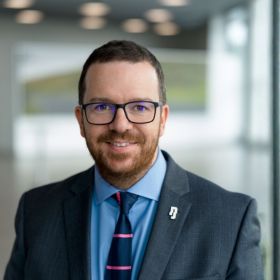
Dr Tom Russ
Author
Dr Tom Russ is a Reader in Old Age Psychiatry at the University of Edinburgh, combining clinical work with interdisciplinary dementia research. His work focuses on improving care and outcomes for people living with dementia and their families.

 Beccy Owen
 Bernie McInally
 Dr Chloe Fawns-Ritchie
 Dr Yvonne Couch
 Dr Clíona Farrell

 Rahul Sidhu
This was an interesting read, and agree dementia care crosses over multiple specialties. I’m also wondering whether learning disability psychiatrist should also be included in this, especially given that people with Down syndrome often develop early onset dementia, and people with learning disabilities not caused by Down syndrome are also at increased risk of dementia compared to general population. Learning disability psychiatrists are often involved in the assessment and treatment of dementia. Many people with learning disabilities also present with multiple chronic conditions, and early signs of dementia may go missed due to pre-existing cognitive differences. I find that learning disabilities and older adults services are very similar in their approaches to care in the way they are holistic, person-centred, involve family and carers, and consider social concerns.