 Print This Post
Alzheimer’s Disease International (ADI) has today released the eighth edition of its landmark From Plan to Impact report, titled “Time to Deliver”, calling on governments worldwide to renew their commitment to dementia care, research, and policy.
As the World Health Organization’s Global action plan on dementia nears the end of its original eight-year term (2017–2025), this year’s report provides a critical reflection on progress to date—and a stark warning. Despite some advances, no global targets are currently on track to be met, and only 45 of 194 WHO member states have implemented a national dementia plan.
The report highlights the urgency of extending the plan until 2031 and reinforces dementia’s status as a pressing public health crisis—set to affect 139 million people by 2050, with annual costs expected to double to US$2.8 trillion by 2030.
Key messages from the report include:
- Dementia must remain a global health priority; the loss of the WHO plan would be a serious setback.
- There is growing global momentum, with six new national dementia plans launched this year alone.
- Countries with dementia plans are demonstrably more successful in achieving targets across awareness, care, research, and risk reduction.
The report also celebrates local and regional successes and innovations—while urging that the time for rhetoric is over. Now is the time to deliver on the commitments already made.
You can download the full From Plan to Impact VIII report here: https://www.alzint.org/u/From-Plan-to-Impact-VIII.pdf
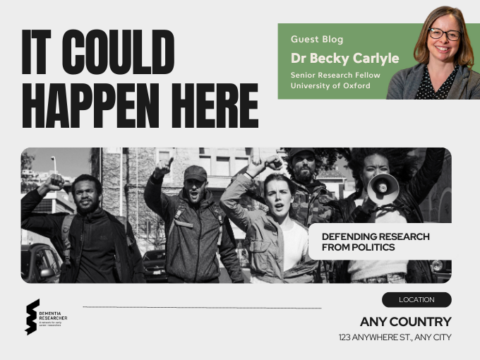
 Dr Becky Carlyle
 NIHR
NIHR


What saddens me the most is that, according to the WHO, of the 55 million people living with dementia globally, more than 60% are in low- and middle-income countries, including Sub-Saharan Africa — yet none of these countries have a national dementia plan. I created this podcast to raise awareness about dementia in Africa, but its uptake remains very low in these regions. Why? Many people don’t truly understand what dementia is, often associating it with other factors rather than recognizing it as a medical condition.
We have a lot of work to do. Even if we could start by adding a dementia policy to the existing health policies of each WHO member state, it would be a step forward. However, as long as our governments are unwilling to participate in these initiatives, we risk fighting a losing battle.