
 Print This Post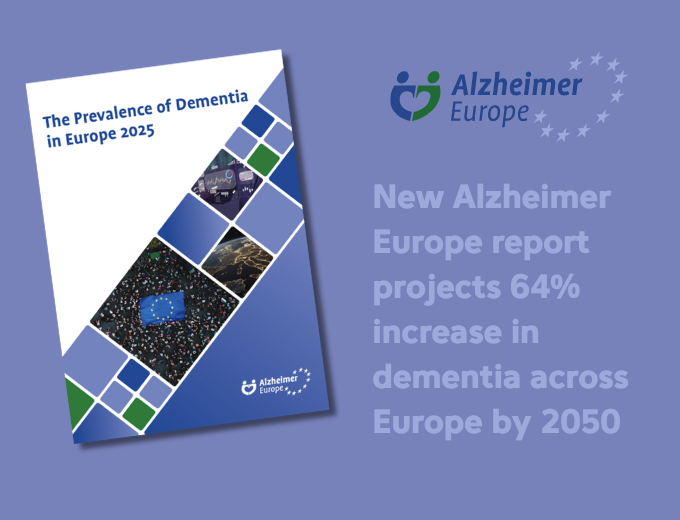
A new report from Alzheimer Europe estimates that the number of people living with dementia across Europe will increase by almost two thirds by 2050. The figures underline the growing pressure on health services, social care, and research systems over the coming decades.
The report, The Prevalence of Dementia in Europe 2025, provides updated estimates for dementia prevalence across Europe, building on the organisation’s earlier Dementia in Europe Yearbook 2019. It applies updated prevalence estimates across five year age bands to population projections from the United Nations World Population Prospects 2024, for the years 2025 and 2050.
“The scale of the challenge posed by dementia across Europe is substantial and it is our sincere hope that our updated figures provide the impetus for decision-makers, both at the European and national levels, to prioritise dementia and ensure it is addressed across the domains of health, research, disability policy and support for informal carers. In particular, policy-makers must work to improve care services, make investments in health infrastructure for diagnosis and treatment, as well as help for family, carers and supporters of people with dementia. As part of this, they must take into consideration the changing demographics of the population and the prevalence of conditions such as dementia. Our Helsinki Manifesto sets out a blueprint of actions, at the EU and national level, to improve the lives of people with dementia, their carers and families. We reiterate the key calls from our Helsinki Manifesto: There is a clear need for a coordinated European Action Plan on Dementia and a dedicated research mission, each with ringfenced funding to ensure their proper implementation.”
Jean Georges, Alzheimer Europe Executive Director
Key figures
- For 2025, an estimated 9,065,706 people are living with dementia in EU27 countries.
- For 2025, an estimated 12,122,979 people are living with dementia across EU and non EU countries combined.
- For 2050, an estimated 14,335,788 people are projected to be living with dementia in EU27 countries.
- For 2050, an estimated 19,905,856 people are projected to be living with dementia across EU and non EU countries combined.
- This represents a projected increase of 58 percent in the EU and 64 percent across Europe as a whole.
What changed since 2019
To assess change since the 2019 publication, Alzheimer Europe compared estimates for EU27 countries across both reports. Overall numbers are broadly consistent. The report notes higher prevalence rates among men across all age bands aged 70 and over, with the largest difference in the 70 to 74 age group. Patterns among women were more mixed.
What this means for policy and research
Alzheimer Europe argues that the projected rise strengthens the case for action now. This includes investment in health, care, and social protection systems, support for dementia research, and preventative interventions. The report also highlights the need for system capacity across the full care pathway, from diagnosis through to end of life care.
The organisation reiterates calls for coordinated European action, including a European Action Plan on Dementia and a dedicated research mission with ringfenced funding, aligned with its Helsinki Manifesto.
Access the resources
The full report and interactive maps showing projections from 2025 to 2050 are available from Alzheimer Europe.
Interactive maps and graphs for countries across Europe, visualising the prevalence from 2025 to 2050, are available at: https://www.alzheimer-europe.org/dementia/prevalence-dementia-europe
Source: Alzheimer Europe, The Prevalence of Dementia in Europe 2025.


 Emily Spencer


 Dr Becky Carlyle
 NIHR
NIHR