
 Print This Post
What does it mean to be perfect? Increasingly it seems that this is being demanded of us in every sphere of our lives. Could our quest for scientific perfection be harming us?
By now all neuroscience researchers have heard at least something about the reproducibility crisis in neuroscience research (A manifesto for reproducible science | Nature Human Behaviour). To counter this, it is argued, we need to produce high quality, reproducible research, which is adequately powered to do the job in hand. I’m not going to disagree with that and campaigns like the BNA’s (British Neuroscience Association Credibility in Neuroscience) are really important, but does that mean that it has to be perfect? Also, if it is perfect, at what personal cost?
Would excellence be a better goal to aim for?
Some years ago I read a thought provoking piece in a medical journal (Thoughts for new medical students at a new medical school – PMC) about how the personality traits that make for good doctors, including the desire to get things right, can have a corrosive effect on our personal lives and happiness. I suspect that a similar argument could be made about scientists.
During my psychiatric training I had to pass some really hard exams which required us to learn about a lot of psychological theories. One of these (and my personal favourite) was Donald Winnicott’s “The Good Enough Mother”. In essence he said that there is no such thing as a perfect parent, but that you just have to be good enough at the myriad tasks required of parents. He also spoke about how seeking illusory perfection in parenting can be damaging to the child. I wonder if seeking illusory perfection as a scientist is equally damaging to us. (Excellent vs Excessive: Helping Trainees Balance Performance and Perfectionism – PMC).
I was reminded of this when I heard the wonderful Professor Trevor Robbins speaking at a BAP (The British Association for Psychopharmacology | Home) careers event longer ago than I would care to admit. He spoke about how as a young scientist he had delayed publishing a paper, because he wanted it to be perfect, and then got scooped such that it was never published at all. His message to the assembled ECRs? It doesn’t have to be perfect, but it does have to be published.
This made me think about a friend’s child who sat an English exam. They wrote a brilliant first paragraph of a story, but they still failed the exam because they only wrote one paragraph. It was only when they let go of their need for each paragraph to be perfect that they were able to finish a story in the next exam and score above the pass mark.
How many of us have unfinished grant applications, papers or projects that have never seen the light of day because we didn’t deem them to be perfect?
So am I arguing that we should be slapdash researchers? Absolutely not, but I think that the difference between good enough, or perhaps excellent enough, and perfect is for most people a better quality of life, work/life balance and for some people better mental health. Yes, there are definitely things that we need to get right and we need to try our best to produce good work, but we need to think about whether excellence is enough instead of aiming for perfection. I wonder if the impossible search of perfection in every task can tip at least some of us into a state where getting projects finished becomes an even more difficult task.
Ultimately we need to do the best work that we possibly can, but in a way that allows us to be kind to ourselves, recognises that to err is human and that true perfection is an illusion. Research careers are after all a marathon, not a sprint.
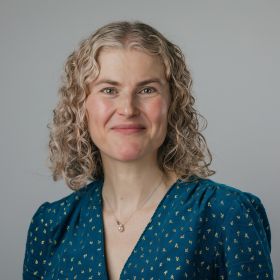
Dr Lindsey Sinclair
Author
Dr Lindsey Sinclair is an Honorary Senior Clinical Research Fellow at the University of Bristol and a Locum Consultant in Old Age Psychiatry. Her research explores the relationship between depression and dementia, combining lab work with epidemiology and genetics. Clinically, she works with older adults experiencing a wide range of mental health problems. Outside of work, she’s a keen baker and runner, and has a particular talent for creating ambitious birthday cakes.

 Emily Spencer
 Dr Lindsey Sinclair

 Dementia Researcher


 Alz Forum

 Rebecca Williams