If you’re a regular reader of my blog, you will likely realise that I am in the final stages of (hopefully!) completing my PhD. I am now around four months from my planned submission date, and doing everything I can to stay on track. In this month’s blog, I’ll be thinking about the preparations I’ve made, the hidden tasks to accommodate, and bad news that might end up being a blessing in disguise.
I’ve mentioned before that the analysis I’m undertaking for my thesis has been time-consuming to say the least. For the last seven months, I have effectively done nothing aside from analyse my data. Not all PhDs are created equal, and I happen to have undertaken one in which I was completely naïve to the methodology employed. Thankfully, I am finally at the stage where I feel like I have a reasonable handle on what’s going on – and just in the nick of time!
Suffice it to say that I grossly underestimated how long that analysis would take. The delay to my timelines being what it is, I decided that timely submission would only now be feasible if I set myself regular and rigid deadlines for writing up the rest of my thesis. I’m proud to say I now have a (beautiful) Gantt chart specifying activities by the week, including drafting bullet-pointed chapter outlines, initial drafts, time for supervisor feedback and integration of comments. I am even prouder to say that I have managed to adhere to these self-imposed timelines – meaning that my first results chapter has both been drafted and commented on according to schedule! This was achieved in no small part thanks to attending a three-day writing retreat – something I would recommend without hesitation. With a cumulative 12 hours of silent, group writing, I managed to produce just over 5,000 words of my chapter, which was then built upon and polished into the final draft the following week. In less than two working weeks, I had the 6,500-word chapter submitted (and feedback received, thanks to an incredibly fast turnaround by my supervisory team!). With this success under my belt, I concluded I should just book onto a further 3 writing retreats, and my whole thesis could be finished before the summer!
Alas, glancing at my diary this week has suggested that might not be achievable after all. Somehow, conference season seems to have crept up upon me, and with it the realisation that I have both an oral and a poster presentation to prepare within the next three weeks. The weeks I had set aside to write my second results chapter look like they might need to be – in part – reappropriated. The same goes for the third chapter – for two of the four I had set aside, I’ll be at two different conferences. There’s a third conference a month or two later that I still need to make a decision on, as to whether I can justify taking the time to attend.
One might argue that trying to squeeze in so many conferences at this ‘writing up’ stage of my PhD seems like overkill – or at least, adding unnecessary pressure to what is already a pressurised time. I would be inclined to agree, were it not for the fact that I haven’t attended or presented at a conference since 2023, and never with my own PhD work. Going on maternity leave a year into my PhD, and then returning to my studies before my son even turned nine months old meant that travel had to take something of a back seat. Where peers presented the findings of their systematic reviews in this format, I prioritised writing it up as a journal article – something that didn’t require me to leave London, or my flat if need be. Now, however, I do feel that I need to make up for lost time and take whatever opportunities I can to share the results of my research.
Although I do have the publication of my review under my belt, a couple of weeks ago I was advised that publishing findings from my main study would put me in an advantageous position prior to my viva – which evidently is good advice. At a minimum, submitting a paper and receiving peer review comments would be helpful in terms of identifying areas of weakness that I may not have seen. Having received that advice, I looked at my Gantt chart in a panic: given that I hadn’t factored in preparing presentations, where was I supposed to squeeze in writing up a journal article? At the same time, I had just submitted a round 1 fellowship application, and knew that proceeding to the next round would also mean adding massively to my workload. Repeatedly waking up in the middle of the night thinking about it alerted me to the fact I was possibly becoming overwhelmed.
How can you prioritise effectively when everything seems essential??
This week, I received an email to say that my fellowship application had been unsuccessful. It’s probably a slightly unusual thing to reveal on this platform – people tend to share their successes, rather than their failures. I should probably feel disappointed, or perhaps aggrieved: I wholeheartedly believed in my proposed project, and would have been so excited to take it on. But I can’t help but think it’s a blessing in disguise. Right now, what matters is seeing my current project through to completion, making good on my existing commitments, and hopefully coming out the other end a newly-minted ‘doctor’. There will be other opportunities in the future – by which time, I will be in a stronger position to compete for them – and in the meantime, I’ll be grateful not to have an additional deadline to add to my overflowing Gantt chart.
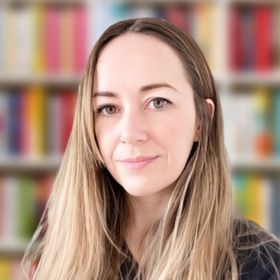
Emily Spencer
Author
Emily Spencer is a PhD Student at University College London looking at improving how GPs communicate with people with dementia and their family carers about their future care. Emily previous had a 5 year career break to pursue a career as a musician, and has previously undertaken research on improving the care people with dementia receive from their GP practice, as well as end-of-life and palliative care provision in the community. Emily is also a new mum and will be writing about her experiences navigating motherhood and a research career.

 Dementia Researcher
 Beccy Owen
 LSE Impact Blog
 Dr Ajantha Abey