In December 2025 I started a new role at the University of Edinburgh. It was the first time in my career I had moved to a new job at a new university. After nearly a decade at Newcastle, where I did my undergraduate, masters, PhD and postdoc, leaving was a big deal. I wrote about the process of leaving in an earlier blog, but now I wanted to reflect on the other side of it. What it is actually like starting somewhere new.
I want to say two things upfront, and they are both equally true. Starting somewhere completely new where nobody knows you is genuinely exciting. It is also absolutely terrifying. A mix of the two is totally fine. I am the kind of person who can be buzzing with excitement one minute, let a flash of anxiety creep in, and then beat myself up for no longer feeling excited. Life is complicated enough without letting yourself spiral like that. So my first piece of advice is simple. Enjoy the excitement and do not let the little peaks of fear get in the way.
Meeting New People
One thing about being somewhere for a long time is that you become part of the furniture. Not in a bad way, but everyone knows who you are, what you do and what makes you tick. You can easily be taken for granted. Starting fresh, I really enjoyed meeting people who were interested in getting to know me and vice versa. There is something energising about introducing yourself and your research with fresh eyes looking back at you.
The Mundane Stuff
There are mundane problems that will follow you from one university to the next. Your laptop probably will not have arrived yet. Your smart card to access buildings definitely will not be set up. Your email address will not be ready to go. And you will absolutely have hours of fire safety, data protection and diversity training ahead of you.
Although this is frustrating, I have come to see it differently. Those first few days are probably the least busy you will be for the rest of your time in the role.
So relish the joy of the mundane admin while it lasts. It will not last long.
The Imposter Syndrome Risk Zone
On a more serious note, starting a new role brings you perilously close to the imposter syndrome zone. And that makes sense. Most of the techniques I have learned for tackling imposter syndrome rely on using your track record as evidence that you belong where you are. When you start somewhere new, that evidence base is not there yet. Your old support structures are gone and you have to build them from scratch.
I will be honest. There have been days in my new role where I thought I was completely out of my depth and did not know what I was doing. And to a point that was probably true. But it is important to remember that when you start a new position, you are not expected to know what you are doing straight away. It reminds me of my PhD. When you are in the eye of the storm it feels like a PhD is all about producing things, when really it is about learning how to produce things. Starting a new role is much the same. The expectation at the start is to engage and learn, not necessarily to deliver.
My advice on this, like so many things, is to communicate early. And I say that because I did not take my own advice. I spent far too long worried about what everyone was thinking about me. When I eventually sat down with my new line manager and mentioned I was feeling a bit lost and that my confidence had taken a knock, I was immediately reassured. They got me involved in work quicker than originally planned, and that made all the difference.
The Good Parts
I have probably made the whole experience sound scary, so let me end with the good parts.
Now that I am more settled, there are more good days than difficult ones. I remember sitting in a meeting where a project was being discussed. I asked a question that I assumed everyone would think was obvious, but it turned out nobody had thought of it. Nobody else had the exact expertise I had to think about the problem in that way. That is the thing about being a new researcher in a new environment. Nobody has the unique combination of experience that you bring. It is what makes research both exciting and terrifying at the same time.
I have also had the experience of being at the beginning of a study for the first time in my career, recruiting real people into a project. I was terrified at first because I knew nothing about the process. But now that the study is finding its pace, I am finding it genuinely exciting to be part of something from the ground up.
Slow Down
Moving to a new job is exciting. You wanted to do it for a reason, whether out of necessity or opportunity. There is no point pretending it is not scary too, and there will be hard days. But my biggest piece of advice is to remember to slow down. Do not put pressure on yourself to hit the ground at anyone else’s pace. On the tough days I would tell myself in the morning that I was going to turn up, do the best I could and go home. When you take the pressure off and slow down, you give yourself the space to appreciate the new and exciting things happening around you.

Dr Connor Richardson
Author
Dr Connor Richardson is a Neuro-epidemiology Research Associatea at The University of Edinburgh. His research interest lie in using advanced statistical modelling and machine learning to measure dementia risk. Connor blogs about his research, Equality, Diversity and Inclusion and sometimes his Pomapoo’s.


 Dr Connor Richardson
 Nature Careers Blog
 Dementia Researcher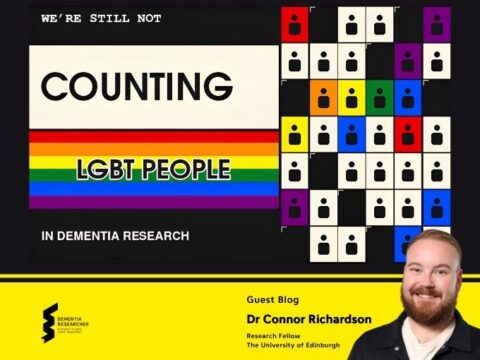


 Emily Spencer


 Dr Lindsey Sinclair