 Print This Post
Back in May I attended Hot Brain 3, an annual, free, hybrid conference that opens discussion on the impact of climate change on brain health. With talks ranging from modelling responses to rising temperatures in crustacean nervous systems, to how the NHS is adapting to climate change, the day gave a broad but thorough overview of how rising temperatures can affect all aspects of brain health, disease and research.
For full disclosure, I helped with the organisation and running of this conference, as part of my involvement with UCL Institute of Neurology’s Climate Crisis committee. However, I was not involved in the programme design, and I was blown away by the quality of the speakers on the day. The morning session, opened with a talk from Prof Mark Maslin, giving an overview of the current state of the climate. Despite this being a more despairing topic, it gave context to the level of urgency for the medical and scientific talks which came later in the day. Furthermore, as a neurobiologist, it gave me a better understanding on what 1.5 degrees of warming (as set out in the Paris agreement) actually looks like, and how realistic this is (not very). A second talk from engineer, Prof Priti Parikh, highlighted global disparity and inequality in access to resources, such as sanitation and sufficient food, and the intersection between these, with her work focussed on slum conditions in India. This discussion starkly showed what has been understood for a long time, that the consequences of climate change are more severe in the global south and for those living in lower socioeconomic regions.
But of course, the purpose of this day was to discuss specifically the impacts of climate change and global warming in neurological conditions. A real highlight of this, was the participation by people with lived experience. Stephanie Smith spoke bravely about her son’s experience with Dravet syndrome, a neurodevelopmental condition associated with seizures. Stephanie described how changes in temperature, and particularly the hot temperatures during heatwaves, can trigger the onset of seizures for her son, and many others with Dravet. This has a huge impact on their whole family lifestyle, with so much planning required for simple day to day living. Adaptations, such as fans and aircon have come at the personal expense to their family and this is a common experience for those susceptible to heat related illnesses.
A second talk from Lauren Howarth, who has spinal muscular atrophy type 2, and works as a helpline officer for Muscular Dystrophy UK, really delved into the difficulties she has experienced in relation to climate change, as a wheelchair user. With increasing temperatures, her black wheelchair becomes incredibly hot and uncomfortable, contributing to skin irritation. Lauren described how much she misses out socially. She is forced to cancel plans and miss out on activities that her friends don’t give a second thought to when temperatures rise. Lauren also stressed that speaking at this meeting was the first time she had a platform to speak about the impact of climate change on her. Clearly, the impact of extreme temperatures needs to be discussed by clinicians with their patients, so that adjustments can be made.
From these talks, it was obvious that climate change can have serious consequences for those with existing neurological conditions, both on lifestyle, and conditions themselves. But what about the influence climate change could have on the development of neurological conditions. Two talks really stood out to me in this area. Prof Jane Hirst, from Imperial College London, talked about the association of increasing temperatures with preterm births across various parts of the world. Research is ongoing to understand the association between preterm birth and neurodevelopment, but early data indicates there may be a connection. A second talk, by Dr Lasse Brandt from Charité Universitätsmedizin in Berlin, highlighted issues of mental health and rising temperatures.
Suicide rates, particularly in men, significantly increase after a heatwave. The direct and indirect causes of this still need further elucidation, but climate change will clearly have huge consequences on mental health.
Another important point raised which is relevant for dementia researchers, was that heat-related illnesses is more common for people with Alzheimer’s disease and dementia than those without. This already vulnerable group will face further challenges as the global temperature begins to climb, and heat waves become more common and intense.
In terms of tackling climate change, systems are adapting, but slowly. Representatives from Greener NHS spoke about the investment in solar panels across hospital campuses in England. Dr Rose Ingleton demonstrated a new tool available to GPs to calculate the carbon footprint of common medical problems, allowing GPs to consider alternative solutions, such as combining testing appointments to reduce recurrent travel, or to implement virtual appointments when appropriate.
For me, overall, Hot Brain 3 primarily drew attention to the desperate need for action on climate change. Much more research is clearly urgently needed to investigate the role of rising heat and humidity in affecting existing neurological conditions, including neurodegeneration, and in causing new instances of neurological illness. But more importantly, we need strong leadership in influential institutions and government to lead the way to preventing irreversible damage to planet, and people.
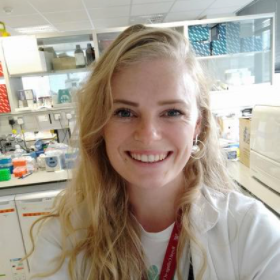
Dr Clíona Farrell
Author
Dr Clíona Farrell is a Postdoctoral Researcher in the UK Dementia Research Institute at University College London. Her work focuses on understanding neuroinflammation in Down syndrome, both prior to, and in response to, Alzheimer’s disease pathology. Originally from Dublin, Ireland, Clíona completed her undergraduate degree in Neuroscience in Trinity College, and then worked as a research assistant in the Royal College of Surgeons studying ALS and Parkinson’s disease. She also knows the secret behind scopping the perfect 99 ice-cream cone.

 Rahul Sidhu
 Dr Sam Moxon
 Ajantha Abey
 Dr Peter Connelly
 Rebecca Williams
Thanks so much for sharing — what an important topic! One we will become more and more familiar with undoubtedly as the climate crisis continues.