 Print This Post
I’ve recently joined Dementia Researcher as a regular blogger, where I’ll be talking about all thing’s dementia research, as well as sharing my experiences, lessons, and advice from life as a final-year PhD student.
For my first blog, it felt right to start at the beginning. Not with Alzheimer’s disease or lab techniques – but with my journey. How I ended up doing a PhD, how I discovered science, and how something that once felt completely out of reach slowly became my passion.
As I sit here writing this, I’m trying to rewind the last ten years and make sense of how I got here: a fourth- and final-year PhD student researching Alzheimer’s disease.
A lot of people discover their love for science early on at school. For me, that wasn’t the case at all. Science lessons didn’t spark anything special, and no one really talked about what a career in science could look like. I didn’t even realise you could become a “real-life scientist”.
Things began to change during my A-levels. My interest in science slowly grew, particularly around how the body works. When it came time to apply to university through UCAS, I found myself torn between two very different subjects: history and biological sciences. I chose biology and I suppose the rest really is history. At that point, though, I still had absolutely no idea that becoming a neuroscientist was even an option.
I went on to study at the University of Leicester, where I was exposed to a huge range of biological topics; from plants and ecosystems to genetics and neurophysiology. To be completely honest, I didn’t love university at first. It was exam heavy, I struggled at times, and I even had to resit some exams. But that experience taught me something important: setbacks don’t define you unless you let them stop you.
Everything changed in my third year when I did my first-ever research project. That project, randomly allocated, happened to be in neuroscience. It quickly became my favourite thing I’d done throughout my entire degree. For the first time, I experienced what it was like to work in a lab, ask questions that didn’t already have answers, and contribute, however modestly, to new knowledge.
By the end of my undergraduate degree, I still didn’t really know what I wanted to do. Biology is incredibly broad, and my interests felt scattered. What I did know was that I wanted to learn more about the brain, and I couldn’t wait to get back into a lab. Around this time, my grandad, who I had lived with, was living with vascular dementia. It began with repeated questions, forgetting names, and moments of confusion. Over time, the symptoms worsened. Watching that progression up close had a profound impact on me.
That combination, my growing fascination with the brain and my personal experience of dementia led me to apply for an MSc in Clinical Neuroscience at UCL. The MSc was intense. I was juggling a job three days a week, commuting from Birmingham to London every week, and trying to stay afloat academically. It was hard, but incredibly rewarding.
During my MSc, I completed a dementia research project at the UCL Queen Square Brain Bank, working with Professor Tammaryn Lashley and Dr Alex Bampton. For the first time, I worked with human brain tissue. I was fortunate enough to publish my findings as a first author and be included on the Dean’s List. More importantly, the experience gave me confidence. It helped me realise that research – particularly in neurodegeneration – was what I wanted to do long-term.
After finishing my MSc, I was hired as a research assistant at UCL, working on a Parkinson’s disease project that was heavily genetics-focused. I quickly realised that this wasn’t quite the right fit for me. After that, I moved into industry, working as a scientist at a biotech company in Oxford on rare autoimmune diseases. While it was a valuable experience, it confirmed something important: I missed academia.
So I started applying for PhDs in dementia research. Given my love for neuroscience and my experience with my grandad, it felt like the right path. Then an incredible opportunity came up at the University of Sheffield, investigating neurovascular function in Alzheimer’s disease as part of one of the UK’s leading Doctoral Partnership Programmes. I applied, interviewed, and was awarded the position. Three and a half years later, here I am – nearing the finish line.
My PhD research focuses on neurovascular coupling – the relationship between neuronal activity and blood flow in the brain in preclinical models of Alzheimer’s disease. This process is known to be disrupted in Alzheimer’s and may even serve as a potential biomarker, so understanding it better is crucial. I also study how vascular risk factors influence Alzheimer’s pathology.
Alongside my research, I strongly believe that scientists have a responsibility to communicate their work beyond academia.
I’ve always loved talking to people about science, so throughout my PhD I’ve been involved in public engagement and science communication, and now, through this blog, I hope to share more about my research and my journey.
I’m also an ISTAART ambassador, part of a global network of dementia researchers working together to tackle Alzheimer’s disease. It’s been one of the most rewarding experiences of my PhD, and I’ll be writing a dedicated blog about how to get involved.
In addition, I work in medical writing, contributing to science communication outlets like The Conversation and publishing articles in outlets such as The Independent.
Outside of academia, I’m passionate about showing that it is possible to have a healthy work-life balance during a PhD. I’m quite strict about when I work and when I don’t, although I’ll admit that gets harder towards the end.
So, what’s next? As I approach the end of my PhD, I’m constantly thinking about the future—while also trying to finish experiments and write a thesis. In future blogs, I’ll be sharing everything I’ve learned along the way: how to network, how to build the right support around you, how to write a thesis, how to deal with imposter syndrome and research stress, and how to make the most of dementia research networks like ISTAART.
I’m really looking forward to sharing this journey with you.
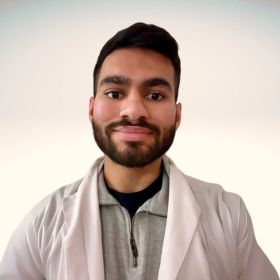
Rahul Sidhu
Author
Rahul Sidhu is a PhD student at The University of Sheffield, focusing on the effects of heart disease on dementia in preclinical models of Alzheimer’s disease. His research aims to uncover how cardiovascular health influences neurodegenerative conditions, potentially leading to novel therapeutic strategies.
Follow @rahulsidhu_
Find Rahul on LinkedIn
https://doi.org/10.5281/zenodo.18462346

 Beccy Owen
 Bernie McInally
 Dr Chloe Fawns-Ritchie
 Dr Yvonne Couch
 Dr Clíona Farrell
 Dementia Researcher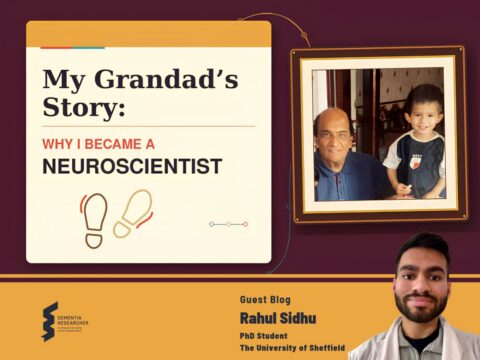
 Rahul Sidhu
 Dr Emma Law
 Dr Ajantha Abey