 Print This Post
We often think about dementia as a slow burn. A disease that develops over decades rather than weeks. It’s the gradual decline of a loved one from noticing the first symptoms to the loss of another small piece of them every time you see them.
Clinically, we track progression in months and years. We monitor cognitive scores, longitudinal data and look for any gradual changes in how the patient behaves. The goal is to see differences that are statistically significant.
That’s all very valid but here’s the issue. As someone who has watched multiple relatives suffer through dementia there is one thing I now for sure. From a family perspective, dementia is not experienced as a trend on a graph. It unfolds in a series of key, heartbreaking moments. They don’t follow trendlines or timelines.
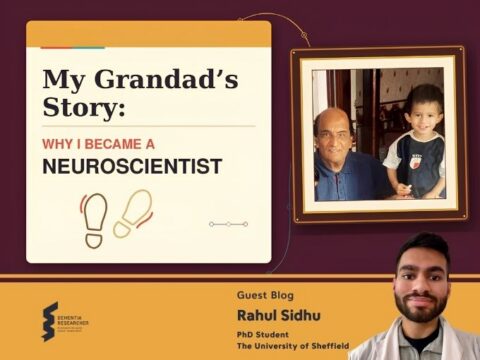
I think this is one of the things that surprised me when I went through this process. Dementia teaches you that time does not always move forwards in one single direction. My grandfather was a good example of this. I would see him fairly regularly and it was impossible to predict how he would be each time I saw him. Sometimes we could have a full conversation. Other times he had no idea who I was. It leaves you existing in two versions of time at once. In one version you are the grandson he watched grow up, go to university, get a PhD, start a life of his own… in another version you are a total stranger. Somebody he never met. It’s a really strange experience and one that you cannot describe but if you have experienced it, you know.
Time seems to behave totally differently when you are going through this. Take repetition for example. He could ask me a simple question and I would find us returning to it 5 minutes later because that part of the conversation had been forgotten. For my grandfather, it was his first time asking it and hearing my reply. For me and everyone else in the room it wasn’t. Yet you have to try and answer it as if it’s the first so as not to distress them.
It feels like time is folding back in on itself.
Immediately after that feeling of time folding over, it can switch to feeling stretched. Our conversations would slow right down while he tried to think, often looking visibly frustrated. He would pause and process what we were talking about and fairly simple and routine conversations would take much longer than usual. Or it would feel like time collapsed fully. After a period of stability where he showed a much more gradual decline that I could predict and plan for, I would come in and find him dramatically changed. Sometimes that was in a good way with us recounting all the dogs he judged at Crufts, thus giving me false hope of improvement. Other times he would be totally unrecognisable. The only thing that was consistent was inconsistency. I could never know what to expect. There were no averages to judge him by. Just a collection of moments that defined where he was at any given time. What makes this difficult is that these moments don’t translate easily into how we measure dementia.
As researchers, we are reliant on observing change over time. We look at biological changes in cells, study cognitive scores, look at behavioural changes or alterations in functionality. This gives us a very clear and rigid structure by which we can perform statistical analyses and tease out our findings. It is an essential structure that is core to our research and is the best way we have to record progress. But, it simplifies a very complex issue.
A small change in a cognitive score, for example, could translate to something much more profound and noticeable in real life. A single misfired neural circuit that could be so easily disregarded as an outlier in the lab could have been the reason my grandfather couldn’t remember his old address. Equally, those moments of clarity in him. The moments that meant so much to us as a family. They aren’t moments that can easily be captured in a dataset.
This raises an important question. When we look at a potential new therapy and we say things like ‘this can slow the progression of dementia’, what are we actually saying? And what does that look like from a human perspective? Do we get more time with our loved one? Can they remember who we are 75% of the time rather than 25%? Or does it simply mean that the graph looks better?
This is the main thing I learned from watching a loved one go through dementia. Time isn’t always a linear progression. It can stretch, loop, fall apart and be totally unpredictable and immeasurable. Some of our most important moments will never fit on a trend line.
Our challenge as dementia researchers is to remember this. We cannot abandon the structured tools we rely on to do our work but we need to remember that behind every data point there is an experience. And it might look nothing like the trend we are writing about in our papers.
Because until we better understand how dementia is actually lived, not just how it is measured, we risk missing something fundamental about the disease itself.
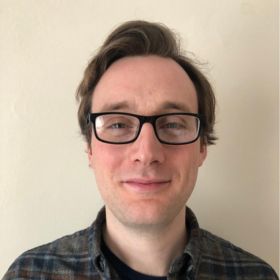
Dr Sam Moxon
Author
Dr Sam Moxon is a Research Fellow at the University of Birmingham. His expertise falls on the interface between biology and engineering. His PhD focussed on regenerative medicine and he now works on trying to develop 3D bioprinting techniques with human stem cells, so that we better understand and treat degenerative diseases. Outside of the lab he hikes through the Lake District and is an expert on all things Disney.

 Dementia Researcher
 Rahul Sidhu
 Dr Yvonne Couch