
When I wrote the previous post I thought it would be a one off. In my brain you spent months organizing a conference, you managed everything to the nth degree and then you just turned up on the day, pressed go and everything ran according to plan and you could sit back and enjoy the talks. I was definitely present for the talks, I cannot say I enjoyed very many of them because I was too busy fretting about all the stuff that, as it turns out, you still have to do after the conference starts. So today we’re going to go through all the things you have to do AFTER you’ve organized the conference.
First up is the set up considerations and for this, I’m going to start the day or even the week before. You have options with IT at a conference. You can fill your local desktop with poorly named powerpoint files and have people hunt and click every time a new speaker turns up, or you can do what we did and run everything into one big powerpoint and have it essentially autoplay. The former allows the speakers to work on their talks all the way to the last minute but means a ton of IT organization for you on the day, they need to get to you before their sessions, upload things, check things, etc. The latter is less work for you on the day but more pressure for your delegates and slightly more work for you before the day. I gave everyone a deadline of noon the Friday before to get me their talks and by noon I had maybe half of them. Another 20% trickled in over the next hour and the rest required nudging and explaining the concept of time to people. It meant a little work for me on Sunday but then I had just four powerpoint files labelled with the day (Monday/Tuesday) and the rough session (before/after lunch). I strung everyone’s presentations together and bookended them with QR codes for voting and for the internet and with instructions like ‘Coffee Break’ or ‘Lunch Break’ which meant people knew what was up next.
So you have a hard drive with all your talks on, what are you doing on the actual day?
Let’s go on to physical set up. The size of your conference will dictate how long and how much setup time you need. We were a relatively small conference and, more to the point, only had the venue from the morning of the event so we had to start set up a couple of hours prior to registration opening. This meant that we had to make sure that all the tables were out and there were chairs for exhibitors, we had to make sure everyone had a plug socket that wanted one. Our poster boards were at another venue so we had to hire a van and run that to and from that place to collect them, bring them in and set them up. We also had all the conference associated junk that was going to be useful like an attendance list, name badges, talk prizes and conference bags. All of that had to be ferried from where we were storing it (mostly under my desk in the lab) to the conference venue so we side-lined the van we were using for the posters and put everything in it. Once at the venue we had to liase locally to find trolleys and find ways to transport things sensibly from the van to the venue. Then people started to arrive.
By this point I was quite sweaty and we hadn’t even got near the science.
First you have sponsors who were arriving anywhere between an hour before and during registration, they had to be directed and set up within the space. Here is what I learned from attending sponsors. 1) they often like to have name badges so it is useful to print them for them, even if they are not attending the conference as delegates and 2) they really like a ‘return on investment’ so they want to get something out of it. This means they need footfall and traffic and plenty of opportunity to network. For this, it’s useful to cite lunch somewhere near them (ours wasn’t through no fault of our own but this upset them greatly) and it’s also useful for them to have the option to join for dinner should they wish to. If they don’t have these options they can become quite vocal but this was our first conference and our mistakes were through not knowing what we were doing, rather than deliberately trying to annoy anyone.
The other thing it’s useful to know re sponsors is that they often want a delegate list so they can spam people after the conference but for this, to comply with all the GDPR rules, you need to include a tick box somewhere on the registration page that says you can send on their details to sponsors. We, of course, did not do this so I had to decline several requests after the conference, possibly making them a little sadder than they already were. But at least one sponsor, who’d had a talk, picked a new assay they’d developed because he thought it would work well for the audience and it absolutely did, several people told me after they thought it was really exciting and had gone and found them specifically to ask about that assay which goes to prove that if you pick your sponsor well, and they work with you on what you are trying to achieve, you can both get something out of it.
OK, we’ve got all the sponsors settled in and now the delegates are starting to arrive. Here it’s useful to remember you’ll need people to sit on the registration desk and check people in and field questions. This cannot be you. First, you will be too busy doing myriad other ridiculous things but second it’s nice to be able to use some of the time to glad hand and get coffee. Find some PhD students or post-docs or RAs to help out here. Importantly though, remember to furnish them with all the information they might need. Our delegates began to arrive and, typically, we had forgotten to tell them they can’t check in to their rooms until the afternoon so everyone has luggage and doesn’t know what to do with it and we had not told the lovely pair of ladies we had roped into doing registration.
This question got fielded whilst we were in the main auditorium checking the powerpoint was functioning and making sure the mics all worked and that the lighting and temperature were all appropriate. We’d already had one flash talk drop out and had to last minute switch up some people. More sweating was starting to happen but I had packed extra spray for this eventuality.
By around 9.45 there were groups of people having coffee in the sun, looking very relaxed and my brain started to quieten down and I thought ‘now it just runs, right?’. No. No it does not.
You need to remember that you will be chairing some of the sessions. We roped in a couple of people to help whose main role was really to produce a question when our brains went on vacation temporarily or were too busy thinking about lunch and dinner organizational issues. You need to remember that if you have people giving longer talks or big keynotes they may want a bigger introduction, for that you might want to get a bio from them or something slightly longer than ‘next up…Tracy’. It depends on how formal you want it to be and how formal they are. We were very informal so nobody got a massive intro except our amazing keynote, and we checked that everyone was happy in advance with that.
You also need to remember that one of you has to actually introduce the whole conference. To say hello and other useful things. I did this for ours but absolutely winged it on the day which was, perhaps, less professional than it should have been. You need to make sure they know how to connect to the internet, where the bathrooms and fire exits are, where lunch and dinner are, how things are going to be run, who to find if they’re stuck and whether or not they can take photos. If you’re taking photos you have to let them know in case they don’t want to be in them, etc etc.
Mid-session things are also likely to go awry. Our laser pointer was quite feeble but this was not a fixable issue so we just sort of had to tell people after a while that it wasn’t going to be all that visible and the mouse or a vaguely thrown arm might be better. We also had a few very softly spoken people who were not close enough to the mic to be picked up, one of which required a hastily scribbled note and a colleague sneaking up and adjusting the mic stand mid talk.
We did talk and poster prizes realising last minute we had to set up a sensible way for people to vote for talks and then very last minute realising we had to actually judge the posters. Between this and fielding questions left right and centre about all kinds of nonsense you may actually not get to do very much networking at your own conference but, in theory, it puts your face in front of a bunch of other people’s faces which is supposedly a good thing.
Dinner was another fun series of events as we had a couple of drop outs and a couple of extra people who had paid but dropped off some list somewhere through some kind of comedy of excel sheet errors so there was much negotiating about who got to come and who didn’t. Fortunately ours was being run by a local college who do these dinners all the time and so I was just quietly grabbed during the drinks reception and told when things would be happening and how, and did I have any thoughts on timings and so forth. At this point I am sweaty and desperate for a glass of something fizzy.
I timed my own talk for 8.30 on day two. Someone described it as the ‘hangover slot’. I had very much not partaken in vast amounts of alcohol so I was mostly fine but had woken in a panic at 3am and not gotten back to sleep so was very tired. Day two went largely fine but once you’re done there will be packing up to do. Chucking of extra tote bags, moving back of poster boards, etc. We eventually got lunch as a team around 3pm. By 5pm I was swaying in my kitchen on the verge of just nodding off.
Would I do it again? Absolutely not but it’s on the CV now, I know I have the skills and more to the point I have so much more respect for those who do organize conferences. If you’re organizing a conference any time soon I hope these posts have been useful and I wish you luck!
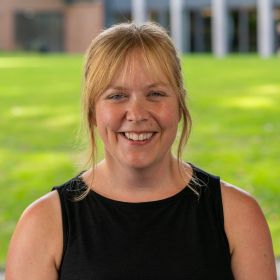
Dr Yvonne Couch
Author
Dr Yvonne Couch is an Associate Professor of Neuroimmunology at the University of Oxford. Yvonne studies the role of extracellular vesicles and their role in changing the function of the vasculature after stroke, aiming to discover why the prevalence of dementia after stroke is three times higher than the average. It is her passion for problem solving and love of science that drives her, in advancing our knowledge of disease. Yvonne shares her opinions, talks about science and explores different careers topics in her monthly blogs – she does a great job of narrating too.


 Dementia Researcher

 Beccy Owen
 Bernie McInally
 Dr Chloe Fawns-Ritchie

 Dr Clíona Farrell
 Dr Becky Carlyle

 Rahul Sidhu