Final EPAD dataset now available
 Dementia Researcher
This week The European Prevention of Alzheimer’s Dementia project announced the external release of its final dataset – with free open access.

This week The European Prevention of Alzheimer’s Dementia project announced the external release of its final dataset – with free open access.

The International Consortium on Dementia and Wayfinding is looking for ECR volunteers to help deliver their important work.

Alzheimer’s Disease Data Initiative launches new AD Workbench to foster greater global research innovation and accelerate breakthroughs in Alzheimer’s

A new dementia research podcast from the USA with an international feel, getting into clinical research and tips for new ECRs and Data Podcasts…

Junior researchers need to engage with policymakers, institutions and funders to argue against planned budget cut-backs, warn Brian Cahill and Marco Masia

Professor Alison Wray present ideas from her research in layman’s terms, with practical ideas for approaching dementia communication in new ways
The MRC confirms multi-million-pound renewal of funding for Dementias Platform UK (DPUK), in partnership with industry and the third sector.

Alzheimer’s Society welcomes Dr Richard Oakley to their Research and Influencing team as the new Head of Research, ready to transform their work.

Lab-equipment manufacturers should consider left-handed researchers when they design products, says Parastoo Mashouri in this blog from Nature Careers

University of Exeter has developed a new epigenetic clock specifically for the human brain, using brain tissue samples more accurate than previous versions.
Remote cognitive testing & memory clinics, is big data good? How is building a car like studying the brain….. just some of the podcast topics covered.
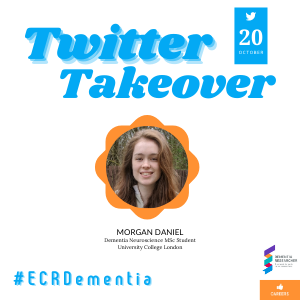
Catch-up on Morgan Daniels twitter take-over, showing us her day of MSc study at University College London (from morning to bedtime)
 Katie Gambier-Ross
 Adam Smith
 Nature Careers Blog
 Alzheimer's Society