 Print This Post
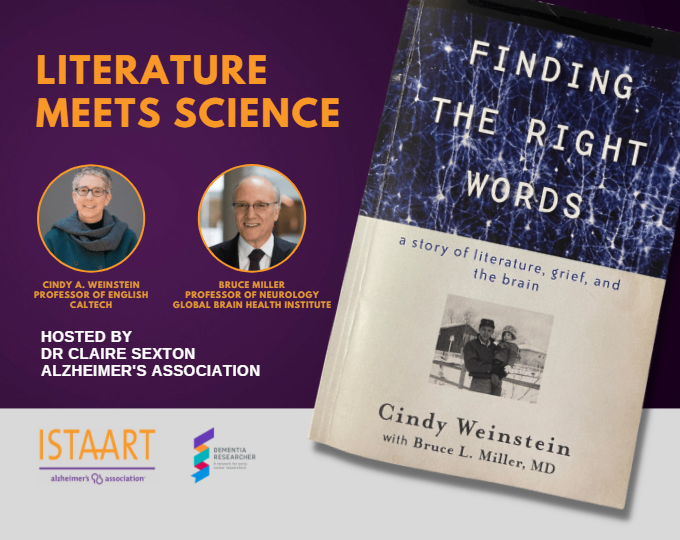
In this special ISTAART Research Retrospectives Dr Claire Sexton interviews Professor Bruce Miller discussing his research and his seminal papers on Frontotemporal dementia.
Bruce is Professor of Neurology and Psychiatry at UCSF where he holds the A.W. & Mary Margaret Clausen Distinguished Professorship in Neurology. He founded the UCSF Memory and Aging Center and leads an NIH-funded program project grant on frontotemporal dementia, the UCSF Alzheimer's disease Research Center, and two consortia focused on developing treatments for the tau and progranulin subtypes of frontotemporal dementia and another consortium for Parkinson’s spectrum disorders.
He has directed new approaches to patient care linked to intensive caregiver support and, in a separate effort, developed better diagnostic support tools for primary practice physicians in collaboration with Quest Diagnostics. His multidisciplinary approach builds collaborations around iPS cells, genomics, and neuroimaging enabling research findings related to the differential diagnosis of dementia, dementia risk factors, and new therapeutic approaches.
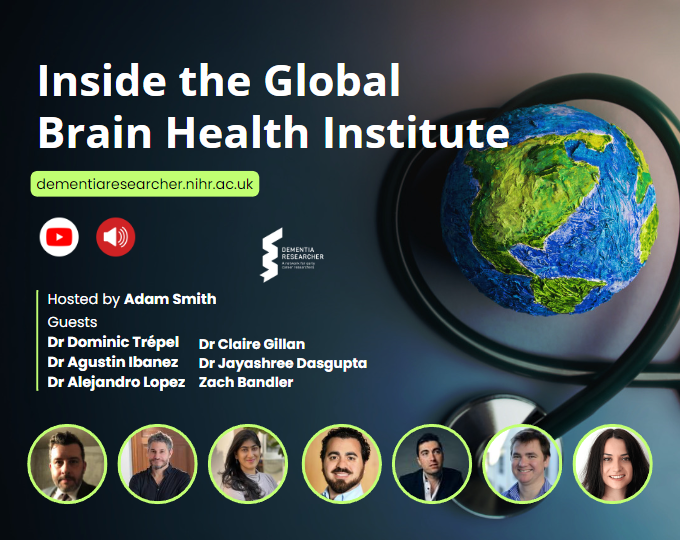
Professor Miller’s extensive knowledge of clinical diagnosis, disease pathology, and brain-behavior relationships make him a widely sought-after teacher and mentor. He in addition to his research, he co-directs the Global Brain Health Institute, a training program for global leaders in brain health to reduce the scale and impact of dementia around the world. These international collaborations have fostered the development of new prevention and therapeutic approaches and have pushed researchers worldwide toward a more precise understanding of frontotemporal dementia and other neurodegenerative diseases.
Professor Miller will be attending the Alzheimer's Association Satellite Symposium - find more information at https://www.alz.org/satellite-symposium
Voice Over:
Behind the Breakthroughs, conversations with dementia research pioneers on ISTAART Research Retrospectives.
Dr Claire Sexton:
Hello, my name is Claire Sexton, and it's my pleasure to be chatting today with Dr. Bruce Miller and to go on this research retrospective of his incredible career. And to start off with, it would be great to discuss your 1991 paper in neurology. This was Frontal lobe degeneration: clinical, neuropsychological, and SPECT characteristics. And I wondered if you could paint a picture for us about where you were in your career and your life when you published this work?
Professor Bruce Miller:
Yes. Well, for a little context, I did a fellowship with a great man named Frank Benson, and also Jeff Cummings, his student. And this was a time when I think we underwent a period when all dementia was considered Alzheimer's disease.
And so the lore was, don't pick Pick's disease, or in other words, don't pick frontotemporal dementia. This is an illness that is too rare to ever diagnose. And further, it can't be differentiated from the real problem, which is Alzheimer's disease.
Well, Alzheimer's disease is a real problem, but my teachers helped me develop a work that suggested that, yes, frontotemporal dementia is common, it's a common dementia. And further, we can differentiate this from Alzheimer's disease.
And I think we had this strong belief that if we were ever going to get molecular therapies for Alzheimer's disease and for frontotemporal dementia, we had to be really precise about what was included and what was excluded from our diagnosis.
Dr Claire Sexton:
Thank you. And this paper then that you published, in particular, why was this so pivotal for you, personally, and for the field?
Professor Bruce Miller:
Well, I can say personally it was hugely important to me. I was really trying to convince people, really convince people that frontotemporal dementia was a real entity. I think I got tremendous pushback on almost all of my papers, even small ones, when I tried to talk about frontotemporal dementia, because people just didn't believe that it existed.
And so, one thing that was really critical for me in writing this paper was support. I think for young people in the field, having mentors who believe in you and support what you do is going to be very important. So my mentor, Frank Benson, said, "Yes, you must do this paper. It's very important and we must get it out there into the world."
The other person who helped me enormously, who read the paper and made really great suggestions, was the great Arne Brun, a neuropathologist from Lund, Sweden, who had characterised what he called the non-Alzheimer dementia of the frontal type that they were seeing in Lund, Sweden.
So this combination of really a strong belief in what I was doing, supported by two really brilliant mentors who encouraged me to do so, allowed me to push forward with this paper.
Dr Claire Sexton:
And what was it that stemmed that belief that you had in this concept? Was it driven by the science? Was it driven by your clinical experience with these patients?
Professor Bruce Miller:
Well, yes, it's a great question. It was really driven by my clinical experience. When I began to tell people in the Los Angeles area that I had an interest in frontotemporal dementia, people started referring me cases.
And I collected case after case of people who had a dementia, but it was certainly not Alzheimer's disease. We had limited tools at that time, but the blood flow pattern on SPECT was different. The neuropsychological pattern was different. And I think the fundamental behavioural presentation was so different from Alzheimer's disease.
So this made me believe, even without a lot of pathology at that point and no biomarkers, really, to say definitively that this wasn't Alzheimer's disease. But based on the science, which Arne Brun had showed that there was a pathologic entity of frontotemporal dementia, I pushed forward with this idea. Clinically driven, but also with some good science in the background.
Dr Claire Sexton:
And how long did it take for you to get people on board? How long did that resistance to these ideas last for you?
Professor Bruce Miller:
I think the big shift didn't happen with this paper, that's for sure. It was very slow. But in 1998, just when I was coming to San Francisco to UCSF, a number of people, led by Michael Hutton, showed that in families with frontotemporal dementia, many had a mutation in the tau gene.
And so I think for the first time there was a biology to frontotemporal dementia. It wasn't just a clinical syndrome. But people suddenly understood this tau protein, which is also important in Alzheimer's disease, when it's mutated will cause frontotemporal dementia.
I think that was a massive paradigm shift. I remember Peter Davies, a great tau chemist, and I presented at the National Alzheimer meeting 1999, and I talked about frontotemporal dementia and he talked about tau. And I think I saw the beginnings of acceptance that this disease belonged as part of the dementia community. It was a very gratifying day.
Dr Claire Sexton:
That's wonderful. And I think when you have the benefit of perspective, then you can see how these things build one on another in the field evolving. But I wonder about for you, at that time, did you always have that faith? Personally earlier, you spoke about the mentors, but did you always have that faith that this would progress and your ideas would gain widespread acceptance?
Professor Bruce Miller:
Claire, I was very much in the moment, and I'm not sure that I really knew how important this disease would become. And so I think the first 10 years was rough sledding and I wasn't sure what the outcome would be. But I knew I was going to study this disease no matter what.
And I think for me, the real excitement and gratification has been the brilliant people who entered the field and helped us to begin to understand the connectivity in the brain associated with this, maybe the evolutionary origins of frontotemporal dementia, the molecules responsible for this.
So I think when I was early in this, I had my skills, but there was really a need for people with very profoundly different skills, and that came after 2000.
Dr Claire Sexton:
Wonderful, thank you. I think we'll touch upon a bit later then just about the increased diversity in teams, as well, that we see today.
So if we fast-forward now 25 years later then, you led a team that published a paper, again in neurology, of cognition and neuropsychiatry in behavioural variant frontotemporal dementia by disease stage. So if you could then bring us right up to date then, what had changed in the field of FTD over this time?
Professor Bruce Miller:
I think we have so many things that have changed. We have longitudinal data. Almost everything I did until fairly recently was cross-sectional. I'm really hugely grateful to a number of people like Jonathan Rohrer in London, Adam Boxer, Howie Rosen, and Brad Boeve, who have started these longitudinal studies of the imaging behaviour and molecular progression of people with frontotemporal dementia. So that's one of the huge changes that this paper reflects upon.
I think the other thing that has happened is that we now have a pliable biology. We now have something that I must confess I never quite imagined, which is we have specific molecules that we can target in frontotemporal dementia. We have the potential to change the disease trajectory of frontotemporal dementia. We have therapies that I believe, with the same optimism I had when I was believing that we could diagnose this, but I'm even more optimistic now that we'll be able to treat these illnesses.
So I think these longitudinal studies represent a critical inflexion point in the history of frontotemporal dementia. It shows us we know what the trajectory is, and we know that if we have the right intervention, we can change that trajectory. And for me, that is the excitement of frontotemporal dementia over the last five years.
Dr Claire Sexton:
And I agree, it's tremendously exciting. And I wondered if you'd be able to share with our listeners just a little bit more about what that trajectory is? When does the biology start to emerge as opposed to the symptoms, and the rate of progression?
Professor Bruce Miller:
Yes. I think that when I started in this field, it was one entity. It was frontotemporal dimension. When you read my 1991 paper, it was just one thing. We knew that a lot of these people had tau inclusions in the brain, but we also knew a lot of these people didn't.
But I think slowly now we have realised that there are different subtypes of frontotemporal dementia, some sporadic subtypes and some genetic subtypes. And they all have slightly different anatomy, clinical presentation, imaging features, and most importantly, patterns of progression.
So the Alzheimer field has really helped us to understand that these diseases don't start the day before we see the patient. In fact, there's probably a 15 to 20-year prodrome. The longitudinal studies of people who carry a gene for frontotemporal dementia are showing that 15 years earlier, at least in some of the subtypes, there's evidence of molecular perturbations.
So for example, in the type of frontotemporal dementia associated with Lou Gehrig's disease, or ALS, caused by a gene called C9orf72, we know now from studies by the ALLFTD group led by Adam Staffaroni, that what happens in C9 is that many, many decades before someone actually clinically presents with ALS or frontotemporal dementia, there are little pulses, little leaks of neurofilament from axons. And we can measure this in the blood.
Isn't that amazing, that someone who is a genetic carrier, who we think won't get the disease for many, many decades, is actually showing very early in life, sometimes even in their 20s, that this disease is progressing? But then the neurofilament comes back to normal.
But I think what this tells us is that if we're going to treat C9orf72, we better get in very early. We better get in to protect the person from these pulses of injury that eventually build up and cause this devastating disease that affects society, the person, the family, children. Truly devastating.
Dr Claire Sexton:
And as you've kind of nodded to there, that greater understanding of the biology of the trajectory then opens the door to new avenues for treatment. And if we look forward now, where do you see the field headed in terms of opportunities for treatments?
Professor Bruce Miller:
I think that probably, and this is not simple, but I will say the simplest solutions are going to come with the genetic forms. So we know that with MAPT or tau mutations, that if we could get the bad gene to stop producing bad tau, that the person will never get sick.
So there are a lot of really smart strategies now. Some of them include antisense oligonucleotides that turns off the production of tau. The great Jennifer Doudna, Nobel Laureate, who has gotten the Nobel Prize for CRISPR, working with people like Claire Clelland here at UCSF, figuring out ways to CRISPR out the bad MAPT gene.
So this is, I think, not so far in the future. Imagine if you carried a MAPT mutation and you had a simple way of having that mutation removed, I think you would be thrilled, and it would change the decades of sorrow associated with MAPT mutations in families. Progranulin's different. Progranulin looks like it's a deficiency of progranulin. So if you carry the bad progranulin gene, what that means is you don't produce enough progranulin in the brain to protect it.
So I think the clinical trials, and now there are many of them going on today, are all designed to give progranulin mutation carriers different ways of boosting progranulin in the brain, whether it's transplantation tied to a virus, whether it's an antibody that binds to transferrin as being done by Denali Pharmaceuticals. There are many different strategies about how to boost progranulin in gene carriers, and again, prevent them from ever getting sick with this disease.
Finally, C9, which is far and away the most common mutation, the major genetic form of ALS and frontotemporal dementia, we believe that the ultimate cure will be CRISPR. That we will figure out a way of cutting out this bad gene, and its removal will allow the brain to develop, continue to grow, and will prevent this degenerative process.
So those are the low-hanging fruit. But I guarantee that with the sporadic forms, we also have really exciting new therapies that are coming as well. It's an unimaginably great time to be a scientist in the field of frontotemporal dementia.
Dr Claire Sexton:
Oh, yes, tremendously exciting for anybody who is entering the field, just what opportunities there are and what progress is set to be made. And tied in with that, I think we've spoken a bit about how the scientific landscape has changed dramatically over the course of your career.
But I'd love to discuss with you a bit about the ever-growing global nature of research. Your work with the Global Brain Health Institute and the Atlantic Fellows for Equity and Brain Health programme has been key to empowering and accelerating global collaborations. So I wondered if you could tell our listeners how GBHI was conceived and a bit about the journey that it has been on.
Professor Bruce Miller:
The Global Brain Health Institute represents one of the largest gifts ever given to Trinity College in Dublin and also the University of California at San Francisco. It's a vision and dream of a great man named Chuck Feeney, who many of you may never have heard about. There's a reason for that. Chuck didn't want his name associated with his gifts. He believed that giving, in and of itself, was the purpose of giving.
And even before Bill Gates, Chuck Feeney said, "I'm going to give away my billions of dollars." And in Chuck's case, he focused in very specific personal issues for him. For him, Ireland, he was an Irish American, was a place that he adored, and he wanted to change the life of people on that island. So he's given many billions of dollars to the island of Ireland to bring up quality of life, bring up health.
He also loves San Francisco and lives in San Francisco, lived in San Francisco. And he had this wild idea that Trinity College in Dublin and the University of California, San Francisco, could work together to train the next generation of leaders in brain health. And we have had some incredible ones, including Claire Sexton here, who was a fellow who came from England very early in the story of GBHI.
But the story has been, we believe that we have to democratise health. We have to focus on dementia in low and middle-income countries and communities. We have done that. We have trained great leaders like Claire, who are experts in various areas ranging from communicating through journalism, books, music, to translating better dementia diagnosis and care through neurology, psychology, and psychology.
So the trainees are multidisciplinary, they work together, they have a common goal of stopping this dementia epidemic. And we can do this. It happened with polio, it happened with HIV, and I believe this is the next big epidemic that we can stop.
Dr Claire Sexton:
Thank you, Bruce. And I'd recommend to anybody who is listening who is interested in the programme to please check out the GBHI website to find out more, because it is truly a remarkable community of change makers and a joy to be part of.
We will be collaborating once again with GBHI on the next AAIC satellite symposium, which is going to be coming up on May 15th and 16th in Cape Town. So anybody listening who is working in Africa, please do keep an ear out for announcements regarding abstract submissions.
But finally, Bruce, I just wanted to touch upon one last thing and then that is, with regard to over the course of your career, you've seen so many highlights and so many achievements, but I think driven through all of that is your dedication clinically to your patients. So I wondered if you could just share with us a little bit more just about your clinical work over the years and the role that your clinical work has played in your career as a whole?
Professor Bruce Miller:
Yes. Well, I find it very gratifying to work in the clinic, work with families, work with patients, work with young trainees. My first focus for almost all of my career was diagnosis, getting the right diagnosis. And then not stopping with diagnosis. I think this is something I learned from the nurses that I worked with, and psychologists in particular. Diagnosis is only one part of our responsibility where we're in clinic.
Also doing everything we can to heal, even when we don't have powerful medications yet. So recognising how difficult this is for the family members, acknowledging it, saying it, and saying it again. Setting up a system to help caregivers. Being available. When I started, I gave every family my cell phone so that they could reach me in time of crisis.
So I think this process in the clinic was very important to me. And in the early days, it also helped me to create a cohort, because people became loyal to our programme, to the nurses, to the psychologists, and they wanted to work with us, and they realised that we had their best interests at heart.
So pure research without having an eye on the impact of these illnesses on the people that we're seeing is nothing that I ever wanted to do. I wanted research, but tied to compassion and great care. And so even today, there's nothing happier for me than going to clinic on a Friday afternoon, working with a team of fellows from GBHI and fellows at UCSF, to meet a new family, meet new people, hear their fascinating stories, and work with them through the problems that they have to make sure that they get the best possible care in the world.
So this was the gift that I got from Frank Benson and Jeff Cummings in my clinical training, and it's the gift that we try to give our trainees. We want them to be able to give back to their families and their communities.
Dr Claire Sexton:
And on that note, thank you, Bruce.
Professor Bruce Miller:
Thank you, Claire.
Dr Claire Sexton:
And I just wondered one thing. So we might do a little cut and paste, because one thing I think we didn't cover which would be good just to add in, if it's okay, is just a bit about the clinical presentation. So if you could maybe just speak a little about how FTD presents clinically, and the difference between that and Alzheimer's.
Professor Bruce Miller:
Great. So when I was working in this clinical space, I began to realise that the behavioural variant of frontotemporal dementia was very different than run-of-the-mill Alzheimer's disease. And in fact, we needed new measures for a behavioural variant, because the classical memory tests weren't very effective at capturing illness. Rather, we had to observe the patient, talk with the loved ones, and hear about things that were considered traditional psychiatric problems.
These people lost empathy. Isn't this amazing that in our research criteria, we have loss of empathy as one of the items? This was a paradigm shift. People didn't believe that you could quantify empathy or that it was important in a diagnosis. But very different than Alzheimer's disease, where empathy is often quite spare.
Disinhibition. This was another new idea in terms of diagnostic criteria. We had to figure out why someone and how someone no longer followed the rules that they had learned as a young child. So they did inappropriate things, sometimes even getting them in legal trouble. We realised that apathy was a major aspect of frontotemporal dementia. Weight gain. Average person gained at least 10 pounds in the course of the illness.
So we crafted research criteria based on primarily psychiatric symptomatology. And I think that this was fairly unique and somewhat original, and I'm really proud of the team at UCSF. First author was Katya Rascovsky, but many people put effort into developing these research criteria for the behavioural variant of frontal temporal dementia.
Dr Claire Sexton:
Thank you. Well, Bruce, I'd like to thank you so much for taking time to chat with me today on this research retrospective. It's been such a pleasure to hear from you.
Voice Over:
Behind the Breakthroughs, conversations with dementia research pioneers on ISTAART Research Retrospectives.
END
Like what you hear? Please review, like, and share our podcast - and don't forget to subscribe to ensure you never miss an episode.
If you would like to share your own experiences or discuss your research in a blog or on a podcast, drop us a line to dementiaresearcher@ucl.ac.uk
This podcast is brought to you in association with the Alzheimer's Association, who we thank for their ongoing support.
The views and opinions expressed by the host and guests in this podcast represent those of the guests and do not necessarily reflect those of UCL or Dementia Researcher


 Dementia Researcher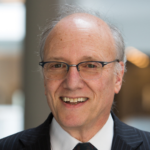
Great listen. very interestingb to hear how far things have come in the FTD field.