Parkinson’s Research: What’s Being Missed
A major new report from the NIHR Policy Research Unit in Dementia and Neurodegeneration at the University of Exeter has revealed a striking imbalance in how Parkinson’s research is funded and conducted in the UK, raising questions about whether current efforts are truly aligned with the needs of people living with the condition.
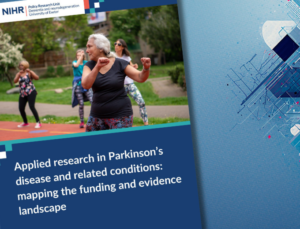
The report, Applied research in Parkinson’s disease and related conditions, examines more than a decade of funding alongside thousands of research papers to map where attention, and investment, is being directed. Its conclusion is clear: while scientific progress continues, the areas that matter most to patients, prevention, care, and everyday quality of life, remain underexplored.
Parkinson’s and related conditions affect a growing number of people, driven in part by an ageing population. Yet despite decades of research, treatments remain largely focused on managing symptoms rather than altering the course of disease. Many people continue to face delays in diagnosis, limited support, and unmet care needs across the trajectory of their condition.
What makes this report particularly compelling is its scale. Researchers analysed 670 UK research grants, representing around £280 million in funding, alongside more than 9,000 international studies published between 2019 and 2024.
And what they found is not so much a lack of activity, but a mismatch.
Nearly two thirds of funding is directed towards understanding disease mechanisms and preclinical science. That work is essential, but only around one quarter of investment supports applied research, the kind that directly improves diagnosis, treatment, and care.
Within that smaller slice, the imbalance becomes even sharper. Treatment dominates, accounting for the majority of applied research funding and studies. By contrast, prevention receives almost no attention, and care research, particularly around palliative support and lived experience, remains limited.
The evidence base mirrors this pattern. Most studies focus on drug therapies and motor symptoms, while issues such as mental health, fatigue, communication, and the realities of daily living are comparatively neglected.
Perhaps most striking is what is missing. There is very little research testing how to prevent Parkinson’s or delay its onset. Care research is often descriptive rather than interventional, meaning there is limited evidence to guide how services should be designed or delivered.
The report also highlights persistent inequalities. Research funding is concentrated in a small number of institutions, particularly in London and Oxford and Cambridge, and very few studies explicitly address differences in outcomes related to socioeconomic status, ethnicity, or geography.
Taken together, these findings suggest a system that is productive but not yet fully aligned with real world need.
The authors argue for a shift in emphasis. More investment in prevention, care, and non motor symptoms. Greater involvement of people with lived experience in setting research priorities. And a stronger focus on translating discoveries into practical improvements in services and support.
It is not a call to abandon fundamental science, but to rebalance the portfolio so that research delivers both long term breakthroughs and immediate benefits.
For researchers, funders, and policymakers, the message is hard to ignore. The question is no longer whether more research is needed, but whether it is being directed to the right places.
👉 Read the full report to explore the data, gaps, and recommendations in detail.




 DEMON Network
 NIHR
NIHR

 UK DRI