 Print This Post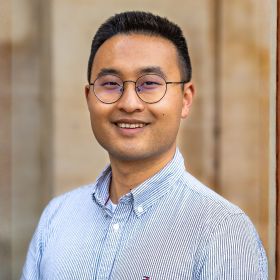
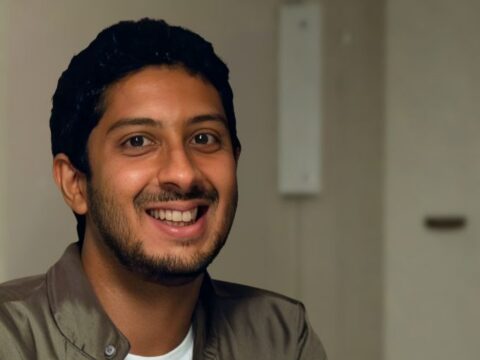
Dr Joseph Kwon
Name:
Dr Joseph Kwon
Job title:
Senior Researcher in Health Economics
Place of work / study:
Nuffield Department of Primary Care Health Sciences, University of Oxford
Area of Research:
I am a health economist who specialises in dementia research by evaluating the cost-effectiveness of dementia interventions. I am particularly interested in novel blood biomarkers of Alzheimer’s disease and how they may improve dementia diagnosis.
How is your work funded:
From September 2026, my research is fully funded by Alzheimer’s Society through its postdoctoral fellowship. Prior to this, my dementia research was funded by the National Institute for Health and Care Research Applied Research Collaboration (NIHR ARC) and Alzheimer’s Society.
Tell us a little about yourself:
I’m originally from South Korea and came to the UK when I was 10 years old. I was schooled in Sussex and London, then did my undergraduate degree in Economics at University of Cambridge. Like a lot of Economics students, I wanted to go into finance or consulting, but I changed my mind while doing my mandatory military service in Korea. I got very interested in healthcare system financing and decided to train as a health economist. I did that through a Master’s at University of York and a Wellcome Trust-funded PhD at University of Sheffield. My PhD topic was in frailty and falls prevention, and that’s when I came to appreciate the scale of challenge presented by dementia. After my PhD, I was fortunate to enter dementia research through NIHR ARC Dementia Research Fellowship, co-funded by Alzheimer’s Society. I’m currently completing my secondment at the National Institute for Health and Care Excellence as part of the Mental Health Mission. I also hold a Master’s in Theology from University of Oxford, where I focused on the ethics of healthcare allocation; in one essay, I argued against bioethicists who deny that people with severe cognitive impairment are full human persons.
Tell us a fun fact about yourself:
I know how to drive a tank (my job during military service) but still don’t know how to drive a car! I also had to learn how to cut fruit into interesting shapes for the military commander I served as assistant (as his post-nap snack) – but was pretty terrible at it….
Why did you choose to work in dementia?
I decided to become a health economist to help support a compassionate health and social care system that makes the most of its finite resources to address important needs. Dementia is one of the most significant needs such a system faces, and that’s why I’m excited to tackle it head-on! I really believe that the effort we make to improve the lives of persons affected by dementia says much about our society – about how humane it is. And I’d like to contribute to that effort.
What single piece of advice would you give to an early-career researcher?
All the effort that goes into failed grant and fellowship applications is never wasted – the ideas and networks built are ingredients for that successful bid around the corner.
What book are you reading right now? Would you recommend it?
The Karamazov Brothers by Fyodor Dostoevsky – it’s gripping right from the start
Favourite film of all time?
Christopher Nolan’s Dark Knight Rises
Favourite ways to unplug and unwind?
Observing trains with my toddler son, who is a big fan of trains. Hiking in the Peak District and in Palgong Mountain in Korea. Going for a morning jog.
What’s the best decision you ever made?
Taking two years out after my undergraduate degree to do my mandatory military service gave me really vital time to think about life and what I want to do.
What’s your favourite vacation spot?
Castleton in Peak District; Palgong mountain in Korea. Peppa Pig World is currently really great too.
Do you collect anything?
Not particularly. I used to buy quite a lot of books on all sorts of topics but don’t have much time to read nowadays.
 Dr Yvonne Couch
 Dr Becky Carlyle

 Alzheimer's Society