Print This Post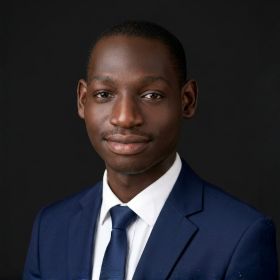
Edward Favour
Name:
Favour Edward
Job title:
Medical Student
Place of work / study:
University of Ibadan
Area of Research:
My primary research interest lies in neuroscience and neurodegeneration. My current work evaluates how Transcranial Photobiomodulation affects neuropathological biomarkers in Late-Onset Alzheimer’s Disease
How is your work funded:
My current project is an independent, unfunded systematic review supported through university infrastructure and database access.
Tell us a little about yourself:
I am a third-year medical student and FATE Scholar at the University of Ibadan, Nigeria, with a goal of becoming a neuropathologist. My academic journey is driven by a fascination with neurodegenerative diseases and policy change. I am an active member of several collaborative research programs and currently have a co-authored manuscript on neuroplasticity under review. Additionally, I serve as the Principal Investigator for a student-led systematic review investigating the impact of Transcranial Photobiomodulation (tPBM) on neuropathological biomarkers in Late-Onset Alzheimer’s Disease. Beyond medicine, I am an Aspire Leaders Program alumnus and enjoy exploring the intersection of technology and healthcare.
Tell us a fun fact about yourself:
To survive medical school, I invented an elaborate study method called the ‘Pulse Study Technique’ that even incorporated a rhythmic breathing style for reading. The best part is, I stopped using it after a day.
Why did you choose to work in dementia?
Dementia represents one of the most pressing global healthcare challenges, which is exactly why I chose to work in this field. By focusing my early research on Alzheimer’s disease, I hope to uncover how neurodegenerative conditions alter the brain and advocate for both innovative treatments and the broader policy changes needed to support those affected.
What single piece of advise would you give to an early-career researcher?
Since I am very much an early career researcher myself, the best advice I can give to my peers is to not be intimidated by the fact that you are still learning. Pitch your ideas, reach out to mentors, you will figure the rest out as you go.
What book are you reading right now? Would you recommend it?
I’m currently reading The Believer’s Authority by Kenneth E. Hagin. It’s been a great way to stay spiritually grounded outside of medicine, and I’d highly recommend it to anyone looking to deepen their faith and broaden their personal perspective.
Favourite film of all time?
If I had to pick just one, I would definitely go with Sherlock Holmes.
Favourite ways to unplug and unwind?
I usually unwind by journaling, working on some non-fiction writing, or watching a great movie. Whenever I have enough free time, I always try to squeeze in a game of lawn tennis.
What’s the best decision you ever made?
Deciding to dive into the research field early in my medical training. It transformed how I view medicine, from studying diseases to active contribution.
What’s your favourite vacation spot?
In my room, watching a movie.
Do you collect anything?
Strictly speaking, no. Unless you count lecture notes and flashcards.