 Print This Post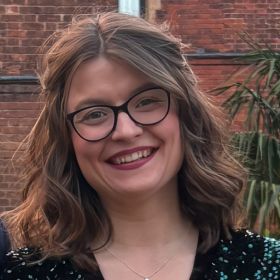
Viktorija Smith
Name:
Viktorija Smith
Job Title:
PhD Candidate and Speech and Language Therapist
Place of work / study:
University of Cambridge
Area of Research:
My research focuses on cognitive and language changes across Alzheimer’s disease and Frontotemporal dementia, using neuroimaging, biomarkers, and neuropathology to explore underlying mechanisms.
How is your work funded:
Wellcome Trust
Tell us a little about yourself:
I’m PhD student and speech and language therapist with a research focus on the neural correlates of linguistic variation in dementia. I trained as a speech and language therapist in London, working across acute, rehabilitation, and outpatient settings, with a specialism in adult neurology. Later I gained experience as a data analyst in the Mormino and Poston labs at Stanford University, developing expertise in large multi-cohort datasets and PET imaging, with a focus on Alzheimer’s disease pathology.
My research aims to characterise cognitive-linguistic profiles across Alzheimer’s disease and Frontotemporal dementia as a continuum, integrating multimodal neuroimaging, biomarkers, and neuropathology to uncover the mechanisms driving heterogeneity in these conditions.
Tell us a fun fact about yourself:
During my undergraduate days working as a waiter in a Chinese restaurant, I once took a phone order for sweet and sour chicken. When the customer asked how long it would take, I accidentally said, ‘Let me check with the chicken’, meaning to say kitchen. They burst out laughing on the other end of the line.
Why did you choose to work in dementia:
As a speech and language therapist, I’ve always been struck by how something so widely experienced can have such a devastating effect on everything that makes us who we are — our identity, relationships, and daily lives. At the same time, I’ve noticed that because dementia is so common, society has grown a little loose with the term, treating it as inevitable rather than deeply personal. I believe that could not be further from the truth, each person is unique, and their experiences and lives must sit at the heart of everything we do, both in care and in research for the future.
It’s also an incredibly exciting time to work in dementia, with new technologies and treatments opening up possibilities we could only imagine a few years ago. I’ve loved being part of a research community that is not only innovative but also close-knit and collaborative, all working toward the same goal of improving life for those affected.
What single piece of of advice would you give to an early career researcher?
Go for all opportunities that come your way, even if self-doubt tries to creep in; you never know what this next step might bring!
What book are you reading right now? Would you recommend it?
I’m currently reading ‘Tomorrow, and Tomorrow, and Tomorrow’ by Gabrielle Zevin. I’ve only just started, but I’m already hooked. I love books that dig into what makes people tick, how our conversations, choices, and emotions shape the way we connect with one another.
Favourite film of all time?
From a serious standpoint – The Fountain (2006), just such an artistic representation of key life topics: love, death, grief, and the meaning of life. More light-hearted ‘Amelie’ – love a good french movie
Favourite ways to unplug and unwind?
All day hike in the mountains with family and our dog Alfie.
What’s the best decision you ever made?
Not sure
What’s your favourite vacation spot?
Too many to choose from
Do you collect anything?
No
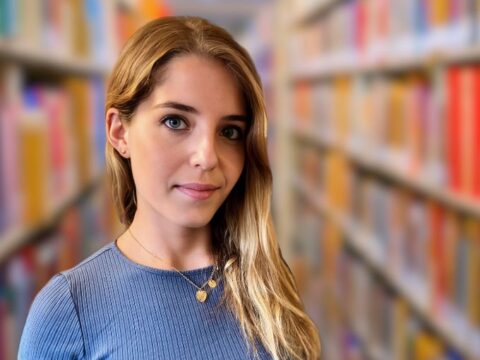
 Rebecca Williams