 Print This Post
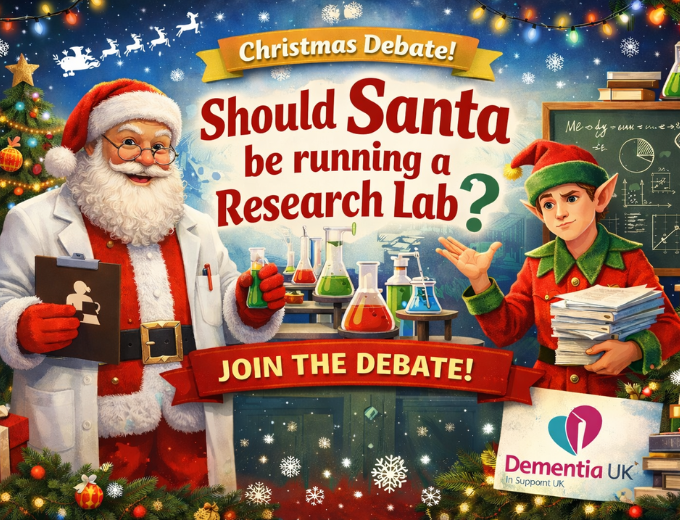
This festive special flips the script on polished papers and perfect protocols. Dr Fiona McLean is joined by Dr Ian Harrison, Dr Soraya Meftah, and Dr Kate Harris to share the research moments that did not go to plan but taught them far more than success ever could.
From ELISAs gone rogue and antibodies that refuse to behave, to admin systems that quietly derail months of planning, this episode is a reminder that real research is messy, unpredictable, and occasionally hilarious. The conversation moves easily between lab disasters, student supervision realities, near misses with fire, and the emotional rollercoaster of academic life.
It is light hearted, reassuring, and (hopefully) relatable. A permission slip to laugh, reflect, and remember that being wrong is often part of doing good science.
Merry Christmas from all of us!
Top takeaways
- Most experiments do not fail, they redirect
- Unexpected results often open better research questions
- Rushing protocols almost always backfires
- Admin failures can be as stressful as lab failures
- Talking openly about what went wrong saves time and money
- Students learn more from troubleshooting than from perfect results
- Publishing negative findings can help an entire field
- Being wrong is built into the scientific method
- Giving yourself time and mental space matters
- If no one was hurt, it is probably recoverable
Voice Over:
The Dementia Researcher Podcast: booking careers, research, conference highlights, and so much more.
Dr Fiona McLean:
Hello, and welcome to the Dementia Researcher Podcast. Today, we have a slightly different episode because it is our Christmas edition, and today we are doing something we do not often do in research. We are admitting that things sometimes go wrong in a show that we've titled The Twelve Research Fails of Christmas. I am Dr. Fiona McLean, and I am a principal investigator and Alzheimer's Research UK fellow at the University of Dundee. And in this show, we are going to look back on the year and share small research blenders, lab mishaps, near misses, awkward moments, and quiet failures that taught us something, even if at the time they just made us sigh. Nothing catastrophic and nothing career-ending, just the sort of things that happen when you're doing real research with real humans and real data with real deadlines.
I'm joined by three brilliant researchers today who were brave enough to agree to this. We're going to start with Soraya Meftah from the University of Edinburgh. We also have Ian Harrison from UCL, as well as Kate Harris from Newcastle University.
Hello, everyone.
Dr Soraya Meftah:
Hello.
Dr Ian Harrison:
Hello.
Dr Kate Harris:
Hi.
Dr Fiona McLean:
Yay. So, before we get festive, could I just ask each of you to do a brief introduction in your own words? And we can start with Ian.
Dr Ian Harrison:
Hello. So, my name's Ian Harrison. I'm a principal research fellow at University College London, and I'm an Alzheimer's Society Dementia Research Leader Fellow here at UCL.
Dr Fiona McLean:
Fabulous. And let's go to Soraya next.
Dr Soraya Meftah:
Hello, I'm Dr. Soraya Meftah, based at the University of Edinburgh, and I am an incoming Race Against Dementia and ARUK-funded fellow.
Dr Fiona McLean:
Yay. Congratulations.
Dr Kate Harris:
Congratulations.
Dr Fiona McLean:
Thank you. And last but not least, Kate.
Dr Kate Harris:
Hi, everyone. Yes. So, no fancy fellowships here, but I am a senior lecturer in interdisciplinary drug discovery at Newcastle.
Dr Fiona McLean:
Amazing, Kate. So, before we start counting down our vested fails, I just want to say this clearly for anyone listening, that research does not look like the method section of a paper as much as we want it to. It often looks like things breaking, plans changing, wrong assumptions, and moments where you realise you should have checked something much earlier. So, this episode is really about permission: permission to laugh, permission to learn, and permission not to be perfect. Let us begin.
So first of all, let's talk about things that seem obvious, but were absolutely not. So, Soraya, I'm going to start with you. Can you tell us something about in your lab that has happened this year where you thought, "Oh, this is so obvious." And when you were planning it, it seems so straightforward. But then once you started, you were like, "Oh no, I'm maybe not so [inaudible 00:03:17]."
Dr Soraya Meftah:
I think when we were prepping for this podcast and when I was reading through the bits and pieces, there's so many, I never really see them as mistakes. I just see them as lessons to learn from, and I've had a lot of lessons to learn from. So, my one for this was actually, I was co-supervising a student this year, my lovely master student, Millie. And we designed this project for her in mind, and we were like, "We're going to look at Tao and we're going to look at this." Very straightforward. It's been done in the literature, which is always the first warning sign. We're like, "Oh yeah, we'll just replicate what's been done in the literature and then we'll extend out." And then-
Dr Fiona McLean:
And how often it's been replicated in the literature? You find this new paper and you're like, "Oh wow, this really, new shiny technique. Let's do it."
Dr Soraya Meftah:
This isn't that shine... This is me being like, "This is a very common thing. I'm sure we'll be able to do it in this." It's a different system that we're using, so it was a bit... But I was like, "Yeah, this will be fine." Pilot set of experiments, everything went the opposite direction to what we expected. And then the next set of experiments, everything went completely the other direction as well. So, we had to do a very big pivot.
I think it's going to be really interesting. We're still going to get some really cool stuff from it, but the original hole that we'd settled down and that she'd done all her literature preparation on was not the hole that we ended up going down.
Dr Ian Harrison:
[inaudible 00:04:49]
Dr Soraya Meftah:
It was a very good learning lesson for science.
Dr Fiona McLean:
Amazing. So, Soraya, you obviously learned a lot when that was happening. I always say to my students that you'll learn more from your failures than you will from your successes in the lab. If everything goes really smoothly, then it's like you never really learn stuff. You always learn when you need to troubleshoot a protocol and things like that.
Did it work out, the experiment, then? Sorry. Did you get data from it?
Dr Soraya Meftah:
I think the main thing for me that I was telling her... So, this was obviously a learning lesson for both of us. But the main thing I was saying to her was that as long as the experiment has worked, the result is obviously... We can't control the results.
Dr Fiona McLean:
The details to do that.
Dr Soraya Meftah:
Like, what to do some stuff. And there were also some other bits that I showed her completely wrong. So again, big mistake on my part. But we troubleshooted all of that; the result was still the same. So, then we're just following the interesting story that the data is telling us.
Dr Fiona McLean:
Amazing. So, when did you realise something was off? Was it end of experiment? Midway through?
Dr Soraya Meftah:
It was more like we'd planned this thing, so it was kind of like a culture experiment. So then after two weeks or three weeks or something, we were then looking to do some molecular characterization. And we looked at the molecular stuff and I was like, "Oh, this is completely opposite of what we were expecting, and completely not where I thought this was going." But yeah, it's a learning story. It's learning fun.
Dr Fiona McLean:
So, there's not really much to fix. It's more just that's what the data is showing.
Dr Soraya Meftah:
Yeah, exactly.
Dr Fiona McLean:
Yeah? Actually, sometimes I think those are the most exciting experiments. I did a big, single-cell experiment. And it's not that it didn't show me what I expected, but there was just this whole other avenue of research that opened up, and that's what I'm pursuing now. It's what I plan on writing my next fellowship on. So, I think sometimes, the most unexpected results can actually be the most interesting. And did you...
You were just having a laugh with the student about it.
Dr Soraya Meftah:
Yeah, I was.
Dr Fiona McLean:
Because I do feel sorry for students because they have a certain amount of time to collect data for their thesis. So, I feel like sometimes when things don't go to plan in the way that they thought they would, they would become panic.
Dr Soraya Meftah:
Yeah.
Dr Fiona McLean:
Yeah, definitely.
Dr Soraya Meftah:
I think there was a bit of stress, but like I said, we sat down, we made sure she was doing everything correctly. And she was so...
I was like, "It's more for your discussion. It's more to talk about."
Dr Fiona McLean:
Amazing.
Dr Kate Harris:
Those sentences are brilliant classic. You start whipping them out. It's like a toolkit of things you've learned, tried and tested that don't make the situation worse.
Dr Fiona McLean:
So, has anyone else had any students? Have they had impacted students just having difficulties with pivoting experiments?
Dr Kate Harris:
Is that not every day?
Dr Fiona McLean:
Yeah, I think so.
Dr Kate Harris:
I don't mean that difficulty with students. My students are delightful and I'm grateful for them every day, but I can't remember the last time an experiment went to plan. There's always something.
Dr Fiona McLean:
[inaudible 00:07:47] Yeah, I feel for students. Like I said, when they've got these time constraints, and they're having to deal with that pressure as well as the pressure of just science research in general.
Dr Soraya Meftah:
That's kind of in science though, right?
Dr Fiona McLean:
Yeah.
Dr Soraya Meftah:
Because I guess, people come into as like an MSC, for example, thinking... I guess, they've only read papers that appear as if everything works first time. Do you know what I mean? When you come into it and you're like, "Actually, that didn't work, but this is the data. This is the data."
Dr Soraya Meftah:
Yeah, exactly.
Dr Fiona McLean:
Yeah. I mean, 90% of the time, I'd say experiments don't work. And then it's 10% of the time they do. But as long as the 90% is not anything too disastrous, as long as it's just tweaking and taking steps forward. I had a master's student who we were doing a technique called Seahorse.
Dr Kate Harris:
Yes.
Dr Fiona McLean:
And we had a protein inducible cell line. And the thing that you use to induce the protein to be made actually affects air respiration. For those people familiar with Seahorse technique, it sounds with cellular respiration.
Dr Soraya Meftah:
Oh, good.
Dr Kate Harris:
Right.
Dr Fiona McLean:
So, his master's thesis ended up being on how... And anyone in the literature, if they were using anything that used, it was a tad inducible system. Actually, the Seahorse is probably showing that rather than a good [inaudible 00:09:10] anything else.
Dr Kate Harris:
Oh, the panic though.
Dr Fiona McLean:
Yeah.
Dr Kate Harris:
Oh, the panic.
Dr Fiona McLean:
He did so well though, because he was able to talk about it-
Dr Kate Harris:
Amazing.
Dr Fiona McLean:
... and that is what research is. But it did make me a bit concerned about half of the literature using these systems. I was like, "Oh, what are you really looking at?"
Dr Ian Harrison:
That was-
We had a similar thing. I wasn't involved in the study, but there was a study in my department where they were looking at... They were doing FMRI with optogenetics.
Dr Fiona McLean:
Oh, yeah.
Dr Ian Harrison:
And they're showing that when you do optogenetics with the animal in the scanner, you get a neuronal activity response. But then there was a time where the animal died, it was just anaesthetic overdose in the scanner. And then it was during the scan, and then they did the same optogenetic thing, but they were still getting this bold response in a dead brain.
Dr Fiona McLean:
Oh.
Dr Ian Harrison:
And so, they started looking into it more. And then similar thing, the group here published the paper that just the laser shining the light in the brain induces this weird BOLD response. And all the data that's out there-
Dr Soraya Meftah:
Right. It makes sense.
Dr Ian Harrison:
... you think how much of that is artefact, how much of it is...
Dr Soraya Meftah:
Right.
Dr Ian Harrison:
Scary, right?
Dr Fiona McLean:
Yeah.
Dr Kate Harris:
The thing I always say to my students, and to myself, let's be honest, I would say this like a mantra whenever I'm having a panic. Which is that it is literally the scientific method to be wrong. You're supposed to throw everything but the kitchen sink at a hypothesis, which means if you're not wrong most of the time, then you're not actually innovating. So, whenever a student comes to me and goes, "I did this and it didn't actually work." Obviously, there's the technical thing. You go through the list of these at the technical. And then if it's like, "What is going on?" I'd go, "Well, congratulations. Let's go get a coffee, work out what on earth's going on. But excellent, you've innovated."
Dr Ian Harrison:
[inaudible 00:11:01] science right then.
Dr Soraya Meftah:
Yeah.
Dr Fiona McLean:
Yeah.
Dr Kate Harris:
Yeah. Because I think we're so used to everything having to work all of the time, and especially the publishing system rewards these amazing success stories. But actually, we're supposed to be wrong. That's literally the definition of doing it well.
Dr Fiona McLean:
Yeah, for sure. I think as well, we kind of touched on this at the beginning, but a bit of culture of being able to say that you're wrong and that something's gone wrong. And at the medical school in Dundee, we have these talks called research and progress talks.
Dr Ian Harrison:
All right.
Dr Fiona McLean:
And I always think the best talks are the ones who genuinely talk about the research that's happening now and talk about what's working and what hasn't worked. Because sometimes people want to put their best foot forward, and they'll present stuff that's published, actually, because they want to be like, "Oh, look, I managed to do this." Which is also, you want to have the opportunities to do that as well. But I think these talks in particular are really important to say, "Actually, I'm having a bit of trouble here," or "This isn't working."
And when I did my last research and progress talk, I was talking about some of my data. And one of the other researchers from the department, who's not a dementia researcher, he was listening and he was like, "Actually, I work in blood pressure, but I do it for something totally different, but I think you should be doing this. I have this mouse model you could use." We ended up collaborating, and we've had a couple of small grants in because of that. So, I think that's a really nice example of when you say about your failures, and someone else comes in and goes, "Well, actually..."
Or I say, failures. Let's use failures and inverted commerce failures. Someone comes in, and actually, there's a door opens down a new avenue of research. So sometimes the best thing you can do is talk about maybe what's not working, or what you don't understand in your research the most.
So, moving back to Ian, let's talk about the time that an experiment technically worked but answered the wrong question. Have you had a moment where something worked exactly as designed in terms of the method, but you later realise, "Actually, this is a completely different question that I'm looking at now"?
Dr Ian Harrison:
I would've, yeah. So, one of the proteins I work on is called Aquaporin-4. It's this water channel in the brain, and the antibodies for it are a bit rubbish because not many people do Westerns for it. Anyway, I was reading papers, and I figured out that it expresses as these two different isoforms, which you can resolve on a Western blot. And I was like, "Great. We've got everything set up. Fantastic." You can see where this is going, Western blots are involved. But anyway, so I did this experiment, pulled the proteins apart, and could see the two protein bands. But in every single gel I did, there was this weird, hazy band above it. And depending on how the proteins were... Like how the brain tissue was homogenised, it would vary as to how much of this band was. And it made quantify my protein of interest really difficult.
So, me and my students spent ages trying to change the way that the proteins were extracted, to change all the things that you change in a Western blot, literally months trying to get this. Because I had this technique in loads of my fellowship readouts, in all of the experiments we were doing. Anyway, it was during this time, it was kind of the end and we were like, "Right, we need to move on because I can't spend too much time on this." And then a paper came out identifying another isoform of this protein, and that's what the band was all along, and I was trying to get rid of it. And everything I tried to get rid of it, I couldn't. But it turns out it's another protein which I didn't even know about, and nobody knew about.
Dr Kate Harris:
We're laughing in sympathy.
Dr Soraya Meftah:
I know. I love it.
Dr Ian Harrison:
Right?
Dr Fiona McLean:
We love that though. [inaudible 00:14:59]
Dr Soraya Meftah:
Let's get rid of Aquaporin by...
Dr Ian Harrison:
But then it then meant that I had all of these, because I tried all the different sample sets, I had. I had tried human brains, I tried mouse brains, I tried different animal models, but I had all of this data then. I had all of these Western blot images with this extra... This new isoform that hadn't really been described before. So, then it turned into...
We started looking at expression of this, and then it turns out that that protein is quite interesting in Parkinson's, we found out.
Dr Kate Harris:
Well done.
Dr Ian Harrison:
But it's one of those things where I spent ages trying to optimise something which didn't need to be optimised, and it was good. We kind of answered a different question with it. We got some data that we didn't expect to get.
Dr Fiona McLean:
So, I guess what ticked off, Ian, was literature. Just keeping up with the literature as you were doing your research, which is now a really good example of why you should do that, which is hard because sometimes when you're really in an experiment, you don't have time to keep Googling all the time. But it sounds like you actually found something really cool.
Dr Ian Harrison:
Yeah. I mean, I'm glad something cool came out of it, having spent three months trying to optimise one antibody. But...
Dr Fiona McLean:
It makes you wonder about all your little shady grey bands that we see all the time on our Western blots. Actually, there might be a whole host of interesting things, and we just go, "Oh, background," or "Oh, I've done a bad Western."
Dr Ian Harrison:
I don't know when the line would've been because after that three months, I was like, "Right, enough is enough." And then I was Googling around and they're like, "Oh no, that's why there's another isoform."
Dr Kate Harris:
Oh, no.
Dr Ian Harrison:
I don't know if that happened a year later or something when I would've realised that.
Dr Kate Harris:
Oh, no.
Dr Fiona McLean:
Has anyone else had that experience where they've discovered something in their research that they...
Dr Soraya Meftah:
In case just like forever-
Dr Fiona McLean:
Did anyone else find a decent isoform of a protein?
Dr Kate Harris:
No, I haven't found an isoform of a protein, but I have accidentally discovered new chemical reactions by not being able to do maths.
Dr Ian Harrison:
[inaudible 00:17:10]
Dr Fiona McLean:
Interesting. Are we talking explosions or...
Dr Kate Harris:
No. I would like to say that I have never blown myself or anyone else up.
Dr Fiona McLean:
Well, that's good. I did nearly get killed in my PhD, not by myself.
Dr Kate Harris:
Oh, seriously?
Dr Fiona McLean:
Well, maybe that's being a bit dramatic, but my very lovely PhD friend at the time, as we were doing our PhD together, we were in a building that now doesn't exist anymore. Not because it got burned down, but because it got knocked down. So don't worry, it didn't go that badly. But we had a sort of L-shaped office research bay. So, you'd go in through the lab, and then at the end there was a little office to the right, and all the windows were really high up and really small. And I was working in the office late one night writing, and they were in the lab doing some sterilising. So, they had a Bunsen burner and a nice big two-litre bottle of ethanol.
Dr Kate Harris:
People actually use those.
Dr Fiona McLean:
Yeah. They still, yeah. Old-school. Like at school, yeah.
Dr Soraya Meftah:
The classic, yeah.
Dr Kate Harris:
What?
Dr Fiona McLean:
And then what happened was he knocked the ethanol and it caught the flame-
Dr Ian Harrison:
What?
Dr Fiona McLean:
... and then the ethanol on fire went across the bench and then onto the floor. And I just remember hearing him swear. And I popped my head out the office and there were just flames on the floor, on the bench. And I was like...
I just remember thinking like, "Oh, this is it. This is how I die." I was so calm. I was like, "Yeah." And I remember looking up at the windows, and they were so small and so far, away. I was like, "Yeah. No, this is it."
Dr Kate Harris:
I feel like we do need to check if you're okay, but this is also really funny.
Dr Fiona McLean:
And then he was panicking, obviously. Then I saw a fire extinguisher, and I was like, "Oh, get the fire extinguisher." And then he went to get it. And then I was like, "Actually..." I was like, "I think the fire/flames are getting a bit smaller." And I think we were very lucky in that the ethanol was actually just gradually burning off. And because it was an old lab, I think it was actually a really well-built lab from the early 1900s where they were genuinely exploding things in the lab on a regular basis. So, they made solid labs.
And yeah, the ethanol just all burned off and I didn't die. So, that's-
Dr Kate Harris:
So, here's my lesson to any listeners out there. And I am aware that I'm a bit unusual in that I'm a chemist by trade, do the biology as well, sympathised with the Westerns, but chemistry. Guidance, please. Please, please, please do not put a flammable liquid next to a naked flame. Hopefully, that is now apparent to others. [inaudible 00:20:07] But that is generally not permitted in a general environment of any form. That would not be-
Dr Soraya Meftah:
Just part of the fun.
Dr Kate Harris:
... a good idea. I would not back that as an option.
Dr Fiona McLean:
You know what? Sometimes you get a bit complacent, get a bit relaxed in your PhD. Open your desk, open-
Dr Kate Harris:
But that's complacent and that's a death wish.
Dr Fiona McLean:
Perks you up the way. Motivates you a bit more in your PhD too.
Dr Ian Harrison:
It's only two litres of ethanols. It's not much.
Dr Fiona McLean:
Exactly. It's fine. It was only a wall of fire. It's fine.
Dr Ian Harrison:
Chill, right? Chill.
Dr Kate Harris:
I mean, we go through worse every time we send a paper in for review.
Dr Fiona McLean:
Exactly. I'd rather face the wall fire again than a review or two. Well, I'm glad that I'm not at the institute that I did my PhD anymore, and it wasn't me who started the fire.
So, Kate, this one is for you. Can you share a small but memorable administrative or system-based failure? So, what's gone wrong with something to do with a form, an approval, software, procurement? Something that quietly causes chaos that you didn't see coming, and you're like, "Oh, adjuvant, why?"
Dr Kate Harris:
So, here's fun, right? So, the first thing I thought is when the briefing was sent through, I spent a lot of time simultaneously laughing and despairing because it was all very clear it couldn't be a big failure. And I was like, "Small? Do I have any small failures?" I'm really not sure. Go big or go home is the attitude over here. So, I've actually been struggling to find a small failure.
Dr Fiona McLean:
Go for big failure then. I want to know about big failure.
Dr Kate Harris:
I'm sure we'll get there. And then again that you didn't expect, I tend to expect admin to be difficult. But what I will share is maybe how I spent loads of time trying to pre-empt a failure and then the failure still happened. That was what I decided to go for. Are you ready?
Dr Fiona McLean:
Oh. What happened in that situation? Or is it-
Dr Kate Harris:
So, as I mentioned before we started, that my fellowship ended a couple of weeks ago. And I'm sure you guys... Have you been to the point at the end of a grant where you actually have to make sure all the money is spent?
Dr Fiona McLean:
Yeah.
Dr Kate Harris:
I knew that this was coming, and I spent ages. Like literally, we spent group meetings for about two months, discussing, as a team, how we wanted to spend this money. Being like, "We need to get this spent. We need to get it organised. We know that it's got to then be confirmed and then the purchase requisition paid, and that's all got to happen before the account gets shut down." Yada, yada, yada. There was even a spreadsheet. And for me, that is unprecedented levels of organisation. And literally, just before we got there, I realised that we are currently... Because of the financial restrictions across universities, operating an approval system. Which means any expenditure you make over a certain amount needs to go to either faculty or school for approval, and they need certificates. And those have to be uploaded in order to put your purchase order through.
So, after all of this planning, I then panic, going, "Oh my goodness, we need to get all of these thing’s in." I can't even tell you how long it took to order a fridge. I don't even want to talk about the fridge.
Dr Fiona McLean:
Oh, no.
Dr Kate Harris:
The fridge is too much.
Dr Fiona McLean:
[inaudible 00:23:37]
Dr Kate Harris:
Then I made this big deal with all the teams about having it. And I apologised profusely to my team because I made this big deal about making sure that if you wanted something, get your approval in, but guess who forgot to get her approval in?
Dr Soraya Meftah:
Classic.
Dr Kate Harris:
And then when I did finally get the approval submitted, they went, "Oh, sorry. No, there's no money left in that account."
I was like, "How?"
Dr Ian Harrison:
I've got a spreadsheet.
Dr Kate Harris:
The spreadsheet was wrong. It's not good. And then I described... So basically, I'd spent so long trying to get everybody else supported, I forgot to do anything for myself. And then turns out that my spreadsheet was inaccurate because I don't have access to my own grants, so I can't...
You have to request a spreadsheet that comes from a centralised system. Then commitments came on that I wasn't anticipating that I didn't know about. And then all of a sudden, I was like, "Oh, I can't even have this thing anyway. Okay, what on earth do I do?" So, it was just a big drama to just spend a couple of thousand K. I'm not going to lie; it was only a couple of thousand.
Dr Fiona McLean:
I think all procurement systems at universities are a bit chaotic. I always remember when I first got my fellowship, they said... They were like, "Oh, if you want to spend on it, you need to get permission from the grant holder."
And I was like, "But I am the grant holder."
And they were like, "Yeah, but you need to get permission."
I was like, "From who?" I'm like, "I don't know."
Dr Kate Harris:
I don't understand. Who was it?
Dr Ian Harrison:
An email for yourself? I don't know.
Dr Fiona McLean:
I know. [inaudible 00:25:05]
Dr Kate Harris:
Who was it in the end? Was it someone in faculty or something, or was it actually just you and they just didn't realise?
Dr Fiona McLean:
No. I don't know what happened, but I was just like, I give myself permission to just spend the money. Oh, I actually think admin feels can be the worst sometimes because they feel kind of out your control. At least, if it's in the lab, you're like, "Oh, I know what I'm doing." Or I can get back into the lab or work it out, or try to approach... Or sometimes-
Dr Kate Harris:
It's just so true. It makes logical sense in the lab most of the time. But with admin, I have neither the skill nor the wherewithal, apparently nor the fortune, to ever be successful in this area. And it's just shown me that normally I'm not organised, and the one time I try to be, I make it worse. So, I might just go back to-
Dr Fiona McLean:
I'd lean the system. That's a lesson, yeah.
Dr Kate Harris:
Yeah. The lesson is, apparently, chaos is the only way I can operate.
Dr Fiona McLean:
I want to pause here and ask all of you. So, why do you think we are so bad at talking about these moments in research? I think it just comes back down to culture again, where people are just scared to admit failure in case you get in trouble. But actually, I think some of the best... Certainly in research and moving research forward, I do think the best thing to do is to talk about failure. Because a lot of time, there might be someone in the crowd who goes, "Actually, I know why that's failed, and it's really interesting. And you should look at X, Y, and Z instead." Obviously, we're not talking about like, "Oh, I dropped my ELISA."
Dr Kate Harris:
Oh.
Dr Fiona McLean:
You know? Split it out.
Dr Soraya Meftah:
Classic.
Dr Kate Harris:
Split my gel.
Dr Fiona McLean:
Button gel. Gels gone.
Dr Soraya Meftah:
Splitting gel's fine. You just kind of smush it, and then hope it's still...
Dr Ian Harrison:
[inaudible 00:26:54]
Dr Soraya Meftah:
Exactly. Just keep-
Dr Fiona McLean:
Just load it back together.
Dr Soraya Meftah:
It's fine.
Dr Kate Harris:
Isn't that how you re-bake a cake?
Dr Soraya Meftah:
And gels are all the same.
Dr Kate Harris:
Cut your sprinkles on it and cover the cracks.
Dr Soraya Meftah:
It's all the same.
Dr Fiona McLean:
Yeah, I think everyone else...
Dr Kate Harris:
Mycoplasma. Sorry. Struck fear into the heart of everyone on the podcast.
Dr Fiona McLean:
It's fine. We'll edit that part as well. It's Christmas, not Halloween cake.
Dr Kate Harris:
Boo.
Dr Fiona McLean:
So, I think-
Dr Soraya Meftah:
Actually, no, I was going to say on that note though with them being quiet about stuff, one of the things that I think really annoyed my master's student this year was that I was always like, "I don't really care what's happened. I just need you to tell me." Because otherwise, I'll come into the lab three weeks later, and something will be broken. And that's more the thing that annoys me. So, I really don't care if anyone breaks anything in the lab or, I don't know, chuck something away. I've had students, like you said with the ELISA, just tip it out at the end, and I'm like, "No, that was the..."
But anyway, it's fine. We take a breath, we start again, but I actually get really annoyed when someone's broken an objective or something. A month later, you go to use the microscope and it's broken, and you're like, "Okay, so now I have to figure out what's going on. I have to start the repair process." Again, none of it's a big deal. It's a month later and you're like [inaudible 00:28:19].
Dr Ian Harrison:
And if you know... Our jobs are to fix problems, right? It's to try and fix scientific problems at the end of the day. So, if somebody comes to you and say, "I've cracked this piece of equipment," you can be like, "That's fine."
Dr Soraya Meftah:
Exactly.
Dr Ian Harrison:
I can fix that. I can buy another one. But then going into the lab next month and being like, "Oh God. Okay, now I can't do my experiment because..."
Dr Fiona McLean:
100%. Yeah, absolutely. I mean, I've broken stuff. And if it's not mine, what I usually do is order it straight away. Go to the person and say, "Listen, I've broken this thing and I've worked on it."
Dr Kate Harris:
That's very conscientious of you.
Dr Fiona McLean:
You've got to do that though. I mean, that's-
Dr Kate Harris:
Yes, but it's nice.
Dr Fiona McLean:
Yeah. I think sometimes, people are scared to say if they've broken something, and they just try and hide it. Especially if they're not permanently in that lab and they're like, "I'm out of here soon, so we'll just cover it up." But yeah, I always say to mention, just a bit.
Dr Soraya Meftah:
It happens.
Dr Fiona McLean:
It's never as bad as you think it's going to be. It's never that big a deal. It might seem it at the time, but nothing's that big. Nothing's that big a problem that it can't be solved. There was another situation during my PhD that I thought was quite funny was we moved buildings. So, as I mentioned, there's an old building that's not there anymore. We moved to a new building. It was getting opened by Camilla, the now queen, and she was going to do a tour of the labs, but we were already in them. We'd only been in them a couple of weeks or something. My good friend, who may have been the same person that started the fire, they were filtering a thing called Oil Red O. It's a lipid stain. And it...
Ian's nodding. He knows what it is. I mean, it does what it says on the tin. It's very red and it's a stain. He was a bit impatient when he was filtering it, and he had it in a big syringe. And he just was like, "Oh, I need to get this filtered faster and [inaudible 00:30:30]." Hit the end of the syringe and the whole thing exploded. And so, this Oil Red O, it went everywhere. It went all over the shelves. It went over the top of the brand-new lab benches, and it went all over the floor. And in himself, actually. He came out of the lab, and it looked like... I thought he'd hurt himself because his face was covered in spots that are in red, and his lab coat was covered in red. And I was like, "Oh my goodness, are you okay?" I thought he'd cut himself or something.
He was like, "No." So, we saw the lab, and it looked like a murder scene. There was just this huge pool of red on the ground. And so, we tried to clean it up, but I think... I don't know. Like I say, it's a very new lab. I don't know if they've properly coated the floor yet or something, but it just literally rubbed into the ground. Queen Camilla was visiting the next week or something, so they tried to get professional cleaners. And literally, nothing could get the stain out. So eventually we just had too just... When they were giving the tour, they're like, "Oh, don't go to that lab. We don't need to do that lab."
Dr Ian Harrison:
Don't go to that lab. This way.
Dr Fiona McLean:
Which I feel that if she then had seen the state, all this red, she would've been like, "What happened?"
Dr Kate Harris:
I don't know. She'll probably find it really funny.
Dr Fiona McLean:
It was. Honestly, it was so funny.
Dr Kate Harris:
Can I ask a question, Fiona, please? Is this friend that you speak of, are they still in research?
Dr Fiona McLean:
Yes. And they're a very good researcher.
Dr Soraya Meftah:
Classic.
Dr Kate Harris:
Can we please bring them onto the podcast? I want to meet this legend amongst men.
Dr Fiona McLean:
I think they're still a researcher. They're very good scientists.
Dr Kate Harris:
Oh, I'm sure. I have no doubt.
Dr Fiona McLean:
Just a little bit of... So, that's why I say you learn by doing. And he never rushed filtering, in particular, Oil Red O ever again.
Dr Ian Harrison:
[inaudible 00:32:24]
Dr Fiona McLean:
And I never rushed any filtering ever because I've seen it. And like I say, as long as you learn something. Well, as long as you learn something and nobody actually dies, then it's fine.
But anyway, moving on from that, don't you? I guess, we were talking about why we should talk about these moments. Do you think it often links to imposter feelings? People don't want to admit stuff because they want to... Especially ECRs, Early Career Researchers, they want to prove themselves and be like, "You know what? I can do research." Sometimes some of them are trying to prove themselves to a lab, to stay on as PhD student. Or they're about to finish their PhD and they're looking for a postdoc position, and they want to impress people who can potentially hire them. So yeah, what do you...
Ian, what do you think about this?
Dr Ian Harrison:
Yeah, it's a good point because I think a lot of academia is engineered such that it's all about putting your best foot forward and selling the papers that you've got. It's all about putting these personal statements together when you write fellowship applications, for example, saying how amazing you are and what amazing research that you're doing. And so, we're so trained, and it's so ingrained in us to point to all the amazing things about ourselves rather than those... And how many of those Western blots go into the paper? All of the other ones that you did. And all of the other data points that didn't quite make it or you were optimising?
But that's not the thing that's seen, is it? And in every experiment, you do, there is always failure to get to the one where it works. But I guess, I think it's a failing, again, of academia, isn't it? It's just we're trained this way, and we should be more podcasts like this when we're actually talking about it. And Fiona, what you said earlier about having those kind of work in progress sessions, they're so good because you got actual data that you got that week, walks and all, and say, "This is a rubbish immunohistochemistry stain I did." Look, and I'm trying to do this, and I'm trying to do this to talk about how you're trying to fix a problem rather than just showing the polished version at the end.
Dr Fiona McLean:
Yes. And that's where it can save you both time and money, because if you're constantly showing what you're doing and being honest about what's not working rather than just maybe showing the bit of the experiment that did work, that's where someone can step in and say, "Oh, I know why that's not working," or, "Actually, you're maybe not interpreting this quite right. Here's how you should interpret it, and you can move forward doing this instead." I do think in academia, any talk I've given, very rarely does anyone get to the question section and say... Everyone in the audience is like, "Brilliant talk. No questions." You know what I mean? People always say, "Actually, have you thought about this? Have you done this?" And it can be, as you say, a very critical environment academia. It's kind of about, I think, sometimes just embracing it. You can be critical in a nice way though. I definitely think-
Dr Ian Harrison:
100%, yeah.
Dr Fiona McLean:
It's to do with tone and how you ask questions a lot of the time. That's why my PhD supervisor always taught me to... If you ever get quite an aggressive question in a talk, you always say, "Thank you for your question," or "That's a really interesting point you've raised." And it gives you a bit of time to think, but also just maybe chills out the tone a little bit if someone's saying, "Actually, I don't like your research. You got this wrong thing."
So, "Well, I hear your point."
Dr Ian Harrison:
"Sorry you feel that way."
Dr Fiona McLean:
"I'm so sorry you feel like that. You are wrong." Soraya, you're laughing. You can [inaudible 00:36:26].
Dr Soraya Meftah:
Again, when I was reading through this, I was like, "Oh, I don't make mistakes. We're all good." And then I've done... Just because, like I said, I don't see them as mistakes. Well, I have mistakes as well, but they're all learning lessons. But I never try to schedule any experimental stuff in the week before I go away. And I've done two this week because of course, why not? And both times, I've done something wrong in them, and I was like, "This is why I don't do stuff this week."
Dr Fiona McLean:
Do you think it's the pressure, or do you think it's just bad luck?
Dr Soraya Meftah:
I think my brain's a bit switched. I don't know. So yesterday, I was showing someone how to do an ELISA, and it was the only time that we had over this month because I had a conference the week before and stuff like that. I was like, "We'll just do it." I was like, "Nice and chill. No rush. We'll just read the protocol. We'll go through blah, blah, blah." But I'd actually drawn my little well-plate template wrong, so I'd only given myself eight columns rather than 12 columns.
So, then we'd processed all the samples, we were loading up the plate, and I was like, "Oh, we have another four rows on this ELISA, and that's money that's going to go down the drain if we don't use it." So, then I was like, "Right, you keep loading. I'm just going to start doing dilutions off the back of my glove to try and rescue this." The dilution didn't work, so I should have just left it as is, but I tried. The rest of it worked. The eight worked. It's just the other four, just money in the bin.
Dr Fiona McLean:
The classic back of the gloves. Like, "Oh, let me get my pen and..." Or the other one is the paper towel.
Dr Soraya Meftah:
Yeah.
Dr Fiona McLean:
The paper towel blue roll.
Dr Ian Harrison:
Yeah, will definitely roll.
Dr Fiona McLean:
Blue paper roll. This will be fine.
Dr Kate Harris:
Do you guys ever-
Dr Fiona McLean:
I wonder how many Nobel Prizes have been written on the back of some blue roll or something.
Dr Soraya Meftah:
Memo, post it note, or something.
Dr Fiona McLean:
Post-it-note. Oh yeah, absolutely.
Dr Kate Harris:
Do you guys ever find out... So, when you've planned an experiment... I have this thing, and I wonder if anyone else identifies with this. Get excited because I've got a million cells. And I go into it going, "I'm only going to do these experiments." I say a million, I'm talking more like 24 to 30 million, but loads and loads of cells. And I've gone, "I'm only going to go in doing these experiments. I'm going to be sensible. I'm not going to create chaos. There's no need to push the envelope." And then you suddenly see that you've got 99% viability and you've got a really good number of cells. And then out of nowhere, you go, "I'm just going to do another 10 plates. I'm just going to invent the experiments on the fly. Let's see what I can do." And then you end up massively regretting it.
Dr Soraya Meftah:
Yeah.
Dr Ian Harrison:
And it never goes as you think it going to goes.
Dr Soraya Meftah:
Never works out.
Dr Ian Harrison:
It never goes as planned.
Dr Kate Harris:
No. Does anybody else have this? I cannot control myself.
Dr Fiona McLean:
Yes.
Dr Ian Harrison:
Yes.
Dr Soraya Meftah:
Always. Just add another antibody on. We'll just look at something else as well, and then it doesn't work than the other ones.
Dr Kate Harris:
You know what? I wanted to try this random experiment that I've never tried before. I'm just going to see if I can do this with completely different cell line. Why not? Even though I've got loads of these cells.
Dr Fiona McLean:
Yep, absolutely. I think, Soraya, what you said about the antibody, if you're adding one antibody, why not another one on it?
Dr Kate Harris:
Why not add? There's another space on that channel. Let's forget about the fact that they bleed into each other, and after a while they cancel out.
Dr Soraya Meftah:
Exactly. That's the way it's-
That's it.
Dr Kate Harris:
It's the red and the green. Why do we do this?
Dr Ian Harrison:
I had a similar thing with an ELISA, which happened, and it almost repeated itself literally last week. So, the week before, I think it was before my fellowship application was due in. And the last bit of experiment, I just needed to show that I could detect alpha-synuclein in CSF. And I had the samples, I ordered the plate and I was waiting for it to arrive. And then it arrived on, I think it was the Tuesday or Wednesday before Easter. And I was like, "I just need to do this ELISA." Literally, got out the box, it got delivered, and I went straight into the lab to do it. Obviously, I was rushing it. I didn't read the instructions properly. I put the wrong concentration of the antibody in. It didn't work. And then so my fellowship application was, I had a little gap where I was going to put in the graph.
And so, the Easter was spent rewriting it and getting rid of that figure and stuff. But literally-
Dr Kate Harris:
Oh.
Dr Soraya Meftah:
I mean, you still got it, right?
Dr Ian Harrison:
Yeah, it's true. But literally this week, the same thing happened. I needed to do these surgeries. Went to the freezer, figured out I didn't have enough of the tau brain homogenate to do it. And I was like, "Right, I need to order an ELISA, and I need it now. And then I need to quantify it so I can do the surgeries next week." Ordered it. Inevitably, it got stuck in customs in Germany. Then, it eventually arrived. And then I literally got it out of the box, came straight into the lab, and I was like, "Right, Ian, take your time. Read the instructions, take your time. This cannot fail."
MUSIC:
He's making a list, just checking it twice.
Dr Ian Harrison:
But it works, and it's fine. I've learned my lesson.
Dr Fiona McLean:
I actually think 96-well ELISAs aren't... 96-well ELISAs, you have to give over... I probably don't do it as well, but you have to optimise what concentration of dilution of your sampling you need to use. And I always try and do it in two strips, like one strip for the good current and one strip-
Dr Kate Harris:
It doesn't go as far as you want.
Dr Fiona McLean:
Yeah. And one strip for the different dilutions of a couple of samples. And I've been lucky so far and that's worked, but...
Dr Soraya Meftah:
It's a gamble.
Dr Fiona McLean:
Yeah. I had, recently, I wanted to add more-
Dr Kate Harris:
Yeah, it's a risk.
Dr Fiona McLean:
I had that recently; I wanted to add more samples to... I just wanted to look at more samples I'd looked at using an ELISA, and I ordered the same ELISA. And what I learned is that all ELISAs are different even if it's the same ELISA. If you want to compare samples, you have to do it on the same plate with the same standard. And what I really worked out is actually the standard was different. It was my samples because I was like, "Why is this skewed?" I did one of the same samples from the last plate on the new plate just to double-check consistency.
Dr Soraya Meftah:
Very nice.
Dr Fiona McLean:
And yeah, it was the standard was off. And luckily, I actually had one... Like, some old standard leftover. I put that back on the plate, and it was then the old standard... And oh, my goodness, sorry, I'm saying the word standard a lot.
Basically, the word standard doesn't mean anything but standard, because they were all different. Yeah, so I feel your ELISA pain.
Dr Kate Harris:
Also, on the subject of absurd assay-based situations, how would you feel, Fiona, about me sharing a pretty gargantuan failure related to an ELISA so that our audience hopefully won't lose faith in any of my brain cells, but potentially? But also, will go, "Oh my goodness, this person has managed to get a senior lectureship, and they have dropped the ball this severely."
Dr Fiona McLean:
Go for it.
Dr Kate Harris:
Would you like that?
Dr Soraya Meftah:
Yeah.
Dr Kate Harris:
Please reassure you listeners that it's not going to seem it over the next couple of minutes, but I am competent. I'm going to caveat this with, it came over a time where I was first, heavily pregnant, then postpartum, then heavily pregnant again. So, it was being raised to me at a time when I had zero brain capacity, or Braxton Hicks. That is going to be my defence, but-
Dr Fiona McLean:
I feel that's a scary defence.
Dr Kate Harris:
So basically, we're on a project where we're using phenotypic screening to find new anti-neuroinflammatory drugs, and we have our beautiful report line that works really nicely. We've spent three years setting up all the orthogonal assays. We know exactly what it's telling us. We're not doing this half-baked, and we have set it up with our Z-prime, our signal-to-noise. It's the kind of work that an interdisciplinary scientist would be proud of, and things were going really, really well. We'd even found new compounds with a new mode of action, and all this kind of stuff.
And then I remember about two years in, my students saying to me, "Kate, is there a problem? Because I've noticed that when I've been taught this assay, that the guy in the HTS facility is putting the compounds on for two hours and then taking them back off before running the assay." And I don't know whether I didn't really understand what was said or whether I just didn't have the capacity to process what was said, but I went, "Oh, just make sure it's consistent with what you're doing." Didn't think much more about it. There was a little bit of, "Oh, how would we interpret this?" As a chemist, you'd leave those on, but maybe as a biologist, you'd take them off. And I do a lot of exploit thinking it's because different disciplines or whatever. Fast-forward-
Dr Fiona McLean:
Depends how you define.
Dr Kate Harris:
Fast-forward a couple of years where my next student is working on it and learning to run the assay, who goes, "Kate." And this was when I'd finally stopped feeding, so this was only a few months ago, and was no longer pregnant and had had some sleep because my daughter's now 18 months. And he went, "Kate, you know that the protocol as we currently do it has us putting the compounds on that we're dosing for two hours, then taking them off and washing them off, and then running the assay to see if the compounds have any effect."
And I was like, "Okay." And it was like the first time I'd heard it. And I was like, "This is not the first time I've heard this. This is..." And it was like ringing in my ears.
Dr Fiona McLean:
Your brain needed it twice.
Dr Kate Harris:
And I was like, "So, there's no compound on the cells when we're running the assay."
Dr Fiona McLean:
Oh, no.
Dr Soraya Meftah:
Watch and see.
Dr Kate Harris:
But we've run several hundred analogues through this at this point, and then we were like, "No wonder we're not getting any structure activity relationships."
Dr Fiona McLean:
Oh, no. That's amazing.
Dr Kate Harris:
I told you; this is idiotic of me. And I was like, "What?" And I think it was, I couldn't possibly believe that that would've been, because I hadn't run the protocol myself because I was off on leave. I just was like, "Obviously, you'd leave them on." And I don't know whether I just didn't process it or whatever it was, but I was like, "No." And then I remember-
Dr Fiona McLean:
To be fair, sometimes in assays, you do treat them with something, remove it, and then put the drugs on or vice versa. It does happen sometimes. But you're not leaving-
Dr Kate Harris:
We were stimulating after putting the drugs on, leaving them for two hours and taking them off.
Dr Fiona McLean:
Oh, dear.
Dr Ian Harrison:
Dear god, yeah.
Dr Kate Harris:
So, to be fair, the fact that we got any active compounds out of this assay at all, I was like, "Oh God, those are going to be good, aren't they?"
Dr Fiona McLean:
They must be really good, I was going to say.
Dr Soraya Meftah:
Yeah.
Dr Ian Harrison:
Yeah.
Dr Kate Harris:
So, we-
Dr Fiona McLean:
Maybe that's the way forward. If you want to find something that really hangs around.
Dr Kate Harris:
I mean, it must have been having some good binders. I'm not going to lie.
Dr Fiona McLean:
No, yeah.
Dr Kate Harris:
We were laughing our heads off. Now, I can laugh about it. But at the time, I was like, "I should quit my job."
Dr Fiona McLean:
No.
Dr Kate Harris:
Like, what? It was so embarrassing. And then it just never computed. And then we had to go to our collaborators and explain that this had happened.
Dr Fiona McLean:
Yeah, that's the worst.
Dr Ian Harrison:
No.
Dr Kate Harris:
And they were like, "How did this happen?"
And I had to just be like, "I can't style this out. It rests with me, but my brain was elsewhere."
Dr Fiona McLean:
So, I guess, that maybe leads me onto my last point: is there anything in a situation where you see it as a failure or a fail moment that you'd maybe now do in a completely different order? So, I guess Kate, you'd maybe do that. Run that protocol in a mini way in the lab before scaling up, and be-
Dr Kate Harris:
What I do in a completely different order is wait until my brain is functional before adopting a new protocol in the lab.
Dr Soraya Meftah:
Yeah.
Dr Fiona McLean:
That's a good point, yeah. And you do have to pick when you try something new in the lab because you have to be in the right mental state-
Dr Kate Harris:
And I wasn't.
Dr Fiona McLean:
... and have the energy for it, and the time. As Ian said, he rushed ELISA. But Soraya, is there anything that you've learned, "I'd do something in a completely different order now"?
Dr Soraya Meftah:
No. I think just like you say, just giving yourself the time, giving yourself the peace if you're going to try something new. And just making... I don't know. As we've been going through, I'm just like, there's so many fails. And I found just so many mistakes.
Dr Kate Harris:
They're learning experiences. Don't lose your sparkle.
Dr Soraya Meftah:
Learning experiences, sorry. So, I've got two quick anecdotes very quickly, is that one, both colleagues of mine, one of them was trying to show that tau spread in flies and thought he had, didn't have his secondary controls right. So, then there was no tau spread in flies. So, then he was like, "Oh, boo." Then he tried for months to get tau spread in flies, didn't get it, but then published it. So, that's a learning lesson I wanted to add here is that sometimes if you're like, "It's really not working," maybe it's really not working. So, then you can publish it.
So, that was a good little outcome.
Dr Fiona McLean:
That's often said is people need to be able to publish their-
Dr Soraya Meftah:
And Brain Communications' very supportive of negative data.
Dr Kate Harris:
Nice. I'm just going to write that down.
Dr Soraya Meftah:
That's all of-
You can't send everything that you failed at. It has to be like...
Dr Kate Harris:
And I'm not. I just wanted to send them my diary.
Dr Fiona McLean:
But it's such a good point. People don't typically publish their failures, but it would save so many people so much time.
Dr Soraya Meftah:
Yeah, so much time.
Dr Fiona McLean:
So much time.
Dr Soraya Meftah:
And actually, he got so many emails afterwards to be like, "We've been trying this for months and it hasn't worked."
Dr Fiona McLean:
And you always know the best papers always reply. This was something that worked, but actually when I worked on a Huntington's project, it was quite difficult to genotype the mice. But there was a really nice, "Oh no, I'm absolutely lying. It was my db./db. line." It was a diabetic-line total line. It was difficult to genotype them. And this group had published a paper on a way to do it. And it was really interesting because you had to use a really cheap version of the chemical that cuts all the bands up. It couldn't be too good one. It had to be a rubbish one, and I love that. It had to be a messy one.
But anyway, the point was is that I emailed them because I needed some help, and they emailed back immediately and I was like, "You know the pain, you don't want pain." I just love that group. They saved me so much time.
But anyway, sorry. Soraya, you were saying. So, you had a second on...
Dr Soraya Meftah:
To be fair, the second one is also just an absolute pain for my other colleague. Which was, he's been hired to look at this protein, has tried many, many, many, many antibodies. So, when you said one antibody, I was like, "Oh, at least it's one." This is like thousands of pounds of antibodies. He's gone through the ELISAs. He's now on RNA scope, and that's roughly working. But we went to the Scottish Neuroscience Day actually, and one of the people stood up and gave a talk and was like, "This protein group is notoriously difficult to detect." And his face just went... Just completely dropped. And he was like, "Yeah, tell me about it."
It's not really a mistake. You have to be confident that you're doing things right, but science is so full of mysterious turns and...
Dr Fiona McLean:
Science was easy. Everything would be cured and everyone would do it.
Dr Soraya Meftah:
That's true.
Dr Fiona McLean:
That's why I always say you have to be slightly obsessed with whatever your topic of research is to want to do it because it's so tough. But you get those highs. You know what? I mean, we'll find work.
Dr Soraya Meftah:
I imagine it's like a drug addiction.
Dr Fiona McLean:
You get this high. You're like, "Ooh, my goodness." Or if you find something, it's like, "Oh." It's addictive, that feeling, I think. And those are the people who stay in research, the ones who keep trying to find [inaudible 00:51:48].
Dr Kate Harris:
The highs outweigh the lows. It is an emotional rollercoaster.
Dr Fiona McLean:
Yeah. But you do get more lows and highs.
Dr Kate Harris:
Literally, I texted a researcher friend yesterday because we're in the same institution, but I think she was teaching, and I was running around doing something. And I just literally went... In the space of 24 hours, I've gone from profound despair to total elation, "What is this job?" It was literally just based on, I think, the day before I felt like I was never going to manage as a researcher and I should quit. And then it literally had gone, just because someone I thought was very important liked one of my ideas, to like, "I'm on top of the world." I was like, "This is exhausting. I think we need a Christmas break now."
Dr Fiona McLean:
I think that's where compartmentalising things is really useful. And I guess, that brings me on to my last point is there a research feel that you can now laugh about?
So, Ian, have you got something that you think back now, at the time was really bad, but now you find it quite funny?
Dr Ian Harrison:
I think I'm just about find it funny now. [inaudible 00:52:49]
Dr Fiona McLean:
Oh.
Dr Kate Harris:
Oh, no.
Dr Ian Harrison:
No. So, we were doing these crazy experiments where we were injecting a contrast agent right at the back of the brain. So, it's like this horrifically complicated surgical setup and we had to do it in the scanner bed, get everything set up, and then move the scanner bed into the MRI scanner with all the cannulas and all of the wires and everything coming out. So, it took us forever to get it running. And then you'd do a baseline scan, then you'd start your infusion. And then I used to check the first few scans to make sure that I could see contrast, and then you can be like, "Right. Okay, fine. Now, we're imaging for three hours. It's fine." So, the first few, once we have...
Soraya's laughing at me. Once we got this running, I was like, "Right." Now I've got everything optimised, so I just stopped checking the first few scans. And then it turns out that the memory on the MRI scan computer was ridiculously low, so it was a couple of days in. And then I was like, "Oh, maybe I'll transfer some of the data over to my laptop and then I can start doing some analysis." And so, there was a good 2 or 3 days of scanning that the data just hadn't saved. And I was like, "Well, that's time I'm never going to get back, isn't it?"
Dr Kate Harris:
Oh.
Dr Ian Harrison:
And then I tried to... But somebody was booked on the scanner the next week, and I was like, "Oh, okay. Lesson learned." [inaudible 00:54:26] Now every time I scan, I take the first scan off and reconstruct the data. I'm like, "Right's there, this is how much data I've got left. This is what the quota is of the system." I was like, "Okay, I'm good to go."
Dr Kate Harris:
Oh, my goodness, the whole thing?
Dr Ian Harrison:
Every single time without fail, but-
Dr Kate Harris:
I'm just imagining you with some kind of little data gnome. Just like, "I must have my data. Don't take it from me."
Dr Soraya Meftah:
No.
Dr Kate Harris:
Oh, very sorry.
Dr Ian Harrison:
Yeah. Bad times. Bad times.
Dr Fiona McLean:
That is painful. That is very, very painful. But you said you can almost laugh about the narrative.
Dr Kate Harris:
Almost.
Dr Ian Harrison:
Yeah. I mean, it's-
Dr Fiona McLean:
But again, you learn something from it.
Dr Kate Harris:
Learning lessons.
Dr Ian Harrison:
Exactly.
Dr Kate Harris:
Learning lessons.
Dr Ian Harrison:
Learning lessons, not fails.
Dr Fiona McLean:
And Soraya, is there something that you can now laugh about, something that happened to you?
Dr Soraya Meftah:
Yeah, I'm going to keep this narrow to this year. A lot of these are basically this year as well, to be fair. We have a lot of fails. So going back to Millie again with her master's project, she was doing this ELISA, because ELISAs are the devil now that we started talking about them.
Dr Kate Harris:
Oh yes, agreed.
Dr Soraya Meftah:
And we'd got a new batch, and the protocol was very similar to the old batch. And Millie was like, "Oh, it says here that we need to shake it for an hour."
And I was like, "We've never shaken it before. That doesn't matter." Being the experienced ELISA runner that I am. And then it just didn't work, and I was like, "What the hell's going on?" We thought there might've been problems with the water, so we were getting in sterile water from different places. I'd emailed the company to be like, "Guys, this isn't working. What the hell's going on? Can you send us a new kit? Because these are expensive."
And then he was like... And actually, I think they must get this a lot because he sent a very detailed thing back to me like, "Have you done this? Have you done this? Have you done this? Check this, check this, check this, check." Because we got no signal. So that's why I was like, "What's going on?" And then I was like, "This works. This works. Right, I'm just going to follow everything exactly as it's... Oh, it's worked. Okay."
Dr Fiona McLean:
Oh, no.
Dr Soraya Meftah:
The shaking.
Dr Fiona McLean:
You have to send that email back saying, "Hi."
Dr Soraya Meftah:
I didn't email them back. I just kind of ignored that.
Dr Kate Harris:
Oh, power play.
Dr Fiona McLean:
Maybe they know.
Dr Ian Harrison:
Ignore that.
Dr Soraya Meftah:
They already know. They know that I've been an idiot. I haven't followed it up. I don't need to.
Dr Ian Harrison:
I'll see another order from you for the same plate, and she's got it working.
Dr Soraya Meftah:
Exactly.
Dr Kate Harris:
Do you think they might just give you one extra free?
Dr Soraya Meftah:
I was kind of just like, "Oh, this kit's obviously not working. They've done something weird." But no, it was me. I was weird.
Dr Fiona McLean:
Oh, no. And Kate, is there something that you can now laugh about that happened to you? Can you laugh about your big drug screening assay?
Dr Soraya Meftah:
Probably not.
Dr Kate Harris:
It's still a bit raw, I'm not going to lie. But what I will say is its along similar lines to what Soraya is saying. So, this isn't a biology one, this is a chemistry one, but it's along the same lines, which is you would end up sometimes when you do a chemistry reaction if you're making analogues. Something doesn't work, which is quite common. First time you do a chemistry reaction, it often doesn't. Optimising every single, tiny aspect of the reaction, being like, "Okay, I need to try a different catalyst." And you can literally spend months re-optimising a reaction, and it's one of the things that theoretically you should always do. And you know that there are similar practises with assay development. You should always check your housekeeping dreams, et cetera, et cetera. We don't. And I know that we should. And it comes back to bite you every once in a while, and then you remember.
And one of the things in a chemistry, I don't know if you guys have come across this, is it's always a good idea when you're ordering a new chemical to check it's actually what's in the bottle.
Dr Soraya Meftah:
Classic.
Dr Kate Harris:
And normally, you just trust it. And then you go back, and then you NMR it, and you're like, "Oh, that's actually nothing. That's actually just..." I mean, there's not even a chemical in there. It's just mush.
Dr Fiona McLean:
Oh, no. See, in biology, we just trust that what gets sent out.
Dr Ian Harrison:
Yeah, I've not even thought about it.
Dr Kate Harris:
No. And this are probably why I'm quite annoying to purist biologists is that I tend to get very critical of kits. I don't trust anything.
Dr Fiona McLean:
I think unfair-
I mean, I wanted to look at iron in tissue, and I ordered a kit and I wanted to look at it in brain, and it said that it could do tissue homogenous. So tried that, and it just didn't work. It couldn't detect anything. And I think they'd only tried it on liver and gone, "Eh, liver's tissue."
Dr Soraya Meftah:
That'll dominate.
Dr Fiona McLean:
That'll do for everything. But what was quite nice about that is it actually led to really cool collaboration with this group of people called the UK Measurements Laboratory, who just... They measure stuff. They're amazing, if anyone ever wants to measure something. I know that sounds really broad, but they are. They measure stuff. Then, they're great to work with. But to find them, I ended up cold emailing the most random people in the UK, being like, "Can you measure iron?" Just literally, to physicists and random academics.
Dr Kate Harris:
Help me.
Dr Fiona McLean:
But lovely physicist, lovely community, because they were like, "These are the people you need to work with eventually." And I was like Mary on a donkey looking for Bethlehem, but instead of Bethlehem, I found the UK Measurements Laboratory. I'm trying to bring in the Christmas thing.
Dr Kate Harris:
I wondered what was going on here a little bit.
Dr Ian Harrison:
Yeah, [inaudible 00:59:55]. It's good.
Dr Kate Harris:
I was like, "Okay."
Dr Fiona McLean:
Go, get that. So, I think on that, that's terrible.
Dr Kate Harris:
Great job. That was amazing. Never changed.
Dr Fiona McLean:
Terrible and [inaudible 01:00:04].
Thank you so much to Soraya, Ian, and Kate for being so generous and brave enough to share your stories. And if you are listening, and you have had a messy research moment this year, you're in a very good company. And we would love to hear about your own research fails of Christmas, so do share them with us in the comments or in the community app. And I think on that note, I wrote something down that I quite liked that Soraya said earlier. And she said, "Give yourself peace to do new things." So, I thought that was my other Christmas thing, peace on earth, or in this case, peace in the lab.
And so, I'd like to say thank you for listening and thank you for being part of Dementia Researcher Community this year. Bye.
Dr Soraya Meftah:
Bye.
Dr Ian Harrison:
Bye, everyone.
Dr Fiona McLean:
Say bye.
Dr Ian Harrison:
Bye.
Voice Over:
The Dementia Researcher Podcast was brought to you by University College London with generous funding from the UK National Institute for Health Research, Alzheimer's Research UK, Alzheimer's Society, Alzheimer's Association, and Race Against Dementia. Please subscribe, leave us a review, and register on our website for full access to all our great resources. Dementiaresearcher.nihr.ac.uk.
If you would like to share your own experiences or discuss your research in a blog or on a podcast, drop us a line to dementiaresearcher@ucl.ac.uk
Did you know... you can find our podcast in your favourite podcast app on mobile devices, and our narrated blogs are also available as a podcast.
The views and opinions expressed by the host and guests in this podcast represent those of the guests and do not necessarily reflect those of the institutions where our they work, UCL, Dementia Researcher or its funders.
Share your thoughts on this topic in the comments below.

 Dementia Researcher


 Dr Becky Carlyle