 Print This Post
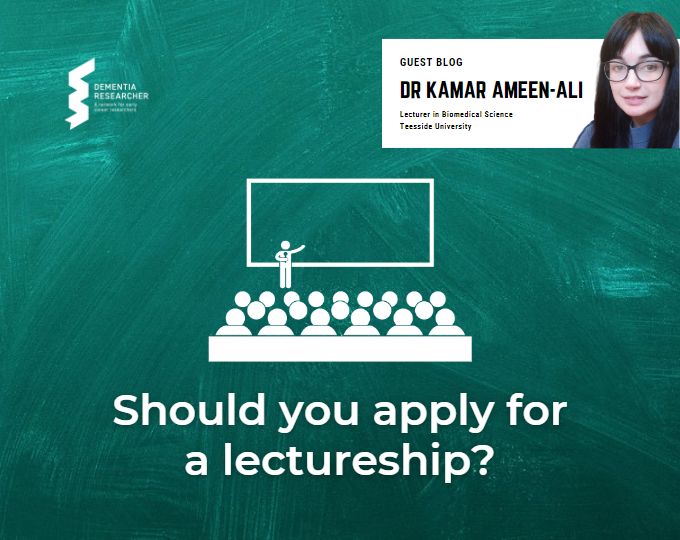
Should you pursue a fellowship or apply for a lectureship? The choice is often framed as protected research time versus a permanent contract, but the reality is more complicated.
Dr Fiona McLean is joined by Dr Warren Donnellan from University of Liverpool, Dr Kamar Ameen-Ali from Teesside University, and Dr Sarah-Naomi James from University College London, to compare the jobs as they are actually experienced. They discuss teaching, hidden administration, research independence, institutional support, pay, promotion and what happens when funding ends. They also ask whether any academic role can now be considered secure, and share the questions candidates should ask before accepting a post.
Their routes show that fellowships and lectureships are not separate tracks: teaching can strengthen a fellow's next move, lecturers can still win fellowships, and careers rarely follow the tidy sequence shown on a CV.
In this episode:
- What teaching-and-research and teaching-and-scholarship lectureships involve day to day
- How fellowships create independence, and where institutional control still applies
- Why teaching, administration and student support often consume more time than workload figures suggest
- What happens when a fellowship ends, including tenure-track promises and the need for further funding
- How salary bands, spine points and contribution points affect pay
- Whether any academic role can now be considered secure
- The interview questions that reveal expectations and departmental culture
- Why teaching experience, mentorship and resilience can keep more than one career route open
Narrator:
The Dementia Researcher Podcast, talking careers and research, sharing conference highlights, and so much more.
Dr Fiona McLean:
Hello, I'm Dr Fiona McLean, and I'm an Alzheimer's Research UK Fellow at the University of Dundee, and I'm delighted to be hosting today's show. If you've been to any career session at any conference in the last 10 years, you will have heard the same framing. You do your PhD, you do a postdoctoral position or two, and then you go for a fellowship, or you go for a lectureship. One buys you protected research time, and the other buys you a permanent contract. Pick one. And it's a genuinely difficult choice, because most people are making it with very little real information. Job adverts do not tell you what the workload is.
Interview panels do not tell you what happens when the money runs out. And the people who've been through it tend to describe their own routes being more deliberate than they actually were. It is also a choice being made in a very particular moment. Independent fellowships have always been competitive, and there are only a few hundred early career awards made across the whole of the UK in any given year across every discipline. At the same time, universities are now under real financial strain. The sector has been shedding jobs, and permanent no longer means what it used to mean.
So, the old logic that the lectureship is the safe option and the fellowship is a risky one deserves another look. I'm joined today by three people who've made this decision from different starting points and in different kinds of institutions. We have Dr Warren Donnellan, who's a senior lecturer in psychology at the University of Liverpool, where his research looks at resilience in paid and unpaid dementia care. Dr Sarah-Naomi James is a senior research fellow at UCL working on life course epidemiology and brain health and has just been awarded an Alzheimer's Society Leader Fellowship.
Dr Kamar Ameen-Ali, who's a senior lecturer in biomedical science at Teesside University, where she researches neuroinflammation as a driver of neurodegeneration and leads a BSc programme. Thank you so much for joining me today. So, we're going to get straight into it and talk exactly about what these jobs are. So, we want to start by defining these terms because I think there's a lot of confusion in this debate coming from the fact that we're using two different words to describe about 15 different jobs. So, Kam, can I start with you?
For someone who's only ever seen academia from the inside of a lab or an office, what does a lectureship actually consist of? What is the job like?
What does a lectureship actually involve?
Dr Kamar Ameen-Ali:
Yeah, so my lectureship is what we call teaching and research lectureship, which means that there's an expectation that I engage in both of those things as part of my job. And I have a certain number of hours in my workload dedicated to those things, as well as all the kind of associated administration that comes with teaching and comes with running a course and running modules as well. So, my teaching responsibilities, they run across the academic year. I lead modules. That's topics within the course. I also teach on those as well. So as part of that, I have to organise assessments for the students. I have to do marking.
I also have to supervise project students, dissertation students. And because I'm a course leader, I have to provide leadership for the whole of the undergraduate biomedical science course. So that kind of fits in my teaching responsibilities and my administration responsibilities. With my research, it's as you would expect. So, it's to publish papers, to carry out research, apply for grants and so on. So yeah, as part of my teaching and research contract, it's kind of those two main activities, but then also the hidden administration activities that we also have to do.
Dr Fiona McLean:
Yeah, and what's that split roughly, like if you could explain to our listeners in sort of a percentage term?
Dr Kamar Ameen-Ali:
In terms of percentage, so I did check my workload before we started recording for this because I wanted to double check. And it's roughly around, you know, split 33% for each of the three. So teaching, research, and administration as well. So, it's roughly equally split. But in terms of how it's across the year, in terms of the proportion, you'll have periods where you're doing a lot more teaching and then periods where you'll have time to do more research. So, it's not like that's equally spread across the year. You'll have different periods of time where you're doing more of one than another.
Dr Fiona McLean:
Absolutely. And do you think that's reflective of the contract that you signed?
Dr Kamar Ameen-Ali:
I think so. On paper, it looks like that, but when you're doing your work day to day, it kind of can feel like you're doing nothing but teaching or nothing but like admin tasks. But on paper, I'm like, actually, yeah, my time should reflect what it says, but it doesn't always feel like that.
Dr Fiona McLean:
And so, you mentioned about modules and leadership and that side of things. So, some students will maybe be aware, if you're listening to the podcast, but for anyone else, what does that really mean? What is that job of module leading?
Dr Kamar Ameen-Ali:
Yeah, it's kind of hard to put into words because it's so many kind of small activities. So, module leadership will be things like setting up the virtual learning environment for the students, making sure all of the recorded lectures, the resources and materials are available to the students on that virtual learning environment. It will also be dealing with any student queries related to that particular module. As I said before, setting up the assessment, arranging the marking, or doing the marking of that assessment, liaising with the external examiner for that assessment. So, it's like all these small little tasks that then kind of add up.
Dr Fiona McLean:
Absolutely. Yeah, it's a massive job, and obviously, that'll change through the term about how much of that you have to do. That's kind of what you were saying with the, you know, it's not 33% of your time every day, it's 33% of your time across a year, and that you have to dedicate to these different roles. And just to move on to Sarah, so same question, but maybe the other way around, what is an independent fellowship, and how is it different from being employed as a postdoc or on someone else's grant as a researcher?
What is an independent fellowship?
Dr Sarah-Naomi James:
Yeah, so I'm actually in this kind of intermediate position where I'm still on a postdoctoral position but have been awarded a fellowship. So, these are my answers in the context that I understand but maybe ask me in a year and I might change my answers. But essentially, when you're in a postdoctoral position, you're funded by somebody else's grant and working on their kind of research vision, research strategy. So, you're doing things like authoring papers, perhaps starting to be writing grants, and supervising students, but it's all kind of at the discretion of the PI of that grant that you're funded by.
And so, what a fellowship gives you is an independent package for dedicated time, money, and protection essentially to work on the papers or research area that you would like to work on. So really, it's around giving the person who's got the fellowship the financial security, I guess, as well to work on what they want to. And so, the fellowships are externally funded often by different charities or by different medical research bodies, Wellcome Trust, MRC, et cetera, but they're all facilitated through a university. So, you apply externally to these funders, but as part of the university system.
And we can come onto that later because that gives you lots of advantages, but also disadvantages and a lot more procedures, I guess, that you have to follow as part of your institution.
Dr Fiona McLean:
So, it's kind of like you have to be sponsored by someone essentially. They have to sort of say, "Yeah, I back this person to be able to complete this work." And I guess part of that agreement, you as researchers say, "I'm going to bring my ideas in. Hopefully, there's money in, and then the people to do that work." And then the flip side is the university will have to be able to agree to say, "Okay, I'm going to give this researcher space to do it in the lab.
We're going to make sure that they have access to the necessary equipment and anything else we need to deliver the research." And, yeah, so it's like almost an agreement with the university or whoever it is that's going to sponsor this fellowship before you even have to put that application in, right?
Dr Sarah-Naomi James:
Yeah, and so with that, lots of universities do give you lots of support around writing the grant as well. So, it's very kind of mutual relationship. But I think, yeah, it's important to kind of consider the external funding by the bodies and then how you work with the institution to firstly, like, write the application, but also then enact it as well.
Dr Fiona McLean:
Yeah, and I guess that sort of brings us on to talking about independence. So, while, yes, it's an independent fellowship that is attached to you, there's very much a sort of, yeah, relationship with the university to say, "Whilst your research is independent, we'd hope that you would engage in sort of activities within the university, including teaching, I guess." Is that what you find?
Dr Sarah-Naomi James:
Absolutely, so I guess that's the other thing as well. When you're a postdoc, you kind of have to seek out opportunities for teaching if that's what you want to do, and we'll come on later perhaps to say why that's such a good reason. But you still kind of have to ask permission, as it were, of the PI of that grant about how you manage your workload. Whereas when it's a fellowship, that's very much you have the autonomy to decide that, you have the autonomy to decide what you need to deliver on your goals, what you want to kind of do, how much teaching you want to embed.
But even though we talk about independent research, science especially in this age is very collaborative and actually working across the institutions, working across different researchers, whilst it's independently funded, you are definitely part of that, the wider team and who's delivering on the teaching as well as the research.
Dr Fiona McLean:
Yeah, I think this is a good point actually to sort of point out to our listeners about opportunities in teaching. I know from my own experience, I was on a fellowship, which is 100% research, but there was an opportunity to pick up a couple of neuroscience lectures, and I had some really good advice from someone in the department who said, "Technically, you're not contracted to do this. You don't have to do it.
But right now, these two neuroscience lectures have come up right in your area." So that's a great opportunity to take them on, because if you don't do it now, maybe in a couple of years' time when that fellowship's coming to an end and you're looking hopefully for maybe something more permanent in a lectureship form at the university, you know, they'll look at that and say, "Well, she's already engaging in teaching.
You know, we need someone to keep doing those lectures, so why not keep the person on who's already doing them?" And then the other point was that they said, "You might get the opportunity to do lectures later, but it might not be in your area. It might be I sit in the School of Medicine, and it could be anything. It could be, well, we need someone to do the kidney. Can you lecture the kidney?"-- But if you've got those opportunities that come up to lecture in something that you're passionate about, that you've got expertise in, then just take that opportunity. And then, yeah, we're talking about kind of, um, what the award covers before.
So, we said about the university buying into sort of you as a researcher and your ideas, and they'll offer the lab space. But the research grant will often cover consumables, you know, staff. Anything else you can think of, Sarah, that they kind of cover your salary, obviously?
Dr Sarah-Naomi James:
The different funders will offer different packages depending on the budget, but also their rules. So, there's something called the overheads, which some funders don't fund. And what that essentially is, is giving money straight to the university to kind of cover your lab space and that aspect. But because it's your fellowship, you are essentially in charge of that budget. So, before you apply, you have to get it all validated from your university. But, you know, you can put in things like salary for postdocs, some offer you can put funding in for PhD students, anything really that will kind of deliver that research vision.
My work is accessing big data, so I've kind of put in requests for the data access requests and kind of the science support that's needed for that. So, anything within that kind of research vision.
Dr Fiona McLean:
I'm going to ask you the big question now is what happens at the end of that fellowship? So, my own experience, so with the fellowship I got, I got a letter of support from the University of Dundee that said at the end of my fellowship, I would be put onto a tenure-track lectureship to give me some sort of continuity and ability to keep applying for grants throughout fellowship that went beyond the time that I had within that original research fellowship. What about yourself? Have you done something similar, or will it be a question at the end that you will then look for lectureship jobs that are out there being advertised?
What was your experience?
What happens when a fellowship ends?
Dr Sarah-Naomi James:
So, this is the kind of gamble, as it were, about the fellowships that they are fixed term. So, I'm on a five-year fellowship, and actually, credit to lots of the funders where they've tried to shift away from the shorter-term fellowships to longer fellowships for this reason, because whilst you're kind of delivering the research, you also do need to start writing grants to secure the next couple of years. And the job instability is a huge part of, you know, view your work and it's important. So, I think having job instability as part of a fellowship is obviously a bad thing. So, lots of advice is to try to talk to your university.
And again, it depends on the institution around getting in writing that they will then support you to get on this tenure track. In my own case at UCL, there is less money for positions and to commit to those tenure positions. So, what they typically say is that you need at least two fellowships and then they'll commit to it. And so, it's an ongoing debate in our institutions about how they can support us, and we can come to it later. There are other ways to perhaps get promoted whilst you're on these fellowships to make yourself in a better position to get to the next step. But yeah, in my own case, it's not guaranteed.
It's a tentative relationship that I'll have to revisit over the next couple of years.
Dr Fiona McLean:
Fingers crossed it goes well. (laughs) And Warren, can you let us sort of understand better about the lectureship job title, what that sort of means from your perspective? And obviously, lectureship is a word that sort of covers many different institutes and sometimes different jobs. So where does that variation come from?
Teaching and scholarship contracts, and the promotion ladder
Dr Warren Donnellan:
Yeah, so I'm a senior lecturer at University of Liverpool, and I'm on a teaching and scholarship contract. So basically, what that means is that the ratios between the teaching, research and admin are slightly different from Kam's, for example. So, I also checked mine, (chuckles) my workload in prep for this. And currently, I have 60% teaching, 20% research, and 20% admin. The problem is that admin kind of encapsulates everything that isn't teaching and research, so you do feel squeezed.
But yeah, I think I'm an unusual case 'cause I've always been on that teaching focused, even though I'm very research active and I've brought in grants and I've published, I've always been teaching-focused, even though Liverpool is a very research-intensive university. So, it's slightly, well, it's very difficult at times to be a teaching-focused lecturer in a very research-intensive environment. You are squeezed, and you're kind of fitting it in as and when you can.
The only good thing is that, you know, not the only good thing, but one of the positives is that I'm not going to be sacked if I don't bring in a major grant you know, 'cause I'm there to run the modules. I'm there to teach. I'm there to kind of do all of the stuff that Kam described on the teaching and admin front. But yeah, it's a slightly, it's a bit of a balancing act. And the point I think someone, was it Sarah made about identity as well is a really important point about, who am I? Am I a researcher today? Am I an educator? Is that a false dichotomy, you know? Liverpool puts a lot of emphasis on this idea of research-connected teaching.
So, the idea is you should be doing both and, you know, the stuff that you're teaching about, in an ideal world, you're teaching about stuff that you're actively, you're a leading expert in, and that's going to improve the student's experience. It's going to improve your satisfaction. It's not always the case, (chuckles) but luckily at Liverpool, that's kind of what I do. I get to teach stuff that I'm actively researching. But yeah, as you said, it's very different depending on what university you're working at.
Dr Fiona McLean:
Absolutely. My own experience, Dundee is, they call it research-led teaching, which very much means the students are being taught by people who are active in those research areas. And I think to make that kind of teaching work, there needs to be a bit of a balance, because you get big numbers of undergrads in and you need people who have the time and to focus and the skills, 'cause teaching's such a difficult skill to teach with larger numbers of students. And then as they go up through their degrees and get more specialised, you know, they then sort of maybe have smaller lectures with people who specialise in those areas.
So, it's a real tricky balance. And just quickly on sort of the ladder of progression in a lectureship, so most people go in at lecturer, and then there's senior lecturer. And then, in other institutes, this is sometimes where it changes a little bit, but what in Liverpool, is it reader then professor, or is there associate professor in there?
Dr Warren Donnellan:
Yeah, it's a really good question 'cause I think it does vary. I think for me, my routine, I didn't even do a master's, to be honest. I'm slightly unusual. I went and did my BSc at Liverpool, and then I got onto a PhD, a four-year part-time PhD where I was also doing this doctoral academic teacher job where I was teaching statistics undergrads. And then I got a university teacher job, and then I got a lecturer promotion, and then I got a senior lecturer promotion.
And I think, as you said in the intro, that sounds really straightforward, but it was not. (laughs) I had a child in that process, and that was my ladder, but, you know, I was never a postdoc. It's always been teaching-focused for me. There is no reader on my teaching and scholarship pathway. It's straight to professor. That's my next rung on the ladder. And something I'm starting to think about at the moment is, you know, someone said to me in a meeting last week, you get chair, then what? It's like you're over the edge of the cliff and people don't think about that.
So, you might not have time to talk about that today, but these are the kinds of things you're thinking about. So, yes, we talk about job security. I'm really lucky to have that. But then you think, right, okay, now what? (laughs)
How each of them got there
Dr Fiona McLean:
Yeah, I think, yeah, you've brought us on really nicely to our next section, which is about how each of you got to where you are. And it's great to hear these stories, these unedited versions, not just the CV, not what we see on the university profile page. And just to touch quickly back to you, Warren, about that. So, it's interesting to hear that, yeah, your next step is professor. And you mentioned the word chair. So, a lot of people call it a chair because it's like a chair in a really specific subject. So, it's chair of neuroscience or chair of, well, it can be a chair of anything.-- The university can make up whatever chair they want.
But it's quite an interesting wording. So that's a professor. Some universities have associate professor. We don't have it at Dundee. I think, actually, that's maybe reserved sometimes for Oxbridge and maybe Sarah can confirm, maybe London universities as well, yeah, where associate professors, sometimes you'll hear someone's a professor and you think, "Oh my goodness, they're so young." And then they're like, "Oh wait, wait, wait. I'm an associate professor." And then you're like, "Wait, what? What's that?" (laughs) So if anybody ever hears that, don't panic, don't panic. You're not behind in your career. But Warren, just to touch back.
So yeah, you said about how you got there. You don't have a master's. And I also don't have a master's, so it's okay not to put yourself into debt to try and chase that academic and research dream. Not that I'm saying a master's isn't useful, but they are very expensive. And so, you're set about your teaching, so that's quite a unique way to have come in. Do you think you were able to prove yourself before they kind of then gave you that big trust in sort of being a leader in teaching, being a lecturer? What's your sort of perspective on that? And also, did you ever think about applying for fellowships and did you?
Dr Warren Donnellan:
Yeah, so because I had the doctoral academic teacher slash PhD four-year thing, the idea behind the doctoral academic teacher positions at Liverpool is that they're a bit of an apprenticeship. You know, you're learning to teach. You come in with very little teaching experience, if any, and you just learn on the job, and you can do teaching qualifications and stuff, but it's very experiential, and there's a lot of trial and error. So, by the time that four years comes to an end, you know, hopefully, you've proved yourself, you've demonstrated that you can teach and you've got rapport with the students, and you know the university systems.
And that's one of the advantages of staying at one institution. I'm like a Liverpool lifer. (laughs) And, you know, has its pros and cons. You know, sometimes I get jealous of my colleagues who've been all over the world and arrived at Liverpool. I'm quite proud of the fact that I'm a Liverpool alumni. You know, it's really served me well. You know, you get your feet under the table. You get to know the staff, the students, the institution. So that's kind of how it worked. I never really considered fellowships because I think I just fell in love with teaching. I'm a massive, massive fan of education and educating future psychologists.
That's my kind of purpose if you like. So, I never considered that, but I have got lots of friends and colleagues who've done it and loved it. And can I just say as well, I've been involved in a couple of recent recruitment drives at Liverpool, and people who've been on fellowships are so, so, so attractive for lectureships because, okay, you've got the research skills, but the fellowship, as you said earlier, gives you that independence and that autonomy that maybe a postdoctoral researcher or a research assistant doesn't have. You know, you're like a ready-made lecturer.
People that we've took on who've had fellowships just absolutely fly because they've developed those skills. So, I think it's a bit of a false dichotomy to think of lectureships over here and fellowships over there. It's all one kind of journey.
Dr Fiona McLean:
They're very complimentary.
Dr Warren Donnellan:
It's a snaky path, but it's a journey.
Dr Fiona McLean:
Yeah, yeah, that's great to hear. And yeah, that's really nice to hear that you know, there are other skills that come from a fellowship, not just research. And back to Kam, your route looks different again. How did you end up in Teesside, and how deliberate was that?
Dr Kamar Ameen-Ali:
Yeah, so after my PhD, which I did at Durham, I went straight into my first postdoc, and I moved my first postdoc, so I didn't stay at Durham. But at the same time, I didn't really have any real aim of having a career in academia. It was almost just like thinking about the next thing. It wasn't thinking long-term. And I feel like each decision that I've made along my career has really been about just seizing opportunities that are available to me at the time and looking at things that I'm interested in and following that for as long as I'm interested in it.
So, after my first postdoc, I spent two years working for a research funder, and doing that actually really helped me realise that I wanted to work in research and that I feel like if I'd done a second postdoc immediately after that first one, I might have burnt out and I might have actually decided that I didn't like research. So, I feel like I needed that time outside of academia to kind of realise that. So, I then had two more postdoctoral positions after that. And during that time, I did apply for a fellowship that was unsuccessful. And I had to move around for those different postdoctoral positions.
And part of me feels like we're told a lot about, oh, if you move around, it's going to be an advantage working in different labs. It'll increase your chances of getting a fellowship. And for me, that wasn't true because we're talking about short-term postdoc contracts here, and I didn't ever really have enough time during those contracts to build up the pilot data and to kind of establish those connections in order to be able to put in a strong competitive fellowship application. So, for me, actually moving around wasn't advantageous. And so, I can see how actually staying in the same place can actually help.
So, it's just a little bit about, I guess, challenging that narrative. At the time, I wasn't keen on the idea of teaching, so it's not like I was looking purposefully to apply for a lectureship. I found the idea of standing in front of all of those students really terrifying, and I really, really didn't want to do it. But it got to a point for me where having some job security became, the shift was that was now what was more important than pursuing anything else.
And so, I started to look at lectureships, and when I got the one at Teesside, which was just over four years ago now, I quickly found that actually I really, really valued the teaching side of my job and helping students to develop and to achieve their goals. I found that really, really rewarding, like Warren said. And so that's probably one of the most valued part of my jobs that I have now. And I would say that it wasn't necessarily deliberate, more about kind of seizing opportunities. That's a big part of it.
A lot of what you realise is a lot of it is luck because I feel like if I'd waited any longer, the job market isn't what it was when I got my lectureship. So, a lot of it was actually, I applied kind of at the right time, even though at the time, I didn't know it was the right time 'cause if I had left it any later, there's just not those posts around now, which would've made it more difficult for me to try and transition to a lectureship.
Dr Fiona McLean:
Absolutely. I think you've kind of covered my next question, which was what's it like being in a sort of less research-intensive university, whereas actually, what you've kind of said is that's been a good thing because it's opened up this whole other passion for you in teaching, which is fantastic. And Sarah, what about yourself? So how did you find yourself? You kind of touched on part of that route, but how did you end up going down the fellowship route specifically?
Dr Sarah-Naomi James:
Yeah, so after my PhD, I did it in King's, and then I changed institutions for my postdoc, but I changed phenotypes. So, my PhD was kind of in epidemiology, but around neurodevelopmental health. And then actually, I shifted then to thinking about the other aspect of ageing around dementia. But the methods were very similar, which was the kind of appeal there. And I changed phenotype at the time because I was still very open and excited about everything, but also this kind of idea of serendipity.
So, we call it like part luck, part preparedness, like be prepared and get yourself in a situation where you can take those leaps, but a lot of it is luck as well. And actually, it's through luck that now that I have this postdoc, which I came to kind of just feel so motivated by dementia research, and we can talk about that later. So, then I was in this postdoctoral position at UCL, and technically, I am still on it. And so, this is eight years later, and that's actually very unusual. So, over these years, it's been a fixed-term contract. Every two years kind of had to review where can I get my additional funding from?
So, my funding over the past eight years has been a combination of bridging money. My different PIs have kind of been able to kind of cover the gaps. And so there has been, even though looking back, it's eight years of very enjoyable job, there's been lots of job uncertainties around that. And I've had two periods of maternity leave within that and the kind of fixed-term contract, when is this ending? Is there more money coming? It's been quite hard. And just to add though, over those eight years, I have applied for other opportunities.
I have actually applied for lectureships and had very honest conversations with the people in those hiring positions where, actually, we realised the teaching configuration wasn't right for what I wanted. And I actually wanted to ask a question. But around, you know, when you apply for jobs, can you talk about and negotiate that kind of workload of how much teaching and how much research there is? And actually, in the case that I applied for these jobs, we decided that wasn't the case. And so, I have also applied for jobs at other fellowships as well. So even though I've now successfully secured one, it hasn't been that straightforward.
And there's been lots of times that I've sought other opportunities and actually decided to stay in my role. And so sometimes, staying in the position is also an active choice as well.
Dr Fiona McLean:
Yeah, I think you've kind of brought us onto our next section, Sarah, which is kind of about the trade-offs of the two roles and what you're basically sacrificing by maybe going down a different route. And so, I might just open this up kind of to the group. So yeah, what do you feel from, if you have more of a research or fellowship role, what has to be sacrificed to deliver what you guys think? Kam?
Dr Kamar Ameen-Ali:
So, I think I have what's considered probably quite a full teaching load for somebody who's on my type of contract, so on a teaching and research contract. I think I actually have. It would be interesting to compare with Warren 'cause I probably have maybe a comparable teaching and admin percentage if you add everything up to him because I actually do have a lot on my workload compared to other people on the same type of contract as me. I don't know how that's happened.
But when I look at it in terms of my calendar, for example, I'll see that it involves teaching on average, two, three-hour classes a week from October to December and then from January till May, so the two semesters of the academic year. So, when I look at that on paper, on my calendar, and I think, actually, I have got loads of time to do research because I'm only teaching two classes a week and they're only three hours each. So where is all my time going? When I look at it, it tends to get filled with things like just meetings, paperwork, student meetings. All those slots seem to get filled up with those types of things.
So, it can be hard to find that time to do the research, even though on paper, it looks like I should have a lot of time. But I'm lucky that I have a PhD student, so that does help with driving the research forward. And within my workload, that does count as research rather than teaching. But if it's project supervision for undergraduates or master's students, that's classed as teaching. So, it is hard finding that balance, but you've just got to try and make it work and just look at the whole academic year and where you've got pockets of time where you can progress on certain activities, I think.
Dr Fiona McLean:
Absolutely. And Kam and Warren, you are technically both sort of permanent lecturers. Do you feel more secure than, say, Sarah, who's on a fellowship with a fixed-term, or? Because there's a lot of disruption in UK academic institutes right now. And Dundee's gone through loads of redundancies. Most of the universities in Scotland are, actually, and there's a lot in England as well.
And, you know, if you have a fellowship, technically, like you've got your salary covered and you've got your protected time, like they can't really get rid of you 'cause it wouldn't be a cost saving because, you know, it's an outside charity or funder that's going to be covering that salary. So how does that make you guys feel? Warren, what do you think about that?
Dr Warren Donnellan:
Yeah, I think for me, because teaching income is the main source of income for, well, for any university, if you look at the figures, I feel perhaps more secure than my researcher colleagues. Yeah, so I feel relatively safe. I don't think anyone feels fully safe.
Pay, salary bands and spine points
Dr Fiona McLean:
Absolutely. And I guess that we've not really spoken too much about it, because it's an uncomfortable topic, but money. Can we quickly have a chat about, do people in fellowships get paid more, less, you know, vice versa with lectureships? There are obviously the kind of spine points and the grading systems that are across UK universities for your lectureships. And you can actually, anyone who wants to explore that, any listeners who want to have a look into that, you can Google that quite easily and have a look at where lecturers and different promotions will land you on a pay scale.
But within your institutes, do you think there's big discrepancies between lectureships and fellowships? Just a quick guess or no, Warren?
Dr Warren Donnellan:
I'm really not sure. I'm not sure.-- But I know that we have increments each year and it's reasonably generous. But yeah, I don't think any of us went into lecturing for the money. (laughs)
Dr Fiona McLean:
Yeah. - That's fair to say. And I know from applying for fellowships, you can kind of say what salary you believe you should be on. And depending on whether it's a junior fellowship, like a postdoctoral fellowship, or a senior fellowship, you know, that salary will be expected to be more or less depending on the fellowship itself. And I think the university would probably check that they agreed with the amount that you were going to ask for, as would the funder. And they would also have a look and check that it was reasonable. My experience is that a lot of people are on similar salaries because of that grading system and points-based system.
Dr Sarah-Naomi James:
So, my experience is that they are very similar 'cause you're just on the bands. The biggest difference, and we haven't covered that, is around the clinical versus non-clinical fellowships. That's where you get the differences in my institution.
Dr Fiona McLean:
Absolutely.
Dr Sarah-Naomi James:
The differences in my institution.
Dr Fiona McLean:
Yeah, we have the same, yeah.
Dr Sarah-Naomi James:
So, you have the banding, but you have the spine points within that. So, a little tip that I would say for anybody applying for a postdoctoral job and also a fellowship is to try and negotiate up on that spine because lots of people kind of just accept that you start your job, you go in at the lowest rung, but actually, there sometimes is negotiating room to go further.
Fellowship or lectureship: is either one secure?
Dr Fiona McLean:
Absolutely. And there's also these things called contribution points. Maybe if you're doing a postdoctoral fellowship, then you might have to stay on the postdoctoral grade, which at Dundee is grade seven. But if you've got a fellowship, you might be able to ask for those contribution points, which take you into the first couple of bands on grade eight because you've got your own money and that should be rewarded. So those are always useful conversations to have. And as my granny used to say, you know, if you don't ask the question, if you don't ask, you don't get, so you may as well ask. And the worst that someone can say is no.
I want to now bring it to the present because I think the decisions that we're having to make now are different from 5, 10 years ago. And there are only so many early career fellowships out there, especially in our field of dementia. And the success rates of major schemes sit. You know, there's not that many opportunities to really land those types of grants and fellowships. And at the same time, you see that universities are struggling financially. There's a lot of restructuring and severance schemes that are happening across the UK, and staff numbers are starting to fall for the first time in a long time at universities.
And that's such a challenge for many people that are listening now as it is for us on the podcast. So just to kind of touch on that, just Sarah, for being through that fellowship process recently, what is it like out there? Is it quite, you know, competitive? Do you feel like you have to put out a lot of applications to sort of be successful? What's the feeling?
Dr Sarah-Naomi James:
Yeah, it's definitely very competitive. And so, I think one of the things that my mentor said to me is that the only constants that we have in academia is things going to change. So actually, finding ways to be resilient to rejection, finding ways to kind of reach out for mentorship across different people, different kind of areas of expertise and experience. My mentors have never been through this particular environment. So actually, the wisdom that they have is just, you know, get those systems in place, celebrate the small things, celebrate just submitting a grant. Don't celebrate if you're successful or not.
You know, just the fact that you've got to that position and you've got that idea, those are the kind of small wins. So, yeah, the advice is that supportive system.
Dr Fiona McLean:
Yeah, and it's kind of maybe going for all opportunities, which is maybe something I think Warren and Kam might say is as well don't just look for fellowship opportunities, look for the lectureships as well. And there's opportunities in both these roles of fellowship and lectureship to do research and teaching. So, if you can get your foot in the door and get that opportunity, you might have a chance to mould what that role is. And, yeah, absolutely. I think what's important as well is with the lectureship, it's not going to stop you applying for a fellowship.
And as Warren, you made a great point earlier, a lot of these things sit alongside each other now. And I'll come to all of you and just say, you know, do you think that one of these routes is safer? Just yes or no or, you know, is it all just a risk 'cause academia is a risk now? Kam, I'll come to you first.
Dr Kamar Ameen-Ali:
I used to think that having a lectureship, a permanent contract, that was security. And when I got that, that's what I thought, until around 18 months ago when, as you've described, these redundancies and severances started to happen across most higher education institutions in the UK. And all of a sudden, I felt like, hmm, I'm not so secure anymore. And I felt like it's a little bit of a myth because I almost feel like at any point, I could get an email from HR calling me into a meeting saying I'm at risk of redundancy.
And I know, as Warren said, that maybe if you're on a teaching and scholarship contract, you might be more valuable to the university because you are essentially there to provide all the teaching. And I do that as well, but actually, a big portion of my contract is research. So, they might see somebody that is a lecturer who can do what I do and is on a lower grade and therefore cheaper. So, I am therefore disposable. So, I don't think one is necessarily more secure than the other because, as you've described of a fellowship, it's still fixed term, but you at least have that security for the period of the fellowship.
So, I don't think one is more secure than the other, but maybe on balance, a lectureship still is more secure at the moment because of the potential for the permanent contract.
What to ask before you accept a post
Dr Fiona McLean:
Yeah, I agree, absolutely. I guess if we're going to be talking about, yeah, sort of security and sort of decision making that people have to make, that brings us on to maybe what we should be asking before we take up one of these roles. Should we be asking, am I secure in this position when you're applying for lectureships? And that kind of feeds into what the university's goals are and what their vision for the university is long-term. Are they going to be delivering more teaching? Because, as you say, it brings in good money. What does that teach look like? Does it matter to what level?
And these are kind of important questions to ask at the interview stage. And maybe this is a bit controversial, but, like, let's maybe ask you all now, before accepting a job, is there one question from each of you that you think should be asked to an interview panel to sort of almost really test them and check that this job is right for you? Warren, what's that maybe question that you might be scared to ask in an interview to sort of check that the lectureship's the right thing?
Dr Warren Donnellan:
Well, I was on a panel recently and the candidate said, "What would success look like in my first year?" And I was just, I loved it. I've never heard that question before. And the chair of the panel was like, really had to think, but it led to a really nice little conversation at the end of the interview. You know, operationalising success, it's transparent, isn't it? It's open. So, I love that question. And if I ever get the opportunity to ask it, I'm going to add it to my list of questions.
Dr Fiona McLean:
It's brilliant 'cause it actually pushes the interviewers to go, "Well, actually, this is what success looks like." And then if you get the job and you deliver that, you can always say, "Well, I asked you what you said success looked like and I delivered it." So that's a great question. Sarah, what in a fellowship interview, what's maybe a question that people might be scared to ask, but actually is really important before they accept a fellowship?
Dr Sarah-Naomi James:
I don't know 'cause I just prepared my answer for the other one in my mind. And so, I was going to talk about that because I have applied for lectureships along the way and actually decided to stay on the fellowship track. And the thing really that was different for me is that it isn't a question at the interview, but it's a question about asking people in that system. So, reach out to the current lectureships and not people necessarily on the panel because personally, nobody's going to be able to guarantee your success. Nobody's going to be able to guarantee, yes, this is a permanent job for life.
But actually, I think the most important thing from me and my peers through seeing their experience is the culture and your peers and the people you're going to be working with. So, before you do anything, we kind of touched on it, do you stay in an institution? Do you move institutions? Like part of that is understanding who are you going to be working with day to day. And I think that's, in a very changeable sector, our resilient systems are people. And I think that at the end of the day, I think that's the best advice. Things are going to change.
So, work in a place where you think that you kind of fit into that culture and then you can feel that you will get that support.
Dr Fiona McLean:
Absolutely. I think quite a good question to ask the panel is, are you happy working here? Because it's quite a, you know, you'll see it on their faces if they're like, "Yeah, I love it here." And if there's any doubt, you'll see it on their faces really quickly that they're like, "Oh, ugh." And I always think that's a good question to ask is, yeah, are you happy in this department? Are you happy at this university? And just quickly, Kam, have you got your one question that you would ask before you take a job on?
Dr Kamar Ameen-Ali:
Something similar to yours, and I have asked this before, and it is, tell me one thing that you like about working here. Because if they're scrambling to try and find something, it's a bit of a red flag because it's like, well, if there is something that you like working about here, it should come to mind.
Dr Fiona McLean:
Absolutely.
Dr Kamar Ameen-Ali:
So yeah, it's quite similar to yours.
Dr Fiona McLean:
Great. And that brings us on nicely to our last section. And before we wrap up, one last question to each of you, and I want something specific from you rather than sort of general. And it's about anyone who's listening, what advice would you give them on these kind of jobs, the fellowship versus lectureship, something specific about that you want to change their minds about? And I'll go to Kam first with that.
Dr Kamar Ameen-Ali:
Don't be scared of teaching. (laughs) And like you said, if you're a postdoctoral researcher or if you're a research fellow, if you've got a fellowship at the moment, take any opportunities to get some teaching experience like you've said, Fiona, because you never know when an opportunity might come. And actually, if job security is what you want, that might be a route to it. So, take opportunities and be planning for different routes so that if the opportunity comes, then you have that experience and you're ready for it.
Dr Fiona McLean:
Warren?
Dr Warren Donnellan:
For me, it's mentorship. That mentorship has been transformative for me. And now I'm in a position where I'm mentoring colleagues myself. And without that, I don't know where I'd be. Helping you to navigate someone who isn't in your field, you know, who has that objective lens is really helpful as well. So yeah, mentorship.
Dr Fiona McLean:
Perfect. And Sarah, what's your one takeaway for the listeners?
Dr Sarah-Naomi James:
Don't take rejection personally. It's not about you, your personality. A lot has to do with luck. And so don't take it personally but find ways to kind of keep that resilience up and a big part of that is mentorship.
Dr Fiona McLean:
I love that from all of you. Thank you so much. And I'd now just like to say thank you to Warren, Sarah, and Kam for joining me and for being so open about their own journeys and experiences. If there's one thing that I'd like listeners to take away from this conversation, it's that there's two jobs, not two grades. And if anyone else is saying that, then I think you can take it from these three experts that that's not the case at all.
If this episode has raised things that you want to talk about, you will find careers content, funding calls, and job adverts on our website at dementiaresearcher.nihr.ac.uk, along with a full transcript of this episode and links to everything we mentioned. Do also join us in the Dementia Researcher community app where you can carry on this conversation with people making exactly the same decisions as you're having to make right now. I'm Fiona McLean, and you've been listening to the "Dementia Researcher Podcast." Everyone safe. Bye.
Guests:
Bye. - Bye. Bye.
Narrator:
The "Dementia Researcher Podcast" was brought to you by University College London, with generous funding from the National Institute for Health and Care Research, Alzheimer's Research UK, Alzheimer's Society, Alzheimer's Association, and Race Against Dementia. dementiaresearcher.nihr.ac.uk.
If you would like to join a panel or record a podcast on your own area of research, complete our show form. You can subscribe to our podcasts through your favourite podcast app, just search for 'Dementia Researcher' or follow the links in the footer of this page.
Did you know... all of our blogs are also available as podcasts? Find them here on Apple, and here on Spotify
The views and opinions expressed by the host and guests in this podcast represent those of the guests and do not necessarily reflect those of UCL, Dementia Researcher or its funders.
Join our Supporter Programme and subscribe to our channel in YouTube or in Apple Podcasts for exclusive access to bonus shows, and to gain early access to our recordings.
Share your thoughts on this topic in the comments below.

 Dementia Researcher





 Dr Yvonne Couch