 Print This Post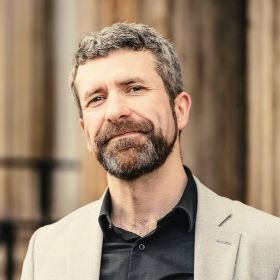
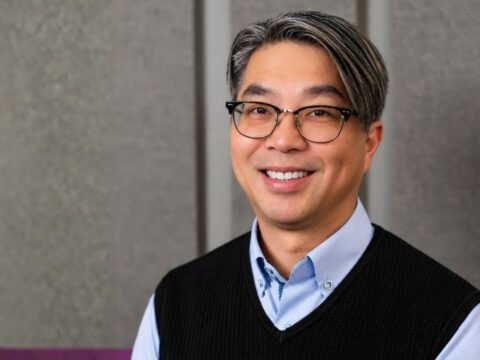
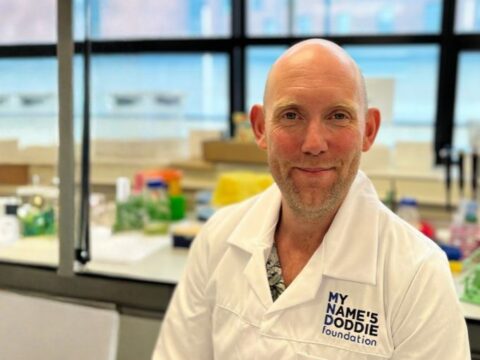
Professor Terry Quinn combines NHS clinical work with dementia research and mentoring. Photograph supplied by Terry Quinn.
Terry Quinn did not set out to become an academic. A research opportunity between clinical jobs led him into stroke research, and an email to a team in Oxford helped him develop an interest in dementia and evidence synthesis. Now a professor and NHS consultant in Glasgow, he combines clinical care with research, policy and support for the next generation. His experience shows how a career can develop through opportunities, trusted mentors and a willingness to change direction.
“There is no academic phenotype, and the research ecosystem benefits from diversity.”
My route into research
I studied medicine at University of Glasgow from 1996 to 2002. I did not come from a medical or academic background and completed my degree with support through the University hardship fund. In 2000, I took a year out of medicine to study a BSc in neuropathology in Glasgow. I enjoyed laboratory work, and was awarded the title ‘young neuropathologist of the year’ for a project on ApoE and brain swelling, but I missed clinical contact. When I left medical school, I had a fixed plan to become a psychiatrist. That did not quite work out, but perhaps things have come full circle as I am now involved in the aspects of psychiatry that excited me then and still excite me today.
I did not intend to become an academic. As a junior doctor, I was between clinical jobs when an opportunity came up to work in a stroke research unit. I thought it would be an interesting way to fill a year. Almost twenty years later, I am still researching stroke and other brain diseases. I was lucky, I had people who believed in me, and I said yes at the right times.
Building a clinical research career
From 2006 to 2008, I held a research fellowship in stroke, leading to an MD by research at the University of Glasgow. This was a research doctorate, equivalent in level to a PhD. My MD was entitled ‘Improving outcome assessment in stroke’ and started a career-long interest in how we measure concepts like cognition and physical function. That opportunity became much more than a way of filling time between clinical posts. It was the beginning of a continuing research career alongside my work as a doctor.
An email that opened a new direction
While working in stroke, I became increasingly interested in the memory and thinking problems experienced by stroke survivors. In 2011, I opportunistically sent an email to a dementia research team in Oxford and found myself visiting on a scholarship awarded by the Royal College of Physicians and Surgeons. It was an opportunity that grew out of following an interest and approaching people whose work I wanted to learn from.
In Oxford, I started working with the Cochrane Dementia team and learnt a great deal about dementia, research methods, and evidence synthesis. I must have done something right, because I became an author and editorial board member in 2012, then took up the lead role around 2017. I stayed in that role until the UK Cochrane groups were disbanded in 2022. That interest in evidence has stayed with me and informs my work on guidelines, policy, and research methods.
Developing through supported posts
In 2010, I took up a SCREDS clinical lectureship (Scottish Clinical Research Excellence Development Scheme), a joint university and NHS post funded by the Scottish Government. This allowed me one day a week for research. A protected day for research was great, but there is a limit to what you can achieve with one day. So, I successfully applied for a senior lectureship funded by the Stroke Association and Chief Scientist Office (2014-2019) that allowed for a 50:50 split of research and clinical. I should point out that I had many failed attempts at Fellowships before this success. These posts formed part of my progression through a career combining clinical work and academia.
In 2020, I worked full-time as a COVID doctor as did most clinical academics. Since 2022, I have held the David Cargill Chair of Geriatric Medicine. Looking back at that sequence, my career has included periods with different balances of research and clinical responsibility, rather than following the plan I had when I left medical school.
My work in dementia research today
I wear several hats across clinical care, research and policy, but care of people living with dementia is the common thread. Current projects include building capacity in dementia data research, creating guidelines for practice and supporting new brain health services.
I am very fortunate to be employed through an endowed university chair, this offers a degree of job security and flexibility that is uncommon in the research world. My time is split equally between NHS work and research or academia, although both can sometimes feel like full-time commitments. For me, it is the perfect mix: the immediacy of working in a busy emergency unit alongside research that shapes clinical work.
Working across research boundaries
I deliberately try to work across the boundaries between vascular disease, frailty and dementia. Those connections are important to the questions I want to ask. However, they can also make funding difficult, because some ideas fall between the gaps of specific funders.
Skills and support
Resilience matters. Rejections are part of research, and I have had to learn not to take them personally.
I have also had to learn not to take myself too seriously. The research and the mission are serious, but that does not mean we cannot enjoy the work and have fun along the way.
Flexibility matters too. Unexpected opportunities come along, and you need to be ready to consider them and take a risk. My own route into research depended on opportunities I had not planned for.
I am very aware that any success I have had comes from the support and mentorship of many other people: too many to list without breaking the internet. I now have the privilege of supporting others. Building research capacity is one of the most rewarding parts of my job.
What I find rewarding
Building a team is incredibly rewarding. Helping other people develop is an important part of what makes this work worthwhile. I started to grow a research team around the same time as I had children, and the joy (and frustration) of supporting a research family is not dissimilar to raising kids. The challenge is keeping the plates spinning across my responsibilities as an NHS doctor, researcher, and dad, while trying to be a decent human being.
Looking ahead for clinical academic careers
Doctors have traditionally had more opportunities to become involved in research than other clinicians. It is encouraging to see schemes supporting nurses and allied health professionals into research. At the same time, I am concerned that recent funding decisions may discourage doctors from becoming academics. Some of the opportunities, support and funding that were essential for my academic growth are no longer available and I see that it is now (more) difficult to break into the world of clinical-academia. Supporting clinical academic careers across professions matters to me and I try my best to support the next generations both directly and through policy.
Three practical things to try
- Email people you would like to work with. The worst that can happen is that they do not respond. My own email to a team in Oxford opened an important new direction.
- Say yes to opportunities, even when they seem a little scary. You do not need to have planned every step before exploring what might be possible.
- Find a mentor you trust and maintain that relationship throughout your career.
What I wish I had understood earlier
People told me, and I told myself, that “people like me do not make good academics”. That is nonsense. There is no academic phenotype, and the research ecosystem benefits from diversity.
Find out more