 Print This Post
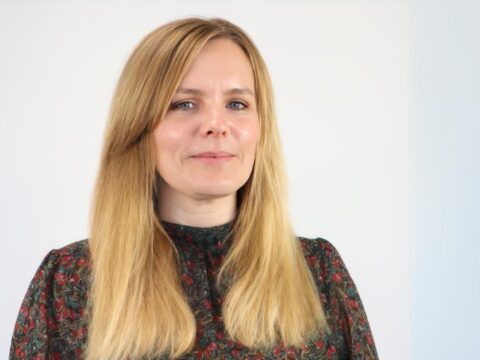
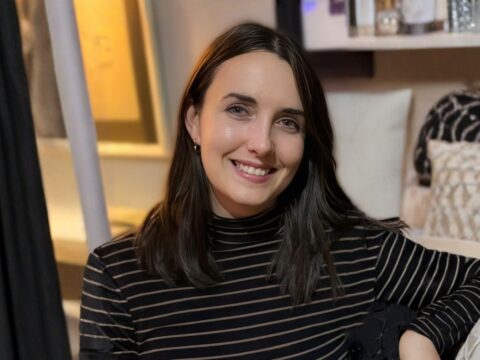
Dr Connor Richardson
Connor is an epidemiologist studying how stroke, cerebral small vessel disease and ageing blood vessels affect dementia risk. He works across clinical trials, cohort studies and electronic health records, using quantitative methods to understand risk and improve care and prevention.
“You cannot plan your career completely. Things happen unexpectedly and outside your control.”
Finding a route from biomedicine into public health
I studied Biomedical Sciences at Newcastle University from around 2009 to 2013. An eight-week summer placement in a genetics laboratory introduced me to working research and showed me how different it was from a teaching laboratory. Experiments could fail, supervision mattered and progress was rarely as tidy as it appeared in practical classes. My dissertation in immunology imaging gave me more experience of working independently and writing research for publication.
I left my degree interested in ageing and neuroscience, but I was not certain that I wanted a research career. I returned to Newcastle for an MSc in Public Health in about 2014. I was interested in public health practice and wanted my dissertation to become something useful and publishable, so I actively looked for a supervisor who would support that ambition.
My dissertation supervisor offered a dementia project that brought together my interests in ageing, neuroscience and population health. She helped me build confidence in quantitative research and statistical coding in Stata. Halfway through the MSc, she encouraged me to apply for an upcoming PhD. I enjoyed the project and wanted to continue working with her, so I applied.
Learning to become an epidemiologist
I began my PhD at Newcastle University in about 2015. At first, it was a little intimidating working with statistical experts like my supervisor because I worried that my statistical skills would not be strong enough. She became an exceptional mentor, manager and friend. Working with experts who were both demanding and supportive was one of the main reasons I stayed in research.
The PhD gave me my first experience of working with population-representative data. I learned longitudinal modelling and methods for handling missing data, managed relationships with several supervisors and became responsible for keeping a long project moving. I also taught and supervised students, published as a first author, spoke at conferences and learned to balance a thesis with everyday research work.
Research work through changing circumstances
After the PhD, I became a Research Associate at Newcastle University. The pace changed. Instead of having several years to focus on one doctoral question, I worked on shorter projects intended to produce and publish findings within fixed timescales. I also learned that academic jobs can involve grants or topics that are not always closest to your own interests.
The role coincided with the COVID-19 pandemic. My work shifted from dementia epidemiology to infectious-disease modelling for NHS trusts in North East England. It was a sharp change of topic, but it showed me that epidemiological and statistical skills can transfer quickly when health services need evidence.
Promotion, fellowship and growing leadership
From about 2024, I worked as a Senior Research Associate. I gained promotion on my second attempt and secured an NIHR ARC DEM-COM fellowship. Managing my own salary, travel and research costs while continuing to contribute to other grants was a new level of responsibility.
I took a larger role in the design and analysis of CFAS neuropathology projects and became an equality, diversity and inclusion leader within the research institute. Leadership initially felt like an area I needed to develop. Starting with a defined responsibility made the next step easier, and I found that I enjoyed supervising projects and mentoring researchers.
When academic success did not bring security
A major turning point came as the CFAS neuropathology project was ending. I had recently secured the fellowship and hoped to complete it while developing my own position within that work, but that route was no longer available. Around the same time, my PhD supervisor and line manager moved to another university.
I want to be honest about how a professor leaving affects the postdoctoral researchers working with them. It does not necessarily cause problems. However, in many cases a postdoc’s funding and research plans are tied to their supervisor’s support, and that is a reality of academia. For me, it meant completing my fellowship with remote supervision rather than having my supervisor based at Newcastle. It also meant completing the fellowship while keeping one eye on finding my next job. That was new, because I had never had to worry about funding while working with her.
I also learned that promotion would shorten my contract because the higher salary had to be paid from the same fixed pot of funding. Redundancy notices began arriving and there were no suitable roles for me at Newcastle. It was a clear example of how an academic success can still carry a cost. I began looking seriously at work outside university research because I was no longer sure that the insecurity was sustainable.
My supervisor’s move did not end our working relationship. She remains a career mentor and I still speak with her regularly. I have come to appreciate how valuable it is to keep those relationships going after people move on.
Choosing to stay in research
I saw an epidemiology position at the University of Edinburgh that seemed almost written for my experience. It was at a senior research grade and offered a four-year contract. I applied even though I was uncertain, and when I was offered the role I decided to treat it as one more chance to build a research career with a period of security.
The move in 2026 was my first change of institution. I had worked only at Newcastle and mainly in population research, so the greater emphasis on clinical studies and cardiovascular disease was challenging. I also work in a hybrid pattern and commute between Newcastle and Edinburgh. Imposter syndrome made the early transition harder than I expected.
However, the move has also given me the chance to grow and broaden my research. I am expanding my expertise into clinical research and leaning into my interest in vascular dementia and cerebral small vessel disease. I have a greater role in teaching and have started the Postgraduate Certificate (PgCert) in Academic Practice. It has given me confidence that I can adapt to a new institution and build relationships with new colleagues.
Studying stroke and vascular dementia
I am now an epidemiologist in the University of Edinburgh’s neuroscience and cardiovascular research environment. My work is supported through a British Heart Foundation Centre of Research Excellence, where I contribute to the Stroke and Vascular Dementia theme.
I study dementia risk associated with stroke, cerebral small vessel disease and ageing blood vessels in the brain. Some projects use clinical trials to test new treatments and improve outcomes after stroke. Others use cohort studies and electronic health records to understand vascular dementia risk across populations and help shape public-health approaches.
Most of my week is devoted to research. I contribute statistical design and data analysis across several studies, advise other groups on quantitative methods and supervise students or clinicians completing research projects. I also contribute to lectures, seminars, dissertation supervision and marking because I enjoy teaching and want to keep that route open.
Looking after mental health and setting limits
I have experienced periods of anxiety and depression during my career and have to be more aware of stress at work.
I now try to separate my identity from academic work. That distance has reduced some of the pressure I used to place on myself.
Short contracts and rejection remain difficult, particularly without a second income to fall back on. I sometimes compare academic pay and security with what people holding similar skills receive in other sectors. I try to focus on whether my work is satisfying now, while remembering that leaving academia in future would not mean that I had failed.
Skills and relationships that make the work possible
Project management helps me maintain momentum in work that can be very individual. I set daily, weekly and monthly tasks so that a long project becomes a series of achievable steps. Communication is equally important. When I begin to think the worst of my work or abilities, speaking openly with a supervisor or colleague often brings reassurance and a more accurate perspective.
Peers at a similar career stage have been particularly valuable. Talking with other fellows helped me understand that many challenges were shared rather than personal failures. I keep in contact with colleagues who have moved to other universities or sectors. Writing retreats are another practical way to protect time for a grant or paper while having support nearby.
Reward, pressure and an open future
I most enjoy working with motivated people on unfamiliar problems and turning ideas into evidence that could improve dementia care. Mentoring clinicians and postgraduate researchers is especially rewarding. Teaching and public engagement also make me reconsider work I may have been doing for years because new audiences ask different questions.
Research can also be unexpectedly solitary. When I am focused on one project, I may go several days without working directly with another person. Progression can feel as though it requires the work of two or three jobs: completing current studies, teaching and supporting others, while also developing grants, leadership and a future programme.
I am trying to move from being a grant-funded researcher towards greater independence, but I do not pretend that the route is clear. I need to identify questions I can lead, attract funding and gradually build a programme and team. At the same time, I keep an alternative CV for industry or public-sector roles. Choosing Edinburgh was a deliberate decision to give the new direction a fair chance.
Three practical actions
- Find a mentor you trust who will identify your strengths and weaknesses honestly and help you remain accountable for working on them.
- Join relevant networks and attend regularly, even when the immediate benefit is not obvious. Stay in touch with supervisors and colleagues after they move on. Relationships often become useful later.
- Read the promotion or appointment criteria for the next role you want. Choose one missing area and find a manageable way to gain experience, whether through a small leadership responsibility or a modest funding application.
Selected research and programme links
- Two-decade change in prevalence of cognitive impairment in the UK
- Insights into the pathological basis of dementia from population-based neuropathology studies
- VCING Scoring and White Matter Arteriolosclerosis Show Relationships to Dementia Status and White Matter Damage in an Unselected Ageing Brain Cohort
- International Journal of Molecular Sciences publication supplied by Connor
- British Heart Foundation Centre of Research Excellence at the University of Edinburgh