
 Print This Post
Around this time three years ago, I wrote a blog about why early career researchers need good mentors. I was part of two mentoring schemes at the time, mentoring two PhD students, who have both now had their vivas. I made the case for why mentors and supervisors should be distinct roles, held ideally by different people. Having now become a primary supervisor for a PhD student, I have found myself revisiting the roles of supervision and mentorship in this blog.
It has taken me a while to become a primary PhD supervisor. This is not through lack of experience. In fact, I probably had more supervision experience than most do when they become a PhD supervisor, having supervised undergraduates and postgraduates during all three of my postdoc positions, and a total of eight undergraduate and 22 postgraduate students in the three and a half years I had been a permanent lecturer. I had even been secondary PhD supervisor. Coupled with all my mentorship experience, why, then, did it take me so long to become a primary PhD supervisor?
Timing was bad. When I became a lecturer four years ago, the financial situation for many Higher Education Institutions in the UK was worsening, meaning cuts were coming. At my university, there was a pot of internal money to fund a small number of PhD students. Academics would propose a project, and a shortlist of these would be externally advertised. The best applicants would then receive funding for the PhD project they had applied for. A few months after I started my lectureship, I applied for this scheme, but my project proposal was rejected. I hadn’t properly got my research set up, but I could just apply in the next round anyway. There never was a next round.
This scheme had been a lifeline for new academics establishing independence, allowing them to continue their research through a PhD studentship, whilst their time was inevitably swallowed up by new teaching and admin responsibilities which comes with being a new lecturer. My only hope was to apply for external PhD studentship funding. But here’s the dilemma: as a newly independent researcher, how was I supposed to persuade external funders, and the senior researchers who make up their review boards and grant panels, that I was capable of leading a project, supervising a student, and managing a budget? Research funders have become increasingly risk averse as they too have seen their budgets slashed. Internal funding was designed to help new independent academics get on the funding ladder, but that lifeline was now gone. Careers have stalled as PhD supervision is often tied to academic promotion, meaning a new barrier has been created which conveniently keeps our highly technical and skilled labour cheap.
Three years later, I finally had funding for a PhD student. I had developed some good skills in mentorship by this point, so I knew how to provide long-term support for students in terms of enabling them to make choices that will help them to progress. I also had the skills to supervise short-term research projects through the undergraduate and postgraduate students I’d supervised.
The challenge for me was how I would support my PhD student in a larger-scale four-year research project, and make sure I was supervising, rather than mentoring them. But is there a difference? Surely if I can be a good mentor, I can be a good supervisor, and vice versa? Unfortunately, many academics make this false assumption, to the detriment of their students.
In many ways, supervision and mentorship require opposite skills. A good supervisor will work with their student to set goals and develop the necessary technical and transferable skills in order to achieve them. A good mentor should never provide this level of guidance, as the student should be the one driving forward the areas they want to develop. The mentor is there to simply provide support and build confidence along the way, usually sharing the benefit of their experiences. This is where academics often get mentoring wrong and it ends up blurring into proxy supervision. As a mentor, I never discussed the specifics of my student’s research with them. That was their supervisor’s role, and if I did, it could risk conflict with the student stuck in the middle. Things we did discuss included the process of how to publish a manuscript, interview tips etc. That’s not to say that supervisors can’t also be good mentors to their PhD students. But even for those who are, it can still be beneficial for the student if these roles are occupied by different people, as it allows for more openness, unbiased advice, and fewer places for bad supervisors to hide.
It’s with all this in mind that I try to now navigate my first year as a primary PhD supervisor. I’m acutely aware that being a PhD student in a ‘baby PIs’ lab comes with unique challenges. There’s a lack of experience to benefit from and you don’t know what type of supervisor they’ll be, with no previous lab members to ask. But there’s also potential benefits. A good new supervisor will be extra attentive to the support you need and will likely provide mentorship alongside supervision if this is what you want and are happy to have this provided by the same person. They will have a lot invested in your success. It’s this type of supervisor that I aspire to be, as I remember what a privilege it is to be responsible for someone’s journey towards achieving their highest academic qualification.
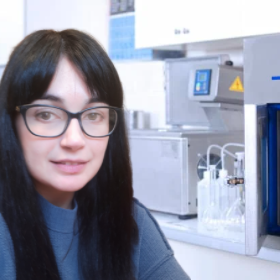
Dr Kamar Ameen-Ali
Author
Dr Kamar Ameen-Ali is a Lecturer in Biomedical Science at Teesside University & Affiliate Researcher at Glasgow University. In addition to teaching, Kamar is exploring how neuroinflammation following traumatic brain injury contributes to the progression of neurodegenerative diseases that lead to dementia. Having first pursued a career as an NHS Psychologist, Kamar went back to University in Durham to look at rodent behavioural tasks to completed her PhD, and then worked as a regional Programme Manager for NC3Rs.


 Beccy Owen
 Dementia Researcher
 Rahul Sidhu

 Dr Yvonne Couch
 Dr Emma Law