 Print This Post
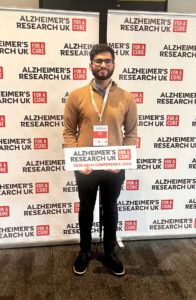
In this blog I’m going to share my experience and some very interesting science that was presented at the Alzheimer’s Research UK conference in February. It showed me that there really is a sense of momentum in dementia research.
Hundreds of researchers present everything from clinical trials to pre-clinical data. It’s a conference where the entire dementia research community shows up. Even though we’re all technically working on the same overarching problem, the approaches are incredibly diverse. In the space of a single day, you can move from clinical trial design to fly models of neurodegeneration, from immune signalling to gut microbiome research, and then even into machine learning models predicting disease progression.
Despite being the largest dementia research conference in the UK, it still manages to feel friendly and collaborative. Early career researchers are everywhere, presenting posters, giving talks and asking questions. It genuinely does feel like a community working together toward a common goal: understanding, preventing and curing dementia. I’ve now been to the conference three times and have presented at each time. Every year, I’m reminded just how broad dementia research really is. There were many great sessions this year, but here are a few that really stood out to me.
One of the major highlights was a talk summarising the current landscape of dementia clinical trials. One particularly interesting point was how much the UK trial environment has really evolved.
The UK now has more Phase 1 dementia trials than anywhere else in the world.
Just five years ago, the United States were significantly leading the way. Seeing the UK move into this leading position highlights the growing infrastructure and investment in dementia research.
But alongside this progress, there are still clear challenges. One issue that was highlighted was diversity in clinical trials. For treatments to work in the real world, trials need to reflect the diversity of the populations affected by dementia. That includes considering differences in sex, ethnicity, co-pathologies and comorbidities. Without this diversity, it becomes much harder to understand who treatments benefit.
In terms of therapeutic strategies, anti-amyloid approaches still dominate the clinical trial landscape. However, there is growing interest in therapies targeting alternative mechanisms, such as gene silencing approaches. The overall message was clear, that the therapeutic landscape is expanding, and the field is gradually moving toward a broader range of disease-modifying strategies.
Moving on, another fascinating session focused on molecular and cellular mechanisms is neurodegeneration. What stood out here was the diversity of experimental models being used to understand how disease processes unfold. One talk explored how RNA mis-splicing can disrupt synaptic function. This is important, as understanding how RNA processing goes wrong could reveal broader principles about neuronal dysfunction.
Another talk offered a slightly different perspective on dementia pathology, emphasising the role of blood vessels. The argument was that dementia should not always be thought of purely as a neuronal disease. Instead, vascular dysfunction may play a central role in driving dementia. This perspective is increasingly gaining traction as researchers recognise the importance of the brain’s vascular system in maintaining brain health.There was also exciting work using Drosophila models to investigate why certain neurons are more vulnerable than others in neurological disorders. Selective neuronal vulnerability remains one of the biggest mysteries in the field. Why do some neuronal populations degenerate early while others remain relatively resistant? Model organisms like fruit flies allow researchers to manipulate disease-associated proteins, for example tau, and observe how different neuronal populations respond.
Another talk in this session highlighted new optical tools for studying amyloid. Advances in imaging and assay development are making it possible to characterise pathological proteins in much greater detail. These kinds of technologies are crucial for bridging the gap between basic molecular biology and translational drug discovery.
The next session that I found particularly interesting focused on immune mechanisms in dementia. One presentation explored oligodendrocyte dysfunction using complex integrative multi-omics approaches. Oligodendrocytes are best known for producing myelin, but they are increasingly recognised as key players in neurodegeneration. By combining genetic data with transcriptomics, researchers are starting to understand how disease-associated genetic variants can actually influence oligodendrocyte biology.
“Despite being the largest dementia research conference in the UK, it still manages to feel friendly and collaborative.”
Another talk examined DNA damage in neurodegenerative diseases. Neurons are long-lived cells that must maintain genomic stability over decades, so defects in DNA repair mechanisms could have significant consequences. By analysing post-mortem brain tissue alongside proteomic and biochemical approaches, researchers are identifying specific DNA damage subtypes and impaired repair pathways associated with dementia. Inflammation was another major theme. One presentation focused on the complement system, a key component of the immune response that can drive inflammation in the brain. Understanding how complement signalling contributes to neurodegeneration is opening new therapeutic possibilities, particularly as researchers begin developing strategies to target these pathways.
Next, the translational neurodegeneration session brought together research spanning genetics, cellular models and pharmacology. One talk focused on linking Alzheimer’s disease genetics to functional changes in neurons. By using induced pluripotent stem cells, researchers are beginning to test how genetic risk factors influence cellular behaviour. This type of work is critical for moving from genetic association studies toward actual biological mechanisms that could be targeted therapeutically. More research in this session explored pharmacokinetics and precision dosing in neurodegenerative diseases. Understanding how drugs are metabolised and distributed in different patient populations is essential for developing effective treatments. By combining multi-omics data with modelling approaches, researchers are investigating how disease states influence drug-metabolising enzymes
Another session that caught my attention focused on diet, nutrition and brain health. Talks explored how diet, obesity and stress influence brain connectivity through the gut microbiome. The gut–brain axis has become an increasingly active area of research, and this work highlights how lifestyle factors may influence cognitive ageing long before clinical symptoms appear. They examined how food-derived bioactive compounds interact with the gut microbiome and influence brain ageing. Certain dietary components may produce metabolites that affect inflammation, oxidative stress and neuronal signalling. Understanding these mechanisms could eventually inform nutritional strategies aimed at delaying cognitive decline.
Finally, one of the most forward-looking sessions focused on artificial intelligence and data science in dementia research. Machine learning approaches are increasingly being used to integrate complex datasets. Machine-learning models can help distinguish between Alzheimer’s disease and frontotemporal dementia, while also modelling disease progression. As datasets continue to grow in size and complexity, computational approaches are becoming essential tools for extracting meaningful biological outcomes. Importantly, there is also growing emphasis on building interpretable models rather than so called “black box” algorithms. For clinical applications, transparency is essential so that researchers and clinicians can understand which features are driving predictions.
Reflecting on the conference as a whole, what stood out to me most was the sheer diversity of approaches being used to tackle dementia. From molecular mechanisms and cellular models to nutrition, clinical trials and artificial intelligence, researchers are attacking the problem from every possible angle.
For early career researchers, conferences like this are incredibly valuable. They offer the chance to see the bigger picture of the field, make new connections and discover ideas outside your immediate research area. For me, the Alzheimer’s Research UK conference continues to be one of the highlights of the research year. It reminds us that while dementia is a complex and challenging problem, there is an entire community of researchers working together to solve it.

Rahul Sidhu
Author
Rahul Sidhu is a PhD student at The University of Sheffield, focusing on the effects of heart disease on dementia in preclinical models of Alzheimer’s disease. His research aims to uncover how cardiovascular health influences neurodegenerative conditions, potentially leading to novel therapeutic strategies.
Follow @rahulsidhu_
Find Rahul on LinkedIn

 Dr Yvonne Couch
 Dementia Researcher
 Rahul Sidhu
 Beccy Owen
 Bernie McInally
 Dr Chloe Fawns-Ritchie
 Dr Clíona Farrell