As a regular traveller in South East Asia over several years, I am now seldom surprised by cultural attitudes to older adults and ageing itself. The large multigenerational household — or the Broons, if you’re living in Scotland — remains very much alive across much of the region. Grandparents and even great-grandparents are not just present in family homes but continue to play active roles within them.
Childminding, cleaning and cooking are often shared tasks, with octogenarians and even nonagenarians contributing as their abilities allow. What is striking is not just what they do, but the desire to continue — to remain useful, connected and involved. That same impulse is visible beyond the home. It is common to see older adults staffing small food stalls or selling lottery tickets from the front of their houses. When you ask family members about profit, the answer is often that little or no money is made, sometimes even a loss. But the sense of contribution, routine and regular contact with customers far outweighs any financial cost.
Despite being accustomed to these differences from Western norms, on my most recent couple of months in Thailand i witnessed something that genuinely surprised me. It also made me think, almost immediately: here is a cohort crying out for dementia research.
Bangkok is often described as a low-cost city, and in many respects that’s true — with one of the notable exceptions being gym membership. On this occasion, after asking around the local street food stalls near our condo, we were directed to a nearby community park that reportedly had a running track and a gym. The advice was clear: you have to arrive early — very early — by 6am at the latest, before the heat becomes overwhelming.
When we arrived, we were pleasantly surprised to see the track already busy with individuals and small groups. It was clear that many of them met there daily — not just to exercise, but to socialise. Even though I’ve passed the 60 mark myself, I still found that I was firmly in the younger cohort.
As promised, there was a large, covered but outdoor gym. For around £3 a month, or 50p a visit, it offered equipment that looked as though it might have been welded together by the A-Team for a last-minute mission — but it did exactly what it needed to do. And again, inside the gym, I was comfortably middle-aged.
As we made our way around the track — me walking mostly — none of the sports facilities surprised us: basketball courts, badminton nets, shaded seating areas where people paused to sit and chat. What we did not expect were four karaoke stations — complete with microphones, monitors and lyric catalogues — already in enthusiastic use as part of people’s early-morning workouts.
On more than one occasion, I stopped (any excuse!) to watch what appeared to be a son or daughter singing into a microphone alongside their elderly parent. The scene was joyful, noisy and completely unselfconscious.
And then there was the setting.

Morning chat under the pavilion. A group of older locals gather for tea, conversation and a quiet moment together beneath the trees. 🌿
I suppose the clue is in the name — Taochew Cemetery Park. Yes, the park, it turns out, was built on an old graveyard. The running track, gym equipment and karaoke machines were surrounded by large gravestones and memorials. Singing, sweating, laughing — all encircled by reminders of mortality. Surreal, yes. But also strangely grounding.
Once a researcher, always a researcher. So while attempting to catch my breath in the high-20s heat at 7.30 in the morning, I did what many of us would do and had a quick search on Google Scholar. Unsurprisingly, there is literature on the cognitive benefits of karaoke, particularly from Japan (Miyazaki et al., 2020) and South Korea (Kim et al., 2025). One Brazilian study (de Silva et al., 2025) grouped karaoke together with bingo — which sounds like a Benidorm away day — and then reported benefits, although it couldn’t disentangle the individual effects.
What I didn’t find was anything that examined the whole package we were witnessing daily in this Bangkok park: physical activity, social engagement, routine, multigenerational mixing, music, performance and laughter — all freely accessible, habitual and community-owned.
I’ve never found comparing dementia prevalence across countries especially helpful. It rarely tells us what we want to know. Diagnosis rates reflect healthcare priorities, awareness, access and stigma at least as much as true prevalence. Over the 40 years I’ve been practising, the priority given to dementia diagnosis in the UK has changed beyond recognition — which alone tells us how much underdiagnosis must still exist elsewhere. The real question is not if it happens, but to what extent.
So when statistics suggest that around 7% of Europe’s over-60 population lives with dementia, compared with closer to 5% in parts of Asia, I’m cautious. These figures may say more about systems and priorities than brains and biology.
But standing in that park, watching a regular, committed group of older adults — many wearing “I ran Bangkok 21.1 km” vest tops, which I eventually worked out was “half marathon” — doing exactly what we recommend to reduce or delay cognitive decline, my mind wandered.
If only I were an early-career researcher…
Here was a stable cohort, unlikely to miss a day, engaged in physical exercise, social connection, routine and cognitively stimulating activity — effectively research participants who come to you. What might the research questions be? Would a funder consider supporting travel and accommodation to Asia? Could we explore not only positive effects, but also unintended ones? And yes — could we even investigate whether exercising and singing in a graveyard adds something uniquely existential to the mix?
I’m realistic. I’m not an early-career researcher, and I never will be. But someone out there is. And my hope is that they might read this and pause.
Dementia research doesn’t always need to invent new interventions. Sometimes it needs to look more carefully at what communities already do well — particularly when those communities centre ageing, contribution and connection as normal parts of everyday life.
That Bangkok park didn’t feel like a “programme”. It felt like life continuing. And there may be lessons in that worth studying.
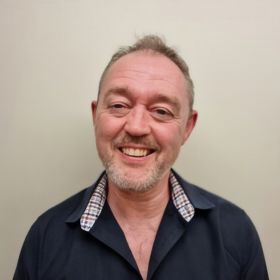
Bernie McInally
Author
Bernie McInally is a Clinical Studies Officer at NHS Lothian and the Neuroprogressive and Dementia Network. Bernie’s background is in Nursing, working in Mental Health and with Older People. He retired from full time NHS clinical work, and is now back working in Clinical Research supporting delivery of the Enabling Research in Care Homes (ENRICH) Scotland. He is passionate about research delivery, and opening access to people in all communities.

 Dr Yvonne Couch
 Dementia Researcher
 Alzheimer's Association
 Beccy Owen
 Dr Chloe Fawns-Ritchie