You found the hidden post!
Well done for clicking the pumpkins. This one isn’t listed anywhere else on the site, so you’re one of the few who’ve tracked it down. Happy Halloween from Dementia Researcher.
Think your colleagues could find it too? Tell people you found it and challenge them to have a go. We’ve written the post for you, and it won’t give the hiding place away:
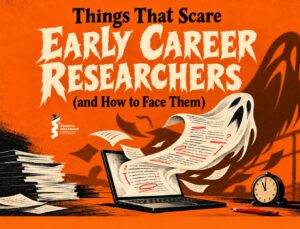 Forget ghosts and ghouls. If you are an early career researcher, the things that go bump in the night tend to arrive by email. So this Halloween we have rounded up the frights we hear about most often, along with the guides and resources that make each one a little less scary.
1. Reviewer 2
Arrives without warning, always at the worst possible moment, and appears to have read a completely different paper. Every researcher meets them eventually.
How to face it: take a breath, sleep on it, then reply point by point. Our guide How to Respond to Peer Reviewers With Confidence walks you through it.
2. Becoming Reviewer 2
Your first invitation to peer review lands in your inbox. Suddenly you are the one holding the red pen, and you are not sure you are allowed.
How to face it: you were asked because your expertise counts. Start with How to Peer Review a Paper: A Step-by-Step Guide for Your First Review.
3. The fixed-term contract cliff
That end date at the bottom of your contract. Somehow it is always closer than it was the last time you looked.
How to face it: start looking early and keep an eye on what is out there. We list dementia research jobs and funding calls every week.
4. The funding deadline at 23:59
The application is nearly done. It is 23:52. The portal has started to spin.
How to face it: set your own deadline a week before the real one, and check our funding calls so the next one does not take you by surprise.
5. The blank page
A thesis chapter, a first paper, a fellowship case for support. The cursor blinks. Nothing happens.
How to face it: knowing what comes next makes it easier to start. The Stages of a PhD maps the road from offer to graduation.
6. “So, what’s your five-year plan?”
Asked at an interview, an appraisal, or by a relative over dinner. All three are equally terrifying.
How to face it: it helps to know what the next rungs look like. See Academic Promotion Criteria: What It Takes to Get Promoted.
7. “This is more of a comment than a question…”
You have just finished your conference talk. A hand goes up in the front row.
How to face it: thank them, take the useful bit, and offer to pick it up afterwards. Nobody expects you to win the debate on stage.
8. The hard drive that dies the week before submission
No further explanation needed.
How to face it: back up today. Then back up the backup.
9. The feeling that everyone else knows what they are doing
The scariest one of all, and the most common. Impostor feelings affect researchers at every stage.
How to face it: talk to people who get it. More than 2,200 early career researchers are in the Dementia Researcher community, and plenty of them feel exactly the same.
What scares you?
Did we miss your biggest fright? Tell us in the community. Happy Halloween from all of us at Dementia Researcher. 🎃