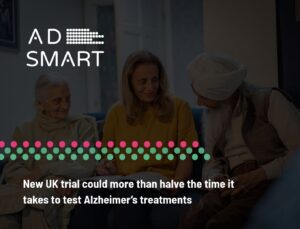
 A new national clinical trial called AD-SMART has launched in the UK, testing several potential Alzheimer’s treatments at the same time against one shared placebo group. Its organisers say the design could more than halve the time it takes to find out whether a drug works, starting with two repurposed medicines already used to treat type 2 diabetes and attention deficit hyperactivity disorder (ADHD).
AD-SMART (Alzheimer’s disease Systematic Multi-arm Adaptive Randomised Trial) is led by the UK Dementia Research Institute (UK DRI) and Alzheimer’s Research UK (ARUK), in partnership with the NIHR, the Medical Research Council and Health Data Research UK, with ongoing funding committed by the UK government. It is the first UK trial to combine an adaptive multi-arm platform design with systematic testing of repurposed medicines in people living with Alzheimer’s disease.
The Chief Investigator is Professor Paresh Malhotra, a UK DRI Group Leader at the Centre for Care Research & Technology at Imperial College London and NIHR National Specialty Lead for Dementia and Neurodegeneration. The trial is being delivered by teams at Imperial, the UCL Innovative Clinical Trials Unit and the MRC Centre of Research Excellence in Clinical Trial Innovation at UCL, the University of Oxford and Dementias Platform UK.
How a platform trial works
In a traditional trial, one drug is compared with a placebo, and it can take a decade or more to get an answer. AD-SMART is a multi-arm, multi-stage platform trial. Groups of participants each start on a different drug, and all of them are compared with a single group taking a placebo. Because the placebo group is shared, more participants receive an active treatment than they would in a conventional design.
Results are checked at regular stages. Any drug that isn’t showing benefit can be dropped early and a new one brought in to take its place, so fewer people spend time on treatments that don’t work. The trial will look at whether the drugs can ease memory and thinking problems and help people keep their quality of life as the disease progresses. Testing medicines that are already approved and known to be safe for other conditions means that, if one works, it could reach people with Alzheimer’s far sooner than a drug developed from scratch.
“For too long, Alzheimer’s research has moved at the pace of one drug, one trial, one answer, sometimes taking a decade or more before we know if we’ve found something that works,” said Professor Malhotra. “We are applying advances from cancer and other conditions to accelerate testing of treatments for people with Alzheimer’s disease.”
The trial is also built to take new drugs coming through the research pipeline, and biotech and pharmaceutical companies will be able to bring their own candidates straight into it.
A model already tested in MND
The approach has a track record. MND-SMART, a similar platform trial for motor neurone disease also led by the UK DRI, concluded that its first drugs were ineffective in just over three years, a process that would normally take at least eight. That trial has since moved on to testing other drugs.
“We already know this model works,” said Professor Siddharthan Chandran, Director of the UK DRI. “Now, we’re doing the same for Alzheimer’s.”
Who chose the drugs
The two starting drugs were picked by an international panel of experts working alongside people with lived experience of Alzheimer’s, based on evidence from earlier patient studies and laboratory research. People with lived experience, working with a team at the University of Cambridge, have shaped the trial throughout, including its design, which drugs to test and how success is measured.
Heather Ransome, 67, from the Isle of Wight, was diagnosed with Alzheimer’s in 2024 and is taking part. She said the one drug she was offered after diagnosis had been around for many years, and that joining the trial had given her some hope. “It’s not too taxing, just some extra tablets to take every day. I don’t know whether I’m being given the active treatment, but if it helps me, or helps others in future, that feels positive.”
Sites, numbers and timescales
The first participants have been recruited at Cambridgeshire and Peterborough NHS Foundation Trust and Surrey and Borders Partnership NHS Foundation Trust, and sites at Imperial College Healthcare NHS Trust, Edinburgh and Southampton are now open. Up to 20 NHS sites are expected to open over the next 12 to 18 months, with more than 30 planned overall.
The team aims to recruit 1,200 people to test the first two drugs and expects to finish evaluating them in 2030, around four years from now. More drugs are expected to join the trial during that period.
AD-SMART is the first trial funded through ARUK’s Clinical Accelerator Programme, and is partly funded by the Dementia Trials Accelerator, an initiative led by HDR UK and the UK DRI to increase the number of people taking part in clinical trials. “For people living with Alzheimer’s disease, time is precious,” said Dr Sheona Scales, Director of Research at ARUK.
Professor Lucy Chappell, Chief Scientific Adviser to the Department of Health and Social Care and CEO of the NIHR, said the NIHR has committed to supporting the trial as it opens more sites, and that AD-SMART will play an important role in its ambition to increase participation in dementia clinical trials across the UK. The Prime Minister also welcomed the launch, saying he had made dementia research a national priority.
Why it matters for researchers
Alzheimer’s affects around 600,000 people in the UK, and there are currently no NHS treatments that slow or stop the underlying disease. A trial that can test, drop and replace drugs on a rolling basis changes the route from lab to clinic, and opens up more ways for researchers to get involved.
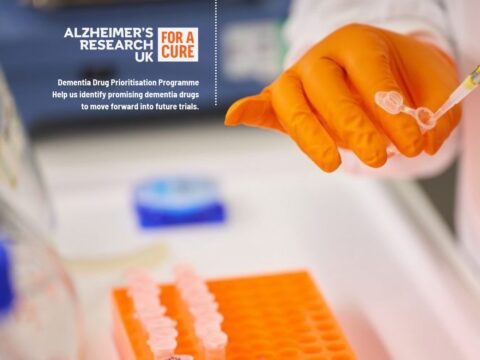
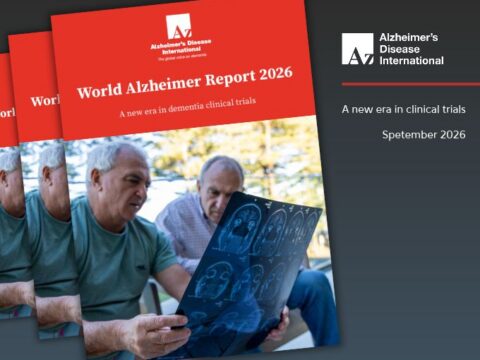
ARUK is already inviting clinicians and researchers to nominate drug candidates through its Dementia Drug Prioritisation Programme, including for future arms of AD-SMART, and earlier this year the team sought digital outcome measures for the trial. With up to 30 NHS sites to open, it will also need research nurses, trial coordinators and other delivery staff across the country. If you’re thinking about a career in trials, our community’s blogs on what it’s like to work in clinical trials are a good place to start, and the World Alzheimer Report 2026 sets out the wider picture on dementia trials.
How to take part
People with a confirmed Alzheimer’s diagnosis who would like to take part can register their interest by contacting:
- the AD-SMART recruitment co-ordinator at adsmart@psych.ox.ac.uk or on 01865 283806
- the Alzheimer’s Research UK Infoline at infoline@alzheimersresearchuk.org or on 0300 111 5111
To find AD-SMART and other studies looking for volunteers, visit Join Dementia Research.
AD-SMART is led by the UK Dementia Research Institute and Alzheimer’s Research UK, in partnership with the National Institute for Health and Care Research, the Medical Research Council and Health Data Research UK. Source: UK Dementia Research Institute media release, 22 October 2026.

 Alzheimer's Association

 Dr Emma Law