 Print This Post
Dr Emma Law
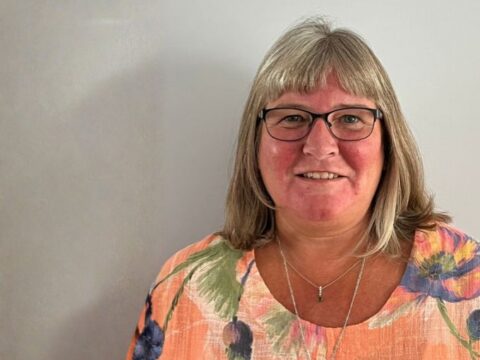
Emma Law’s career began in mental health nursing and developed through dementia services, clinical trial coordination and leadership of Scotland’s dementia research network. Alongside building research infrastructure, she completed a doctorate focused on care home research. She now works part-time in strategic management and co-chairs ENRICH Scotland, helping people and services create opportunities to take part in research.
“Be prepared to take risks and follow an unconventional path.”
Starting in dementia care
My interest in dementia began as a student nurse on dementia wards. I qualified as a Registered Mental Nurse at Perth College of Nursing in 1990 and worked in old age, general adult and forensic psychiatry. From 1995 to 1998, I worked in an acute admission and inpatient ward before moving into a senior charge nurse role in a dementia assessment ward.
That was where my research career began. Two old age psychiatrists, Dr Peter Connelly and Dr Neil Prentice, encouraged me to extend my work and develop a fast-track day hospital. They also encouraged me to monitor the processes we used and record our assessments. With their help, I turned that work into a paper. I submitted the idea for a national award and won the Nursing Standard Older People’s Nurse of the Year award in 2002. Their support opened my eyes to a research career I had not previously considered.
Looking beyond my own profession
I decided to study for a Master of Public Health because I wanted to look beyond nursing. Studying part-time at the University of Dundee brought me into contact with people from different countries and cultures. It was an eye-opening experience, and I completed the degree in 2003.
I wanted my dissertation to be useful, so I investigated gaps in dementia care in general hospitals. The work helped secure a dementia liaison nurse in our local general hospital and improve care for people with dementia. It showed me how research could lead to a practical change in services.
Developing as a manager and trial coordinator
Alongside my studies, I took on senior nursing and management responsibilities across Perth and Kinross. These included developments in old age psychiatry, coordination of older people’s mental health teams and day services, and an acting specialty manager role. From 2005 to May 2009, I was Practice Development Manager for old age psychiatry services and lead for nurse research in dementia. I also gained an Open University professional certificate in management in 2005. Managing services helped me develop leadership skills while keeping my dementia nursing knowledge current.
From 2005 to 2008, Peter, Neil and I ran a clinical trial of an investigational medicinal product. I became its study coordinator, a role I had never held before. I drew on my experience as a manager and learnt quickly about clinical trials. My manager would release me only part-time and expected me to continue my existing job. Combining the two was exceedingly tough, and I worked far more hours than I should have, although we successfully recruited participants. That experience developed my skills, but it also showed how demanding research can become when it is added to an existing workload.
Choosing a different direction
I had thought that becoming a consultant nurse in dementia would be my long-term goal. A difficult working relationship also contributed to my decision to move away from a nursing management career. When a new post appeared to manage Scotland’s first dementia research network, I saw the chance to have a wider remit and help shape something new. I applied and became Scottish Dementia Clinical Research Network Manager in 2009.
The role was about building a network from the beginning and increasing the quantity and quality of dementia research in Scotland. In 2015, its remit widened and it became the Neuroprogressive and Dementia Network. We supported research in other neuroprogressive conditions, including Parkinson’s disease, Huntington’s disease, motor neurone disease, multiple sclerosis and Creutzfeldt–Jakob disease, while dementia remained the largest part of our portfolio.
Studying research while enabling it
While managing the network, I studied part-time for two days a week from 2011 to 2017, completing my Doctorate in Applied Social Research at the University of Stirling. My thesis was titled “Research in Care Homes – Issues of participation and citizenship: Getting involved and being included”. It taught me about research from the researcher’s perspective while I was also supporting studies and developing the network. My manager provided protected study time but still expected me to fulfil my full-time NHS role, which was challenging.
Following my care home research, we partnered with the English initiative to establish ENRICH Scotland, enabling research in care homes. I remain an active co-chair. My career has also included honorary appointments as a Clinical Teacher at the University of Dundee in 2006 and a Fellow at the University of Aberdeen in 2018.
A different balance of work
In 2023, I used the NHS retire-and-return scheme to move from full-time network management to a strategic manager role for 15 hours a week, while continuing to co-chair ENRICH Scotland. Both roles are funded through the Scottish Government’s Chief Scientist Office, and I am employed by NHS Tayside, where the network is based.
My work varies. I contribute to management decisions, supervise staff, support small studies and workshops, and attend conferences and meetings. I deliver full-day Confident Conversations sessions for frontline staff in third-sector, social services and NHS settings. I help people understand why it matters to tell others about research and the barriers to involving people with dementia at home and in care homes. I am an expert rater in the Clinical Dementia Rating Scale, although I do less participant rating now that I work part-time. I am also gathering views from staff, people involved in research and the public to inform our future strategic aims.
The pressures behind the work
Annual funding has been a persistent challenge. Our NHS employing boards gave us permanent contracts in 2025, after many years in which staff wondered whether they would still have jobs and looked for other opportunities. For us, permanent status means that if the network loses its funding, NHS Tayside would have to find us other roles. The breadth of knowledge the role requires can also be underestimated. I need to keep track of academic and sponsor-led studies, care home research, developments across several conditions, management decisions and local human resources processes.
Between 1992 and 1996, I had three children. An excellent childminder and a supportive husband helped me manage work and study around my growing family. Even with that support, I remember weekends spent studying and missing family outings. It was rewarding work, but there were trade-offs.
My decision to partially retire was directly because of my children – two of whom have had children of their own. Partly to atone for the times I was unable to spend with my own children due to work and study pressure, I am a hands-on granny to three grandchildren having time to do all the fun things.
People and skills that made the difference
Learning to manage staff early in my career has been crucial. My grounding in dementia care helped me develop research assessment skills. Finding collaborators with shared values has made studies and papers interesting and enjoyable. Peter and Neil were catalysts: they answered difficult questions or helped me find someone who could. Supportive network colleagues also made it possible to develop ideas and move the work forward.
I enjoy travelling, meeting like-minded people, learning at conferences and sharing our work. I have had opportunities to leave network management, but chose to stay because I enjoyed the role and felt I was contributing to dementia research in Scotland. Nearing the end of my career, I still care deeply about the work, but no longer feel the need to improve my CV or add publications to my name. That is quite freeing.
My advice for a career in dementia research
Find a supportive mentor. If research assessments interest you, ask an experienced team about training and supervised opportunities to develop your skills. Get to know researchers in your area, seek information and build relationships. Be prepared to take risks and follow an unconventional path. Leave room to change direction as your interests and opportunities develop.
Find out more
Publication mentioned: N. Prentice, D. Mowat, E. Law and P. Connelly (2005). “The fast track day hospital: improved care of patients with dementia and associated behavioural disorder.” International Journal of Geriatric Psychiatry, 20(4), 387–388.
 Adam Smith
 Dr Becky Carlyle
 Dr Emma Law