
Having cared for my mum, who had Alzheimer’s disease, I know how much people’s everyday experiences can contribute to dementia research. Through my involvement with Partners in Research, the patient and public involvement group for the NHS Research Scotland Neuroprogressive and Dementia Network (NRS NDN), I have had opportunities to share that experience and help shape research that matters to families like mine.
On 28th and 29th May 2026, I attended the joint Scottish Dementia Research Consortium (SDRC) and NRS NDN conference at the Barracks in Stirling as a patient and public involvement representative. It brought together experienced academics, early career researchers, health and care professionals, and people with lived experience to hear about the latest dementia and neuroprogressive research.
What stood out to me was the mix of people in the room and the opportunity to discuss research on an equal footing. I was there to listen and learn, but also to help show what people with lived experience can bring to research.
What stood out to me was the mix of people in the room and the opportunity to discuss research on an equal footing.
A whistlestop tour of patient and public involvement
I had been asked to take part in a talk that Partners in Research were giving on the first day of the conference. Luckily, the talk was first thing in the morning, so not long to think about it! Along with Dr Rosie Ashworth (Patient and Public Involvement Lead) and Denise Munro (Patient and Public Involvement Officer), we gave our talk entitled “A whistlestop tour of patient and public involvement through Partners in Research and RICH Voices”.
Partners in Research is open to people with experience of dementia, Parkinson’s and other neuroprogressive conditions. We also have our Research in Care Homes (RICH) Voices group, which provides patient and public involvement (PPI) for ENRICH Scotland and is open to family members of residents, care home staff and residents.
We do a variety of activities such as Meet the Researcher, where researchers come to our meetings asking for PPI input on their projects and sometimes for volunteers to provide PPI input throughout their research. People with lived experience can enable researchers to make their research more meaningful and relevant to the dementia, Parkinson’s and/or care home population.
What is co-production?
Co-production is a partnership where professionals, researchers and people with lived experience work together on an equal footing to design, plan and deliver research. It shifts the focus from a top-down approach to one where everyone’s unique skills and insights are valued. Involving people with lived experience helps research to be more meaningful and relatable to the real world. This is the fundamental aim of Partners in Research.
Involving people with lived experience helps research to be more meaningful and relatable to the real world.
Doing our own co-research
I am part of the dementia group. We have been encouraged by Rosie to do our own research. This provides the various groups with opportunities to focus on research of importance to us. It helps give our group members a better sense of how research works and builds our confidence to share opinions with researchers. The dementia group have been working on a co-research project looking at what research activities people with lived experience have been involved in, what the facilitators and barriers are to getting involved, and what would encourage people to sign up to an NHS research interest register. We have completed the questionnaire, and the results have been collated, ready for analysis.
Other things our groups have been up to include:
- A clinical trial research guide for Parkinson’s.
- A co-written book called Challenging Assumptions Around Dementia.
- Launching a series of animations on co-production (one of three).
- Creating a podcast about care home research.
- Co-research about managing expectations between care home staff and family members through RICH Voices.
Talks that stood out
Enough about us! There was a wide range of talks given — too many to mention them all here. There were updates from Alzheimer Scotland, Brain Health Scotland, the Neuroprogressive and Dementia Network, SDRC, Brain Health ARC and Alzheimer’s Research UK.
I just wanted to mention a few of the talks that were of interest to me personally.
“What’s new in SINAPSE” talked about co-production, “The Real PPI” and the Researchers Toolkit, which is available to download on their website. It consolidates best practice guidance on co-producing research for researchers and aims to enhance the robustness and rigour of practice for researchers of all career stages and all disciplines to improve participatory research practice. A must-read for all researchers and something we should maybe encourage our Meet the Researcher participants towards to help them achieve successful co-production.
Women, chronic pain and multimorbidity in dementia
Thea Laurie from the National Dementia Carers Action Network (NDCAN) and an SDRC committee member talked about women and dementia. She advocates for the inclusion of dementia in the Scottish Government’s Women’s Health Plan, as it is the leading cause of death for women in Scotland. Women also make up the majority (60–70%) of unpaid carers supporting loved ones with dementia. She was talking with a student researcher who is looking into the effects of chronic pain and a higher risk of dementia in women.
As a retired physiotherapist myself, who dealt with patients who suffered chronic pain, this was of particular interest to me. So was Dr Lucy Stirland‘s keynote speech on “Seeing the whole picture: Why other conditions matter in dementia”. Over 86% of people with dementia have at least two other chronic illnesses. Some conditions, such as hypertension, cardiovascular disease and diabetes, are risk factors which increase the chance of developing dementia.
With others, having a cognitive impairment makes the management of their co-morbidities challenging due to conflicting management priorities, polypharmacy, side-effects and treatment compliance. For example, my mum had rheumatoid arthritis along with Alzheimer’s. Doing her weekly injections, which were managing her rheumatoid arthritis symptoms well and therefore keeping her pain levels down, became increasingly hard as her cognition declined. So, when do you stop the injections which are managing her rheumatoid arthritis but are causing her distress and agitation, even aggression?
Connecting PPI across Scotland
I think my main personal takeaway from the conference was that there is an amazing array of great research work going on in Scotland. I felt that PPI input is becoming increasingly valued and integrated into research. There are many different organisations and PPI groups all working towards one goal. I do wonder, though, if there is a way that we can connect so that we’re all aware of what each other are working on and not duplicating projects. It would be good to enable members of the different groups to join specific projects of interest to them.
I do wonder, though, if there is a way that we can connect so that we’re all aware of what each other are working on and not duplicating projects.
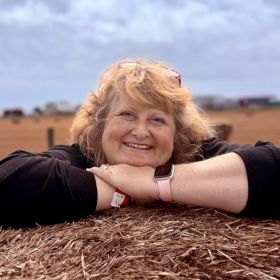
Fiona Hartley
Author
Fiona Hartley is a carer and public ambassador with the NRS Neuroprogressive and Dementia Network and a member of its Partners in Research group. A retired physiotherapist who specialised in care of the elderly and neurological conditions, she cared for her mum through Alzheimer’s disease and now helps researchers shape studies that reflect what people with dementia and their families really face.
Neuroprogressive and Dementia Network on LinkedIn
 Dr Yvonne Couch


 Beccy Owen


 Alzheimer's Association