 Print This Post
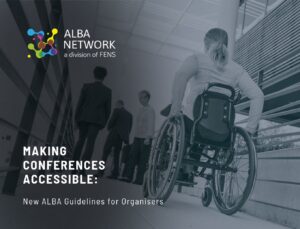 Making a conference accessible doesn’t have to mean a big budget. Most of what makes the difference is simple, cheap and easy to build into normal event planning, and it makes the event better for everyone. That includes attendees with disabilities, but also anyone with a temporary injury, a chronic health condition, sensory sensitivities, fatigue or caring responsibilities.
That’s the message behind new guidelines from the Disability & Accessibility Working Group of the ALBA Network, the FENS-hosted network working for equity and inclusion in brain research. Rather than a policy document, it’s a practical checklist of steps organisers can build into conference preparation from the start.
What the guidelines cover
- A named accessibility coordinator, listed on the website, registration materials and conference app, who handles requests and briefs staff and volunteers.
- Better registration information: forms that ask about access needs, clear advance detail on step-free routes, lifts, interpretation and food labelling, and priority for disabled attendees at the hotels nearest the venue.
- Accessible sessions and materials: accessible websites and apps, microphones for speakers and audience questions, captions where appropriate, readable slides, and sessions that run to time.
- Practical support on site: help putting up posters, stools for presenters, light folding chairs to carry round poster sessions, plenty of seating outside rooms and clear signage.
- A low-sensory room, with reduced light and noise. The group prefers that term to ‘quiet room’.
- Food and water throughout the day, not only at mealtimes, with ingredients clearly labelled.
- Plans for disruption, such as lift failures or extreme heat, which hit disabled attendees hardest.
If you sit on an organising committee, are planning a symposium, or are putting together an ECR event, it’s worth ten minutes of your time. For more on why this matters, see our blogs on inclusion at scientific conferences and running a conference.
A database of neuroscientists with disabilities
The same working group is building a database of neuroscientists with disabilities, to improve representation and make it easier for researchers to find each other, connect and collaborate.
It uses a social-model definition of disability, focused on how people are disabled by barriers in their environment, and welcomes anyone who feels included by that definition, even if you wouldn’t use the word yourself. Members may occasionally be contacted by ALBA or approved partners to advise on accessibility initiatives, take part in events and consultations, speak at conferences and workshops, or help shape policy. Taking part in any of it is entirely voluntary.
For a researcher’s view on what disabled scientists need from their labs and PIs, read Becky Carlyle’s blog on building accessible and inclusive research environments.
 Alzheimer's Association

 Dr Yvonne Couch