Print This Post
 Every early career researcher is told to find a mentor. A few years later, the same people are told to be one. Somewhere in between, most of us are expected to work out how by copying what our own mentors did, or doing the opposite. Formal training for mentors exists, and the evidence says it works, but many institutions don’t offer it, and those that do often keep it for senior staff. If you're lucky, you’ll have had some training before you need it. If not, this basic guide is the training course we wish we’d been given.
It’s written for anyone mentoring in research, whether you’re a PhD student taking an undergraduate under your wing, a postdoc on your first formal scheme, or a new lecturer who has suddenly become responsible for other people’s careers. We’ve written it with dementia researchers in mind, but almost everything here applies across science and medicine. It draws on the research evidence on mentoring in science and medicine, on UK schemes that already do this well, and on advice from mentors in our own field.
In brief
Good mentoring is a skill you can learn, not a personality trait. Randomised trials show that even short, structured mentor training changes how mentors behave, and that mentees notice the difference.
Most of it comes down to two habits: listening more than you talk, and being clear from the first meeting about what each of you expects. The rest you can learn as you go. Nobody needs you to be a professor or to have every answer, and you certainly don’t have to wait for HR to book you on a course.
On this page
We start with why this guide exists, what a mentor is (and isn’t) and how coaching differs from mentoring. Then comes what to think about before you say yes, followed by the heart of the guide, the core skills, as a do-it-yourself course.
After that we get practical: the first meeting, good questions to ask, common mistakes, mentoring across difference, other formats and ending well and getting credit. We finish with how to build your own training, tips from mentors in dementia research and answers to common questions.
Why this guide exists
Ask a room of researchers what helped their career most and mentoring will come up again and again, it’s in every careers talk. Lots of online tools and blogs talk about how to find a mentor, and how it helped. What they don't do is talk about 'how to be a good mentor'. Most of us were never taught to mentor, so we improvise, which is less than ideal.
Mentoring can be learned
The good news is that the evidence says mentoring is learnable. In 2019 the US National Academies published a major review, The Science of Effective Mentorship in STEMM, and one of its central messages is that mentoring is a set of skills that can be learned, practised and improved through reflection and feedback. It isn’t a gift some people have and others don’t.
There’s trial evidence to back that up. In a randomised controlled trial across 16 US academic health centres, involving 283 mentor–mentee pairs, mentors who took an eight-hour structured course improved their mentoring skills more than those who didn’t, and their mentees reported changes in how they were mentored. A much larger 2026 study, following 787 faculty mentors at 33 research universities, found that training in culturally aware mentoring produced changes in mentors’ behaviour that were still there a year later.
If you manage researchers, it’s already part of your job
In the UK, anyone who manages researchers is already expected to do a lot of what mentors do. The Researcher Development Concordat, signed by universities and funders across the UK, sets out obligations for managers of researchers. They include holding regular career development conversations with their staff, including an annual career development review, and giving them time for at least ten days of professional development a year. In other words, supporting someone’s career is written into the role. How to do it well isn’t. As one university’s case study for Vitae puts it, most people become managers of researchers because they won a grant, often with no training as a manager or as a careers adviser.
Why doing it well matters
Mentoring isn’t magic, and that might surprise you. It’s held up as the answer to every career problem, so we tend to assume that people with a mentor do a lot better than people without one. The evidence says they do better, in their careers and their wellbeing, but only by a little.
What’s more striking is how much harm a poor mentor can do. When researchers asked mentees about their mentors, the bad experiences weighed more heavily than the good ones, and other studies link poor mentoring to more stress, lower job satisfaction and people wanting to leave their jobs. So a mentor who keeps cancelling, brushes their mentee off or oversteps doesn’t just fail to help. They can do real harm. That’s why it’s worth learning to do it properly.
What a mentor is (and isn’t)
The National Academies define mentorship as a professional working relationship, over time, in which people support each other’s growth and success through career support and psychosocial support. Two things in that definition are worth holding on to: it’s a working relationship, not a friendship or a favour, and it covers both the practical side of a career and the human side.
Mentor, supervisor or line manager?
These roles overlap, which is where a lot of confusion starts.
- A supervisor is responsible for getting a degree or a project done. They set direction, check progress and, crucially, assess you.
- A line manager has formal employment responsibilities: your workload, appraisal, leave and contract.
- A mentor supports your development, and ideally sits outside your chain of command. Because they don’t assess you or control your contract, you can be honest with them about things you’d never tell your boss.
Plenty of supervisors mentor their students and staff, and good ones do it well. But the power difference means some conversations will never happen in that relationship, which is why most people benefit from mentors outside it too. Kamar Ameen-Ali’s blog on supervision vs mentorship explores this from the point of view of a new PhD supervisor.
The UK model: developmental, not directive
Much of the older mentoring literature is American and describes a senior figure taking a junior protégé under their wing and steering their career. In the UK, most schemes use a developmental model instead. The Academy of Medical Sciences mentoring programme, which has matched hundreds of pairs since 2002, describes its approach as enabling and non-directive. The mentor’s job is to help the mentee think clearly and make their own decisions, not to tell them what to do.
That’s a useful default for new mentors. You don’t have to have the answer. You have to help someone find theirs.
Practical help counts too
Non-directive doesn’t mean hands-off. Some of the most useful things a mentor does are practical: introducing your mentee to someone who’s hiring, reading a cover letter the night before a deadline, putting in a word with the right person.
“I made introductions for one of my own mentees that helped them find their next job. I’d do it again without a second thought. Some of that is just who I am. I like helping people. But I also think it’s part of the job. Advice is useful. A door held open is sometimes worth more.”
Adam Smith, Programme Director, Dementia Researcher
The skill is in offering rather than taking over. Ask whether they’d like an introduction before you make one, and only vouch for people and opportunities you can genuinely stand behind. Make sure your help adds to their own network rather than replacing it, so they can make the next connection themselves. And be fair about who gets it: it’s easy to go the extra mile for mentees who remind you of yourself, and harder to notice the ones who don’t ask.
Sponsorship: a different job from mentoring
Mentoring and sponsorship often get lumped together, but they’re different things, and it helps to know which one you’re doing.
A mentor gives advice and support, mostly in conversation with the mentee. A sponsor uses their own standing to open doors for someone, usually when that person isn’t in the room: nominating them for a prize, suggesting them as a speaker, putting their name forward for a committee or telling a funder about their work.
You can be one without the other. Some people are brilliant mentors but have little influence to open doors, and some senior people sponsor people they’ve barely spoken to. The best mentors do both when they can. So as a mentor, it’s worth asking yourself whether there’s a door you could open for your mentee, not just advice you could give.
Research in academic medicine suggests this matters most for women and researchers from under-represented groups, who are less likely to be picked out for opportunities unless someone makes a deliberate effort. Our article You’ve heard of science mentoring, what about sponsorship? goes into this in more depth. And you don’t need to be senior to sponsor in small ways: recommend your mentee for a talk, share their paper, or mention their name when someone asks if you know anyone good.
You are not meant to be everything
If you have got this far into our guide, we hope we haven't put you off the idea of being a mentor. So, this might be the most reassuring thing in the whole guide. The idea of one all-knowing mentor who meets every need is out of date. Current thinking favours a network of support: one person for feedback on writing, another for career decisions, a peer for accountability, someone outside the institution for honest advice. The National Center for Faculty Development and Diversity’s mentoring map is a simple tool for this, putting the mentee at the centre with categories of support around them.
So part of your job is to help your mentee build their network, not to be it. That takes a lot of pressure off you, and it’s better for them.
Coaching vs mentoring: what’s the difference?
People use the two words interchangeably, but they’re different things, and knowing the difference will make you a better mentor.
| Mentoring | Coaching | |
|---|---|---|
| What it draws on | The mentor’s own experience of the field and the career | The coach’s skill at asking questions, not their knowledge of your field |
| Focus | Broad: career direction, how the system works, development over time | Usually specific: a goal, a challenge, performance, confidence or leadership |
| Advice? | Sometimes, shared as one view among several | Rarely. The aim is for you to reach your own answers |
| Who does it | Usually a more experienced colleague, often unpaid | A professionally trained coach, ideally accredited, sometimes provided by your institution |
| How long | Often months or years | Often a set number of sessions |
Neither is therapy. Coaching and mentoring are about work and development, while therapy is provided by people trained to support mental health conditions.
Does coaching work?
Coaching has a growing evidence base in academic medicine. In one randomised trial, doctors given just a handful of professional coaching sessions had significantly lower emotional exhaustion and burnout than those who weren’t, and a much larger trial of online group coaching involved more than a thousand women doctors in training.
Using coaching skills as a mentor
For you as a mentor, this means two things. First, you’ll borrow coaching skills all the time: asking open questions, resisting the urge to jump in with advice, and helping your mentee reach their own conclusions. But borrowing a few techniques doesn’t make you a coach. Professional coaching is a skill in its own right, and proper coaches train for it, often gaining accreditation from bodies such as the International Coaching Federation or the European Mentoring and Coaching Council. Coaching isn’t regulated in the UK, so anyone can call themselves a coach, which is worth knowing if you point a mentee towards one: check their training and accreditation first.
Second, you should know when someone would be better served by a coach than by you. If the issue is confidence, leadership or managing a team, and not really about the field, a coach may help more. Many universities offer coaching through their staff development teams, so it’s worth knowing what yours provides. Our piece on mentoring and coaching lessons from the F1 track looks at what happens when you combine the two.
Coaching deserves a guide of its own, and it’s one we plan to come back to.
Before you say yes
Am I too junior?
Almost certainly not. Near-peer mentoring, where the mentor is only a step or two ahead, is valuable precisely because you remember what it was like. A PhD student who applied last year knows more about the current application process than a professor who applied twenty years ago. Our older piece on mentoring undergraduates as a postgraduate makes the same case. The question isn’t whether you’re senior enough. It’s whether you can help with what this person needs.
Four questions to ask yourself
- Do I have the time? Be realistic. An hour a month plus some emails is a genuine commitment. Cancelling repeatedly is worse than saying no.
- Why am I doing this? Good reasons include wanting to help, wanting to learn and wanting to give back. Wanting a line on your CV is fine too, as long as it isn’t the only reason.
- Am I the right match? If they want advice on clinical academic careers and you’ve never been near one, you may not be the best person, though you might still help them find someone who is.
- Is there a conflict? If you manage them, assess them, or sit on panels that will judge them, think hard about whether they can speak freely to you.
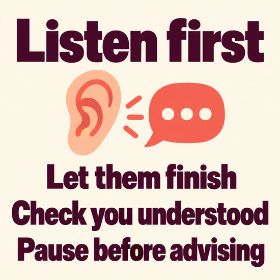
Give your mentee room to think aloud. Let them finish, check that you have understood and resist the urge to offer advice straight away.
Who ends up doing the mentoring
This kind of work doesn’t fall evenly. A study drawing on a national survey of faculty at more than 140 US institutions found that women do significantly more service than men, even after accounting for rank, ethnicity and field, with the gap driven mainly by work inside their own university. A survey of 469 ecology and evolution faculty found that those from under-represented groups did a disproportionate share of diversity and inclusion work, including mentoring minority students, and that this work wasn’t seen as counting for tenure. The term cultural taxation describes this extra, unrewarded labour. A Nature feature on unofficial “shadow” mentoring adds that students may see junior staff as more approachable, so they get asked more too. Most of this research comes from the US, and we couldn’t find good UK data on mentoring loads specifically.
It’s fine to say no
If your average week is already full of other people’s problems, and you just don't have time, it is okay to say no. A quick, honest email is genuinely kinder than a reluctant yes. You don't have to go into detail. A polite thank you for thinking of you, and something like “I can’t give this the time it deserves right now. Have you thought about asking [name]? I’m happy to have one coffee to talk it through”, is plenty. It will only cost you an hour, not a year.
What’s in it for you
If you do say yes, it’s not purely altruistic. A 2013 meta-analysis found substantial evidence that mentors themselves benefit, including in job satisfaction and career success.
The core skills: a do-it-yourself mentor training course
The best-tested mentor training in science and medicine is Entering Mentoring, developed at the University of Wisconsin–Madison and now run by the Center for the Improvement of Mentored Experiences in Research (CIMER). It was the course used in the randomised trial above, and it’s built around a set of core competencies. The curriculum has grown over the years, but the original six are still the foundation, and we’ve added a seventh, wellbeing, because it comes up in almost every mentoring relationship.
You don’t have to work through these in order. Pick the one you suspect you’re weakest at, try the exercise in your next meeting, and see what happens.
1. Communicating well
Most new mentors talk too much. Your mentee mentions a paper that’s been rejected twice, and before they’ve finished the sentence you’re telling them about your own worst rejection and which journal to try next. It comes from wanting to help. What they usually need first is someone who listens properly, checks they’ve understood, and lets them think out loud. Sort out the dull practical things as well, like whether a WhatsApp message is fine or they should email, and how long they should expect to wait for a reply.
Try this: in your next mentoring conversation, aim to speak for less than a third of the time. At the end, ask your mentee to sum up what they’re taking away, and notice whether it matches what you thought you said.
2. Aligning expectations
Many mentoring relationships go wrong because each person expected something different and nobody said so. Your mentee may expect you to read drafts, introduce them to people or help them get a job. You may expect them to drive the agenda and turn up prepared. Because of the power difference, mentees rarely raise this themselves, so it’s your job to make expectations explicit, early, and to revisit them.
Try this: before your first proper meeting, you each write down three things you expect from the other and three things you don’t. Compare them. The gaps are where the conversation needs to happen.
3. Assessing understanding
Don’t assume your mentee knows how things work. Early career researchers often nod along rather than admit they don’t know how a fellowship panel works, what a person specification is for, or what “impact” means to a funder. Equally, don’t assume they know less than they do. Find out before you advise.
Try this: before you give advice on anything, ask “talk me through how you’d approach it.” You’ll learn what they already know, where the gaps are, and sometimes that they didn’t need your advice at all.
4. Fostering independence
When a mentee messages at ten at night asking whether they should reply to a reviewer now or sleep on it, it’s flattering to be asked. It’s also a sign they’re leaning on you for calls they could make themselves. The job is to make yourself less needed over time, which mostly means letting them decide things you’d have decided differently, and keeping your mouth shut when they do.
If you’re also their supervisor, this is harder, because the grant has deadlines and it’s quicker to just tell them what to do. CIMER’s training materials call out that tension directly. You won’t make it disappear, but you can be clear with yourself about which decisions are genuinely theirs.
Try this: next time your mentee asks what they should do, ask what they think first. Then offer your view as one option, not the answer.
5. Practising inclusion
CIMER now calls this competency “Establishing a Practice of Inclusion”, and it starts with you. Your own background, identity and experiences shape what you notice, what you assume and what advice you give. We cover this in more depth in the section on mentoring across difference, but the first step is reflection.
Try this: write down three things that helped your own career that your mentee may not have, for example family who could support you through an unpaid placement, a supervisor who championed you, or an education in the UK system. Keep that list in mind when you give advice.
6. Supporting professional development
Help your mentee think beyond the next paper or deadline. Where do they want to be in five years? What skills will they need? Most researchers won’t stay in academia, so be open to careers in industry, the NHS, policy, charities and elsewhere, and don’t treat those as second best. In the UK, the Concordat expects research staff to have time for at least ten days of professional development a year, and you can help them use it well.
Try this: ask “in five years’ time, what would you like to be true that isn’t true now?” Then agree one small step they could take in the next month.
7. Supporting wellbeing
Research careers are stressful, with short contracts, rejection and uncertainty built in, and mentors often hear about it first. You’re not a therapist, and you shouldn’t try to be. But you can notice when something’s wrong, ask about it, listen, and help your mentee find the right support. We cover what to do when someone is really struggling in the section on common mistakes, and our guide to emotional intelligence in the lab is useful background.
Try this: find and save the details of your institution’s wellbeing service, employee assistance programme and occupational health team now, before you need them.
The first meeting
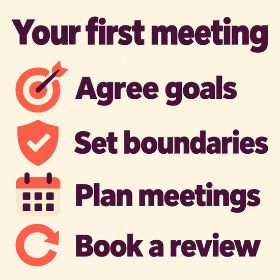
Start with shared expectations. Discuss goals, boundaries and confidentiality, agree how meetings will work, and set a date to review the relationship.
The first meeting is where you put the skills above into practice, especially aligning expectations. It sets the tone for everything after it, so it’s worth a bit of preparation.
A simple agenda
- Introductions. Share your career story as it really happened, and ask for theirs. Being straight with each other from the start, highs and lows included, sets the tone for everything after.
- What they want from this. Their goals, what they hope you can help with, and what they don’t need from you.
- Practicalities. How often you’ll meet, for how long, in person or online, and who arranges it. The mentee should usually set the agenda and book the meetings, because it’s their development.
- Confidentiality and its limits. Agree that what’s said stays between you, with one exception: if you believed someone was at serious risk of harm, you might need to act. Saying this at the start means it won’t come as a surprise later.
- Feedback. How they’d like you to give it, and how they can tell you if something isn’t working.
- A review point and an ending. Agree to check in on how it’s going after three to six months, and agree that either of you can end the relationship without it being anyone’s fault.
A mentoring agreement
This may sound formal, but putting a simple outline of how things will work in writing, even just in an email, can help down the line. In the US, the Association of American Medical Colleges publishes compacts between research students or postdocs and their mentors, which set out commitments on both sides, and many universities have their own templates. They’re often long and lab-focused, so here’s a short version you can adapt.
A simple mentoring agreement
What the mentee hopes to get from this relationship:
What the mentor can and can’t offer:
How often we’ll meet, for how long, and how (in person, online):
Who arranges meetings and sets the agenda:
How we’ll keep in touch between meetings:
Confidentiality, and its limits:
When we’ll review how it’s going:
How and when it will end (either of us can end it at any time, no fault):
A useful piece of homework after the first meeting is to ask your mentee to fill in a mentoring map. It helps them see where their support is strong and where it’s thin, and gives you both a clearer idea of where you fit.
Good questions to ask
Listening and asking are most of the job, so it helps to have some questions ready. Open questions starting with “what” and “how” tend to work better than “why”, which can sound like an accusation. And don’t be afraid of silence. People often say the most useful thing just after a pause.
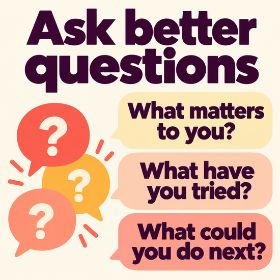
Open questions help researchers identify what matters, reflect on what they have tried and decide on a practical next step. Leave space for their answers.
When you’ve just met
Early on, find out why they’ve come to you now. There’s nearly always a reason, and it’s rarely the one they lead with.
- What’s made you look for a mentor at this point?
- If we were sat here in six months and this had been worth it, what would have changed?
- Who do you already go to for help, and what do you find yourself not asking anyone?
When they don’t know what they want
Plenty of early career researchers arrive saying “I just want to stay in research”, and nothing more specific. That’s normal. Start with what they already know about themselves.
- Which bits of the last month did you enjoy, and which did you keep putting off?
- If nobody would judge you for it, what would you apply for next?
- Picture your working week five years from now. What’s different about it?
When they’re going round in circles
- What have you already tried?
- What could you do before we next speak, even if it’s small?
- If a friend brought you this problem, what would you tell them?
When there’s a big decision
A second postdoc or a job in industry. Moving city for a lectureship or staying put for family. These are the conversations where your opinion is most tempting to give and least useful.
- What are all the options, including the ones you’ve already crossed off?
- Which one would you regret not trying?
- What do you need to know before you decide, and who could tell you?
After a rejection
A fellowship turned down, a paper bounced for the third time, a job that went to someone else. Resist the urge to go straight to the reviewers’ comments.
- How are you doing, honestly?
- Which parts of this were in your hands, and which weren’t?
- When you’re ready, what would you do the same next time?
Every few months, about the two of you
- What’s been most useful from these conversations?
- What should I do more of, or stop doing?
- Is there something you’ve been meaning to bring up and haven’t?
Common mistakes
As we said at the start, a poor mentor can do real harm. These are the mistakes that come up most often, and almost all of them come from good intentions.
- Fixing instead of helping. Practical help is great, but doing their thinking for them isn’t. If you solve every problem they bring, they learn to bring you problems rather than to solve them.
- Cloning your own career. What worked for you worked in a different funding climate, at a different time, for a different person. Share your path as one example, not a template.
- Over-promising. Don’t promise introductions, references or jobs you can’t deliver. A broken promise does more harm than no promise.
- War stories. A relevant story can help. Twenty minutes about your own fellowship interview in 2009 usually doesn’t.
- Breaking confidence. Mentioning something your mentee told you, even casually, to a colleague can end the relationship and damage their reputation. Be careful about gossiping about colleagues with them, too.
- Disappearing. Repeated cancellations tell your mentee they don’t matter. If you can’t keep it up, say so and end it properly.
- Being nice instead of kind. Avoiding honest feedback isn’t kind, because your mentee needs to hear it from someone on their side before they hear it from a panel. But honest doesn’t mean harsh. Ask first whether they want feedback, talk about the work rather than the person, be specific about what would make it stronger, and finish with what they could do next. The aim is for them to leave knowing more, not feeling smaller.
- Stepping outside your competence. You are not a counsellor, an employment lawyer or an immigration adviser. Know when to point someone elsewhere.
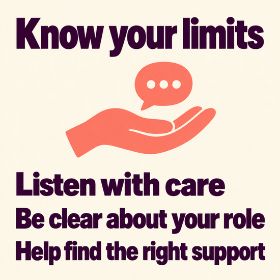
You do not need to have every answer. Listen with care, explain what you can offer and help your mentee find appropriate specialist support when needed.
When your mentee is struggling
At some point, a mentee may tell you they’re not coping. Listen, take it seriously and don’t try to diagnose. Ask what support they already have. Then help them find the right help, which might be their GP, the university’s wellbeing or counselling service, an employee assistance programme, occupational health, or, for workplace problems such as bullying, their union or HR.
If you believe someone is at immediate risk, encourage them to contact emergency services, or Samaritans, who can be reached free, day or night, on 116 123 in the UK and Ireland. This is the situation the confidentiality exception you agreed at the start is for.
And look after yourself. Supporting someone through a hard time is draining, and it’s fine to talk it through, without identifying them, with your own mentor or a trusted colleague.
Mentoring across difference
You don’t need to share your mentee’s background to be a good mentor to them. You do need to be aware that their experience of research may be very different from yours, and willing to learn about it.
The evidence says this can be taught. The Culturally Aware Mentoring programme from CIMER was tested in the 2026 study mentioned earlier, and the changes in mentors’ confidence, skills and behaviour lasted at least a year. The training starts with mentors reflecting on their own identities and assumptions, moves on to understanding other people’s experiences, and only then practises specific skills. That’s a sensible order for anyone.
What it looks like in practice
- Ask, don’t assume. “Is there anything about your situation that makes this harder, that I might not see?” is a good question for any mentee.
- It’s fine to name it. Acknowledging that you haven’t had your mentee’s experience is better than pretending there’s no difference.
- Notice the extra load. A mentee from an under-represented group may be doing far more committee work, outreach and informal support than their peers. Help them decide what to protect their time from.
- Help them find people who share their experience. This is where the network model comes in. You don’t have to be everything, but you can help them find the people who understand what you can’t.
Some situations to be ready for
- International researchers may have a visa tied to their contract, which makes career decisions riskier. Be aware of that, but point them to specialist advice rather than advising on immigration yourself.
- Researchers with disabilities may need to plan around reasonable adjustments, and schemes such as Access to Work, when changing roles.
- First-generation and working-class researchers may not know the unwritten rules that others picked up at home, from how to email a professor to what a conference is for. Make the hidden curriculum visible.
- Researchers with caring responsibilities or part-time contracts may need different advice about mobility, timelines and eligibility for schemes.
- Women are more likely to leave. The largest study of faculty retention in the US found that, across academia as a whole, women are more likely than men to leave their jobs at every career stage, and the most common reason they gave was workplace climate rather than work-life balance. The picture varies by field, but it’s a pattern worth knowing about. Yvonne Couch’s blog on how to make a female professor is worth reading on why.
Other formats
One-to-one mentoring with someone more senior is only one model. Several others work well, and some may suit you and your mentee better.
Mentoring circles
A small group of mentees with one or two mentors, meeting regularly. UK universities increasingly run these for postdocs. The University of Edinburgh offers them as part of its Concordat commitments, and Oxford’s Medical Sciences Division groups around four mentees with one mentor. An evaluation of a facilitated peer mentoring circles programme at the University of North Carolina, involving 168 early career faculty, found participants valued having safe spaces for conversation, access to senior colleagues and peers who shared their identities. Circles are also a very efficient use of a busy mentor’s time.
Reverse mentoring
Here the early career researcher mentors someone senior, sharing their perspective on research culture, inclusion or new tools. The NIHR Southampton Biomedical Research Centre runs a reverse mentoring scheme pairing early career researchers with senior leaders. If you’re an ECR, it’s a way to build mentoring experience and have a real influence on culture.
One-off and group sessions
Not all mentoring needs to be a long-term relationship. A single conversation with the right person at the right moment can make a big difference. ISTAART’s mentoring clubs bring early career and senior researchers together online for open discussion, and our own Ask Your Mentor podcast has mentees interviewing their mentors about careers and lessons learned.
Formal schemes
Structured schemes handle the matching and give both sides some support. The Academy of Medical Sciences programme is open to specific groups of award holders. Funders and networks run their own too. Josie Fullerton’s blog on the Alzheimer’s Research UK cross-network mentoring scheme describes one from the mentee’s side. Check what your institution, funder and professional society offer.
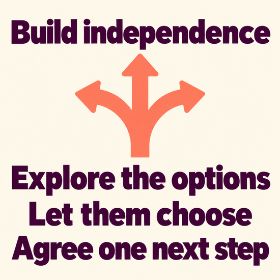
Help your mentee weigh up the options and make their own decisions. Offer your experience as one perspective, then agree a manageable next step.
Ending well and getting credit
Ending well
Mentoring relationships are meant to end, or at least to change. Signs it’s time include your mentee having met the goals you started with, meetings drifting into catch-ups with no purpose, or a sense that someone else could now help them more.
Don’t let it fizzle out with a meeting nobody rebooked. Put a final session in the diary and use it properly. Dig out whatever you both wrote down at the first meeting and look at how far they’ve come since. Ask what they’ll need next, and who might help with it. Then tell them plainly that they can still email you. Some of the best mentoring relationships carry on for decades as professional friendships once the formal part is done.
If it isn’t working, say so early, before you both start dreading the meetings. Something as simple as “I don’t think I’m giving you what you need. What would help more?” often turns it round. If it doesn’t, the no-fault ending you agreed at the start is there for exactly this, and nobody needs to feel they’ve failed. If you met through a formal scheme, tell the coordinator, because rematching people is part of their job.
Getting credit
Mentoring counts, but only if you can evidence it. At UCL, for example, the Academic Careers Framework lists mentoring within your department as institutional citizenship, but it’s evidence of real personal impact that decides whether it contributes to a promotion case. The narrative Résumé for Researchers format, used by UKRI and others, also has space for your contribution to the development of others. Yvonne Couch’s blog on the Résumé for Researchers explains what it’s for.
So keep a simple mentoring log as you go:
- Who you’ve mentored, in what capacity and for how long (you can anonymise this)
- What changed, with their permission, such as a successful application, a new job or a published paper
- Short testimonials from mentees, collected with their consent
- Any mentor training you’ve done, and schemes you’ve contributed to
Our guide to academic promotion criteria explains how this kind of evidence fits into a promotion case.
Build your own mentor training
If your institution offers mentor training, take it. If it doesn’t, you can build your own, and the best materials are free.
Where to find training materials
- CIMER’s curricula. The MyCIMER portal hosts the Entering Mentoring materials, including the exercises and case studies used in the trials. You need to create a free account.
- The National Academies online guide. The interactive guide that accompanies the 2019 report summarises the evidence and includes practical tools.
- The Academy of Medical Sciences. Its mentoring masterclasses are free, though they are open to eligible mentors and mentees on its programme.
- Your own institution. Ask your researcher development or staff development team what they offer. Mentoring and coaching courses are often available but poorly advertised, and asking for them shows there’s demand.
A seven-week self-study plan
Take one competency a week, using the “try this” exercises in the core skills section above. Read the matching CIMER module if you can, try the exercise in a real mentoring conversation, and spend ten minutes afterwards writing down what happened.
The first three weeks cover the basics: communicating well, aligning expectations and assessing understanding. In week four, work on fostering independence, then move on to practising inclusion. Professional development and wellbeing round it off in weeks six and seven. Better still, do it with two or three other new mentors and meet at the end of each week to compare notes.
Learn from your mentees
The best feedback on your mentoring comes from the people you mentor, but they’ll rarely give it unless you ask. At your review point, ask three questions: what’s been most useful, what’s been least useful, and what would you like me to do differently? Then act on at least one answer.
Write your mentoring philosophy
Finish your self-made course by writing a short mentoring philosophy: half a page on what you believe good mentoring looks like, what mentees can expect from you, and how you intend to keep improving. CIMER includes this as one of its curriculum themes. It sharpens your thinking, it’s useful to share with new mentees, and it’s increasingly asked for in fellowship and promotion applications.

"Being a good mentor means helping people become the best versions of themselves, not just junior versions of you. Doing that means really listening to their aspirations and using your experience to guide them down the right path, even if that path goes in the opposite direction to your own."

"I like to always meet away from the office where possible. Somewhere like a coffee shop to create a more open/neutral environment. Help them to set some targets, depending on what they’re looking to achieve from mentoring. Also I try to really listen and not pre-judge."

"Each individual has to find their own way and as a mentee I’ve been lucky to have people support me in finding that. I try to get to know the mentee and their style quickly and then let them lead on topics and discussions. I listen and ask a lot of questions. I can offer advice, experience, a sounding board or my opinion in that moment, but I like to get the mentee to feel they should go beyond that meeting and sound out others and collate information to find their own solutions.
Mentoring can be life-long or a short-term thing to work through something specific. If you aren’t the right person to help a mentee, you can offer alternatives or use your network to support them in getting what they need in that moment. There has to be a connection with the mentee and the opportunity for impact clear – if not, I prefer to help them find the right person."

"Finding a mentor is like dating. Sometimes it should work but the chemistry isn't right. In that case abandon it. However, when you find a mentorship relationship that works, keep it going through your whole career. You can travel through the academic journey together, with your mentor always a few steps ahead and able to guide the way.
The biggest mistake i have seen in mentoring is where the mentor tries to mould their mentee into a copy of themselves (often to boost the mentors career). Mentoring is about making someone the very best version of their unique self. If your motivation to be a mentor is creating carbon copies of yourself, you need to work on cloning not mentoring."

"I think it’s always important to start by clearly understanding what the mentee hopes to get from the relationship, so that the mentorship is aligned with their goals, needs, and expectations & and also revisit this during the mentorship. It keeps everything focused so that they can get the most out of it."

"Academia often seems to run on the assumption that people will somehow absorb what they're supposed to be doing by magical osmosis. In my experience, that only works at Hogwarts. My best mentoring tip is to remember what it felt like when you started. Assume people are overwhelmed, reassure them that's normal, and make it clear that your door is always open. And importantly, there are no stupid questions!"

"I try to resist the temptation to steer someone towards what I think they should do. I see my role as helping them work out what they want to do and how they want to develop, even when that differs from the path I’d chose for them. I can challenge, advise and offer my perspective, but the aim should be to help someone make their own choices as well as they can, and not to turn them into a mini-me."
Common questions about mentoring in research
Click a question to see the answer.
Getting started
Do I need training to be a good mentor?
You don’t need formal training to start, but it helps. Randomised trials show that even short, structured mentor training improves mentoring skills, and mentees notice the difference. If your institution doesn’t offer it, free materials such as CIMER’s Entering Mentoring curriculum let you train yourself. See build your own mentor training.
What’s the difference between a mentor and a supervisor?
A supervisor is responsible for your degree or project and assesses your work. A mentor supports your wider development and ideally sits outside your chain of command, so you can speak more freely. Supervisors can mentor too, but most researchers benefit from mentors outside that relationship as well.
What is a sponsor in academia?
A sponsor is someone who uses their own standing to advocate for you when you’re not in the room, for example by nominating you for an award, recommending you as a speaker or putting your name forward for a role. Mentors advise, while sponsors open doors. Many mentors can do both.
What’s the difference between coaching and mentoring?
A mentor draws on their own experience of your field and may share advice. A coach doesn’t need to know your field, but is professionally trained to use questions to help you reach your own answers, usually on a specific goal such as confidence, leadership or performance. Neither is therapy. See coaching vs mentoring.
Am I too junior to be a mentor?
Probably not. Near-peer mentors, only a step or two ahead, are valuable because they remember the challenges and know how things work now. A PhD student can mentor an undergraduate, and a postdoc can mentor a PhD student. What matters is whether you can help with what the person needs.
How do I say no to mentoring someone?
Honestly, and quickly, so they can ask someone else. Something like: “I can’t give this the time it deserves right now, but [name] would be great, and I’m happy to have one coffee to help you work out what you need.” Research suggests women and researchers from under-represented groups do more than their share of this kind of work, so if you’re already stretched, no is a fair answer.
What should I talk about in a first mentoring meeting?
Start by getting to know each other. Share your career story as it really happened, not the tidy CV version, and ask to hear theirs. Then find out what they want from you, because it’s often not what you’d assume. It doesn’t need to feel formal: a relaxed conversation, followed by a short email summarising what you agreed about how often you’ll meet and what stays confidential, does the job.
How often should a mentor and mentee meet?
Once a month for an hour is a good starting point for most people. Meet more often in the run-up to a fellowship deadline or a big career decision, and less once things settle down. Whatever you pick, agree it at the first meeting and look at it again after three to six months.
What is peer mentoring, and does it work?
Peer mentoring is when people at a similar career stage support each other, often in small groups called mentoring circles. Evaluations suggest participants value the safe space, shared experience and access to support. It removes the power difference of traditional mentoring and makes good use of limited senior time.
Mentoring skills
What qualities actually make someone a good mentor, not just a knowledgeable one?
Knowing your field helps, but it isn’t what mentees value most. The mentors people remember listen properly, turn up when they say they will, are honest with them and are clearly on their side. They’re curious about the mentee’s goals rather than their own, and they help the person think instead of telling them what to do. Most of this can be learned. See the core skills.
How do I get better at active listening so my mentee feels heard?
Talk less, and let them finish before you respond. Summarise what you’ve heard in your own words and check you’ve got it right, then ask a follow-up question before offering any advice. Put your phone away, and try not to plan your reply while they’re still speaking. A good rule of thumb is to speak for less than a third of the conversation.
What questions should a mentor ask?
Open questions that help your mentee think, such as “what have you already tried?”, “what matters most to you in this decision?” and “what would you like to be true in five years that isn’t now?” Questions starting with “what” and “how” usually work better than “why”. See good questions to ask.
How do I give honest, useful feedback without discouraging my mentee?
Ask first whether they want feedback, then keep it about the work, not the person. Be specific about what would make it stronger, rather than only what’s wrong, and finish with one clear next step. Honest feedback from someone on their side is far easier to hear than the same point from a funding panel. The aim is for them to leave knowing more, not feeling smaller.
How much of my own story, mistakes and struggles should I share?
Enough to be honest and human, but keep the focus on them. Sharing a setback you faced, and what you learned from it, can make it easier for your mentee to admit their own. Keep stories short and relevant, and remember your path happened at a different time and in a different funding climate, so offer it as one example, not a template. If you’ve talked about yourself for ten minutes, it’s time to ask them a question.
How do I build trust and psychological safety so my mentee will be honest with me?
Trust comes from small, consistent things: turning up when you say you will, keeping what they tell you confidential, and never using it against them. Be open about your own uncertainties and mistakes, and respond calmly when they bring you bad news. Agree the limits of confidentiality at the start, so there are no surprises later. Mentees who feel safe tell you the real problem, not just the one they think you want to hear.
How do I mentor someone whose background, personality or career path is very different from mine?
You don’t need to share someone’s background to mentor them well. What matters is being aware that their experience may differ from yours, asking rather than assuming, and not steering them down the path that worked for you. Training in culturally aware mentoring has been shown to produce lasting changes in mentors’ behaviour. You can also help your mentee find other people who share their experience. See mentoring across difference.
When things get tricky
How do I know if the mentoring is actually working, and what do I do if it isn’t?
Look back at the goals you agreed at the start. Is your mentee making progress, making decisions with more confidence, or building a wider network? Ask them directly at a review point what’s been useful and what hasn’t. If it isn’t working, say so early and ask what would help more. If that doesn’t turn it round, the no-fault ending you agreed at the start lets you both move on without anyone feeling they’ve failed.
What should I do when my mentee isn’t following through or seems unmotivated?
Start by asking, not assuming. A missed action is often a sign of something else: too much on, a goal that no longer fits, or a problem they haven’t mentioned. Ask what’s getting in the way, check the goals are still theirs rather than yours, and agree smaller, more realistic next steps. If they no longer want the relationship, that’s fine too. It’s their development, so it has to be driven by them.
What should I do if my mentee is struggling with their mental health?
Listen, take it seriously and don’t try to diagnose. Ask what support they have, and help them reach the right help, such as their GP, the university’s wellbeing service or an employee assistance programme. If you think someone is at immediate risk, encourage them to contact emergency services or Samaritans on 116 123.
How do I end a mentoring relationship?
Deliberately. Have a closing conversation that reviews what your mentee set out to do, what has changed and what comes next, and make it clear they can still get in touch. Agreeing at the start that either of you can end it without fault makes this much easier.
Training and credit
Where can I find free mentor training?
CIMER’s Entering Mentoring materials are free through the MyCIMER portal, and the US National Academies publish a free online guide to effective mentorship. Ask your own researcher development team what they offer too, and if you’re eligible, the Academy of Medical Sciences runs free mentoring masterclasses.
How do I show mentoring in a promotion application?
Start a mentoring log now, not the month before the deadline. Note who you mentored and for how long, and, with their permission, what happened next, such as a fellowship won or a new job. When a mentoring relationship ends, ask for a two-line testimonial. Panels want to see what changed because of you, not a count of meetings. Our guide to academic promotion criteria explains more.
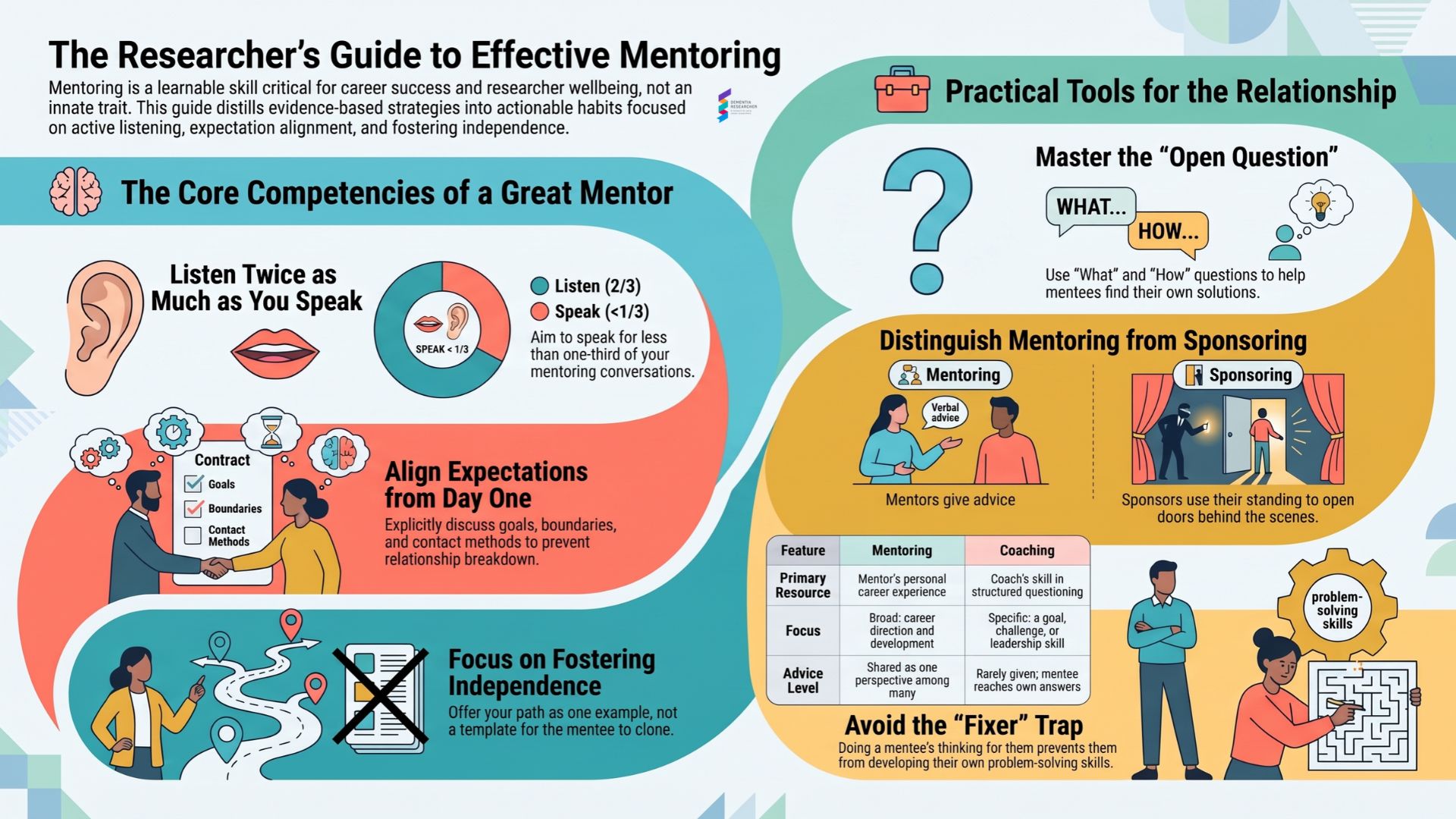
More on mentoring from Dementia Researcher
Our Mentoring Mixtape collects our blogs and podcasts on mentoring in one place. For personal perspectives, read Kamar Ameen-Ali on why ECRs need good mentors, Becky Carlyle on choosing your mentors and Clarissa Giebel on the importance of good mentorship, or listen to our mentoring podcast. For what the best mentors do, see award-winning mentors share their secrets and JoAnn Trejo on why strong mentorship was essential to her career.