 Print This Post
Every researcher should have an elevator pitch. Mine goes something like this:
I want to understand why people age differently. Why do some maintain their memory and thinking skills into their 90s, while others experience substantial decline? What predicts these differences, particularly in relation to health? Which combinations of health conditions accelerate cognitive decline? And how does cognitive decline, in turn, affect our ability to manage our health?
These questions became the focus of my working life.
Then they became the focus of my personal life too.
When my mum was just 61, she was diagnosed with dementia.
Soon after, she had a heart attack.
A few months later, we found out she had an advanced and aggressive form of cancer.
I’m going to reflect on my experience supporting my mum through dementia and cancer, some of the very health challenges I research. Bear with me – this will be sad, at times very personal, and occasionally a little ranty.
The dementia
It took nearly 18 months from my mum first raising concerns with her GP to receiving her diagnosis. To our family, this felt painfully slow. But it turns out that is relatively quick for someone with her type of dementia.
In the UK, many people with dementia report waiting more than a year from first seeking medical help to receiving their diagnosis, with nearly a fifth waiting more than two years.1 This is not unique to the UK. Across predominantly Western countries, the average time from first noticing symptoms to diagnosis was 3.5 years for dementia overall, rising to 4.1 years for young-onset dementia, diagnosed before age 65.2
My mum had a rare and atypical form of Alzheimer’s disease, posterior cortical atrophy (PCA). Her young age and unusual symptoms made diagnosis more complicated. In Scotland, dementia assessment is typically managed through older adult psychiatry. But my mum wasn’t an ‘older adult’, so she was initially referred to general adult psychiatry. It quickly became apparent to us this was not a service specialising in dementia.
In PCA, changes first affect visual-processing regions towards the back of the brain, causing problems with visual perception and spatial awareness, reading and numeracy.3 Unlike typically presenting Alzheimer’s disease, memory and language are relatively spared, at least early on. Though rare, my mum’s presentation was quite typical of PCA: her symptoms began in her late 50s, she started having difficulties recognising and interpreting what she was seeing, and struggled to perform even basic calculations.
Allow this psychometrician to rant for a moment. My mum was administered the ACE-III, a brief cognitive screening tool for dementia.4 The 100 points available on this test are not evenly distributed across the five cognitive domains assessed, with memory and language accounting for over half the points, while visuospatial ability accounts for just 16. This means someone with relatively spared memory and language abilities might score quite highly overall, despite substantial difficulties in other areas of cognition. The difficulty also varies across the domains, with the visuospatial items typically being easier than others.
My mum scored just above the cut-off, helped by the fact the psychiatrist administered the test incorrectly. Part of the test involves learning a name and address to recall later. The psychiatrist read this to my mum four times, rather than the three times stipulated in the test instructions. Although Mum scored high overall, she performed poorly on the visuospatial domain.
The ACE-III is not a diagnostic tool, so its score alone cannot tell you whether someone does or does not have dementia. Yet the psychiatrist placed enormous weight on this score, suggesting that, because Mum scored above the cut-off, she couldn’t possibly have dementia.
But context matters when interpreting these tests. Clinical guidelines emphasise that a dementia diagnosis should be based on information from multiple sources,5,6 including whether the cognitive difficulties are affecting a person’s day-to-day functioning.
By then, my mum, an intelligent and relatively young woman, had stopped working because of her cognitive difficulties, and she reported she was struggling to manage her finances and sequence getting dressed.
Let’s hope this isn’t a systemic issue. Let’s hope it was just one doctor having a bad day; a bad day made worse when I launched into an impromptu lecture about why you cannot meaningfully interpret the results of a test that was administered incorrectly…
After several more appointments with general adult psychiatry, and 6 more months of waiting, Mum was eventually referred to older adult psychiatry after all. Blood tests, brain scans, and a comprehensive cognitive assessment later, she finally got her diagnosis.
Not only can these delays be incredibly frustrating for families desperate for answers, but they can have substantial real-world consequences too. Dementia medications currently available in the UK do not slow the underlying disease, but for some people they can modestly improve or stabilise some cognitive and functional symptoms.7,8 Starting treatment sooner, while there is more cognitive and functional ability to preserve, may help maintain independence a little longer.
Delays can also have substantial financial costs to individuals.9 They certainly did for Mum. After 30 years working as an NHS medical receptionist, my mum had to give up work. But she couldn’t access early retirement on health grounds because she didn’t have a diagnosis…
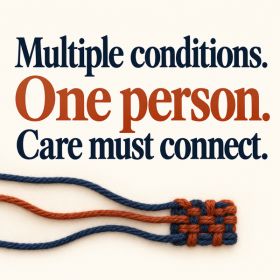
The big C and the many little c’s (comorbid conditions)
Dementia did not kill my mum. Cancer did. But the dementia certainly complicated the cancer.
I remember every detail of Saturday 25th October 2025. Coming home from my run to a phone full of missed calls. The biscuit I ate for ‘lunch’ in the hospital waiting room. The text from a friend ranking the best supermarket-bought tomatoes. The surgeon telling us Mum needed an emergency operation, she had about a 10% chance of surviving it, and even if she did, life would be very different afterwards.
Mum did survive that day.
It was bowel cancer.
Something remarkable happened after her surgery. Mum’s cognitive function improved! We had our Mum back! It seemed that at least some of her cognitive symptoms might have been compounded by the undiagnosed cancer and how unwell it was making her. This improvement was short-lived, but it was wonderful.
My mum was fitted with a stoma. Learning to manage a stoma can be challenging for anyone. Add dementia into the mix, and it becomes much harder. Mum’s difficulty wasn’t so much that she was forgetting what to do, but rather that she struggled with the fiddly and coordinated actions that stoma care involves. Precisely the things her dementia made difficult.
My mum’s cancer was discovered very late. By then, it was stage IV and had already spread to her liver. Sadly, her experience is not unusual. People with dementia are more likely to present with cancer as an emergency and to be diagnosed at a more advanced stage than people without dementia.10,11 Dementia might make it harder for someone to notice or communicate symptoms. And even when someone knows something is wrong, it might make it difficult to advocate for themselves in an unforgiving healthcare system.
There were many clues something (else) was wrong with my mum. Over several months, she repeatedly ended up in hospital, unwell with dangerously low levels of this or that. Something was topped up, she would be sent home, and the underlying problem never investigated.
Even as her weight plummeted.
Even as she was admitted to hospital for the second… third… fourth time.
Cancer treatment can also look quite different when someone has dementia. People with dementia and cancer are more likely to receive no treatment, or less aggressive treatment.10,11 But less treatment does not necessarily mean worse care. We quickly learnt that good care can sometimes mean prioritising quality of life over extending life.
And there was plenty more to consider than just the cancer and dementia. Mum had a whole host of other long-term health conditions, each one still needing continued monitoring and management as Mum’s cognitive and physical health were declining.
This also is not unusual in dementia. In fact, the vast majority of people with dementia (possibly as high as 86%) have two or more other health conditions in addition to their dementia – what we call multimorbidity.12 Yet, clinical trials for dementia drugs (and clinical trials in general) frequently exclude people with other illnesses.13 Newer Alzheimer’s disease drugs are no exception. Trials for lecanemab and aducanumab excluded people with a range of illnesses, including cancer and heart disease.12,14 This matters because a treatment that works well in a relatively healthy trial participant may not work as well, or may have different side effects, in someone with multiple, interacting health conditions.
Cognitive decline will rarely have a single cause. Every person is a unique combination of their biology, circumstance, experience, and a little bit of luck. It’s likely an accumulation of many influences across the entire life course, some tiny, but all adding up.15
My mum’s dementia didn’t happen in isolation. Neither did her heart attack or her cancer. Each was likely shaped by, and in turn shaped, the other conditions.
I’ll never know what caused Mum’s cancer or her dementia. I’ll never know if the outcome of the cancer would have been different had she not had dementia. Would it have been spotted earlier? Treated differently?
As a family, we can’t shake the feeling that once the dementia was diagnosed, there was less urgency to look for something else. Mum was increasingly unable to advocate for herself. As someone responsible for advocating for her, I am left wondering whether things might have been different if I had just pushed harder…
The carer
Managing someone else’s health can really take its toll.
You need to make appointments. Attend appointments. Navigate hospitals. Communicate symptoms. Explain. Re-explain. Be persistent. Understand information. Remember it. Relay it. Monitor for changes. Know when to seek medical intervention.
Often, you are doing all of this in the middle of the night during the latest medical emergency. Then doing it all again the next day.
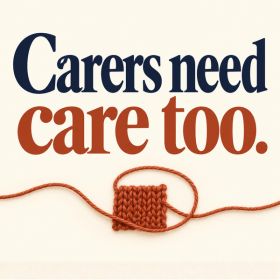 Carers can pour so much of their time and energy into looking after someone else that there is little left for themselves. This can have substantial physical, mental and financial consequences for carers.16,17
We were lucky to have a whole team caring for Mum, including her three children, her partner, and other family members chipping in too.
I should have been well placed to navigate all of this. I’m reasonably knowledgeable about the conditions my mum had. I am assertive; a trait, it turns out, that is highly valuable when trying to advocate for someone in a system that seems to be constantly resisting you. Most fortuitously, two of my closest friends happen to be a clinical neuropsychologist and a consultant geriatrician, both working in the very health board where my mum was being cared for. I relied on them heavily for advice.
But still, I made mistakes. Still, I felt utterly exasperated not knowing how to get my mum the support she desperately needed.
It felt at times like we were battling an entirely fragmented healthcare system which appeared to be organised around individual illnesses. People with multiple health conditions can easily get lost in it. There was dementia care. There was cancer care. They did not seem to communicate, nor, at times, even acknowledge the existence of the other. That was until palliative care started to look after Mum, then suddenly her care felt, for the first time, holistic and joined-up.
But the problem was never the people. With one minor exception, every doctor, nurse, and other healthcare professional involved in my mum’s care treated her with such compassion.
They were doing their best in a system that was battling them as much as it was battling us.
A special shout-out to the nurse who had my mother, despite being weeks from her death, uncontrollably giggling every time he interacted with her. Apparently, one’s ability to furiously flirt is unrelated to one’s cognitive capabilities (n = 1).
The career
Did being an academic who researches these very topics help?
Not really…
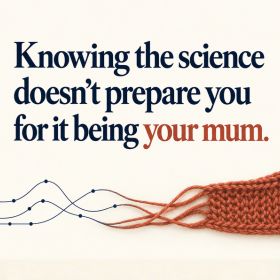 Research can tell us about risks, symptoms, trajectories, and treatments. It can tell us what is likely to happen and sometimes why. But knowing a lot about something does not prepare you for what it feels like when it’s your mum.
It does not prepare you for the first time your mum doesn’t know who you are. Or the first time you witness her experiencing delirium. Or the next time. Or the time after that…
Perhaps because I am a researcher, I needed to observe and track everything. My Notes app and search history became, frankly, unhinged. Was this new thing the dementia? Delirium? The cancer? A side effect of medication? Something new entirely?
I was desperate for explanations and answers. But certainty is hard to come by when it comes to dying. Yes, I am very aware that there is considerable variability in rates of decline… but now that person declining is my mum. I need you to tell me exactly what is going to happen to her and when.
But some things are unknowable. And it didn’t matter anyway. Knowing wouldn’t change the outcome.
Did my ‘lived experience’ help me do my job better? No.
Caring saps every ounce of mental energy you have – a problem when so much of your day job involves deep thinking. I was incapable of thinking. Research often involves planning projects years into the future. But I couldn’t even think about next week, let alone next year!
Several well-meaning (academic) friends told me that, during times of crisis, they had used work as a distraction. By definition, a distraction is something that diverts the mind from what is occupying it. My two ongoing research projects at the time were:
- Investigating whether chronic pain and pain medications are associated with cognitive decline and dementia.
- Investigating whether more precise measurement of personality can improve our ability to predict bowel cancer screening participation.
Neither was particularly effective at diverting my mind.
Like it or not, being an academic becomes a big part of your identity. So, when you are suddenly really bad at it, and stop enjoying it, that challenges your sense of self a little.
But I am lucky. I have a permanent faculty position, a rare occurrence in academia. I have been able to take time off. A lot of time off. My employers, colleagues, students and collaborators have all been incredibly understanding and accommodating.
I haven’t been a particularly productive researcher for a while. This comes with some guilt. And, in the current academic landscape, some fear.
Progress is slow in academia. The bulk of the work involved behind those highly prized ‘outcomes’ is often done months, sometimes years, before they apparently count. So, whilst on paper I looked reasonably productive this year, it was entirely the result of work I had done some time ago. My current lack of productivity will catch up with me. Not this year. But it will. I guess I’m worried this will happen when everyone is a little less accommodating to my circumstances.
For many months, I was juggling the worry that I wasn’t doing my job well enough with the guilt that I was failing my mum.
But as my mum got sicker, I worried less and less about work.
Eventually, I didn’t care about work at all.
The death
Pain is common in cancer and it can be incredibly severe. Pain is also common in dementia, but it can become increasingly difficult to identify as dementia advances.18
Long before my mum got sick, I became preoccupied with pain and pain medications, particularly opioids. In fact, much of my current research focuses on how these are associated with cognitive decline. So, you’d think I’d be well placed to recognise and understand my mum’s pain?
I was not.
My research focuses on chronic non-cancer pain. Cancer pain is quite different, often with distinct underlying mechanisms, and is usually treated as a separate area of research and clinical practice. I knew next to nothing about cancer pain.
But that didn’t matter. The people who needed to know about cancer pain did. Mum’s pain was carefully managed, first by oncology and then palliative care. She certainly had cancer pain. Sometimes it was bad. But once the doctors knew about it, they’d tinker with her combination of medications. And the drugs really did work.
Given her dementia, I worried a lot about Mum being in pain towards the end of her life. What if she was in pain but couldn’t tell us? The palliative care team assured me she wasn’t. But how do you know?
When we asked Mum, she said she wasn’t in pain. She didn’t seem in pain.
Dying looked like hard work, but it didn’t look painful.
In her final few weeks, Mum was cared for in a lovely little community hospital.
I hope Mum’s experience of end-of-life care is something everyone can expect. Thankfully, it seems that high-quality end-of-life care is common in the UK.19
Her death was gentle. Comfortable. And, for us, comforting.
Everyone deserves to die the way my mum did.
The grief
Mum died aged just 63.
I’ve spent my career trying to understand how to age well, while Mum never got to be old.
 Before, I could study ageing and dementia with a relative detachment. Now, I see my mum everywhere in my work: in the papers I read, the data I analyse, the courses I teach.
Constant little reminders of Mum.
I took time away from work to be with Mum at the end. And I took more time off after she died.
I returned to work, slowly.
But I am still exhausted.
And I’m still not particularly enjoying work – a job I once loved. I want to be good at my job again. I want the passion and drive for my research back. But it’s not there yet.
And no one is putting pressure on me to be there yet.
Except, perhaps, me…
For now, I’m trying to get better at giving myself the same patience that everyone else is showing me.
If you are caring for someone with dementia, or grieving, support is available from the Dementia UK Admiral Nurse Helpline, Marie Curie and Cruse Bereavement Support.
References
- Alzheimer’s Research UK. Seeing the Unseen: Rethinking Dementia Diagnosis 2025.
- Kusoro O, Roche M, Del‐Pino‐Casado R, et al. Time to diagnosis in dementia: a systematic review with meta‐analysis. International journal of geriatric psychiatry 2025;40(7):e70129.
- Crutch SJ, Schott JM, Rabinovici GD, et al. Consensus classification of posterior cortical atrophy. Alzheimer’s & dementia: the journal of the Alzheimer’s Association 2017;13(8):870-84.
- Hsieh S, Schubert S, Hoon C, et al. Validation of the Addenbrooke’s Cognitive Examination III in frontotemporal dementia and Alzheimer’s disease. Dementia and geriatric cognitive disorders 2013;36(3-4):242-50.
- National Institute for Health and Care Excellence (NICE). Dementia: Assessment, management and support for people living with dementia and their carers: National Institute for Health and Care Excellence, 2018.
- Scottish Intercollegiate Guidelines Network (SIGN). Assessment, diagnosis, care and support for people with dementia and their carers: Scottish Intercollegiate Guidelines Network, 2023.
- Scottish Government. Polypharmacy Guidance: appropriate prescribing, making medicines safe, effective and sustainable 2026–2029, 2026.
- National Institute for Health and Care Excellence (NICE). Donepezil, galantamine, rivastigmine and memantine for the treatment of Alzheimer’s disease. TA217, 2018.
- Alzheimer’s Society. Unlocking the door to diagnosis: Fixing the dementia diagnosis pathway to unlock treatment, support and innovation 2026.
- Ashley L, Surr C, Kelley R, et al. Cancer care for people with dementia: literature overview and recommendations for practice and research. CA: A Cancer Journal for Clinicians 2023;73(3):320-38.
- Hopkinson JB, Milton R, King A, Edwards D. People with dementia: what is known about their experience of cancer treatment and cancer treatment outcomes? A systematic review. Psycho‐Oncology 2016;25(10):1137-46.
- Stirland LE, Choate R, Zanwar PP, et al. Multimorbidity in dementia: Current perspectives and future challenges. Alzheimer’s & dementia: the journal of the Alzheimer’s Association 2025;21(8):e70546.
- Tan YY, Papez V, Chang WH, et al. Comparing clinical trial population representativeness to real-world populations: an external validity analysis encompassing 43 895 trials and 5 685 738 individuals across 989 unique drugs and 286 conditions in England. The lancet Healthy longevity 2022;3(10):e674-e89.
- Pittock RR, Aakre JA, Castillo AM, et al. Eligibility for Anti-Amyloid Treatment in a Population-Based Study of Cognitive Aging. Neurology 2023;101(19):e1837-e49.
- Livingston G, Huntley J, Liu KY, et al. Dementia prevention, intervention, and care: 2024 report of the Lancet standing Commission. The Lancet 2024;404(10452):572-628.
- Carers UK. State of Caring 2025: The cost of caring – the impact of caring across carers’ lives, 2025.
- Corley J, Conte F, Harris SE, et al. Predictors of longitudinal cognitive ageing from age 70 to 82 including APOE e4 status, early-life and lifestyle factors: the Lothian Birth Cohort 1936. Mol Psychiatry 2022
- Hoti K, Vahia IV, Chivers P, Hughes JD. Digital decoding of the multidimensional pain experience in people living with dementia. Age and ageing 2026;55(5)
- Healthcare Quality Improvement Partnership. National Audit of Care at the End of Life 2025: State of the Nations Report, 2026.
Dr Chloe Fawns-Ritchie
Author
Dr Chloe Fawns-Ritchie is a Lecturer in Psychology at the University of Edinburgh. Her research explores how cognitive function and health influence each other across the lifespan, why people experience different rates of cognitive decline, and what this means for everyday life. She specialises in cognitive assessment, with particular interests in cognitive ageing, chronic pain and the effects of medication on cognition.
Follow @cfawnsritchie
Find Chloe on LinkedIn
Find Chloe on Bluesky

 Dr Yvonne Couch
 Dementia Researcher
 Dr Clíona Farrell
 Beccy Owen