 Print This Post
The World Alzheimer Report 2026, published by Alzheimer’s Disease International (ADI) on World Alzheimer’s Day, is about dementia clinical trials. Its central argument is that the question has moved on. For thirty years we asked whether dementia could be treated at all. Now the harder problem is getting trials filled, finished and delivered to everyone who needs them.
In brief
There are 158 drugs being tested in 192 Alzheimer’s trials, and together they need around 55,000 volunteers. Because at least seven in ten people screened turn out to be ineligible, filling those places means screening roughly 350,000. The report finds the science is running ahead of diagnosis, recruitment and health systems, and ADI makes ten recommendations to close the gap, three of them aimed squarely at researchers and clinicians.
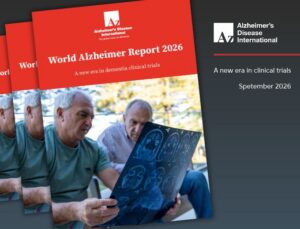 This year’s report takes a different form to its predecessors. Rather than a conventional research review, ADI commissioned health journalist Paul Gallagher, formerly health correspondent at The i Paper, to write it. He interviewed more than 45 people across the field, and the chapters are built around their accounts alongside case studies of people who have taken part in trials. It makes for a readable 108 pages, though the headline messages are easy to miss inside the storytelling, so we have pulled them out below, along with what we think they mean for anyone building a career in dementia research.
World Alzheimer Report 2026 at a glance
- Title: World Alzheimer Report 2026: A new era in dementia clinical trials
- Published by: Alzheimer’s Disease International, 21 September 2026
- Written by: ADI with journalist Paul Gallagher, drawing on interviews with more than 45 experts
- Length: 108 pages across seven chapters and five case studies
- Theme: how dementia clinical trials work, why they struggle to recruit, and how to make them more inclusive
- Cost: free to download from the ADI website
Key findings from the World Alzheimer Report 2026
The trial pipeline has never been busier
The report leans heavily on Professor Jeffrey Cummings’ annual pipeline review, which this year counted 158 therapies in 192 active Alzheimer’s trials, up from 138 therapies and 182 trials a year earlier. Fifty-nine new trials entered the pipeline in twelve months. Around three quarters of the drugs in development aim to modify the disease rather than manage symptoms.
The mix of targets has also broadened. Therapies aimed at inflammation have grown from 6 per cent of trials to 18 per cent over a decade, and the report describes work on tau, synaptic dysfunction, vascular injury, mitochondrial biology and neuroprotection. The direction of travel, ADI argues, is towards something resembling cancer care: earlier treatment, combination therapies, and drugs matched to a person’s biological profile. If you want the background on where the anti-amyloid drugs fit into this, our podcast Changing the Course of Dementia: Four Expert Views covers a lot of the same ground.
None of this makes success likely for any single compound. The report cites analysis suggesting roughly 58 to 59 per cent of Alzheimer’s compounds fail to get out of Phase 2 and around 40 per cent fail in Phase 3, with more than 200 programmes abandoned or failed in the last decade. One estimate puts the cost of developing a new Alzheimer’s drug at US$5 to 7 billion. We wrote about what that failure feels like from the inside in When Clinical Trials Fail.
Recruitment is now the bottleneck
This is the finding that runs through the whole report. The current Alzheimer’s pipeline needs 54,728 participants, 38,417 of them for Phase 3 trials alone. Professor Cummings estimates that screen fail rates of at least 70 per cent mean around 350,000 people would need to come forward to fill those places. In the foreword, ADI’s acting chief executive Chris Lynch calls it a daunting number, and argues that many people are effectively denied the chance to take part because they never hear about trials and the referral pathway into them is flawed.
The UK does not come out of this well. Dr Fiona Carragher, formerly chief policy and research officer at Alzheimer’s Society, told ADI that 551 people were recruited to late-stage dementia trials in England over the most recent five-year period, against 24,000 for cancer. Oncology has spent decades making trials part of routine care. Dementia has not.
Even once people are in, keeping them is hard. One analysis cited in the report found multi-year Alzheimer’s studies lost between 10 and 54 per cent of participants. For practical approaches to this, see our pieces on recruiting participants for clinical trials and dementia clinical trial recruitment and retention.
Late diagnosis shuts people out before they start
Trials increasingly target people with mild cognitive impairment, or no symptoms at all but biological evidence of disease. Health systems have not caught up. A 2025 review cited in the report found people wait an average of 3.5 years from first symptoms to diagnosis, and 4.1 years for young-onset dementia. By the time many reach a memory clinic, they are already past the point at which they would qualify.
Blood biomarkers are the report’s main hope here. Dr Serge Gauthier, a member of ADI’s Medical and Scientific Advisory Panel, puts it plainly: instead of screening 3,000 people to find the 150 you need, you can now do the blood work first. Tests for p-tau217 are already being used both to select participants and, in trials like TRAILBLAZER-ALZ 3, to identify cognitively unimpaired people for prevention studies. ADI is clear that the technology alone will not fix access if health systems cannot afford or deliver it. Our blog on what the FDA clearance of the pTau217 blood test means goes into the detail.
Trials have become much harder to take part in
Lynne Hughes of the Global Alzheimer’s Platform Foundation told ADI that the workload for trial sites and participants has risen by 64 per cent over ten years. Her group estimates that about a quarter of the procedures in a typical Alzheimer’s trial are now non-core endpoints, added for exploratory or regulatory reasons rather than to measure the main outcome. Trials commonly run for 18 months or more, with repeated scans, blood tests, cognitive assessments and visits, all while the participant’s own condition progresses and a care partner shoulders much of the load.
Diversity is still talked about more than it is done
The geography of trials remains lopsided. North America is involved in every major global Alzheimer’s trial and hosts around half of all sites in international studies, and Western Europe is involved in more than 70 per cent. The big growth story is China, where dementia trials rose from 9 in 2021 to 107 in 2024. Meanwhile, countries carrying a rising share of the global burden, such as the Philippines, cannot afford to run costly drug trials at all.
The report argues this is a scientific problem as well as an ethical one. One of its sharpest examples comes from Kenya, where Professor Zul Merali, founding director of the Brain and Mind Institute at Aga Khan University in Nairobi, points out that the APOE4 gene carries a much lower Alzheimer’s risk in people of African ancestry than in people of European or East Asian descent, which raises real questions about whether drugs developed in one population will work in another. ADI wants diversity treated as a measurable standard of trial quality rather than a nice-to-have. We covered this theme in Addressing Diversity in Alzheimer’s Clinical Trials.
Safety and acceptable risk
With disease-modifying drugs now in clinical use, the report spends a full chapter on safety, regulation and ethics. Amyloid-related imaging abnormalities (ARIA) are the obvious concern with anti-amyloid therapies, and the report notes that regulators, clinicians, researchers and people living with dementia often weigh the same risk very differently. Many people with dementia say they will accept significant risk for a chance of staying independent longer. ADI argues those views need to count in regulatory decisions, while monitoring, risk stratification and honest communication remain non-negotiable. The chapter also covers how regulators increasingly shape trial design, including an international network of dementia regulators convened by Professor Cath Mummery, chair of the NIHR Dementia Translational Research Collaboration Trials Network.
Outcomes that matter to people, not just to regulators
The report calls this its strongest theme. Biomarker changes and cognitive scores matter for approval, but for people living with dementia, benefit means staying independent, managing daily life, maintaining relationships and reducing the load on carers. ADI wants trials designed from the outset to measure those things, and wants the time burden of taking part weighed against the time a treatment might give back.
Research needs to look beyond Alzheimer’s
Alzheimer’s disease still dominates investment. The report calls for far more trial activity in vascular dementia, frontotemporal dementia, Lewy body dementia and mixed dementias, and for continued investment in non-drug trials of risk reduction, rehabilitation, psychosocial support and lifestyle change. It highlights FINGER and the US POINTER study, which reported in 2025 that structured multidomain interventions improved cognition in older adults at risk. Our podcast Beyond the Pill: Methodology in Dementia Clinical Trials covers how those non-pharmacological trials are designed.
ADI’s 10 recommendations
The report closes with ten recommendations, grouped by who needs to act.
For governments and policymakers
- Invest in national diagnostic capacity and early detection pathways, including primary care training and access to blood-based biomarkers.
- Create incentives for clinical trials in underserved regions, through tax incentives, grants, streamlined regulation and long-term co-investment.
- Invest in dementia research infrastructure, diagnostic pathways and public trial readiness globally, including public education campaigns about trials.
For national Alzheimer’s associations
- Strengthen their role in research and innovation, becoming confident sources of balanced information on trials, treatments, regulation and access.
For trial sponsors and regulators
- Embed diversity and inclusion into trial design from the outset, with targets built into protocols and site selection.
- Reduce participant burden through hybrid and decentralised models and simpler protocols, and give placebo-arm participants a route to active treatment where a therapy proves beneficial.
- Continue strengthening safety standards and communication, including monitoring for ARIA and clear explanation of risk.
For researchers and clinicians
- Prioritise clinically meaningful outcomes such as independence, daily function, behaviour, communication, quality of life and carer burden.
- Further embed people living with dementia and carers in trial design, and make discussing trials a routine part of the diagnostic and referral pathway.
- Expand investment beyond Alzheimer’s disease into other forms of dementia.
There is also a short call to people living with dementia and their care partners: ask your healthcare professional whether a trial might be right for you. In the UK, the place to start is Join Dementia Research.
What the report means for early career researchers
Most coverage of this report will focus on patients and policy. It is worth reading with your own career in mind too, because several of its conclusions describe where the work, and the funding, is heading.
Trial delivery is becoming a specialism in its own right. If recruitment, retention and site workload are the problems holding the field back, then the people who can solve them are going to be in demand. That means trial managers, research nurses, coordinators, methodologists and data scientists as much as principal investigators. If you have wondered what that work actually involves, read A Day in the Life of a Clinical Trial Coordinator and What I Wish I Knew Before Working in Clinical Trials, and keep an eye on the dementia research jobs board.
Involvement is moving earlier. ADI wants people with lived experience shaping protocols and outcome measures from the start, through advisory panels and co-design, not consulted once the protocol is fixed. Reviewers and funders are increasingly asking for the same thing. If you are designing a study, build this in now and budget for it.
Outcome measures are an open research question. The call for measures of independence, function and carer burden that regulators will also accept is a problem that needs researchers to solve it. Developing and validating those measures is a genuine opportunity for people coming into the field.
Give something back to participants. One investigator who has recruited more than 20,000 people told ADI that the main reason people join and stay is what they get back from taking part. Sharing results properly is part of that, and the toolkit for sharing clinical trial results with participants is a good place to start.
There is room beyond amyloid and beyond Alzheimer’s. The pipeline is diversifying fast, and ADI is explicitly asking funders to back frontotemporal, Lewy body and vascular dementia and non-drug trials. For anyone choosing a direction, those are areas where there is still plenty of unanswered science and less of a crowd.
Inside the report: chapters and case studies
The report is organised into seven chapters, each paired with a case study drawn from someone’s direct experience of research.
- A turning point in dementia research sets out the current landscape and why trials sit at the centre of it.
- Understanding clinical trials explains how trials work, phase by phase, with a case study on the 5 Ironmans Beat Alzheimer’s initiative.
- Clinical trials in dementia: complexity and opportunities looks at what makes dementia trials so difficult, featuring the FTD Brothers and their advocacy around inherited frontotemporal dementia.
- Recruitment, adherence, and global participation covers how people get into trials and why so many do not, following Julie Stauffer Moore’s experience in a US trial after an early-onset diagnosis.
- Safety, regulation, and ethics examines regulators, ARIA and ageism in research, with ADI board member Bill Yeates describing life after his trial ended.
- Global perspectives and solutions makes the case for low- and middle-income countries as full partners, with a case study from the Brain and Mind Institute in Nairobi.
- Conclusion and recommendations draws the threads together and sets out ADI’s ten recommendations.
If you want to see how this year’s theme compares with last year, our summary of the World Alzheimer Report 2025, which focused on rehabilitation, is still available.
Common questions about the World Alzheimer Report 2026
What is the World Alzheimer Report 2026 about?
Dementia clinical trials. It explains how trials work, why they struggle to recruit and keep participants, how safety and regulation are changing, and why trials need to include more people from underrepresented groups and lower-income countries.
Who wrote the World Alzheimer Report 2026?
Alzheimer’s Disease International, with health journalist Paul Gallagher as lead writer. He interviewed more than 45 people from around the world, and the report combines their accounts with case studies of people who have taken part in trials.
How many drugs are being tested in Alzheimer’s clinical trials in 2026?
158 drugs across 192 active trials, according to the 2026 pipeline review by Professor Jeffrey Cummings and colleagues. A year earlier the figures were 138 drugs in 182 trials, and 59 new trials joined the pipeline in the past year.
How many people are needed to take part in Alzheimer’s clinical trials?
The current pipeline needs 54,728 participants, 38,417 of them for Phase 3 trials. Because most people screened turn out to be ineligible, roughly 350,000 would need to come forward to fill those places.
What is a screen fail rate, and why does it matter?
It is the share of people who come forward for a trial but turn out not to meet its eligibility criteria. In Alzheimer’s trials it is usually at least 70 per cent, which is why recruitment has to reach far more people than a trial will eventually enrol.
Why is it so hard to recruit people to dementia clinical trials?
Mostly because people are diagnosed too late to qualify for trials that now target early or presymptomatic disease. Distance from research sites, the time and cost involved, low awareness among clinicians, mistrust, language barriers and stigma all narrow the pool further.
How long does it take to get a dementia diagnosis?
A 2025 review of studies from Europe, the US, Australia and China, cited in the report, found an average of 3.5 years from first symptoms to diagnosis. For young-onset dementia it was 4.1 years, and many people are misdiagnosed along the way.
How does dementia trial recruitment in the UK compare with cancer?
Poorly. Dr Fiona Carragher told ADI that 551 people were recruited to late-stage dementia trials in England over the most recent five-year period, compared with 24,000 for cancer.
What are the phases of a clinical trial?
Phase 0 gives very low doses to 10 to 20 people. Phase 1 tests safety in 20 to 80 people. Phase 2 tests the treatment in 100 to 300 people with the condition, usually randomised. Phase 3 involves hundreds or thousands of people across many countries to prove benefit, and Phase 4 monitors the treatment once it is in routine use.
How many Alzheimer’s drugs fail in clinical trials?
The report cites a review finding around 58 to 59 per cent of Alzheimer’s compounds fail to progress beyond Phase 2, and around 40 per cent fail in Phase 3. More than 200 investigational programmes were abandoned or failed in the last decade.
How much does it cost to develop an Alzheimer’s drug?
One estimate puts it at US$5 to 7 billion per drug, though with wide uncertainty. Private spending on clinical-stage Alzheimer’s research and development between 1995 and 2021 was estimated at US$42.5 billion.
How are blood tests changing dementia clinical trials?
Blood biomarkers such as p-tau217 let researchers pre-screen people cheaply before expensive scans and assessments, which cuts the number of people who fail screening later. They are also used to identify people for prevention trials and to check whether a drug is affecting the underlying disease.
What is ARIA?
Amyloid-related imaging abnormalities, a side effect of anti-amyloid drugs. ARIA-E is swelling from fluid leaking into brain tissue, and ARIA-H is tiny bleeds. It is often symptom-free and picked up only on MRI, but it can cause headaches, confusion, seizures and, in rare cases, life-threatening complications.
Why are placebo-controlled dementia trials becoming controversial?
Now that disease-modifying treatments exist, some researchers argue it is harder to justify giving participants a placebo instead of an available therapy. ADI recommends routes such as open-label extensions so that people on placebo can access a treatment once it proves beneficial.
Why do people drop out of dementia clinical trials?
Trials often last 18 months or more, with repeated scans, blood tests, assessments and visits, while the person’s condition progresses and carers take on much of the load. Worries about side effects such as ARIA also play a part. One analysis found multi-year Alzheimer’s studies lost 10 to 54 per cent of participants.
Where do dementia clinical trials take place?
Mainly in North America, which is involved in every major global Alzheimer’s trial, and Western Europe, involved in more than 70 per cent. China is growing fastest, from 9 dementia trials in 2021 to 107 in 2024, while low- and middle-income countries remain badly underrepresented.
Why does diversity matter in dementia clinical trials?
It is both an ethical and a scientific issue. If trial populations do not reflect the people who will use a treatment, results may not hold across different genetic backgrounds and health contexts. The report notes, for example, that the APOE4 gene carries a lower Alzheimer’s risk in people of African ancestry.
How does ageism affect dementia clinical trials?
Eligibility criteria often exclude older people with frailty, several health conditions or multiple medications. Those are the people most likely to receive new treatments in practice, so the evidence used to approve them may not show how well or how safely they work for that group.
What counts as a meaningful outcome in a dementia trial?
The report argues it means more than cognitive scores and biomarker changes. People living with dementia and their families value independence, daily functioning, communication, emotional wellbeing, quality of life and reduced carer burden, and ADI wants trials designed to measure those.
What does the World Alzheimer Report 2026 recommend for researchers?
Three things. Prioritise clinically meaningful outcomes, and keep investing in non-drug trials. Involve people living with dementia and carers in trial design from the start, and make discussing trials routine in diagnosis and referral. Expand research beyond Alzheimer’s disease to vascular, frontotemporal, Lewy body and mixed dementias.
What does the report suggest people living with dementia do?
Ask their healthcare professional whether a clinical trial might be appropriate, look for information from trusted organisations, and consider taking part where it fits their values and circumstances. ADI stresses that taking part is always a choice.
Read the full report: World Alzheimer Report 2026: A new era in dementia clinical trials (Alzheimer’s Disease International, September 2026). Figures in this article are taken from the report, which draws on the Alzheimer’s Disease Drug Development Pipeline: 2026 review by Cummings and colleagues.

 Dementia Researcher
 Dr Emma Law